
Childe Harold’s Pilgrimage — History & Facts
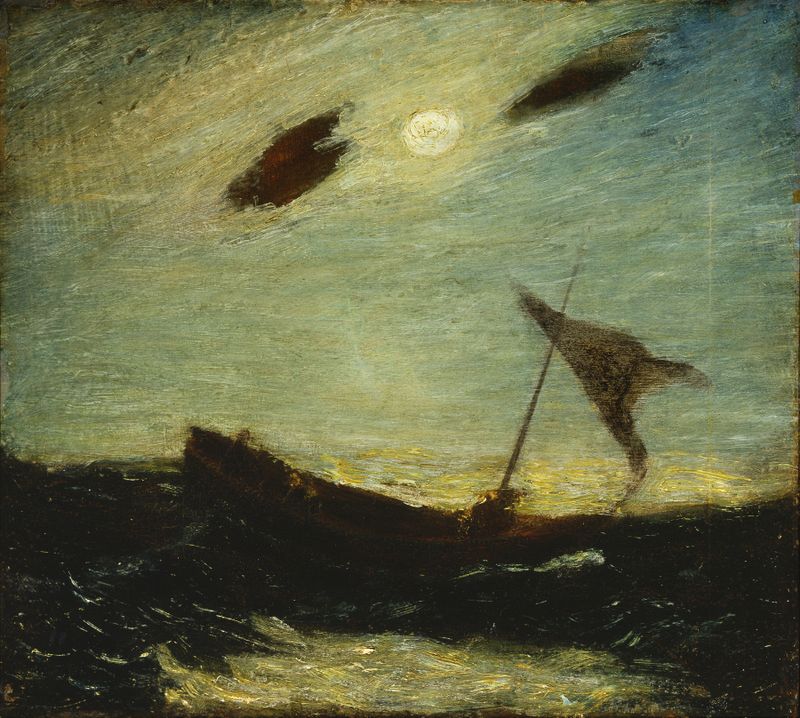
Is this a mirror — or a memory? The hues bleed into one another like whispered secrets, inviting us to ponder the weight of recollections and longing. Focus your gaze on the vibrant blues swirling at the center, where the horizon melts into a tempestuous sea. The bold strokes create a dynamic interplay between light and shadow, leading your eyes across the canvas as if tracing a journey. Notice how the dark, brooding tones contrast sharply with the ethereal glimmers of white, suggesting both the chaos of nature and the fragile nature of human experience. Within this composition lies the tension of solitude and introspection.
The solitary figure, draped in shadow, stands at the precipice, embodying the weight of existential contemplation. The juxtaposition of the tranquil landscape against the turbulent skies reflects an inner struggle, evoking feelings of both wonder and despair. Each wave seems to cradle the figure’s thoughts, blurring the line between reality and dreams, inviting viewers to find their own stories within the depths. Created in the 1890s, Ryder painted this piece during a time marked by a shift in the American art scene toward more introspective and personal subject matter.
Working mostly in New York City, he was influenced by the Romantic movement, which celebrated emotional depth and the sublime aspects of nature. This period saw him grappling with themes of mortality and transcendence, as he sought to capture the ineffable qualities of the human soul reflected in the natural world.
More Artworks by Albert Pinkham Ryder
Browse all →
The Toilers of the Sea
Albert Pinkham Ryder
Moonlight
Albert Pinkham Ryder

The Lorelei
Albert Pinkham Ryder

With Sloping Mast And Dipping Prow
Albert Pinkham Ryder

The Temple of the Mind
Albert Pinkham Ryder

Moonlight Marine
Albert Pinkham Ryder

The Lovers’ Boat
Albert Pinkham Ryder

Harvest
Albert Pinkham Ryder

Under a Cloud
Albert Pinkham Ryder
The River
Albert Pinkham Ryder





