
Children Reading — History & Facts
When Children Reading by Felix Schlesinger first appeared in German exhibitions in the late 19th century, it was celebrated for its gentle realism and the warmth of its domestic scene. What makes this work particularly notable is its role in the growing popularity of genre painting in Germany, where artists like Schlesinger turned everyday moments into subjects worthy of careful observation and artistic honor. At a time when academic art still favored grand historical or biblical themes, Schlesinger’s focus on childhood and learning was both fresh and quietly radical.
The painting’s enduring appeal lies in its ability to capture a universal moment, one that resonated with a society increasingly valuing education and family life. The scene unfolds in a modest, sunlit interior, where two children are absorbed in the pages of a book. The older child leans forward, intent on reading aloud, while the younger listens, eyes wide with curiosity—an intimate exchange that speaks to the passing of knowledge and the bonds of siblinghood. The details are telling: the sturdy wooden table, the scattered papers, the soft play of light on the children’s faces, all anchoring the scene in the reality of middle-class 19th-century life.
Unlike the moralizing undertones found in works by Jean-Baptiste Greuze, Schlesinger offers no overt lesson; instead, he invites the viewer to witness a quiet moment of discovery. The careful rendering of textures and expressions suggests both affection and respect for his young subjects. The exact provenance of Children Reading remains uncertain, as with many of Schlesinger’s works, which were often sold directly to private collectors in Germany and abroad. While the date and medium are not definitively recorded, the painting is typical of Schlesinger’s mature period, when he was associated with the Hamburg school and known for his sensitive portrayals of children.
Over time, the painting has surfaced in several auction catalogues and is now part of an online gallery, allowing a wider audience to appreciate its charm. Its gentle realism and focus on everyday life place it firmly within the tradition of 19th-century German genre painting, a field in which Schlesinger quietly excelled.
More Artworks by Felix Schlesinger

Fleißige Helfer in der Küche
Felix Schlesinger

Die Zeitungslektüre
Felix Schlesinger
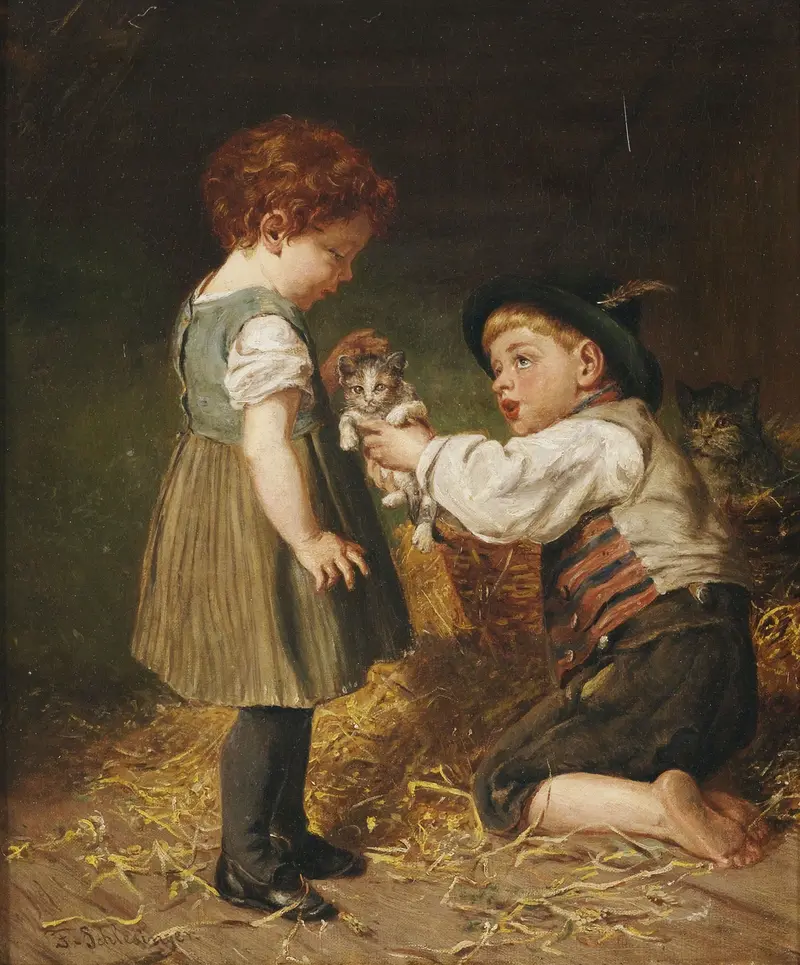
Zwei Kinder mit Kätzchen im Stall
Felix Schlesinger
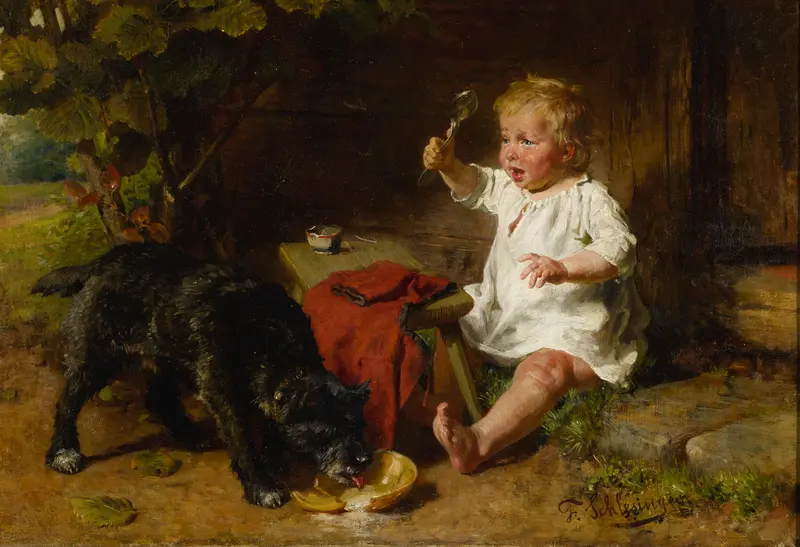
A Shared Meal
Felix Schlesinger
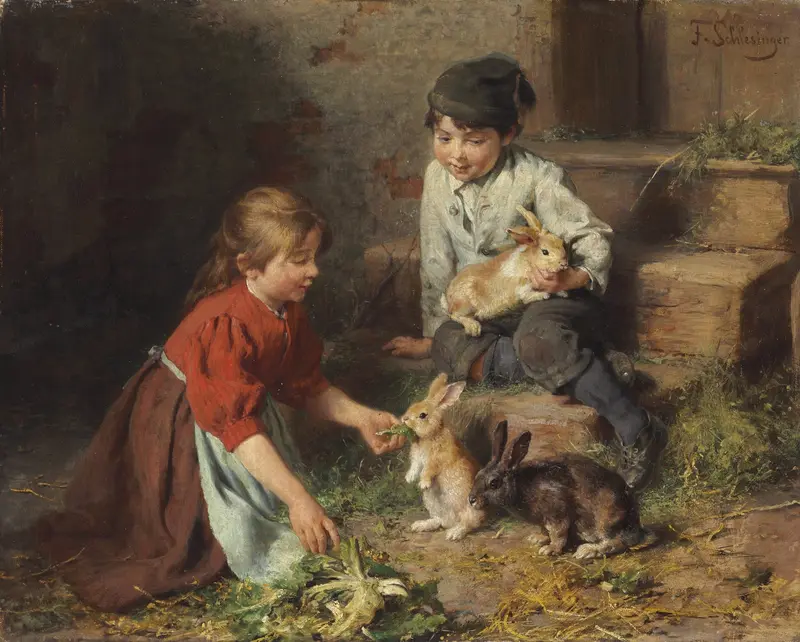
Fütterung Der Kaninchen
Felix Schlesinger
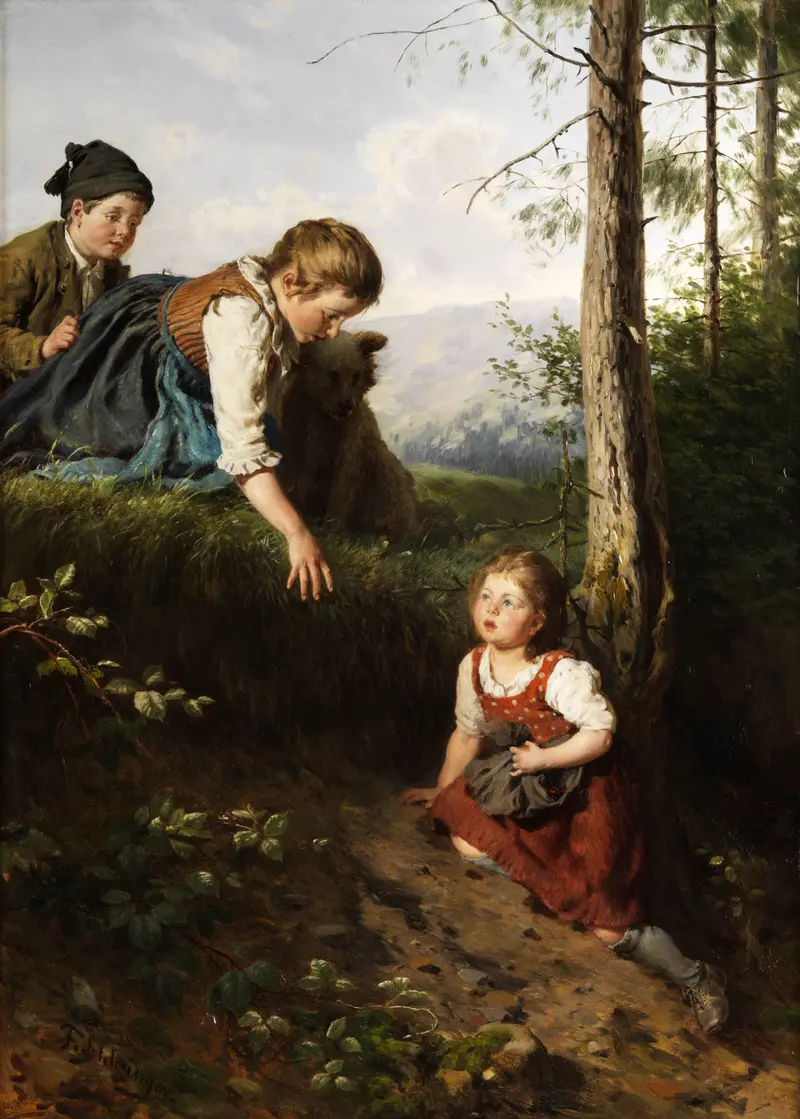
Drei Kinder im Wald beim Beerenpflücken
Felix Schlesinger
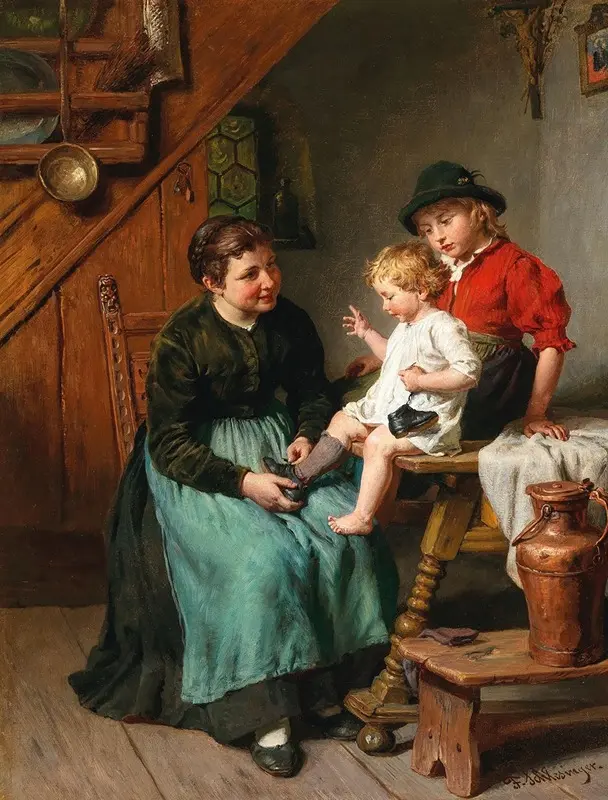
The First Shoe
Felix Schlesinger
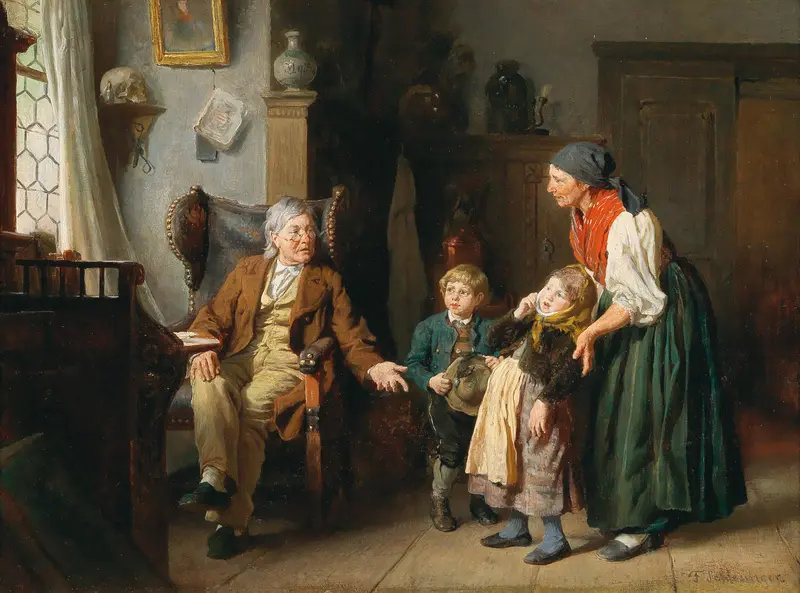
The village doctor
Felix Schlesinger
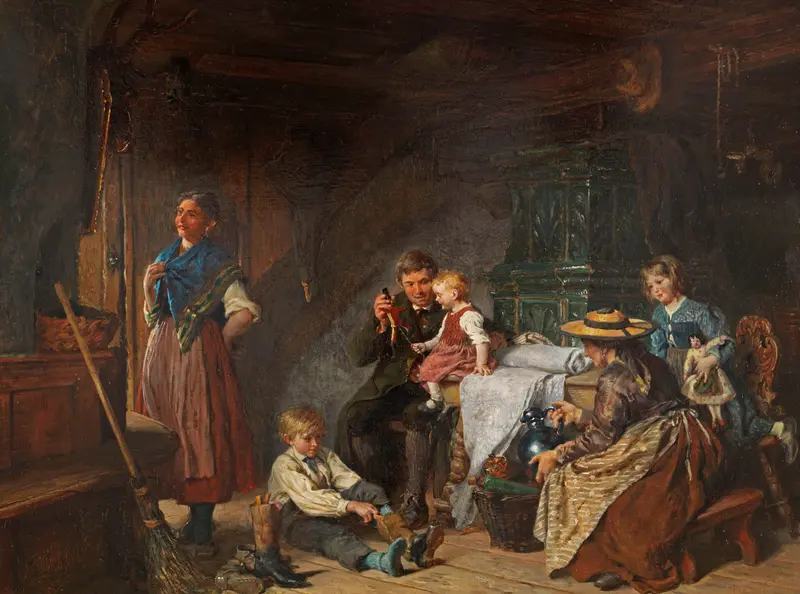
Familienszene
Felix Schlesinger
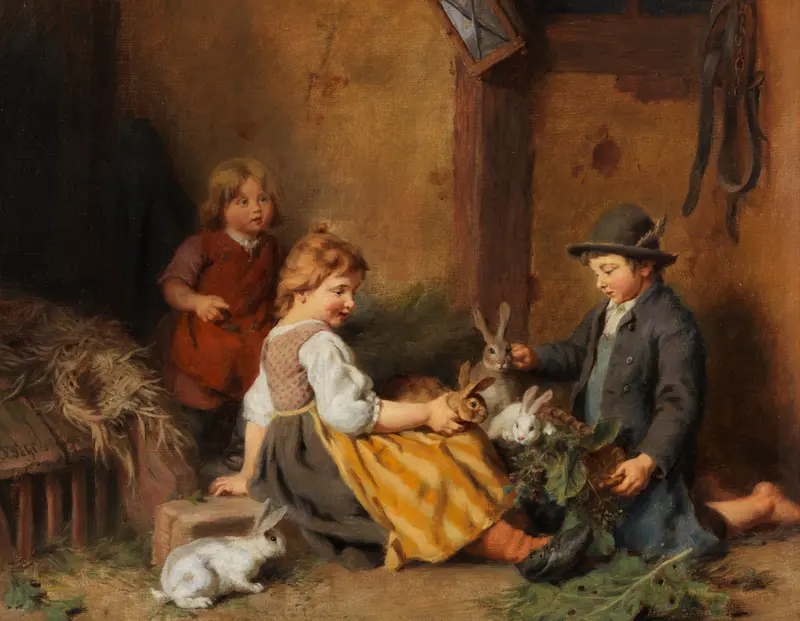
Kinder mit Hasen im Stall
Felix Schlesinger
More Genre Scene Art

Banquet of the Officers of the St George Civic Guard
Frans Hals

Rembrandt and Saskia in the Scene of the Prodigal Son
Rembrandt van Rijn

Bal du moulin de la Galette
Pierre-Auguste Renoir

Quadrille at the Moulin Rouge
Henri de Toulouse-Lautrec

A Burial at Ornans
Gustave Courbet

When Will You Marry?
Paul Gauguin