
Die Zeitungslektüre — History & Facts
No other genre in nineteenth-century German painting so delighted the public as the intimate scene of daily life, and Felix Schlesinger became one of its most beloved practitioners. Die Zeitungslektüre (“Reading the Newspaper”) is a prime example of his gentle humor and keen observation, and it is notable for how often it has been reproduced in prints and postcards since the late 1800s. The painting’s popularity is such that, even in the absence of a known commission or exact date, it remains one of the most recognized images of domestic interiors from the Biedermeier period. A moment of quiet concentration unfolds: an elderly man, spectacles perched on his nose, leans forward to read the latest news, while a young child, perhaps his grandchild, peers over his shoulder with wide-eyed curiosity.
The newspaper itself, crisp and prominently displayed, signals the spread of literacy and the growing importance of current events in everyday life. The warm, golden light that bathes the figures draws the viewer into the intimacy of the scene, highlighting the generational bond and the transmission of knowledge. Details such as the simple wooden table, the modest attire, and the careful rendering of textures recall the works of Carl Spitzweg, who also found poetry in the ordinary.
Yet Schlesinger’s touch is lighter, his humor more affectionate, inviting us to smile at the child’s eager anticipation of grown-up matters. The precise history of Die Zeitungslektüre as an object remains uncertain, as is often the case with Schlesinger’s genre paintings, which were produced for a burgeoning middle-class market and widely circulated through art dealers rather than royal patrons. The painting’s enduring appeal led to multiple reproductions and copies, making attributions occasionally challenging for collectors and museums. Today, works by Felix Schlesinger are held in both public and private collections, especially in Germany, though the original of Die Zeitungslektüre is not firmly located in a major institution.
The painting stands as a testament to Schlesinger’s skill in capturing the quiet drama of everyday life, and it remains a favorite example of the intimate, narrative-rich style that characterized German genre painting in the latter half of the nineteenth century.
More Artworks by Felix Schlesinger

Fleißige Helfer in der Küche
Felix Schlesinger
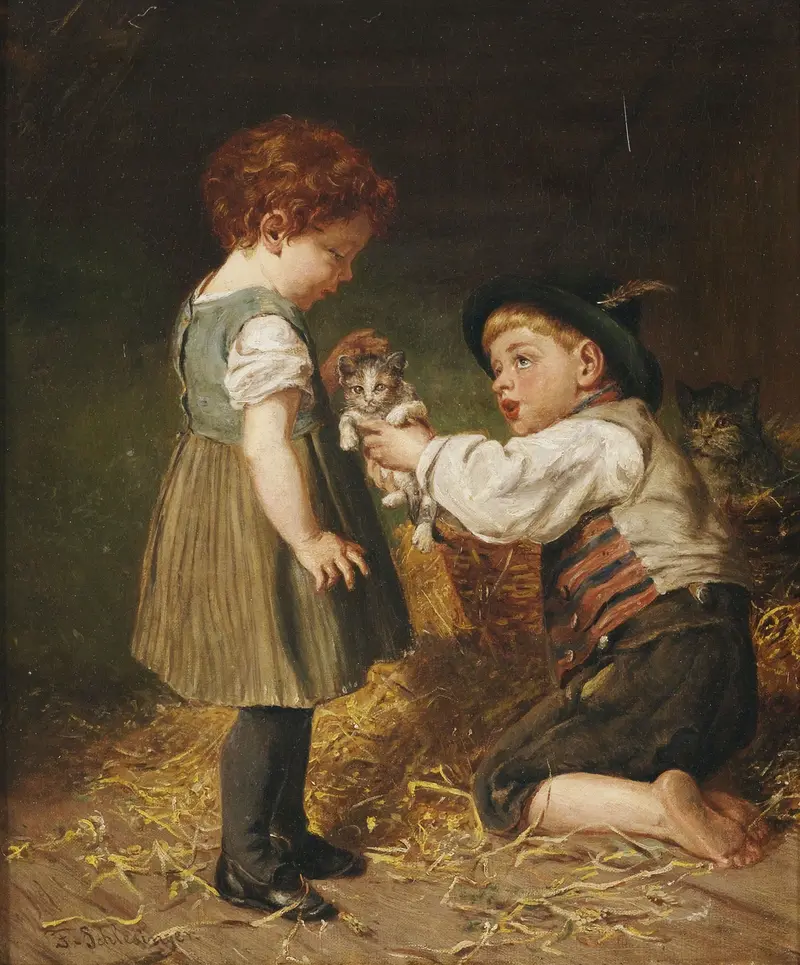
Zwei Kinder mit Kätzchen im Stall
Felix Schlesinger
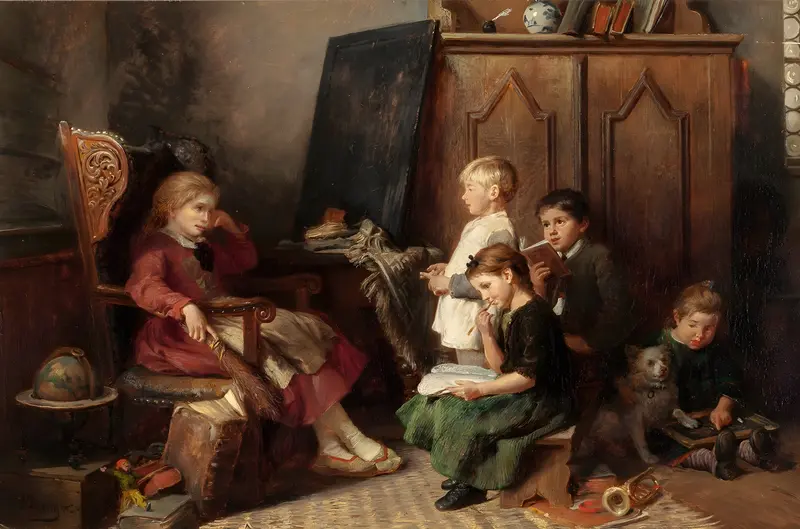
Children Reading
Felix Schlesinger
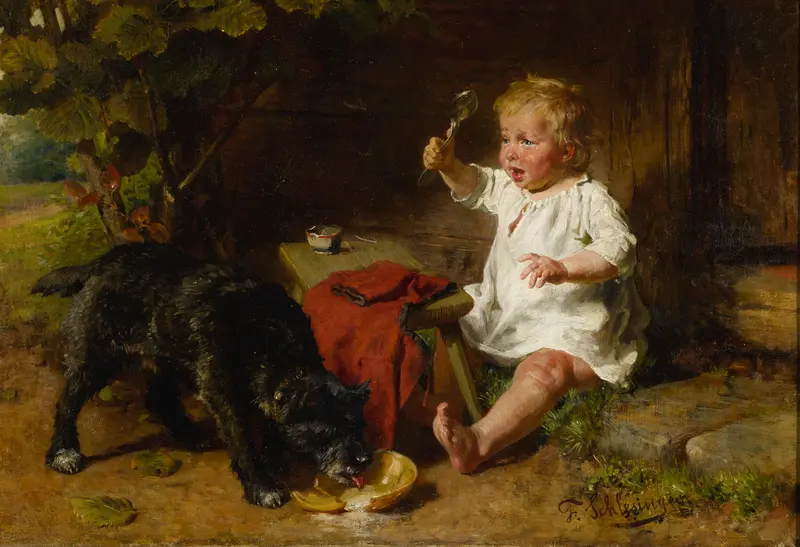
A Shared Meal
Felix Schlesinger
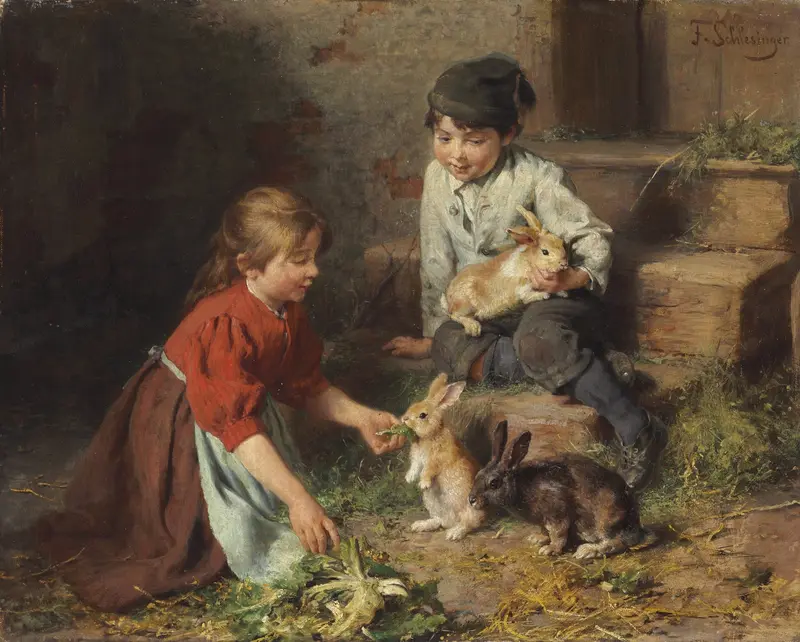
Fütterung Der Kaninchen
Felix Schlesinger
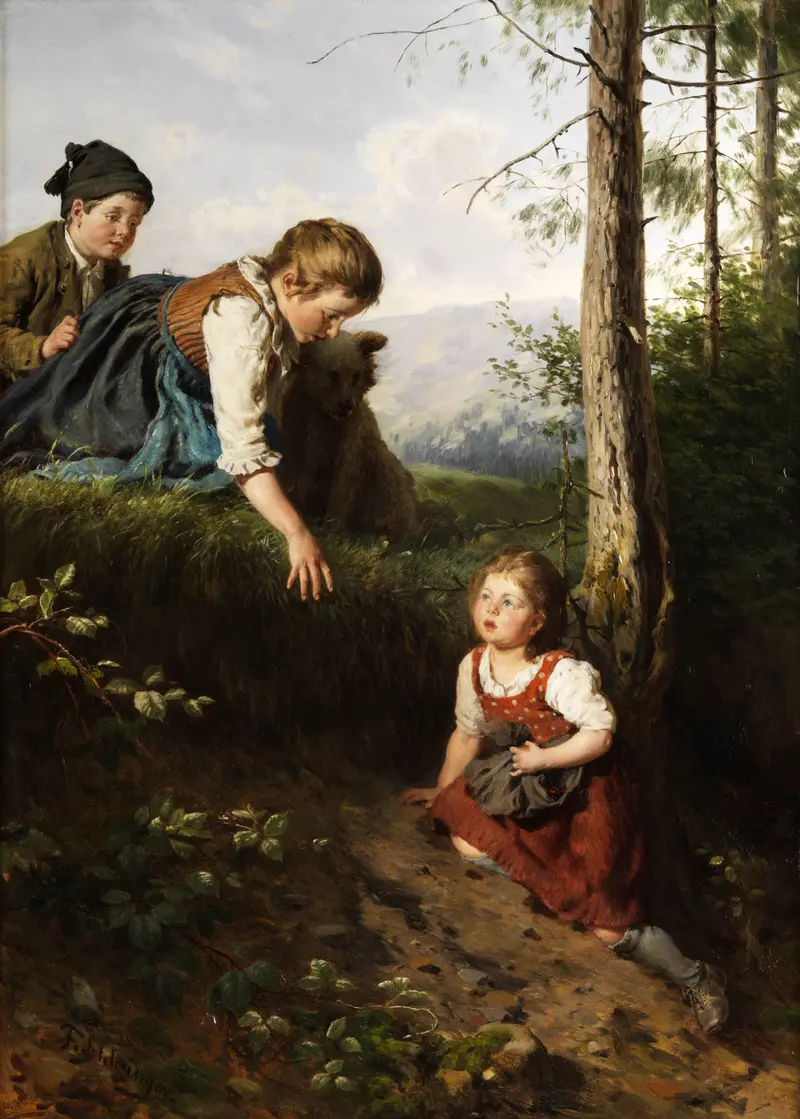
Drei Kinder im Wald beim Beerenpflücken
Felix Schlesinger
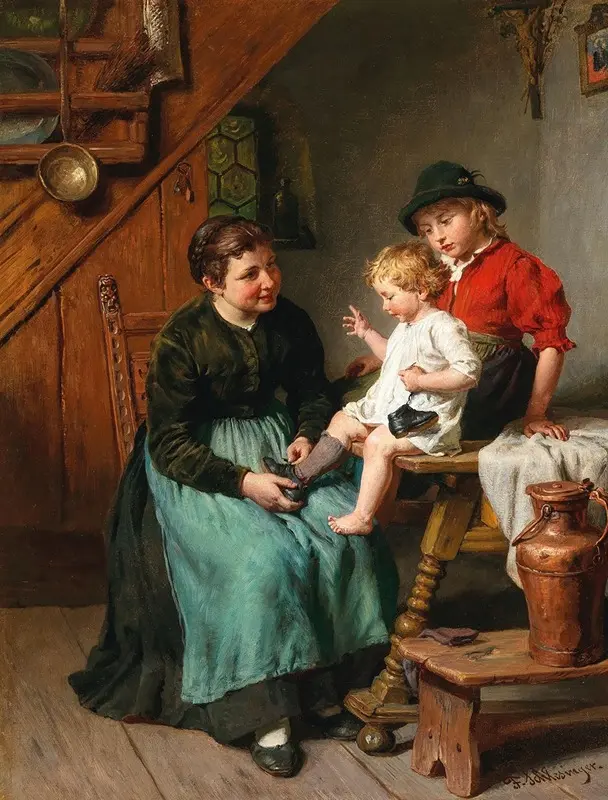
The First Shoe
Felix Schlesinger
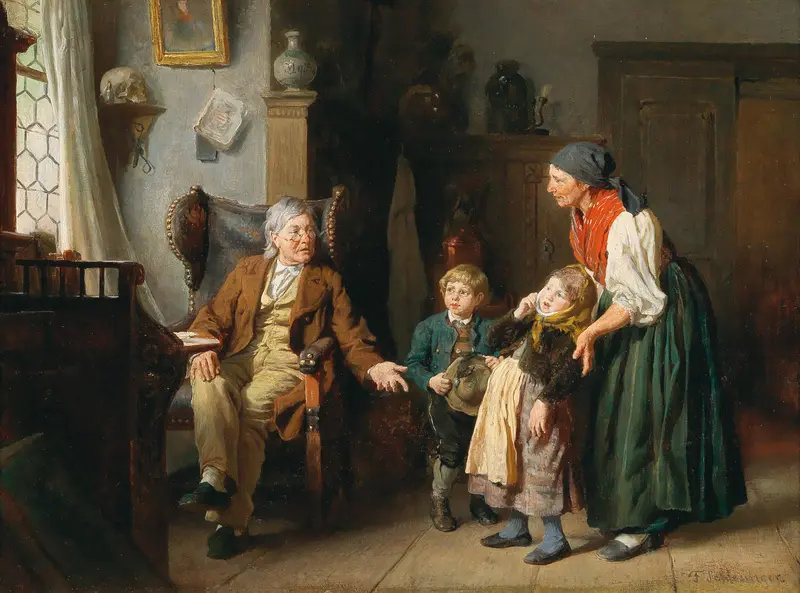
The village doctor
Felix Schlesinger
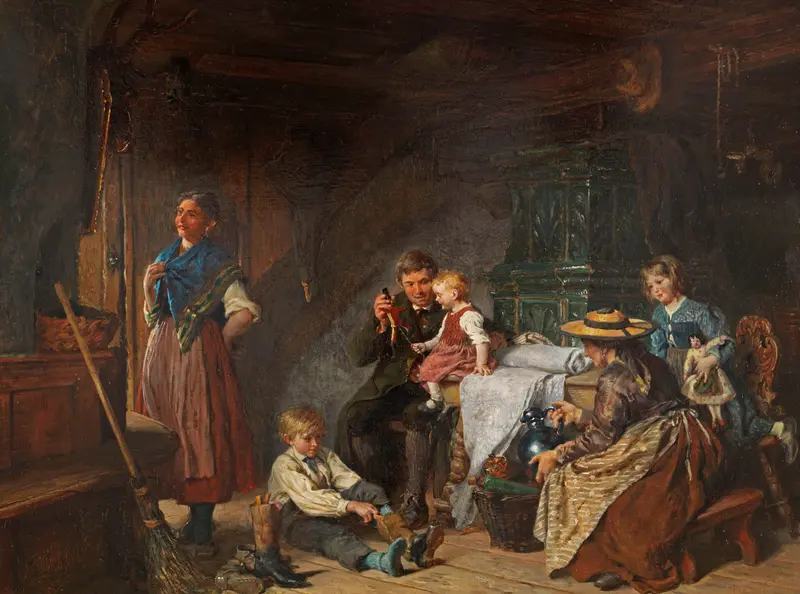
Familienszene
Felix Schlesinger
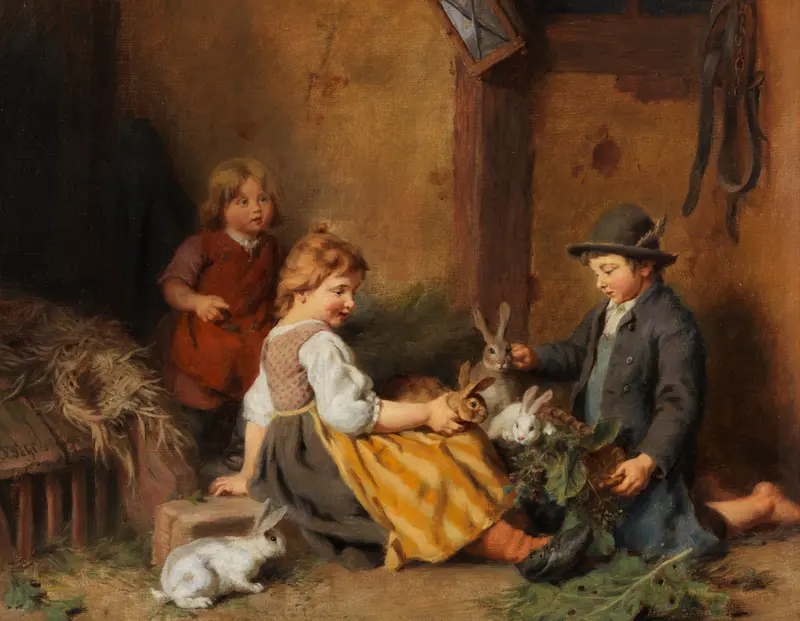
Kinder mit Hasen im Stall
Felix Schlesinger
More Genre Scene Art

Banquet of the Officers of the St George Civic Guard
Frans Hals

Rembrandt and Saskia in the Scene of the Prodigal Son
Rembrandt van Rijn

Bal du moulin de la Galette
Pierre-Auguste Renoir

Quadrille at the Moulin Rouge
Henri de Toulouse-Lautrec

A Burial at Ornans
Gustave Courbet

When Will You Marry?
Paul Gauguin