
The First Shoe — History & Facts
No record survives of when or for whom The First Shoe was painted, but it remains one of the most reproduced and beloved images by Felix Schlesinger, a German artist celebrated for his tender scenes of everyday family life. The painting’s enduring popularity has led to frequent appearances in illustrated books and calendars, and it is often cited as a quintessential example of late nineteenth-century genre painting in Germany. Its exact date and original commission are unknown, and the work’s proliferation in prints and reproductions has sometimes led to confusion over its authorship, with similar scenes attributed to Schlesinger’s contemporaries. At the heart of The First Shoe is a moment of quiet domestic triumph: a mother, seated in a sunlit room, gently helps her small child try on a new shoe for the first time.
The child’s tentative posture and wide-eyed gaze capture both excitement and uncertainty, while the mother’s attentive hands and soft expression radiate patience and pride. Around them, simple household objects—a wooden chair, a basket, a scattering of toys—anchor the scene in the modest reality of a working-class home. The warm, golden light that falls across the figures draws the eye to the child’s foot, emphasizing the significance of this everyday rite of passage.
Unlike the more sentimental treatments of childhood by Franz Defregger or Johann Georg Meyer von Bremen, Schlesinger’s approach is understated, focusing on the genuine bond between mother and child rather than overt sentimentality. The physical history of The First Shoe is as elusive as its date. While the painting is widely reproduced, the original’s current location is uncertain; it has appeared in private collections and occasionally at auction, but no major museum claims it as part of their permanent holdings. This lack of documentation is not unusual for works by Felix Schlesinger, who painted many similar scenes for the burgeoning middle-class art market of his day.
Today, The First Shoe is often cited in discussions of nineteenth-century German genre painting, and it remains a touchstone for those interested in the quiet dignity of everyday life as seen through Schlesinger’s sympathetic eye.
More Artworks by Felix Schlesinger

Fleißige Helfer in der Küche
Felix Schlesinger

Die Zeitungslektüre
Felix Schlesinger
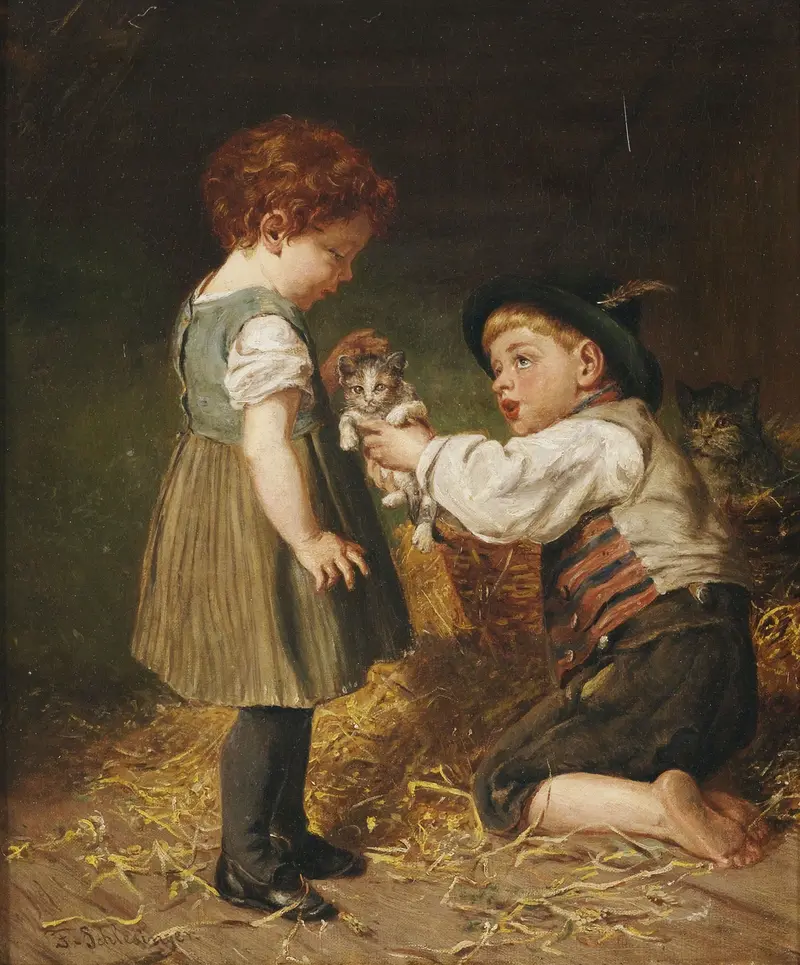
Zwei Kinder mit Kätzchen im Stall
Felix Schlesinger
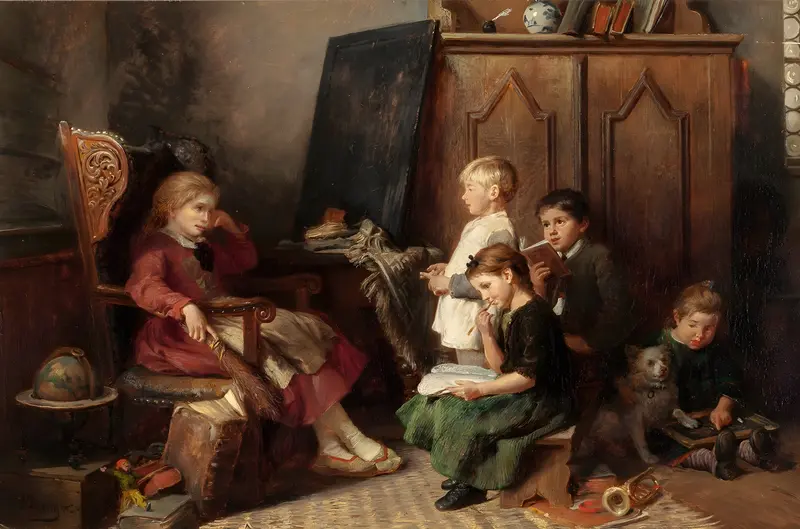
Children Reading
Felix Schlesinger
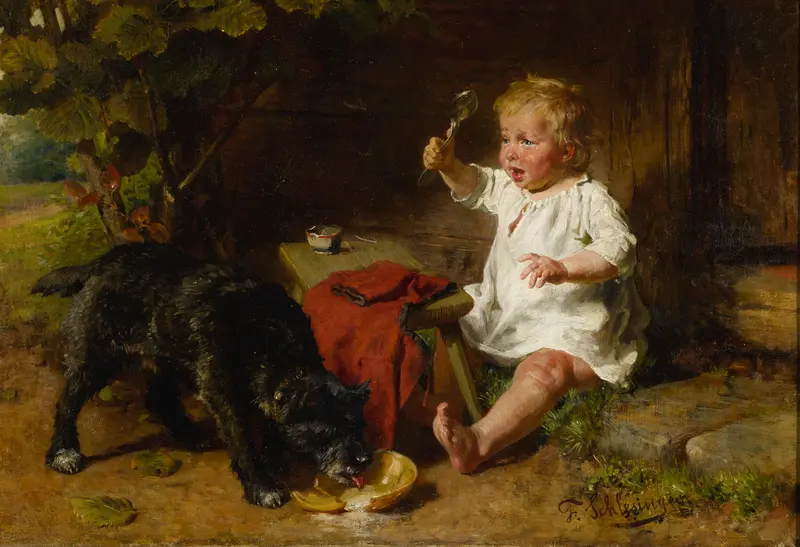
A Shared Meal
Felix Schlesinger
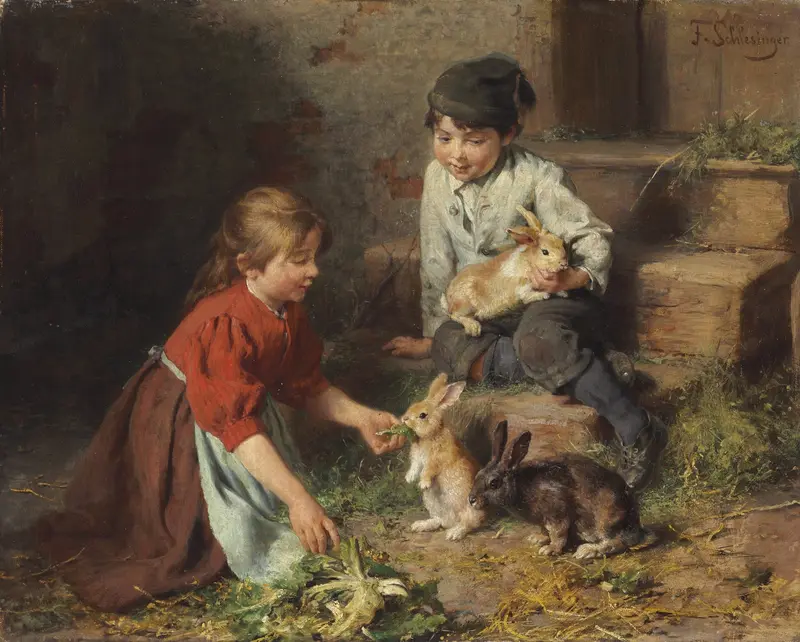
Fütterung Der Kaninchen
Felix Schlesinger
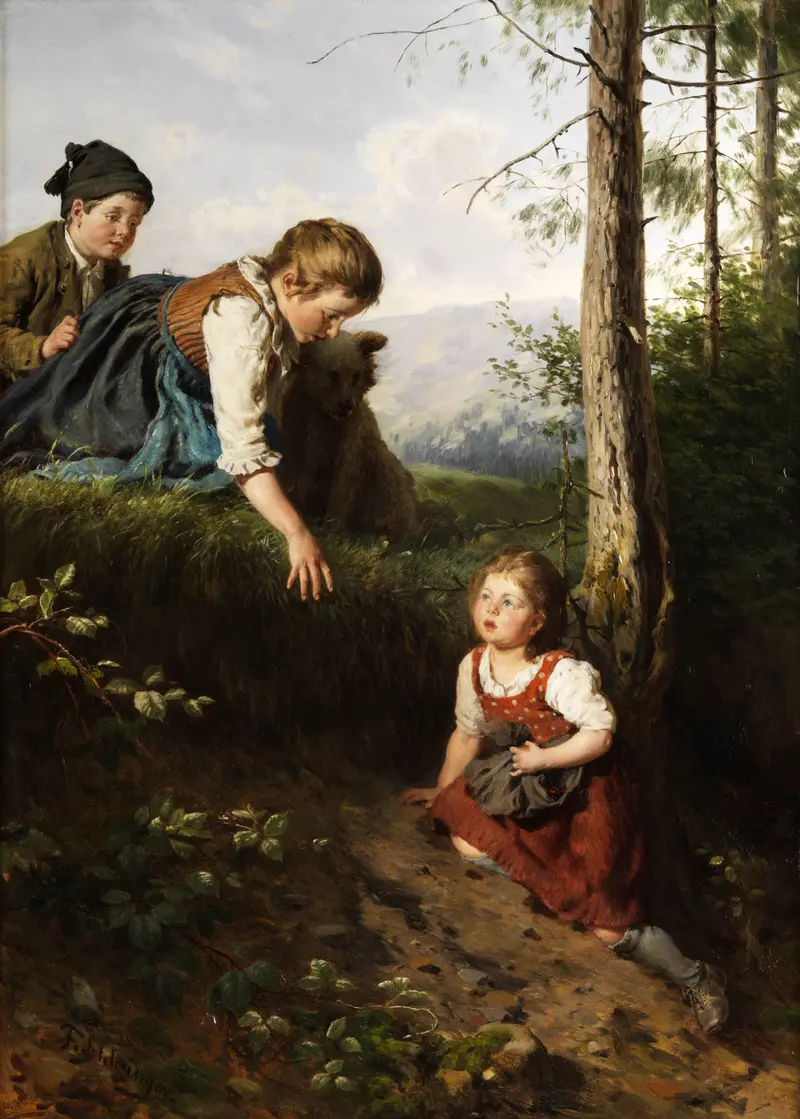
Drei Kinder im Wald beim Beerenpflücken
Felix Schlesinger
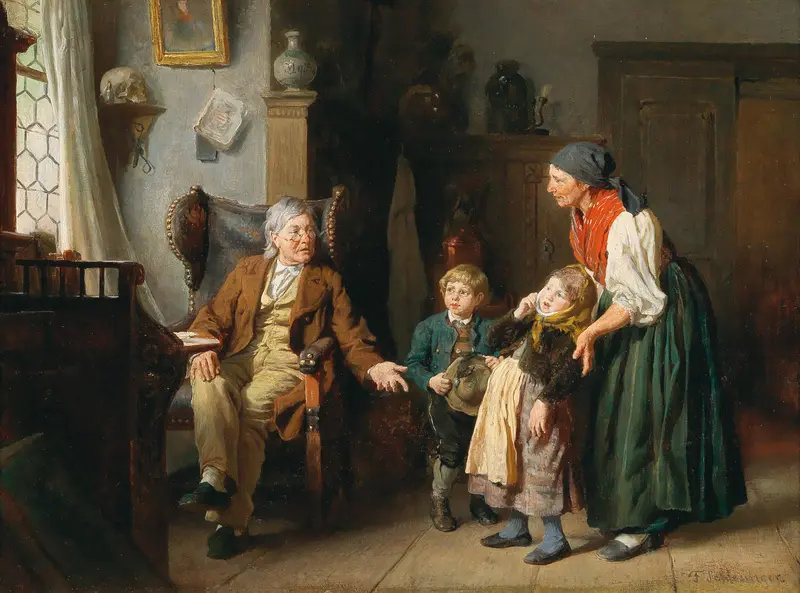
The village doctor
Felix Schlesinger
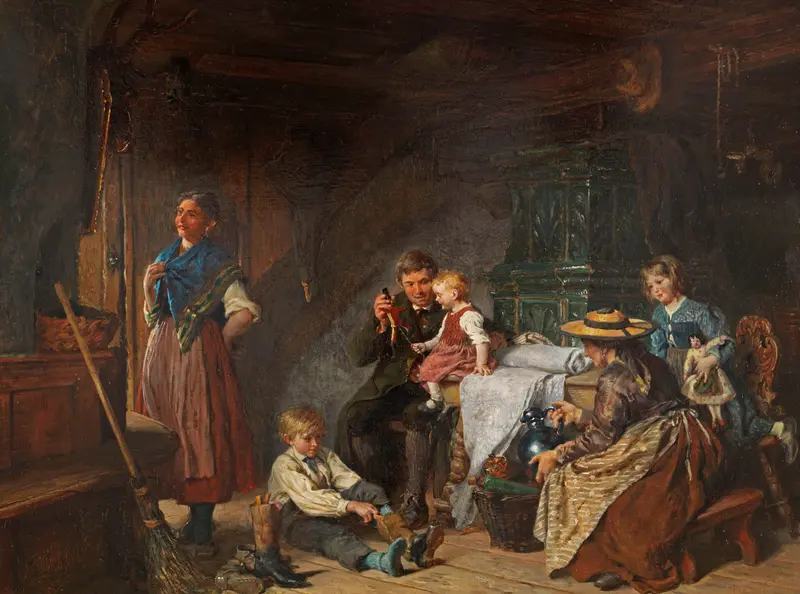
Familienszene
Felix Schlesinger
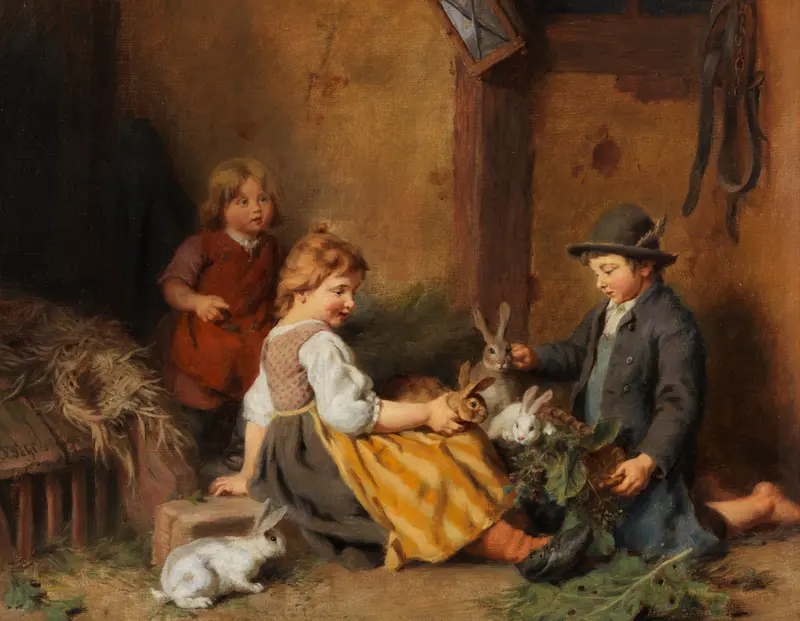
Kinder mit Hasen im Stall
Felix Schlesinger
More Genre Scene Art

Banquet of the Officers of the St George Civic Guard
Frans Hals

Rembrandt and Saskia in the Scene of the Prodigal Son
Rembrandt van Rijn

Bal du moulin de la Galette
Pierre-Auguste Renoir

Quadrille at the Moulin Rouge
Henri de Toulouse-Lautrec

A Burial at Ornans
Gustave Courbet

When Will You Marry?
Paul Gauguin