
The village doctor — History & Facts
No other painting by Felix Schlesinger has been so widely reproduced in popular prints as The village doctor. The image became a touchstone for nineteenth-century viewers, who saw in it an idealized vision of rural compassion and the quiet dignity of everyday life. Though the exact date and circumstances of its creation remain uncertain, the work's popularity is attested by its frequent appearance in illustrated magazines and its enduring appeal in German-speaking households well into the twentieth century.
The painting’s fame lies not in a grand historical event, but in its warm, intimate portrayal of a scene that resonated with generations. A humble country interior forms the stage: a weary doctor bends attentively over a sick child, while anxious family members look on. The painter chooses the moment of diagnosis, when hope and worry mingle on the faces of those gathered. The doctor’s black bag and stethoscope—symbols of modern medicine—rest beside him, contrasting with the rustic simplicity of the room.
Light falls gently on the child, drawing the viewer’s eye and underscoring the emotional center of the scene. Unlike the dramatic tension of Jean-Baptiste Greuze’s sentimental genre scenes, Schlesinger opts for quiet observation, inviting empathy rather than spectacle. Little is known about the early history of The village doctor, and no records survive of its original patron or exhibition. The painting is typical of Schlesinger’s focus on domestic genre scenes, a hallmark of later nineteenth-century German art.
Over the years, it has passed through private collections and has often been attributed simply as a “German School” work when the artist’s signature was obscured. Today, it is recognized as a defining example of Schlesinger’s gentle realism, though its current location remains uncertain, a testament to the quiet but lasting influence of his vision.
More Artworks by Felix Schlesinger

Fleißige Helfer in der Küche
Felix Schlesinger

Die Zeitungslektüre
Felix Schlesinger
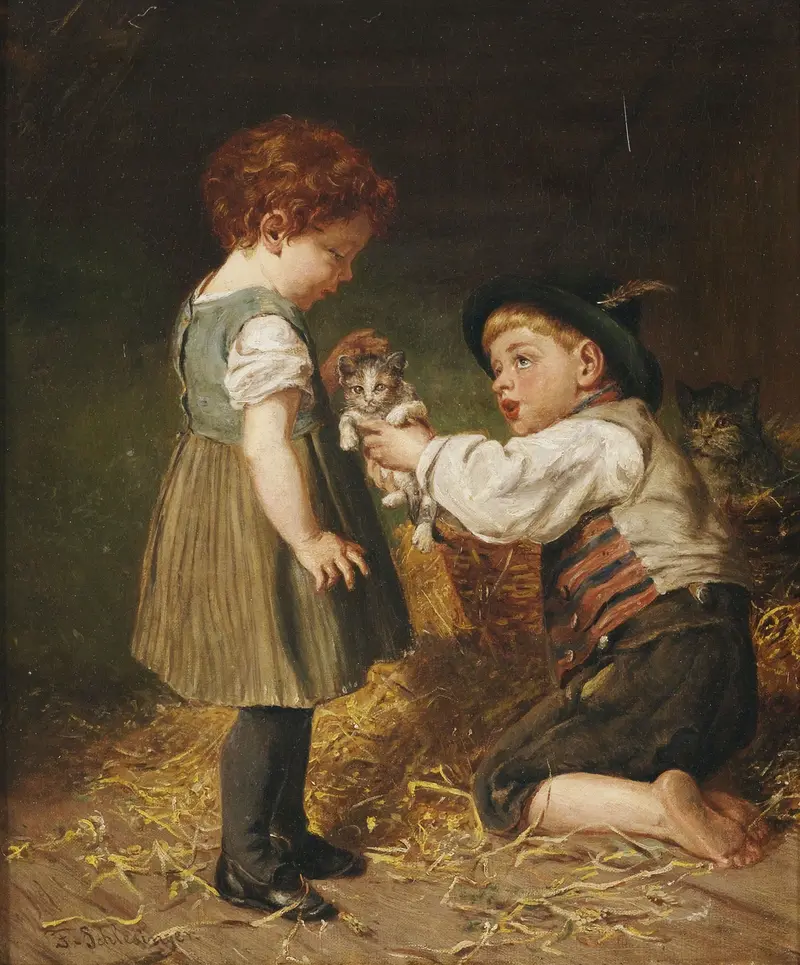
Zwei Kinder mit Kätzchen im Stall
Felix Schlesinger
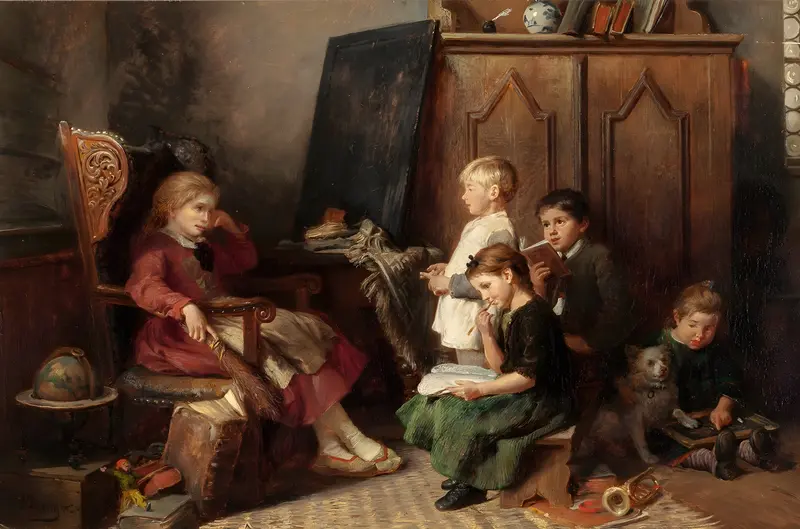
Children Reading
Felix Schlesinger
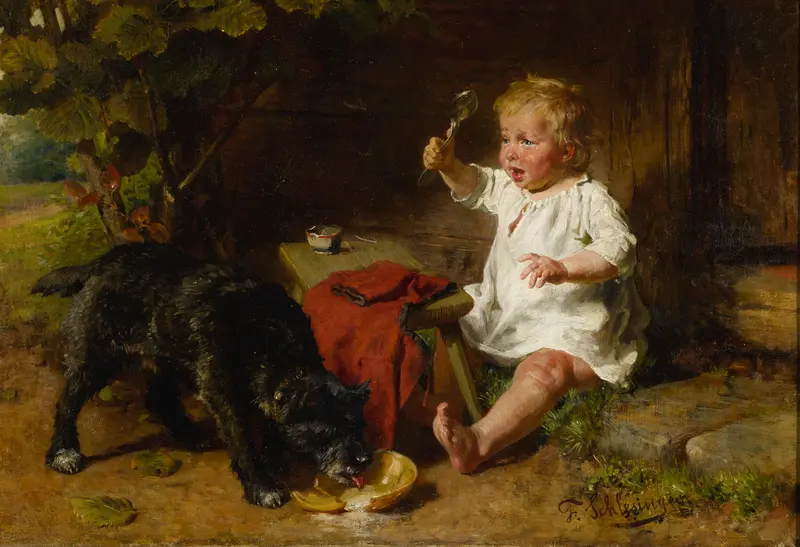
A Shared Meal
Felix Schlesinger
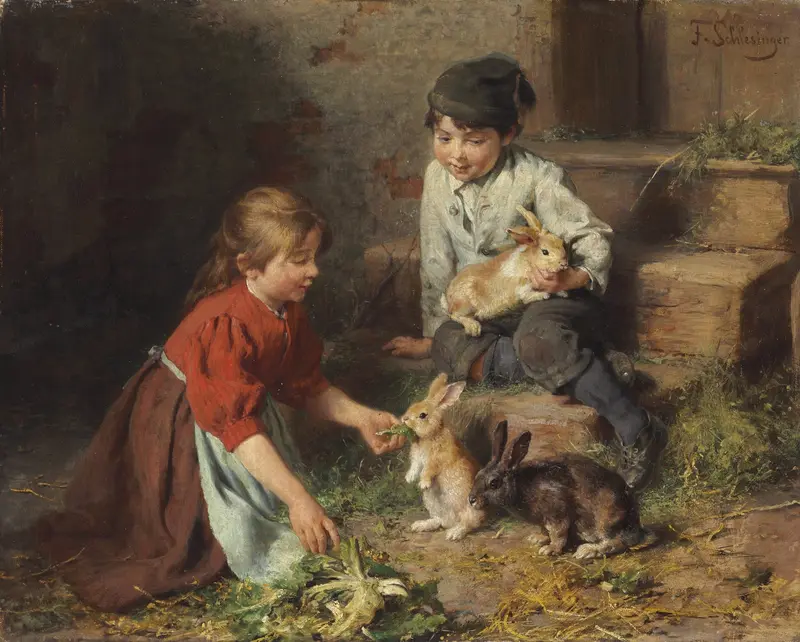
Fütterung Der Kaninchen
Felix Schlesinger
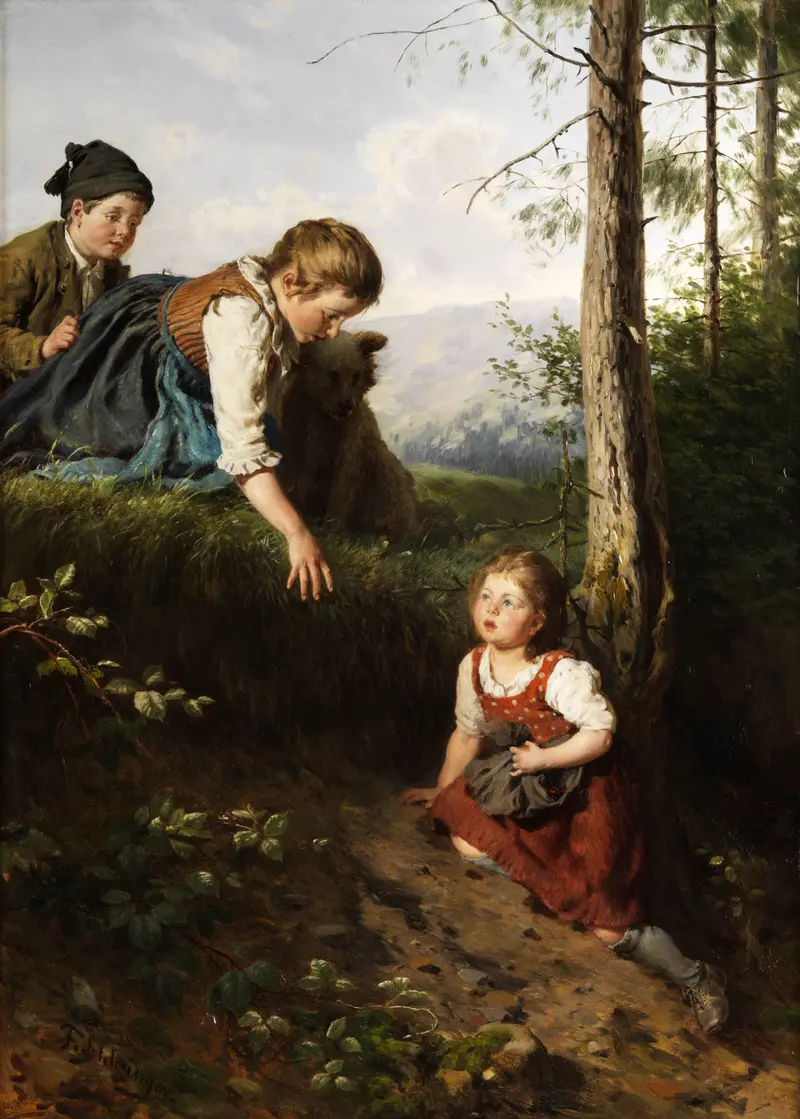
Drei Kinder im Wald beim Beerenpflücken
Felix Schlesinger
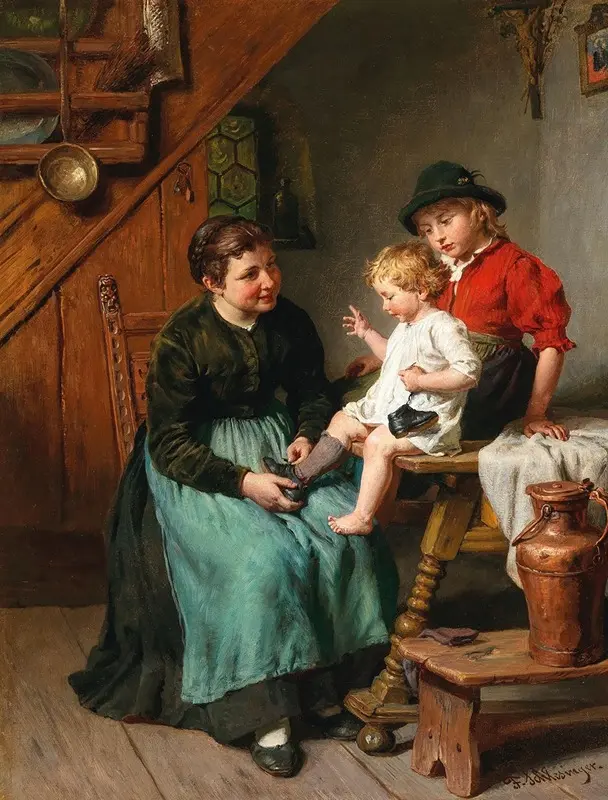
The First Shoe
Felix Schlesinger
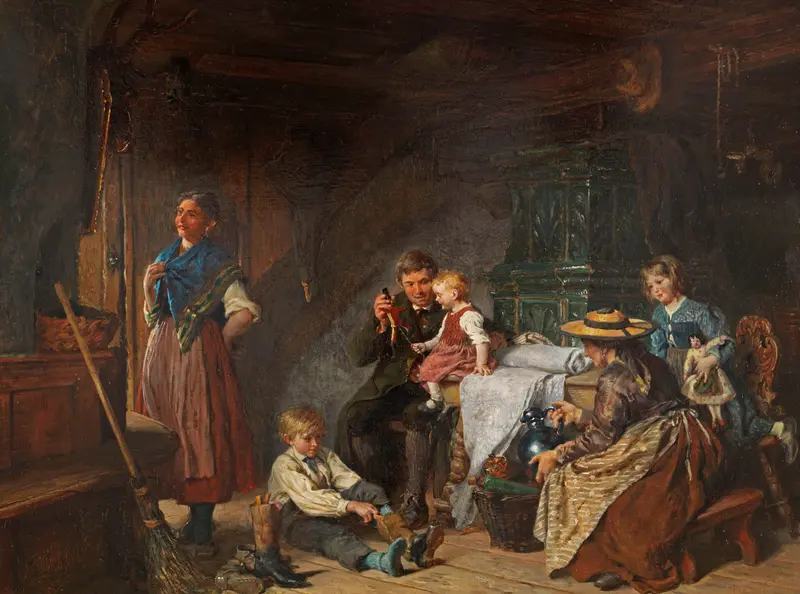
Familienszene
Felix Schlesinger
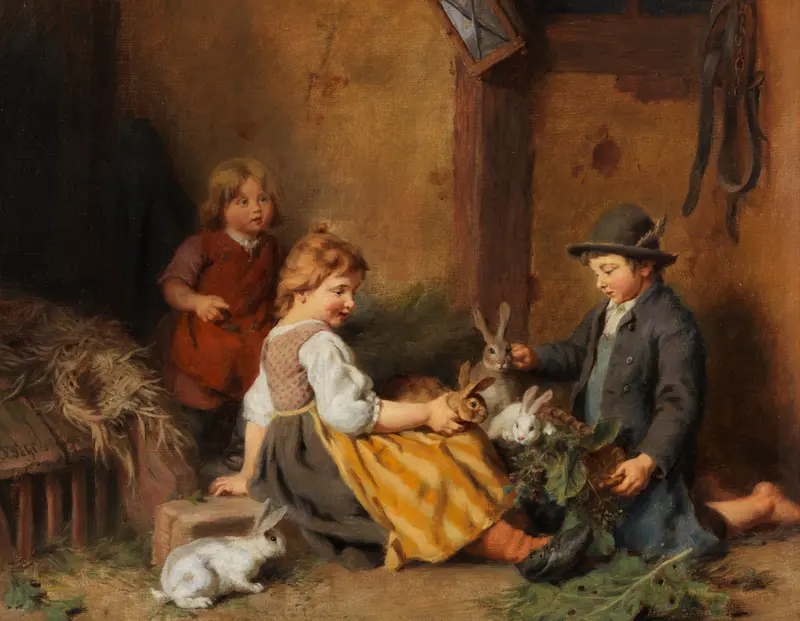
Kinder mit Hasen im Stall
Felix Schlesinger
More Genre Scene Art

Banquet of the Officers of the St George Civic Guard
Frans Hals

Rembrandt and Saskia in the Scene of the Prodigal Son
Rembrandt van Rijn

Bal du moulin de la Galette
Pierre-Auguste Renoir

Quadrille at the Moulin Rouge
Henri de Toulouse-Lautrec

A Burial at Ornans
Gustave Courbet

When Will You Marry?
Paul Gauguin