
Cloud Study, Moonlight — History & Facts
The first thing to catch the eye in Cloud Study, Moonlight is the quiet drama of the sky itself—a single, round moon burning through a veil of drifting clouds, its light pooling softly over a shadowed landscape. The painter, Albert Bierstadt, gives the sky the leading role, letting the land recede into darkness so that the viewer is drawn upward, following the moon’s glow as it slips behind and between the clouds. The brushwork in the clouds is loose, almost hurried, as if capturing a fleeting moment before the scene changes.
Notice how the moon’s light is not cold, but edged with warmth, turning the clouds silver and the horizon a deep, mysterious blue. Every element is arranged to heighten the sense of stillness, but also of movement—clouds drifting, light shifting, night deepening. Painted around 1860, this work belongs to a period when American artists were obsessed with the grandeur and moods of the natural world, often painting outdoors to catch the fleeting effects of light and weather. Albert Bierstadt is best known for his panoramic landscapes of the American West, but here, he turns his attention to the sky itself, making atmosphere his subject.
Such studies were often painted quickly, sometimes as exercises or preparatory works, and rarely signed or widely exhibited in their own time. Now in the Bowdoin College Museum of Art, this small painting survives as a quiet testament to an age when artists sought to capture not just places, but the sensation of looking. Let your eye linger on that moon, and imagine the painter’s hand moving swiftly to keep pace with the changing night.
More Artworks by Albert Bierstadt

A Storm in the Rocky Mountains, Mt. Rosalie
Albert Bierstadt
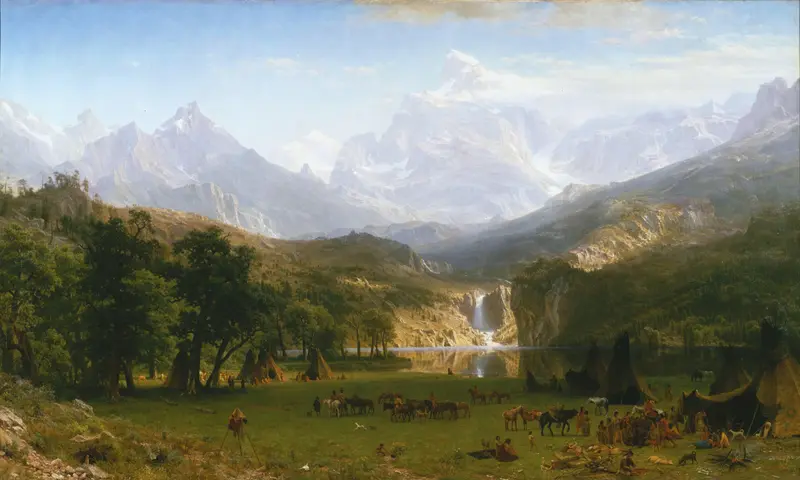
The Rocky Mountains, Lander's Peak
Albert Bierstadt
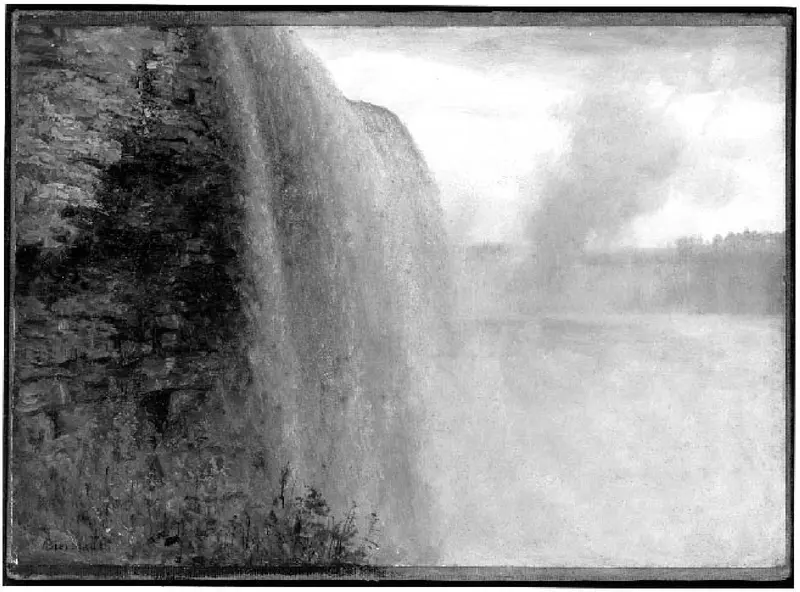
Niagara from the American Side
Albert Bierstadt
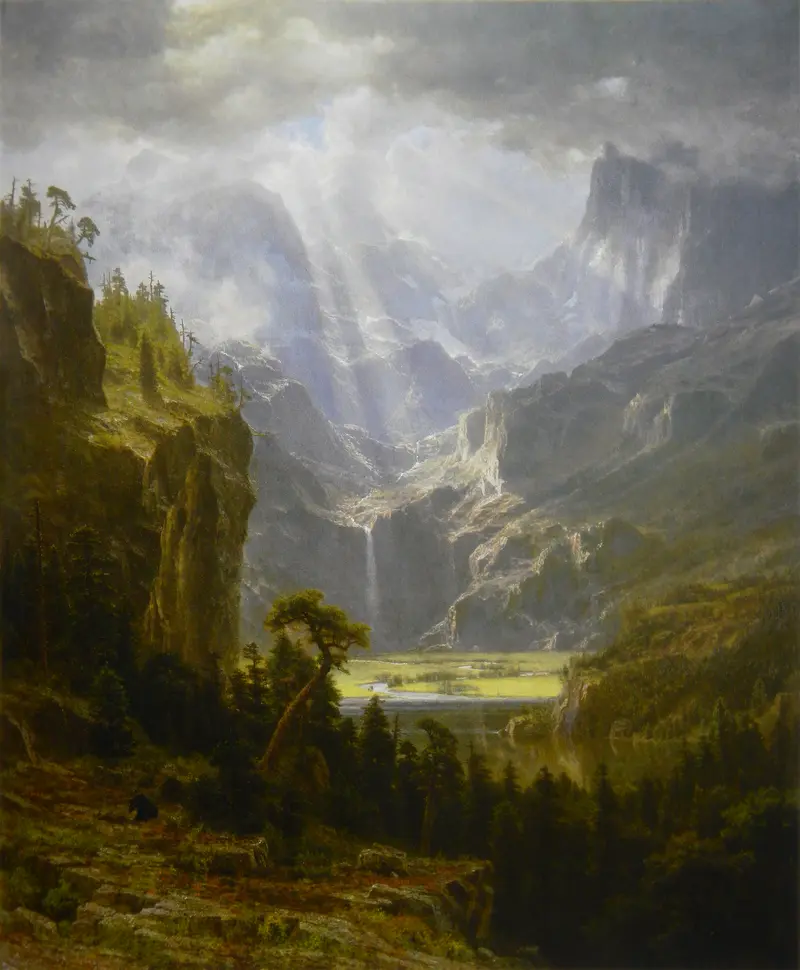
Rocky Mountains, Lander’s Peak
Albert Bierstadt

Valley of the Yosemite
Albert Bierstadt
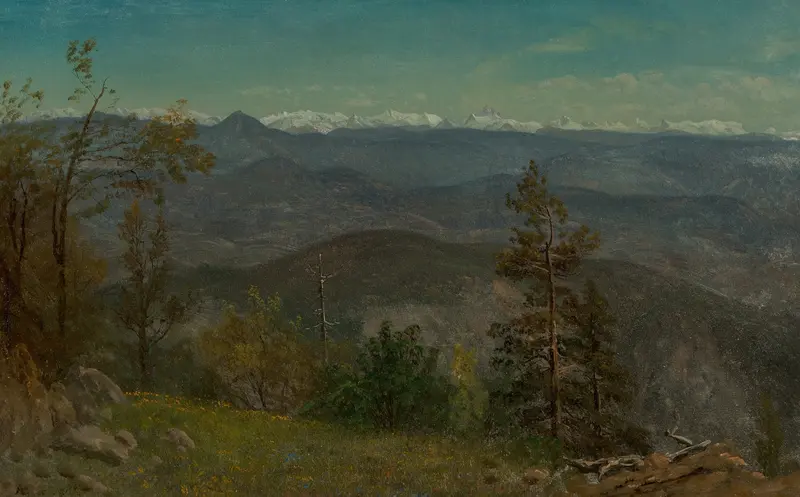
Yosemite Valley, California
Albert Bierstadt
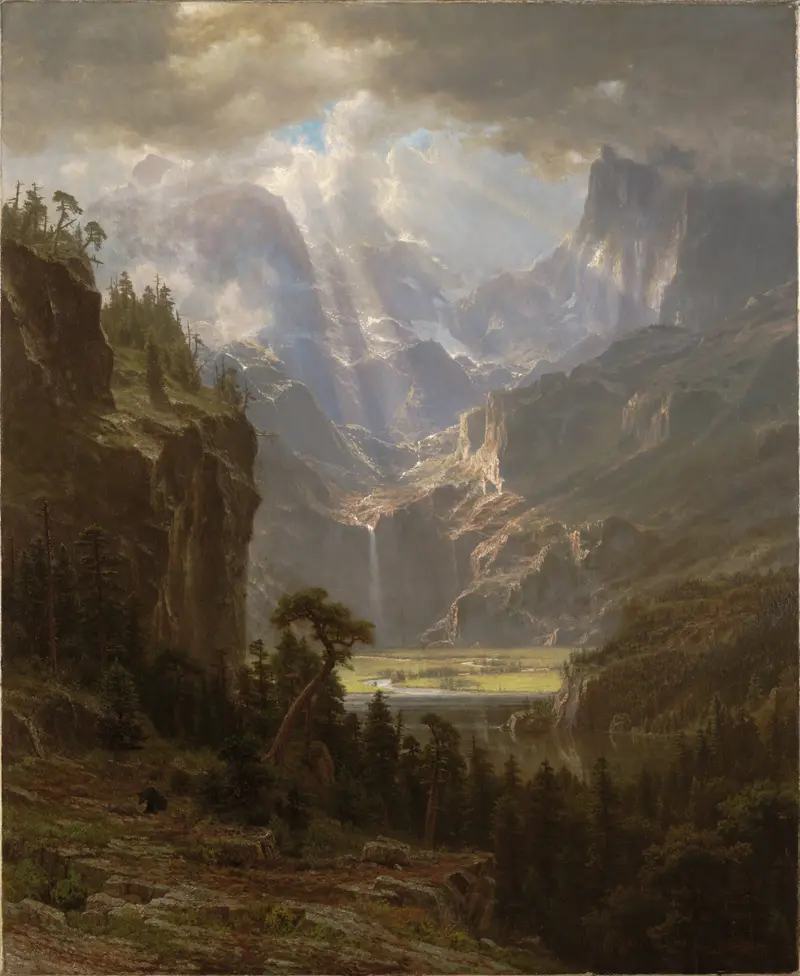
Rocky Mountains, "Lander's Peak"
Albert Bierstadt

Laramie Peak
Albert Bierstadt
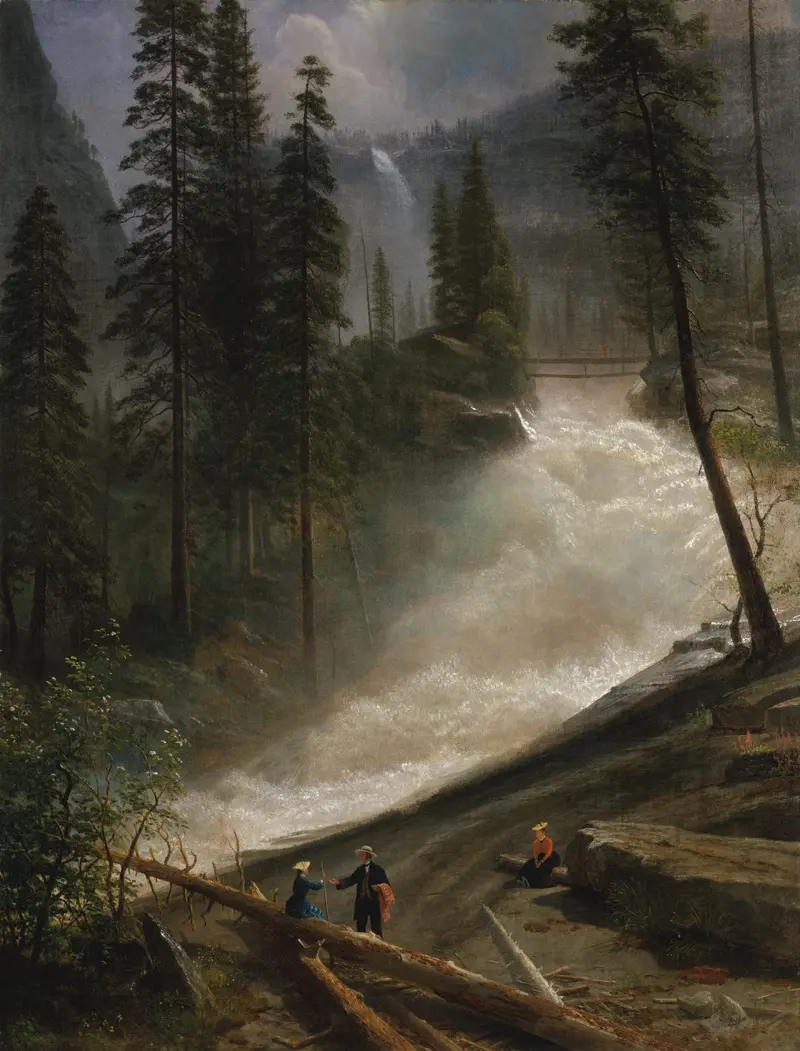
Nevada Falls, Yosemite
Albert Bierstadt
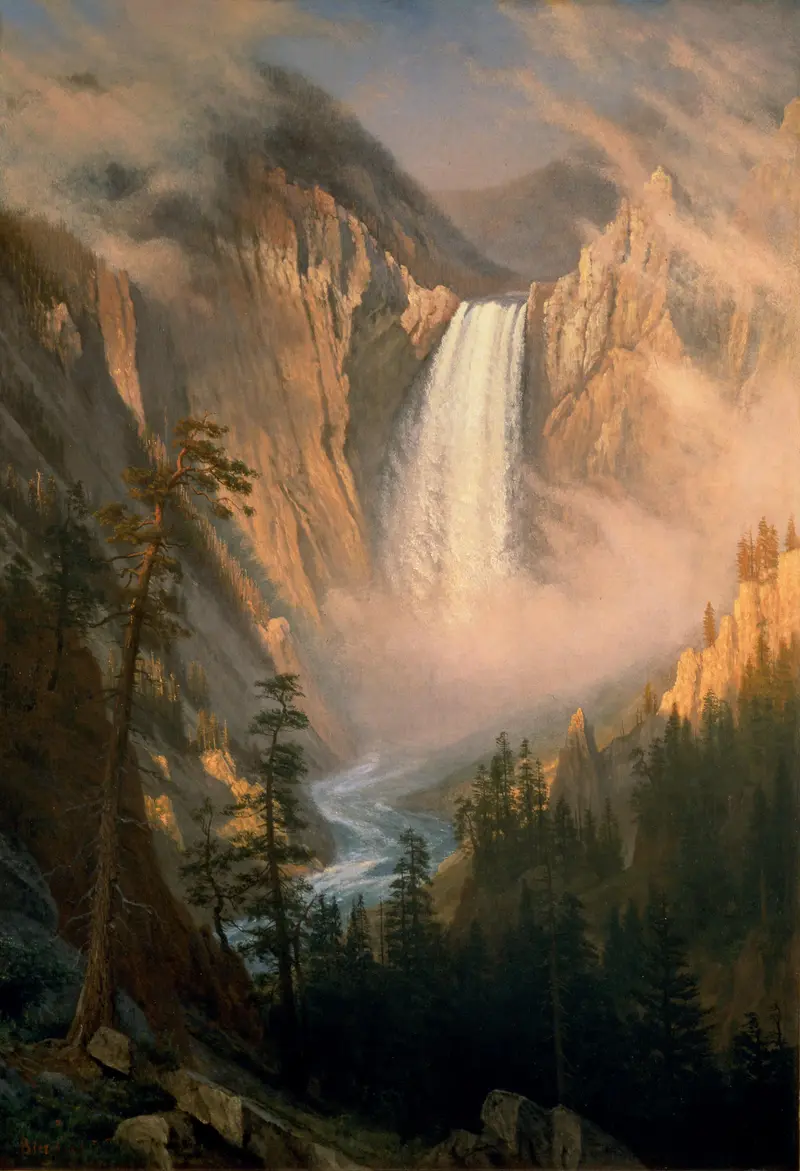
Yellowstone Falls
Albert Bierstadt
More Landscape Art

The Starry Night
Vincent van Gogh

View of Delft
Johannes Vermeer

Water Lilies
Claude Monet

The Grand Canal, Venice, looking north-west from the Ca' Corner to the Ca' Contarini degli Scrigni, with the campanile of Santa Maria della Carità
Canaletto

Windsor Castle
Canaletto

The Grand Canal looking North-East from the Palazzo Dolfin-Manin to the Rialto Bridge
Canaletto