
Clown — History & Facts
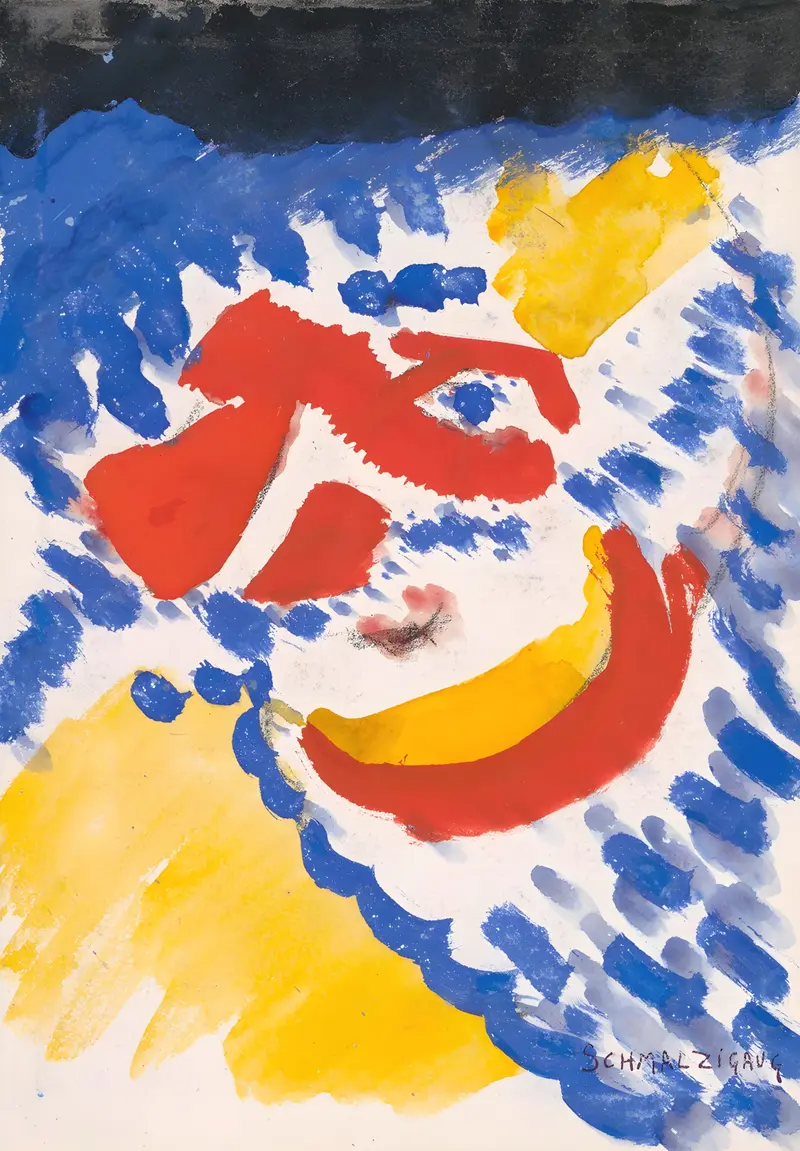
No other painting by Jules Schmalzigaug has provoked as much speculation as Clown, whose date and medium remain uncertain. The work is often cited as a rare example of the artist’s engagement with the circus motif, a theme that fascinated many early twentieth-century painters but appears only fleetingly in Schmalzigaug’s surviving oeuvre. Its mysterious provenance and lack of documentation have led scholars to debate whether it marks a turning point in his career, or if it is a playful experiment outside his usual Futurist explorations. The figure at the heart of Clown is caught mid-performance, face painted in stark, almost geometric shapes, eyes wide with an ambiguous expression that hovers between melancholy and mischief.
The background dissolves into swirling colors and fractured forms, suggesting the dizzying energy of the circus ring—a visual language reminiscent of Futurism, the movement with which Schmalzigaug was associated. Unlike Pablo Picasso’s harlequins, who often appear isolated and contemplative, Schmalzigaug’s clown seems to vibrate with movement, his costume’s bold patterns echoing the chaos and spectacle of the show. The artist’s use of dynamic brushwork and fragmented space invites the viewer to share in the performer’s unstable world, blurring the line between spectacle and reality. Little is known of Clown’s journey after it left the artist’s studio, and its early ownership remains undocumented.
Some believe it was exhibited in Antwerp during Schmalzigaug’s lifetime, though no catalogue entry has yet been found to confirm this. Today, the painting is recognized as an intriguing outlier in the artist’s body of work, reflecting both his fascination with movement and his willingness to experiment beyond the strict confines of Futurism. Its uncertain history only adds to its allure, inviting viewers to look closer and imagine the stories behind the painted mask.
More Artworks by Jules Schmalzigaug

A View of Scheveningen
Jules Schmalzigaug
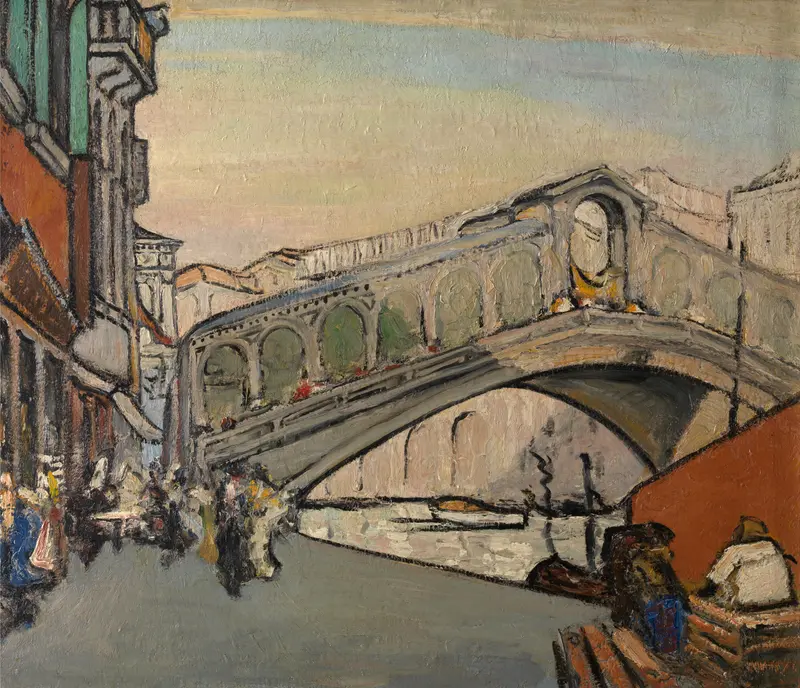
The Rialto Bridge in Venice
Jules Schmalzigaug

Abstract Bouquet
Jules Schmalzigaug
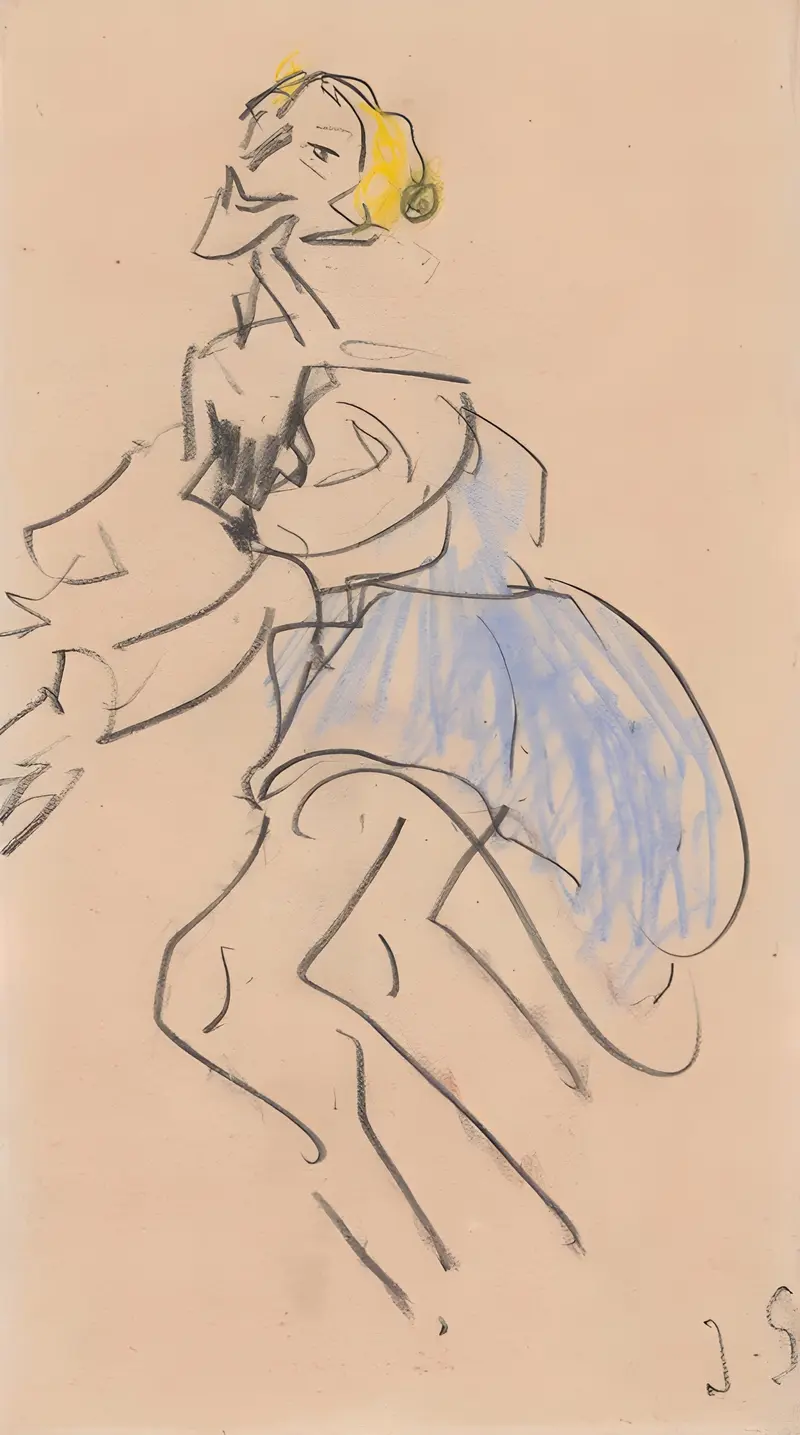
Dancer
Jules Schmalzigaug
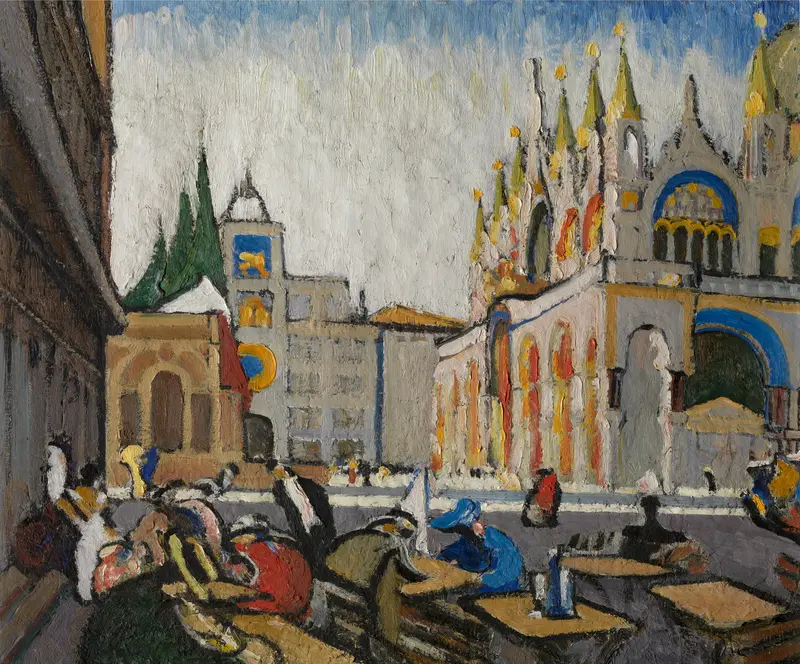
San Marco from the Piazetta
Jules Schmalzigaug
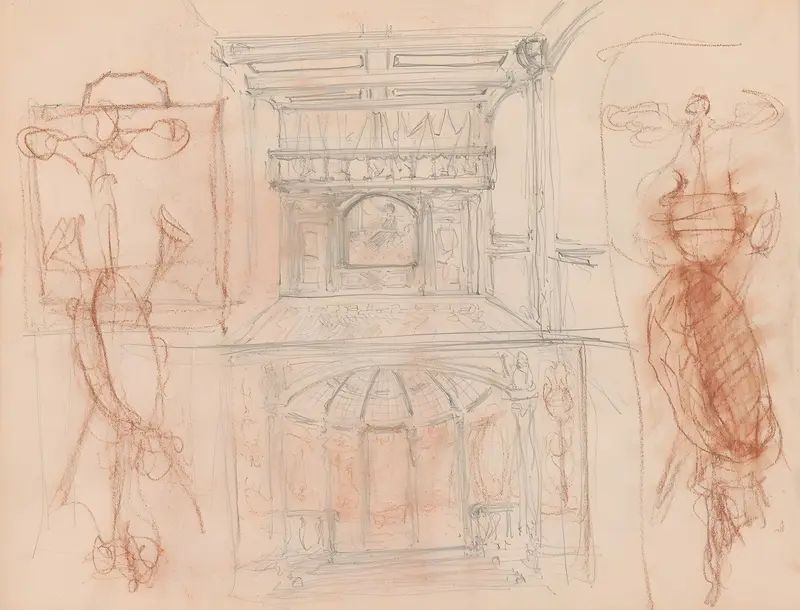
Architectural Elements
Jules Schmalzigaug
Blue, Red and Yellow Figures
Jules Schmalzigaug
Chiesa dei Gesuati in Venice
Jules Schmalzigaug
Café-chantant
Jules Schmalzigaug
Backyard
Jules Schmalzigaug



