
San Marco from the Piazetta — History & Facts
Few artists captured the restless spirit of early 20th-century Venice quite like Jules Schmalzigaug, a Belgian painter whose brief but dazzling career was shaped by his fascination with Italian light and movement. San Marco from the Piazetta stands out as a rare glimpse into Schmalzigaug’s Venetian period, when he wandered the city’s labyrinthine streets and grand squares, sketchbook in hand. Scholars still debate the exact date and circumstances of this work, but it is widely agreed that it reflects his immersion in the city before the outbreak of World War I, when Venice was a magnet for artists seeking inspiration from its shifting reflections and festive crowds. The painting captures the moment when the Piazzetta, that open threshold between the lagoon and the heart of Venice, comes alive under the gaze of the Basilica di San Marco.
Schmalzigaug chooses not the grand processions or ceremonies, but the daily rhythm of the square: figures drift across the flagstones, their forms blurred and energized, as if caught in the pulse of the city itself. The domes and mosaics of San Marco shimmer in the background, rendered with quick, luminous brushstrokes that dissolve architectural detail into pure sensation. This approach recalls the experiments of the Futurist painters, especially Giacomo Balla, yet Schmalzigaug’s palette remains softer, more attuned to the watery light of Venice than to the metallic dynamism of Milan. The physical history of San Marco from the Piazetta is shrouded in some uncertainty, as is often the case with Schmalzigaug’s Venetian works, many of which remained in private hands or were dispersed after his early death in 1917.
There is no record of a specific patron or exhibition for this painting, and its medium—likely oil or gouache on paper—remains unconfirmed. Today, it serves as a testament to Schmalzigaug’s unique position between the Futurist movement and the Impressionist legacy, a bridge between the old Venice of Canaletto and the new visions of modernity. Its presence in an online gallery allows viewers to rediscover an artist whose career was cut short, but whose images continue to vibrate with the life of the city he loved.
Sources: Wikidata Q21620130
More Artworks by Jules Schmalzigaug

A View of Scheveningen
Jules Schmalzigaug
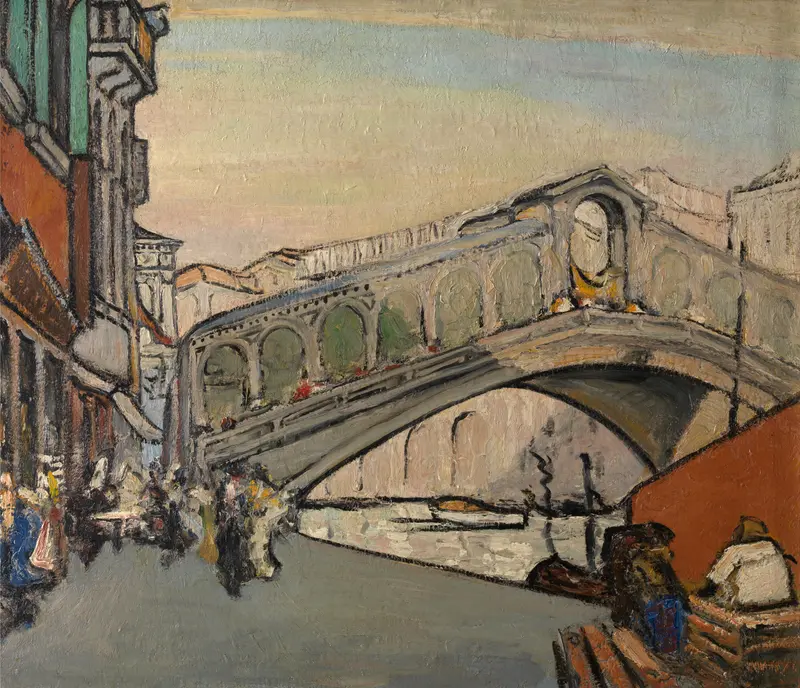
The Rialto Bridge in Venice
Jules Schmalzigaug

Abstract Bouquet
Jules Schmalzigaug
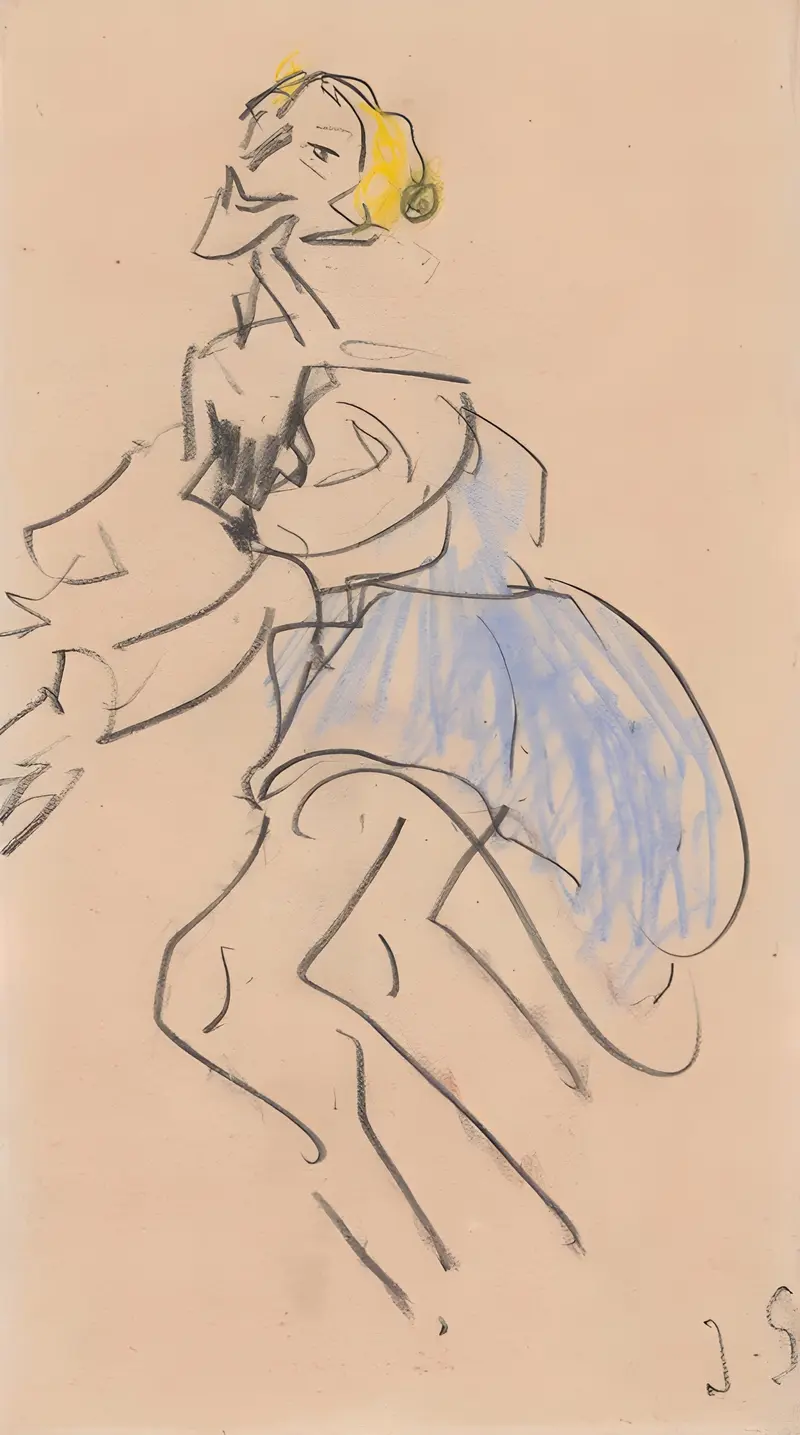
Dancer
Jules Schmalzigaug
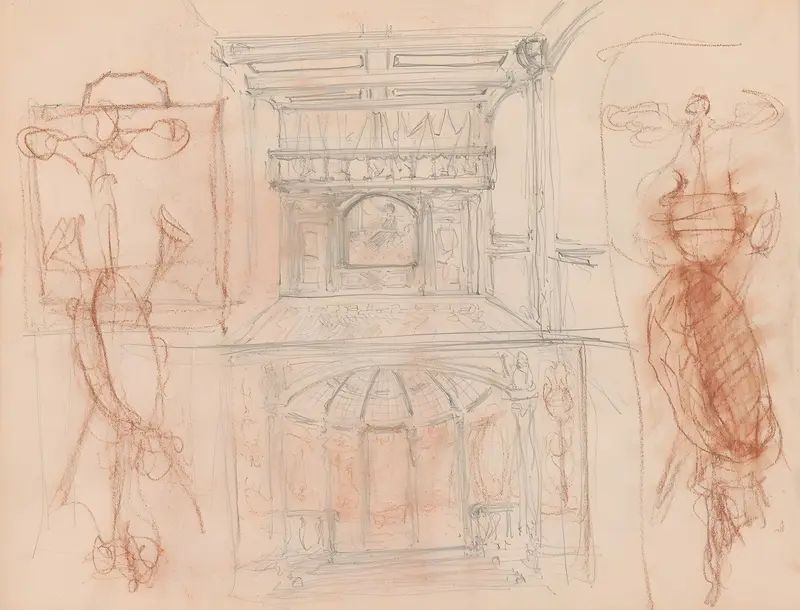
Architectural Elements
Jules Schmalzigaug
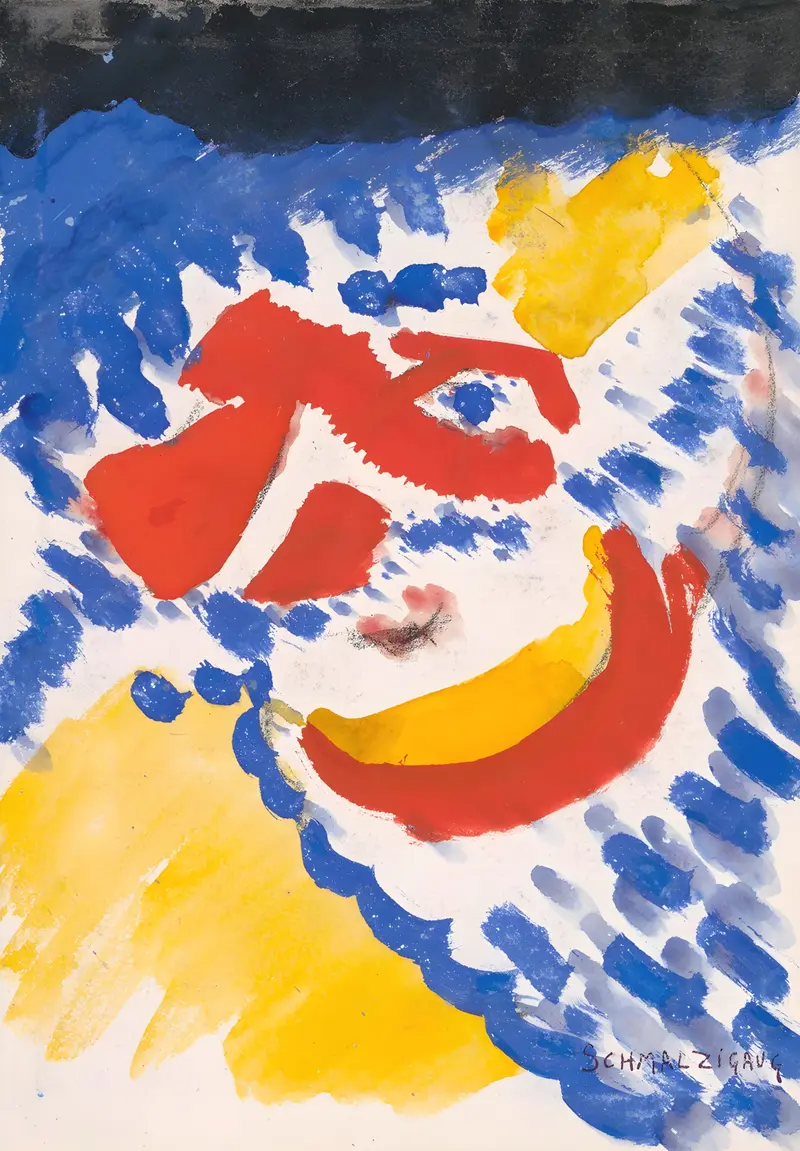
Blue, Red and Yellow Figures
Jules Schmalzigaug
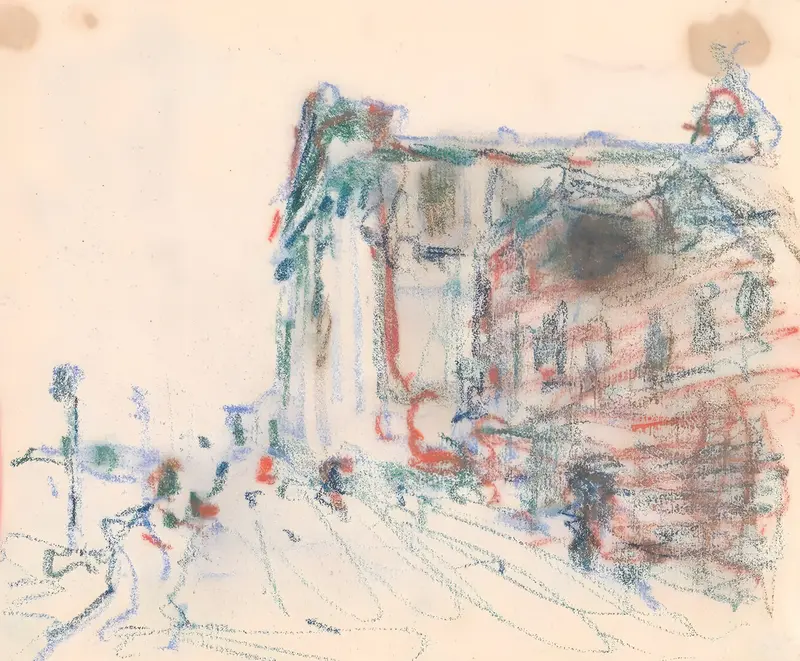
Chiesa dei Gesuati in Venice
Jules Schmalzigaug
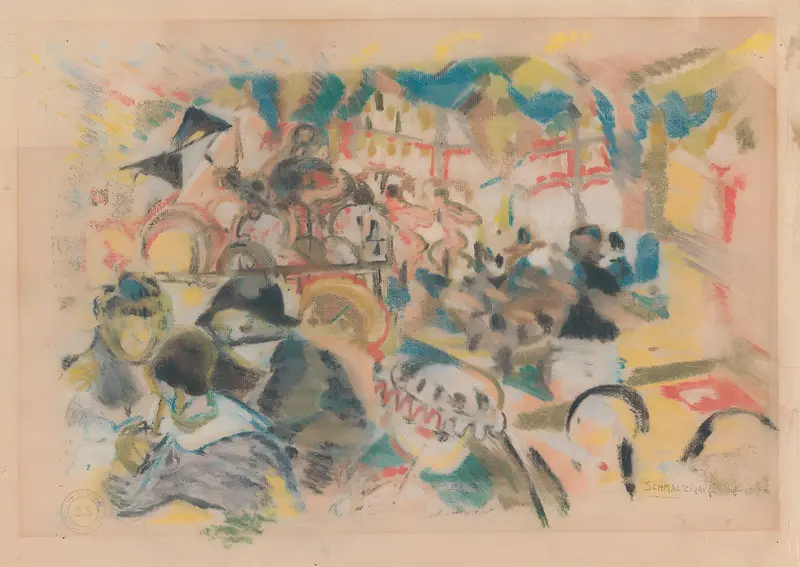
Café-chantant
Jules Schmalzigaug
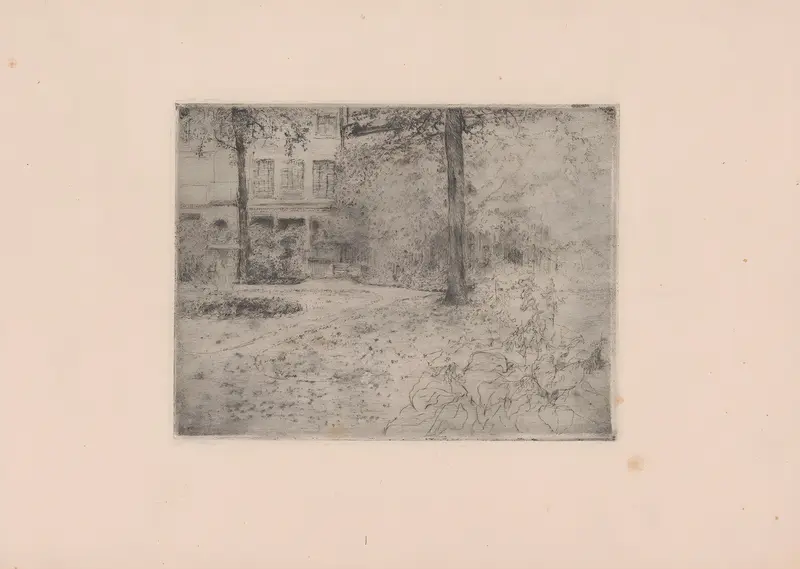
Backyard
Jules Schmalzigaug
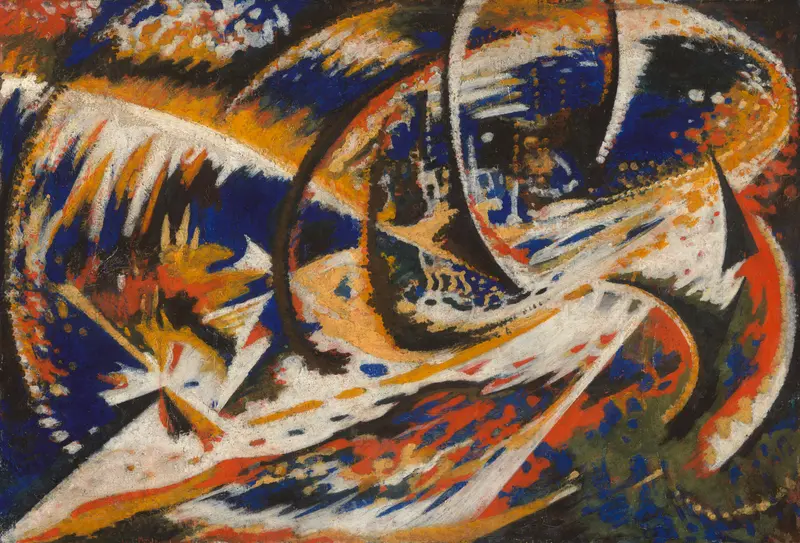
Speed
Jules Schmalzigaug
More Landscape Art

The Starry Night
Vincent van Gogh

View of Delft
Johannes Vermeer

Water Lilies
Claude Monet

The Grand Canal, Venice, looking north-west from the Ca' Corner to the Ca' Contarini degli Scrigni, with the campanile of Santa Maria della Carità
Canaletto

Windsor Castle
Canaletto

The Grand Canal looking North-East from the Palazzo Dolfin-Manin to the Rialto Bridge
Canaletto