
Dancer — History & Facts
When Dancer emerged in the early twentieth century, it marked one of the rare moments when Jules Schmalzigaug—a Belgian artist closely associated with the Futurist movement—turned his gaze to the kinetic world of performance. Schmalzigaug, who spent formative years in Italy, was among the few non-Italians to be welcomed into the Futurist circle, and his fascination with movement and modernity is palpable here. Unlike many Futurist works that trumpet the machine age, this painting captures the human body in motion, suggesting that the energy of the new century could be found not only in engines but in the living, breathing dancer.
The exact date and circumstances of the painting's creation remain uncertain, adding to its sense of mystery and allure. The scene is all rhythm and whirl: a figure, arms flung wide, seems to dissolve into a cascade of color and light. The dancer’s body is fragmented, as if caught in the act of spinning, her limbs and dress breaking apart into vibrant arcs and curves. This visual language, typical of Futurism, seeks to convey not just the appearance of movement but its sensation—a burst of energy radiating outward.
The palette, dominated by electric blues and fiery oranges, amplifies the dynamism, while the lack of clear boundaries between figure and background blurs the line between performer and environment. Compared to Edgar Degas’s more static ballet scenes, Schmalzigaug’s approach is less about the discipline of dance and more about its raw, uncontainable force. Little is known about the early history of Dancer, and no records survive to indicate its first owner or exhibition. The painting’s medium is also undocumented, though Schmalzigaug frequently worked in oil and gouache.
After the artist’s untimely death in 1917, his work fell into relative obscurity, only to be rediscovered decades later as interest in the international reach of Futurism grew. Today, Dancer is recognized as a testament to Schmalzigaug’s unique vision—one that bridged Belgian lyricism and Italian avant-garde energy—and stands as a rare surviving example of his exploration of the human form in motion.
More Artworks by Jules Schmalzigaug

A View of Scheveningen
Jules Schmalzigaug
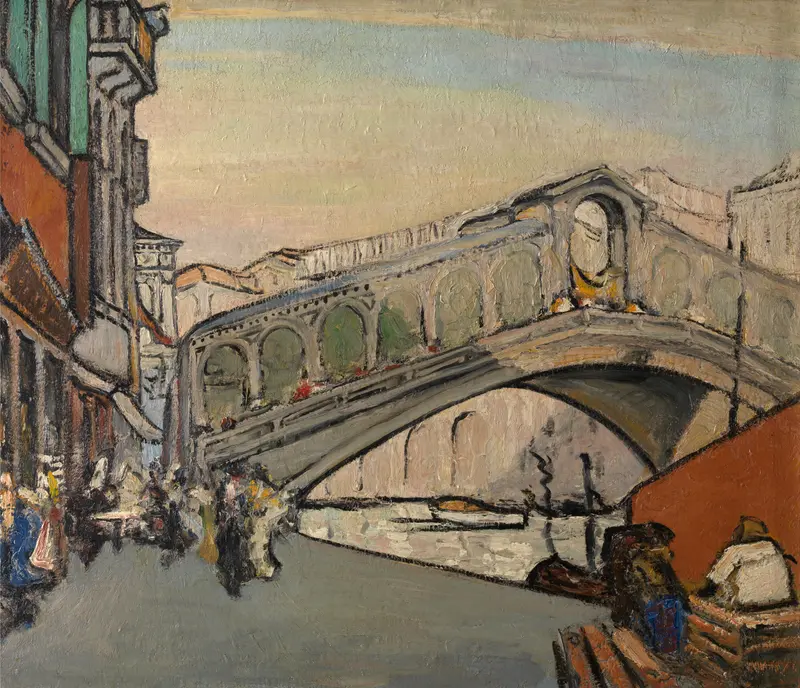
The Rialto Bridge in Venice
Jules Schmalzigaug

Abstract Bouquet
Jules Schmalzigaug
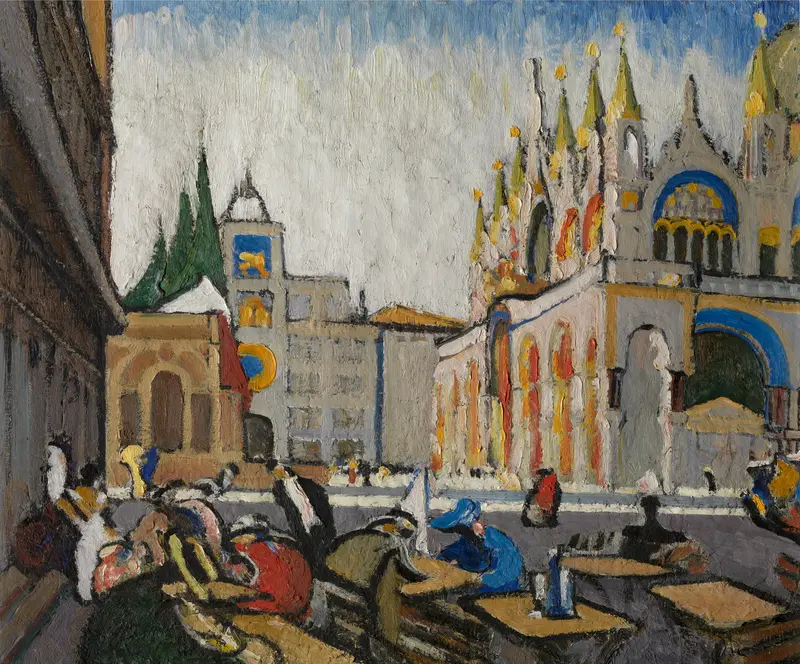
San Marco from the Piazetta
Jules Schmalzigaug
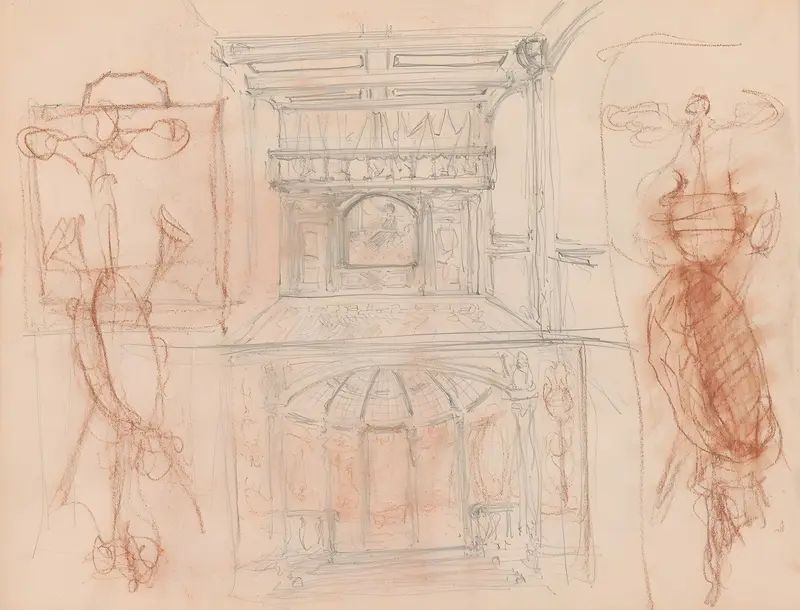
Architectural Elements
Jules Schmalzigaug
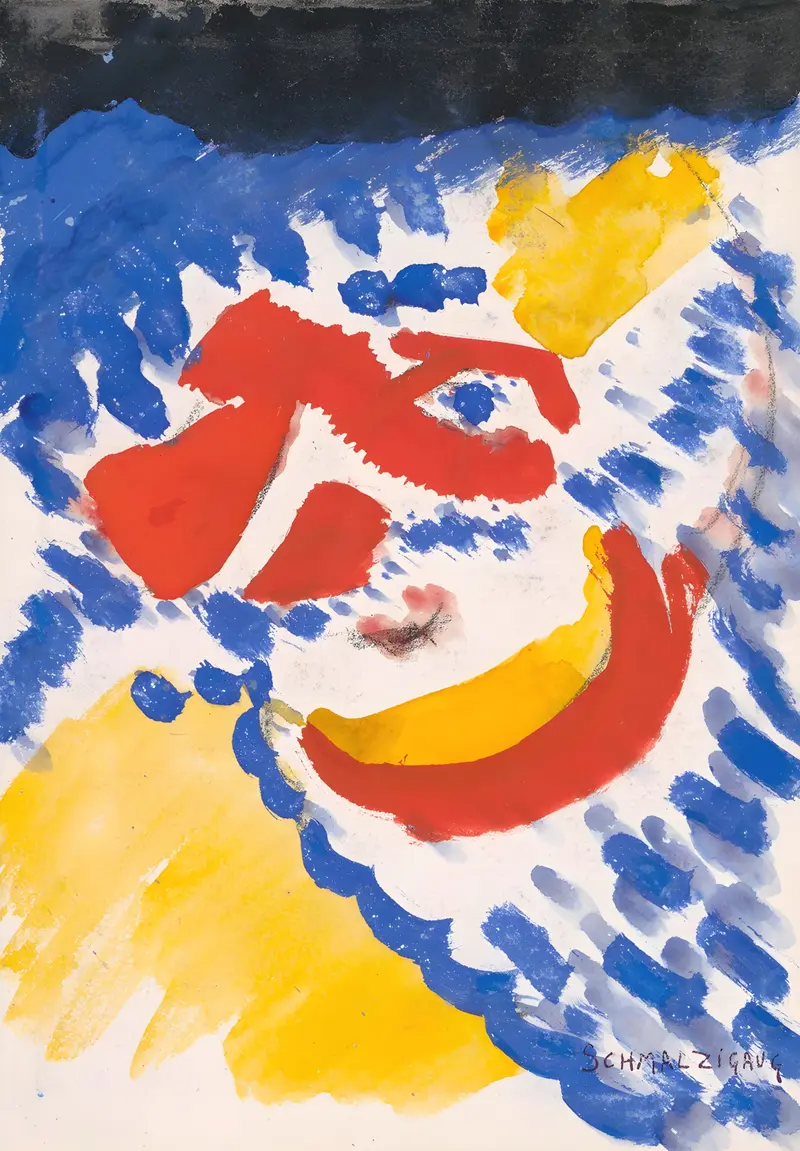
Blue, Red and Yellow Figures
Jules Schmalzigaug
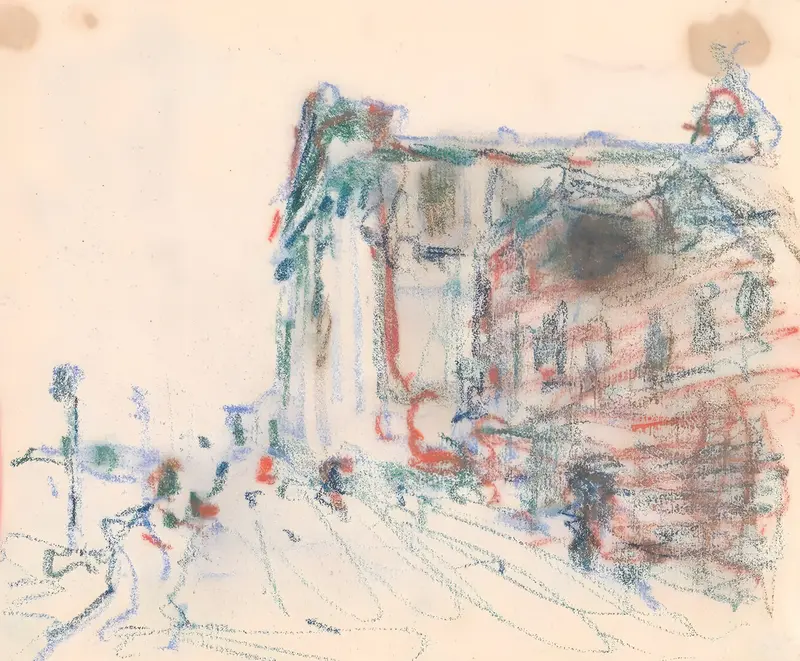
Chiesa dei Gesuati in Venice
Jules Schmalzigaug
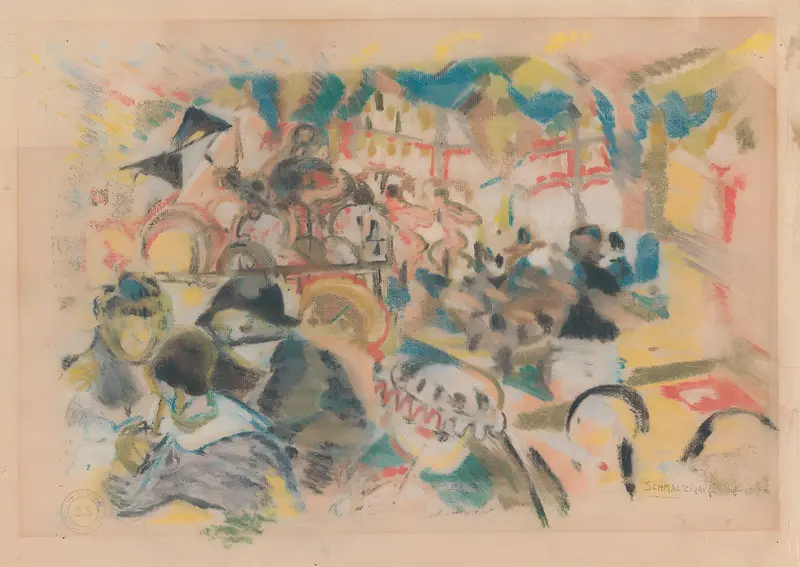
Café-chantant
Jules Schmalzigaug
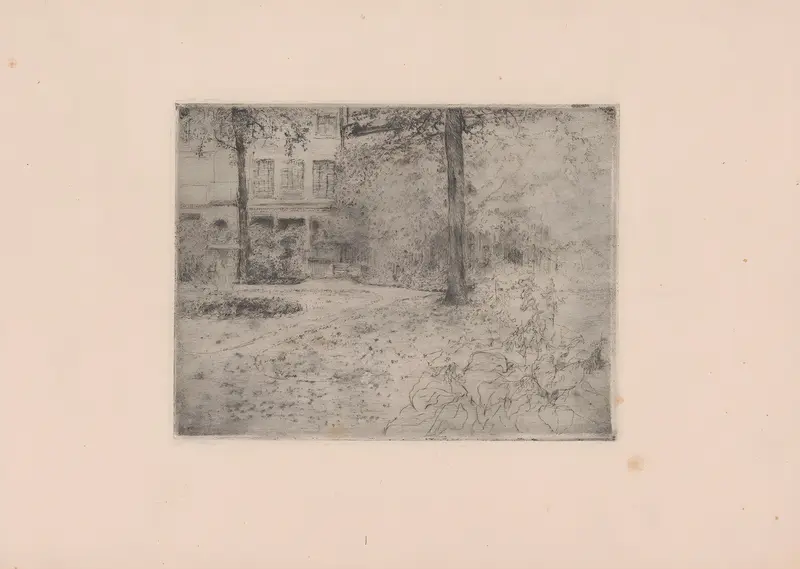
Backyard
Jules Schmalzigaug
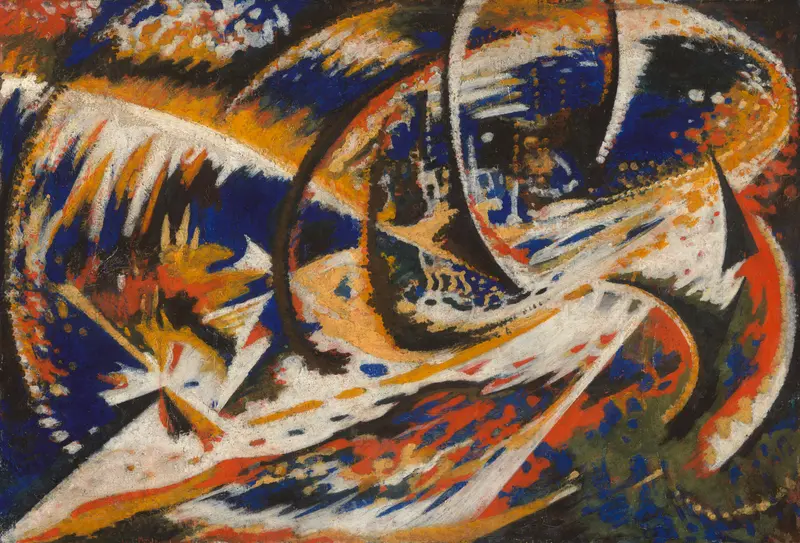
Speed
Jules Schmalzigaug



