
Coast of Grand Manan Island, Canada — History & Facts
Could beauty survive in a century of chaos? Frederic Edwin Church’s Coast of Grand Manan Island, Canada invites us to ponder this question as it reveals the serene yet fragile nature of existence. Look to the left, where rugged cliffs rise dramatically, silhouetted against an expansive sky streaked with hues of lavender and gold. The interplay of light—glistening on the water and casting shadows on the rocks—draws us into the tranquil embrace of the scene. Notice how the painter’s meticulous brushwork captures each wave, creating a rhythmic harmony that belies the tumult of the world outside this idyllic moment. Within the canvas, contrasts abound: the stability of the land meets the fluidity of the ocean, mirroring the tension between permanence and transience.
The soft, inviting colors evoke warmth and comfort, yet the distant storm clouds hint at the uncertainty that looms. This delicate balance suggests that beauty exists not only in the moment but also as a fleeting whisper of what is to come. In 1851, Church was deeply engaged in his exploration of landscape painting, influenced by the burgeoning Hudson River School. As America grappled with social and political upheaval, and the industrial revolution transformed the environment, he sought solace in nature’s grandeur.
Creating this piece on the coast of Canada, he captured not just a view, but an emotional refuge, reflecting both personal and collective yearnings for stability amid chaos.
More Artworks by Frederic Edwin Church
Browse all →
Niagara
Frederic Edwin Church
Cotopaxi
Frederic Edwin Church
Cotopaxi
Frederic Edwin Church
Niagara Falls, from the American Side
Frederic Edwin Church
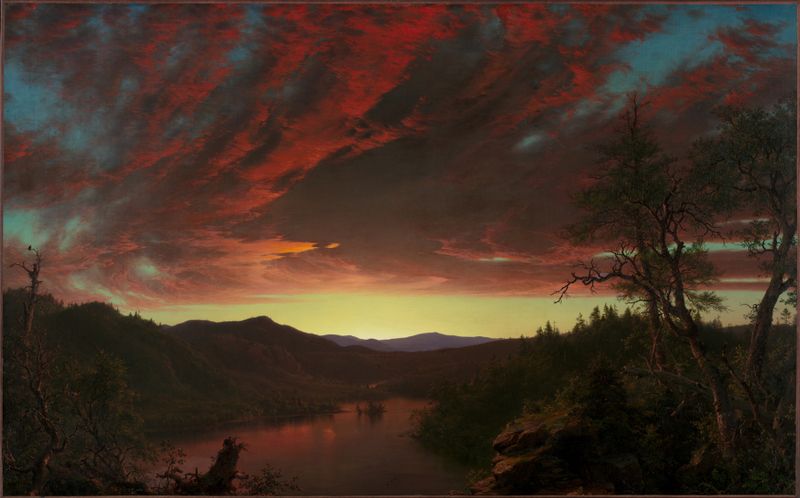
Twilight in the Wilderness
Frederic Edwin Church
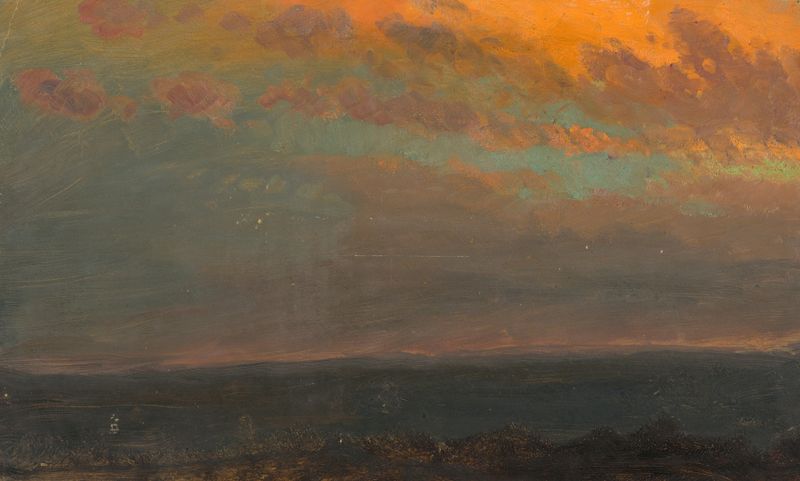
Hudson Valley at Sunset
Frederic Edwin Church
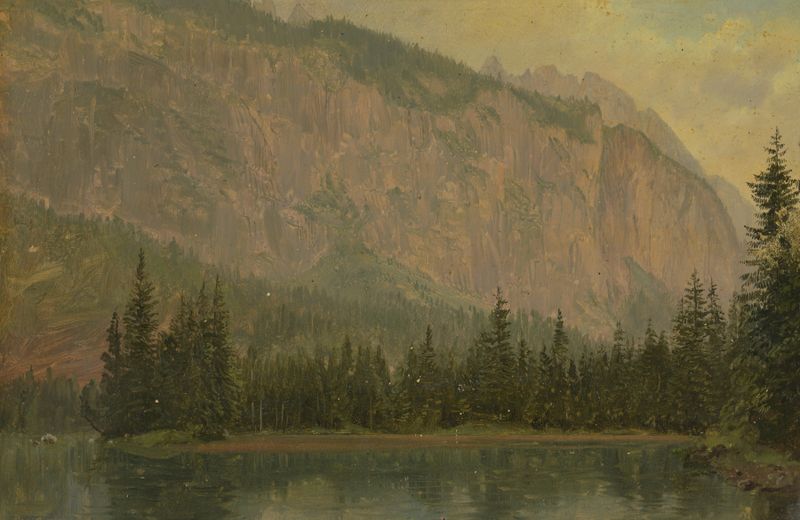
The Hintersee, near Berchtesgaden, Bavaria
Frederic Edwin Church
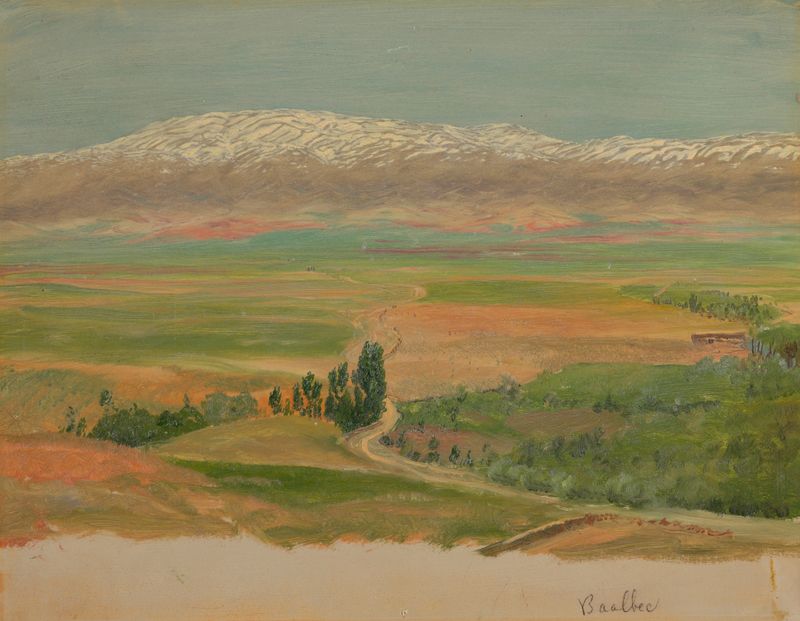
Mountains near Baalbec
Frederic Edwin Church
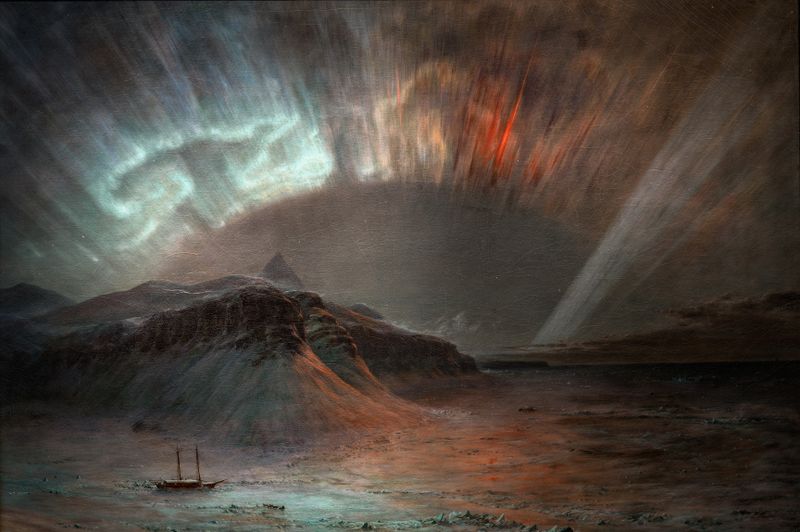
Aurora Borealis
Frederic Edwin Church
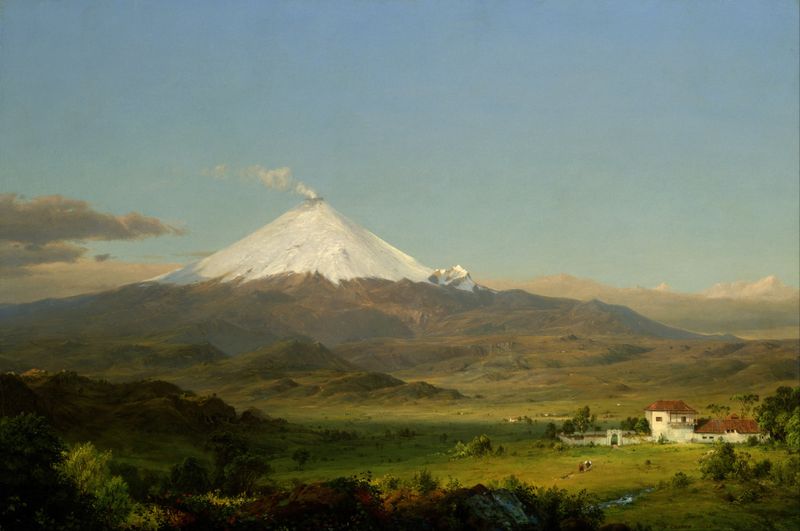
Cotopaxi
Frederic Edwin Church





