Coastal Scene. Motif from Varberg — History & Facts
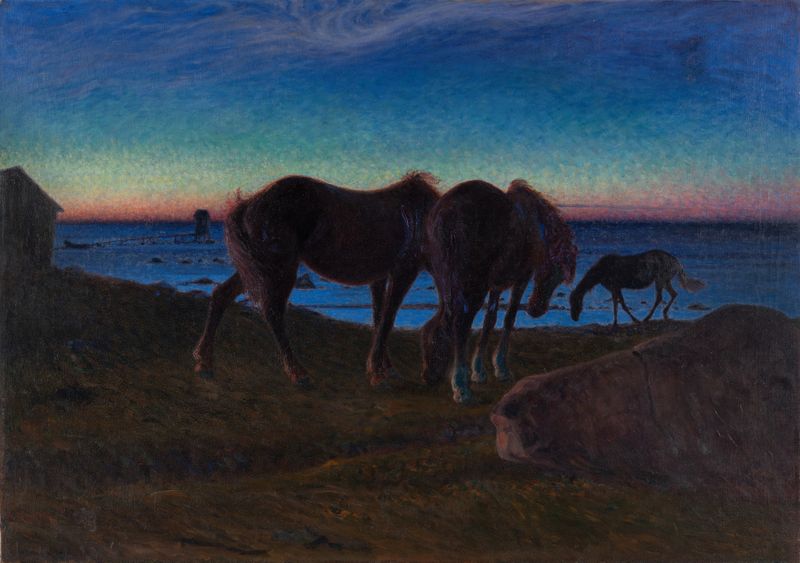
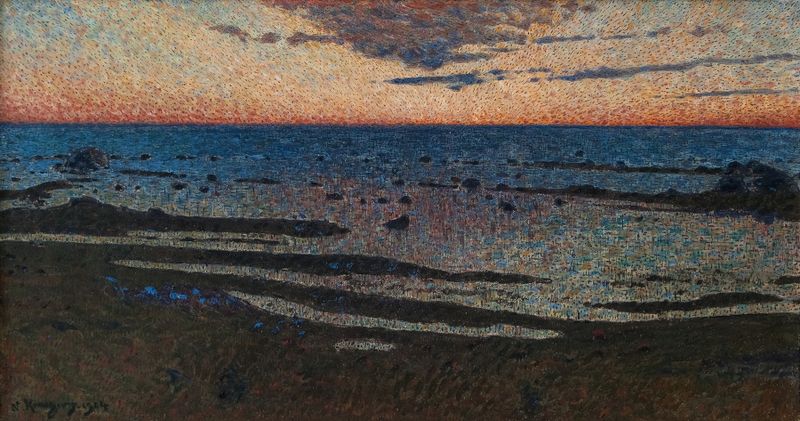
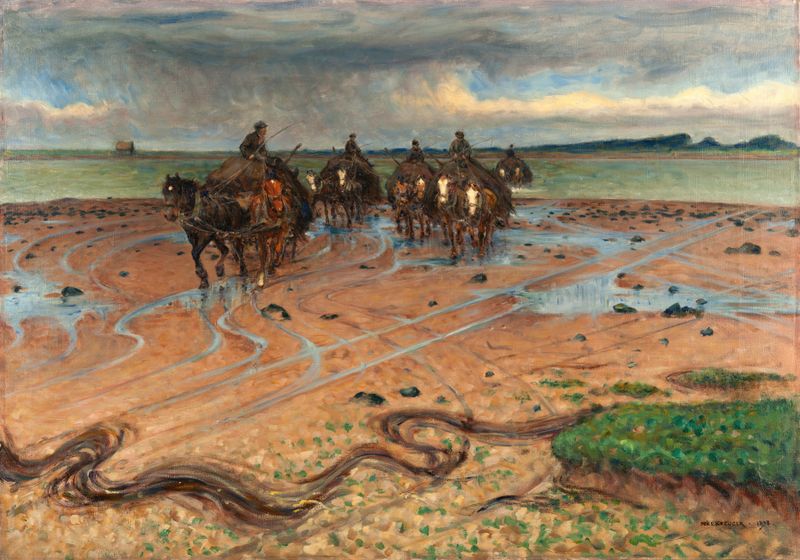
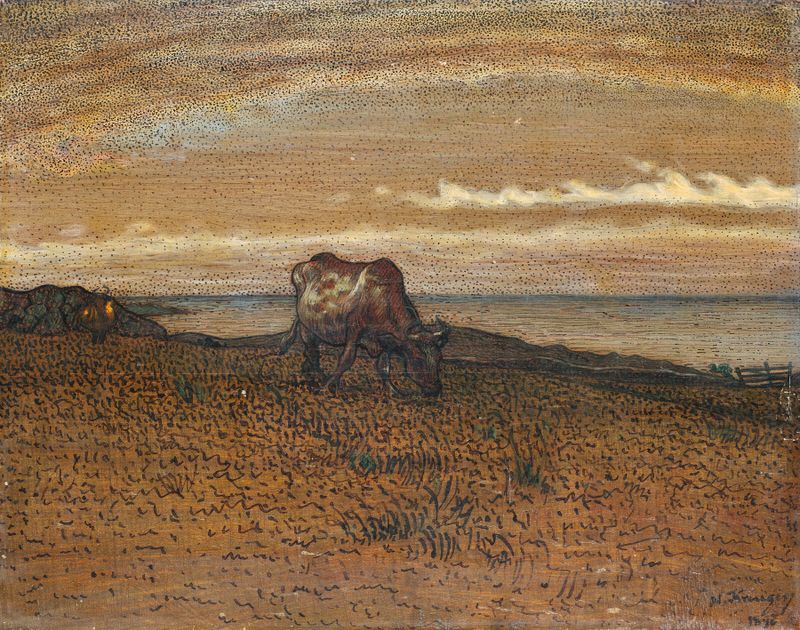
Can beauty exist without sorrow? In the gentle embrace of a coastal landscape, the viewer is invited to ponder the delicate balance between serenity and the weight of forgotten histories. Look closely at the horizon where sky and sea converge; the clear blues and soft whites reflect an idyllic moment. The light dances across the water, illuminating the textured waves that whisper of both calm and turmoil. Notice how the distant cliffs frame the scene, their imposing presence suggesting the struggles that lie beneath this tranquil facade.
Kreuger’s use of soft brushstrokes and a muted palette evokes an atmosphere steeped in nostalgia, urging one to linger in this fleeting beauty. Yet, beneath this idyllic portrayal lie contrasts that invite deeper reflection. The gentle lapping of waves against the shore resonates with a quiet desperation, as if echoing the longing for a past irrevocably lost. The muted colors, while serene, simultaneously hint at the shadows of history that linger in the air, whispering tales of those who have come before.
The scene speaks to a legacy, one that intertwines joy and sorrow, suggesting that each moment of beauty is tinged with the weight of memory. In 1892, Kreuger painted this work during a pivotal period in his life, while living in Sweden. Emerging as a key figure in the Nordic art movement, he sought to capture the transient beauty of nature and the human experience. Amidst the changing tides of the art world, where romanticism began to yield to realism, this piece stands as a bridge between those ideals, immortalizing both the splendor and the complexities of life along the coast.