
Composition XVIII in Three Parts — History & Facts
Three squares, three variations, one relentless logic: Composition XVIII in Three Parts by Theo van Doesburg pulls the viewer into a game of rhythm and order. The eye is caught first by the bold orange, blue, and black planes—each framed, each echoing the others, yet none identical. The geometry is strict but not monotonous; each composition is a fresh permutation, a new answer to the same visual question.
Van Doesburg’s arrangement invites us to compare, to search for a system, to wonder what would happen if the sequence continued. Every color block here serves a purpose. Orange commands attention, blue cools it, black and grey anchor the compositions with weight and calm. The forms seem to push against their frames, testing the limits of the square.
The repetition is not mechanical—subtle shifts in the placement and proportion of each color field create a sense of movement and conversation between the panels. This is not simply decoration; it is a visual argument about balance, contrast, and the possibilities of pure abstraction. Created in the spring of 1920, this work belongs to a world in which artists like van Doesburg were inventing new languages for a new society. The De Stijl movement, with its radical reduction to line, color, and geometry, sought to express harmony and universality in the aftermath of a fractured Europe.
While history has kept few traces of the journey of this particular piece, its presence in the Kröller-Müller Museum’s collection, as referenced in Evert van Straaten’s 1994 catalogue, places it firmly within the legacy of early modernism. Look again: each square is a chapter, each color a voice in a conversation still unfolding.
More Artworks by Theo van Doesburg
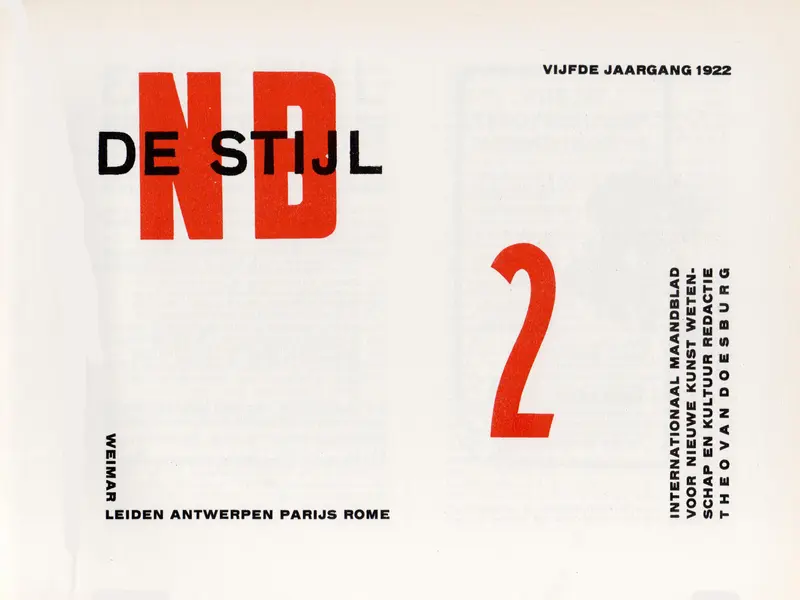
De Stijl, vol. 5, no. 2 (cover)
Theo van Doesburg
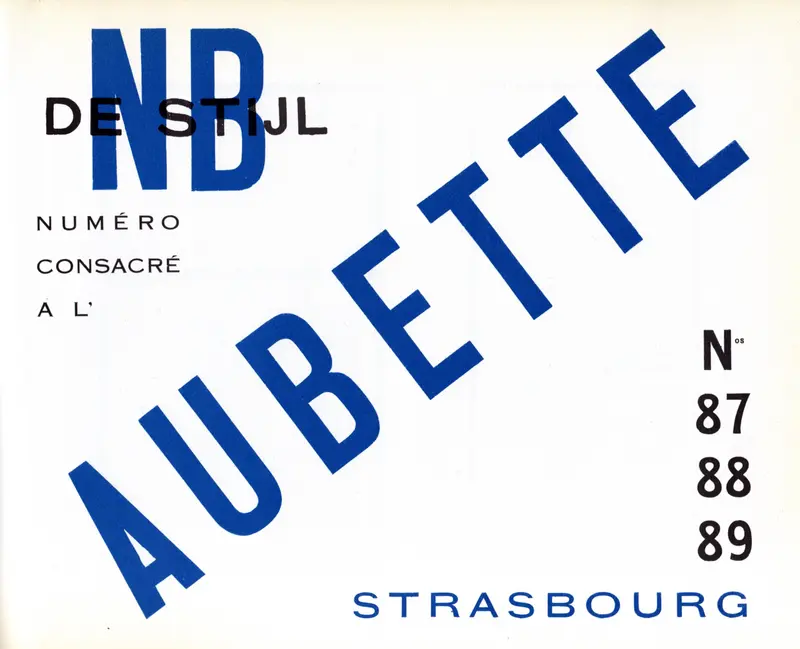
De Stijl, nos. 87–89: Aubette Issue (cover)
Theo van Doesburg
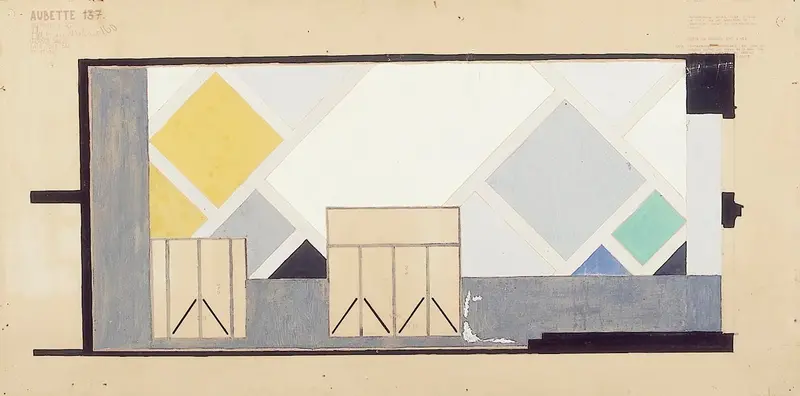
Aubette Ciné-Dancing: Final Color Design for a Wall
Theo van Doesburg
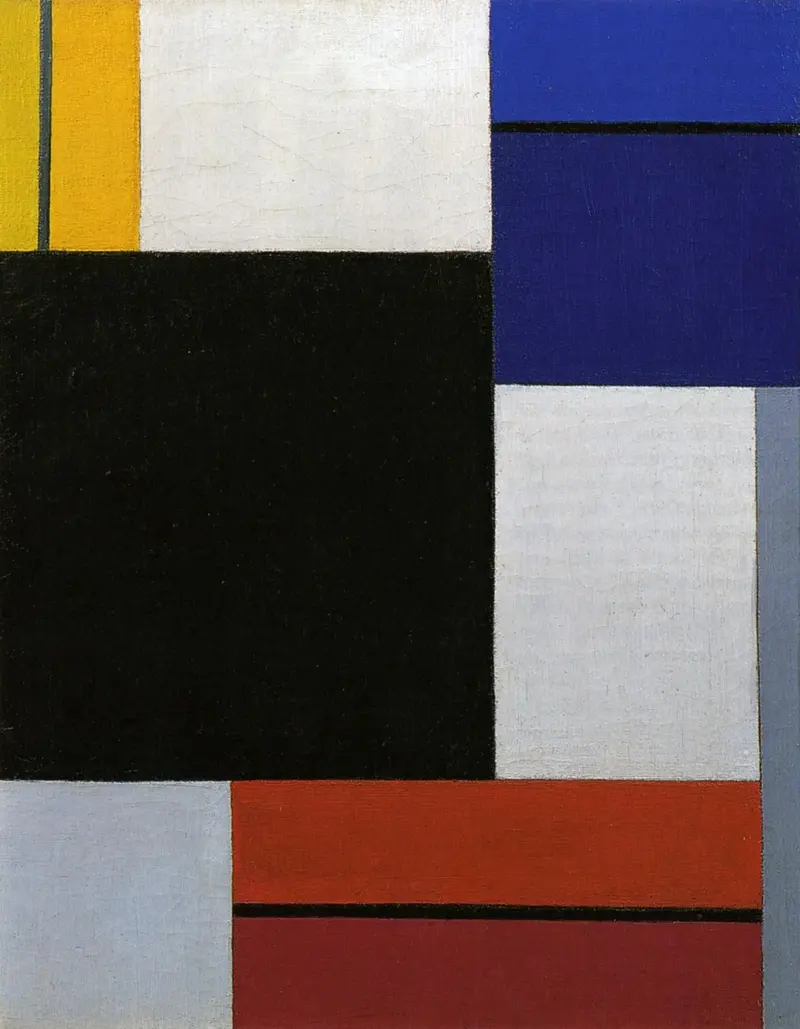
Composition XXI
Theo van Doesburg
Pure Painting
Theo van Doesburg
Counter-Composition V
Theo van Doesburg
Counter-Composition XIV
Theo van Doesburg
Simultaneous Counter-Composition
Theo van Doesburg
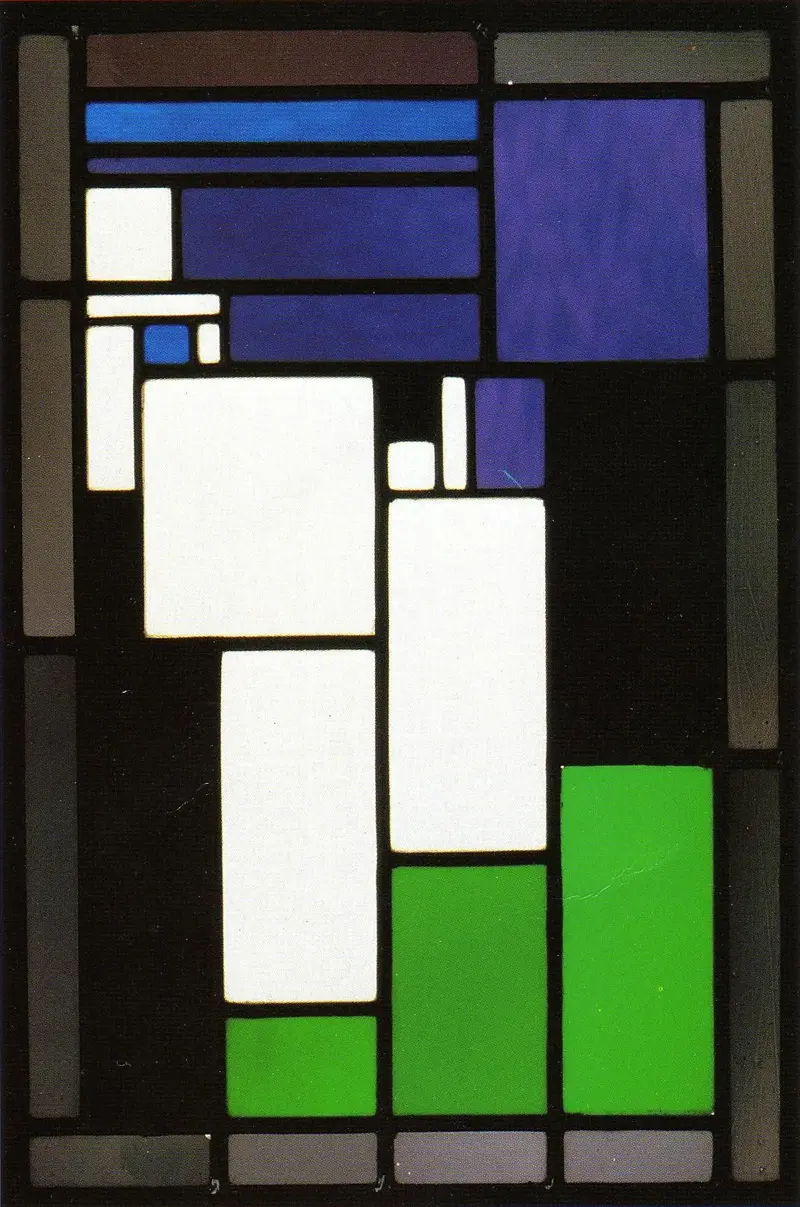
Stained-Glass Composition: Female Head
Theo van Doesburg
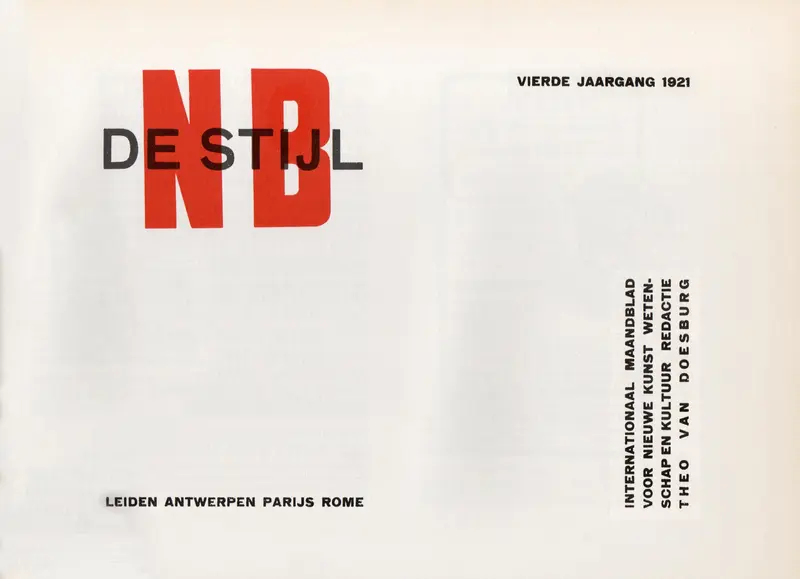
De Stijl, vol. 4, no. 2 (cover)
Theo van Doesburg





