Coniferae (Conifers) — History & Facts
A forest of forms unfolds across the page, each cone and branch rendered with a precision that borders on reverence. In Coniferae (Conifers), the eye is drawn first to the dense, armored spiral at the center—a botanical fortress, bristling with scales that seem to ripple outward in mathematical order. Around it, cones and sprigs radiate like a constellation, each one distinct in texture and architecture: the knobby, clustered fruits of juniper; the delicate, fanlike sprays of cypress; the geometric armor of a pine cone.
Every line and shadow serves a purpose, guiding the viewer to marvel not only at the diversity of coniferous life, but at the hidden order that unites them. The monochrome palette sharpens the focus, stripping away distraction and inviting close study—this is a page meant for wonder as much as for science. Created in 1904 for Kunstformen der Natur, Ernst Haeckel’s illustration stands at the crossroads of art and natural history, a testament to an era when the mysteries of nature were being catalogued with both rigor and awe. Such works were not merely decorative; they were tools for education and inspiration, commissioned for scientists, students, and the curious public eager to understand the living world in an age of discovery.
Haeckel’s plates, meticulously labeled and arranged, reflect a time when the boundaries between scientific illustration and fine art were porous, and when the act of looking closely at nature was itself a kind of devotion. The world that produced this image was one of encyclopedic ambition, and its legacy endures in the way we still turn to images like this—searching for the patterns that link all living things.
More Artworks by Ernst Haeckel
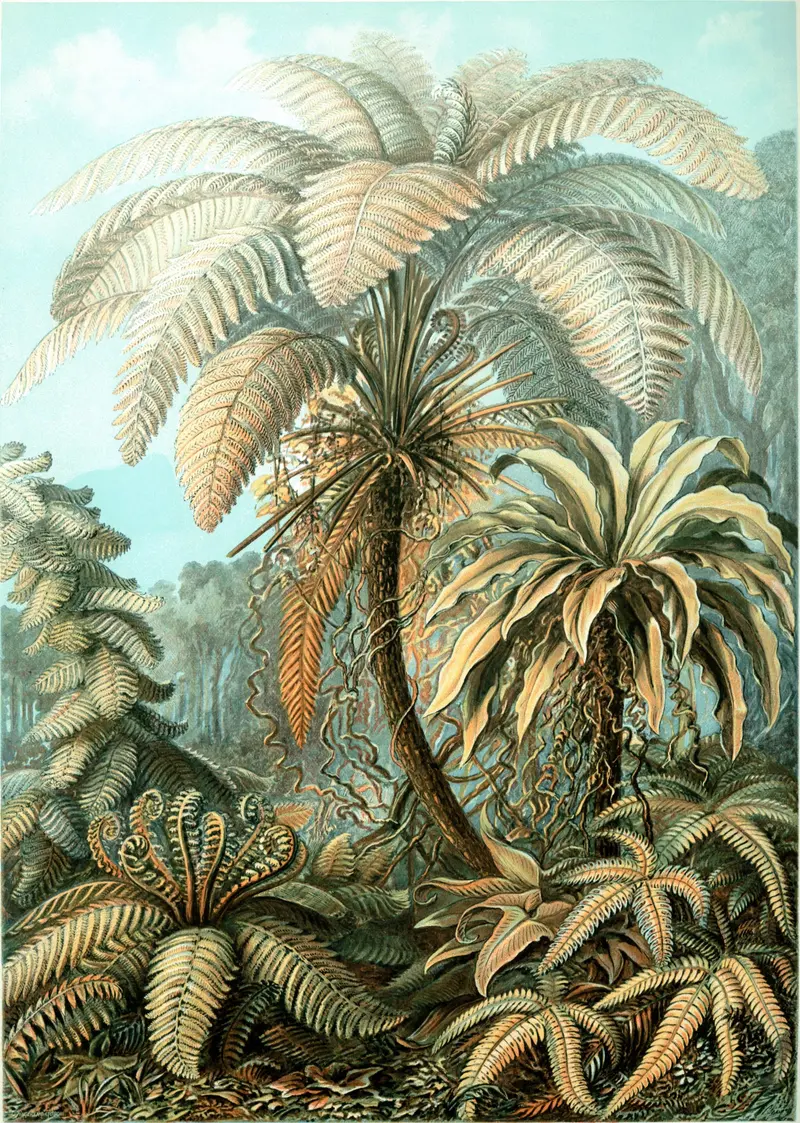
Filicinae (Ferns)
Ernst Haeckel
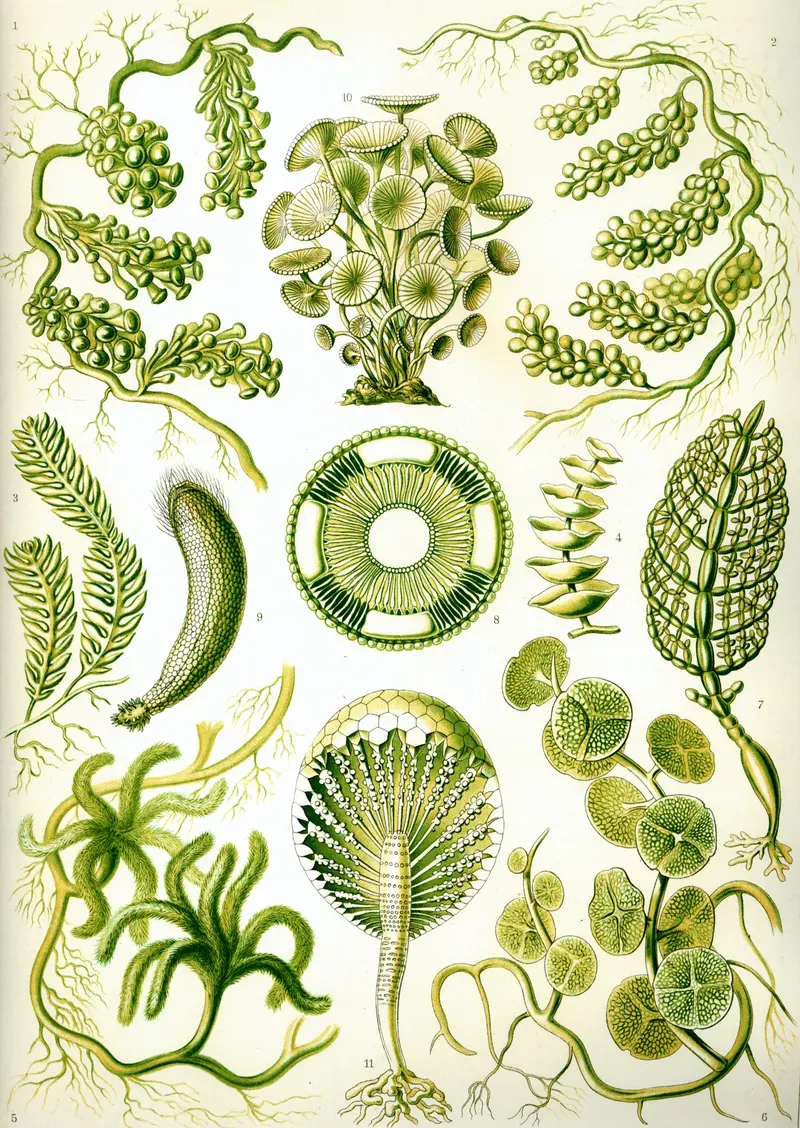
Siphoneae (Green Algae)
Ernst Haeckel

Cirripedia (Barnacles)
Ernst Haeckel

Actiniae (Sea Anemones)
Ernst Haeckel
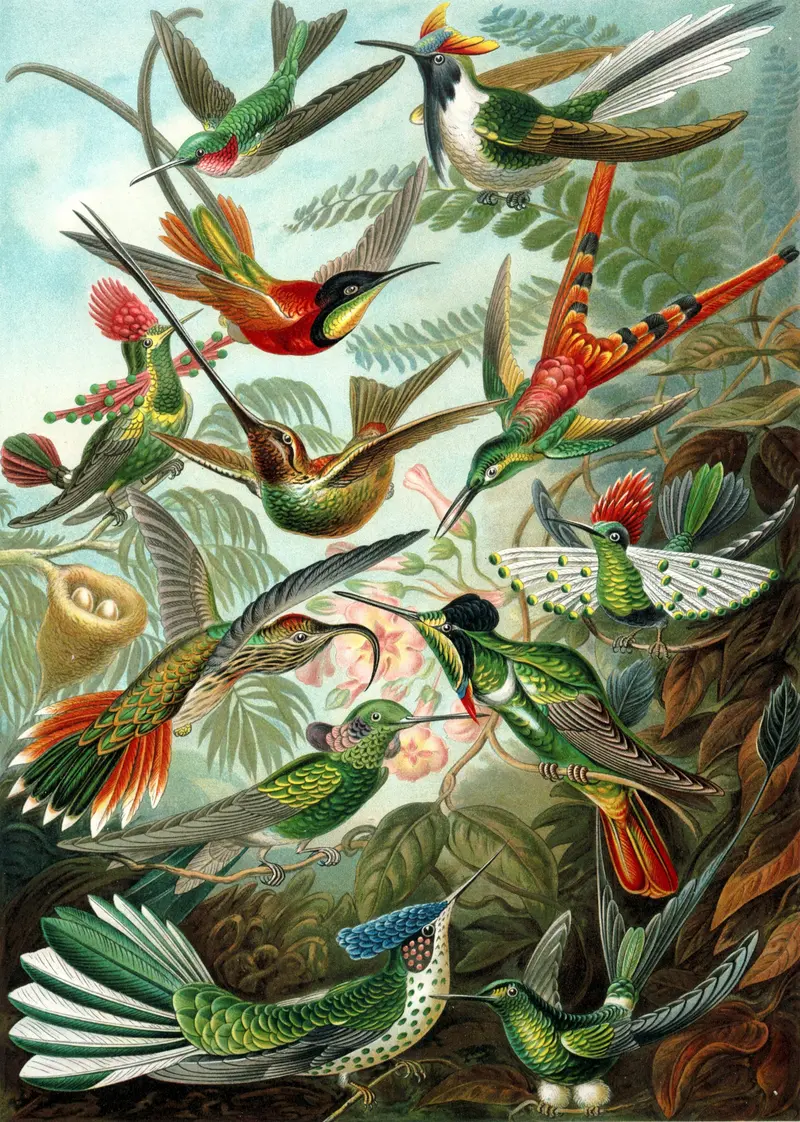
Trochilidae (Hummingbirds)
Ernst Haeckel
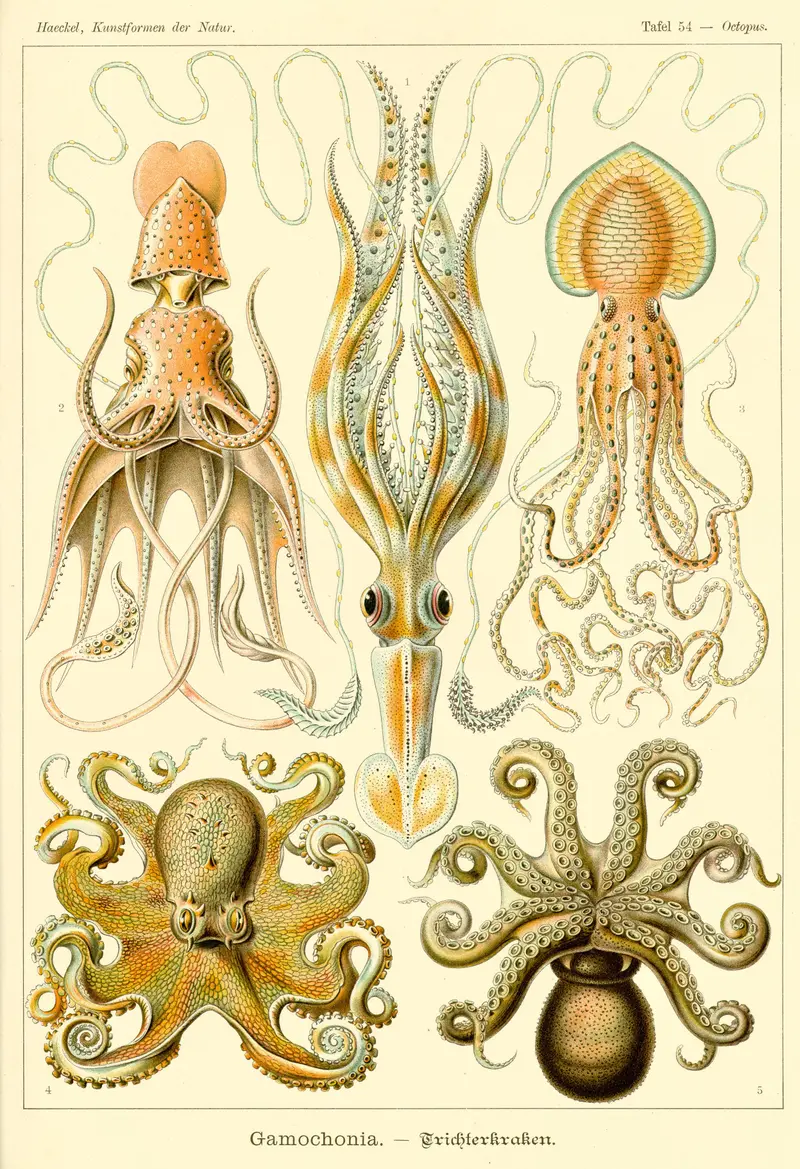
Gamochonia (Cephalopods)
Ernst Haeckel
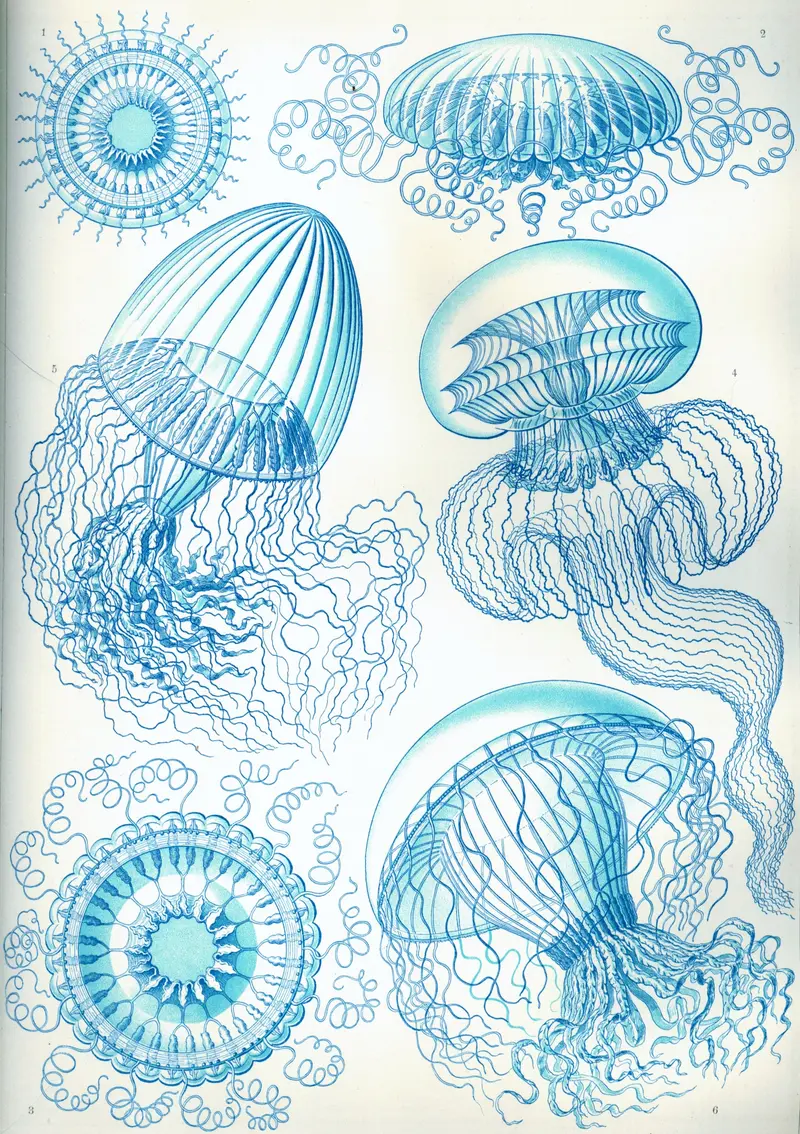
Leptomedusae (Jellyfish)
Ernst Haeckel
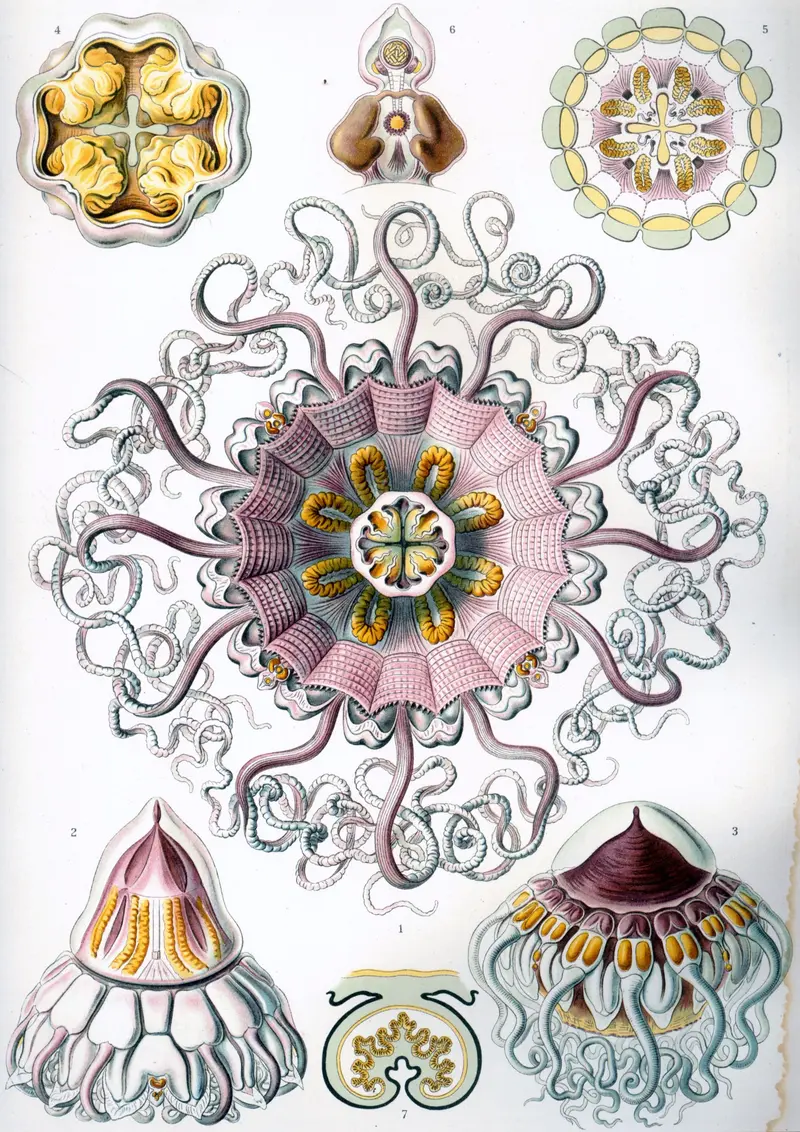
Peromedusae (Jellyfish)
Ernst Haeckel
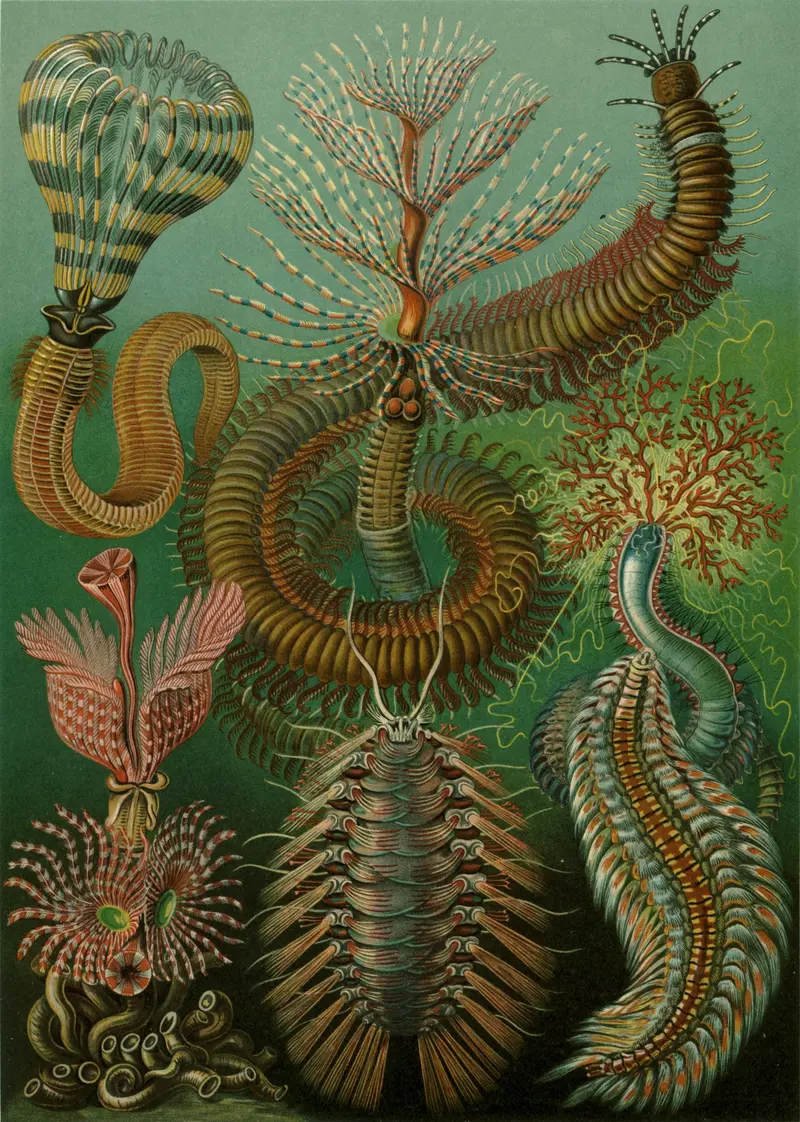
Chaetopoda (Bristle Worms)
Ernst Haeckel
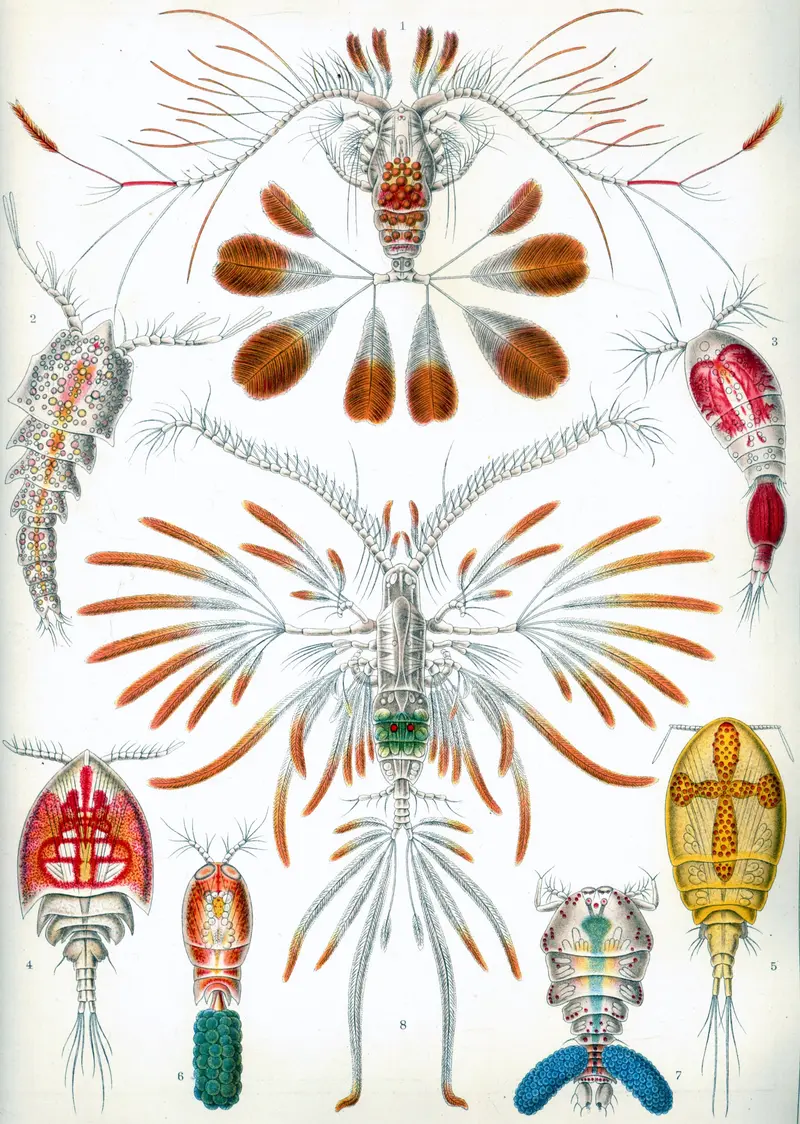
Copepoda (Copepods)
Ernst Haeckel