
Corner of the Terrace, Versailles — History & Facts
What if beauty was never meant to be finished? In the luminous corner of a terrace, the moment stretches between the known and the unknown, where light dances on the edge of possibility. Look to the left at the elegant archway framed by lush foliage, revealing a glimpse of the meticulously arranged gardens beyond. Notice how the soft brushstrokes create an inviting warmth, allowing the sunlight to filter through the leaves, casting delicate shadows on the stone surface. The palette of greens and soft pastels invites the viewer into this serene moment, drawing your eye toward the harmony of nature and architectural elegance. Yet beneath this tranquil surface lies a juxtaposition of permanence and transience.
The stillness of the scene evokes an air of nostalgia, as if time itself hesitates, caught in the beauty of a fleeting moment. The vibrant blossoms, blooming defiantly against the rigid lines of the terrace, symbolize the ever-present tension between nature's wildness and human order, a reminder that even in beauty, there lies a whisper of longing. James Carroll Beckwith created this work in 1911 while living in Paris, a city buzzing with artistic innovation and cultural fervor. During this period, he was deeply influenced by the Impressionist movement, seeking to capture the essence of ephemeral beauty in the world around him.
As he painted the terrace of Versailles, he immersed himself in a landscape rich with history, reflecting his own journey as an artist in a time of transformation.
More Artworks by James Carroll Beckwith
Browse all →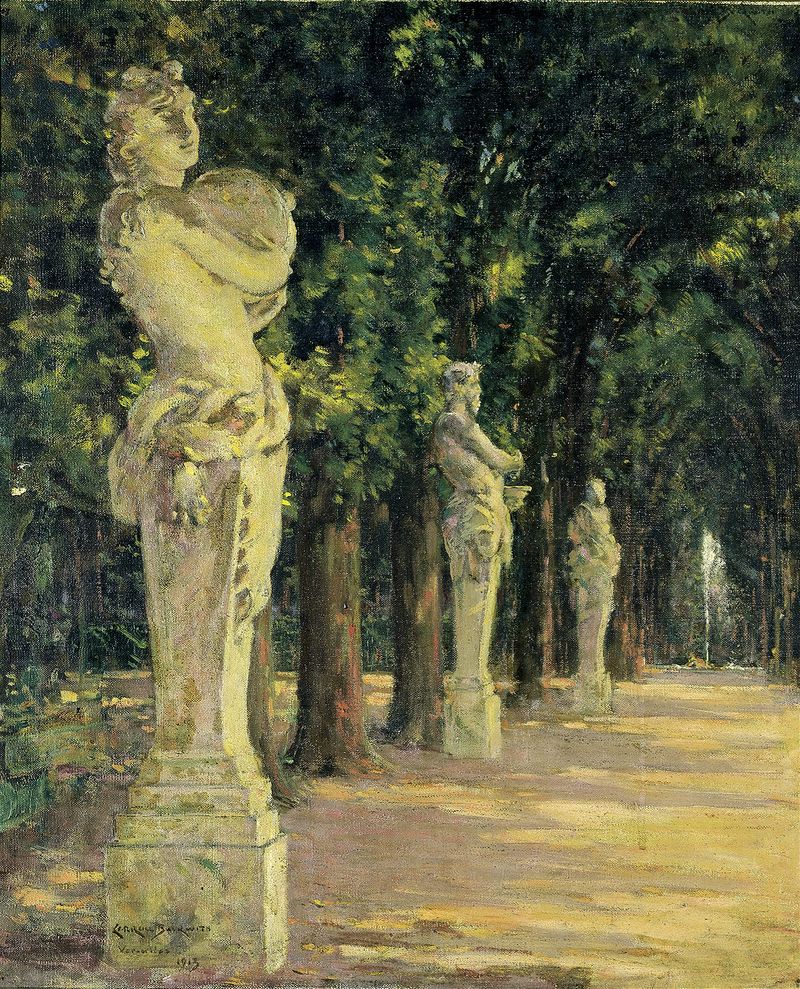
Allee de l’Ete, Versailles
James Carroll Beckwith

Carrefour at the End of the Tapis Vert, Versailles
James Carroll Beckwith

Bassin de Neptune, Versailles
James Carroll Beckwith

Nymph and Cupid
James Carroll Beckwith

George Martin Lane (1823-1897)
James Carroll Beckwith
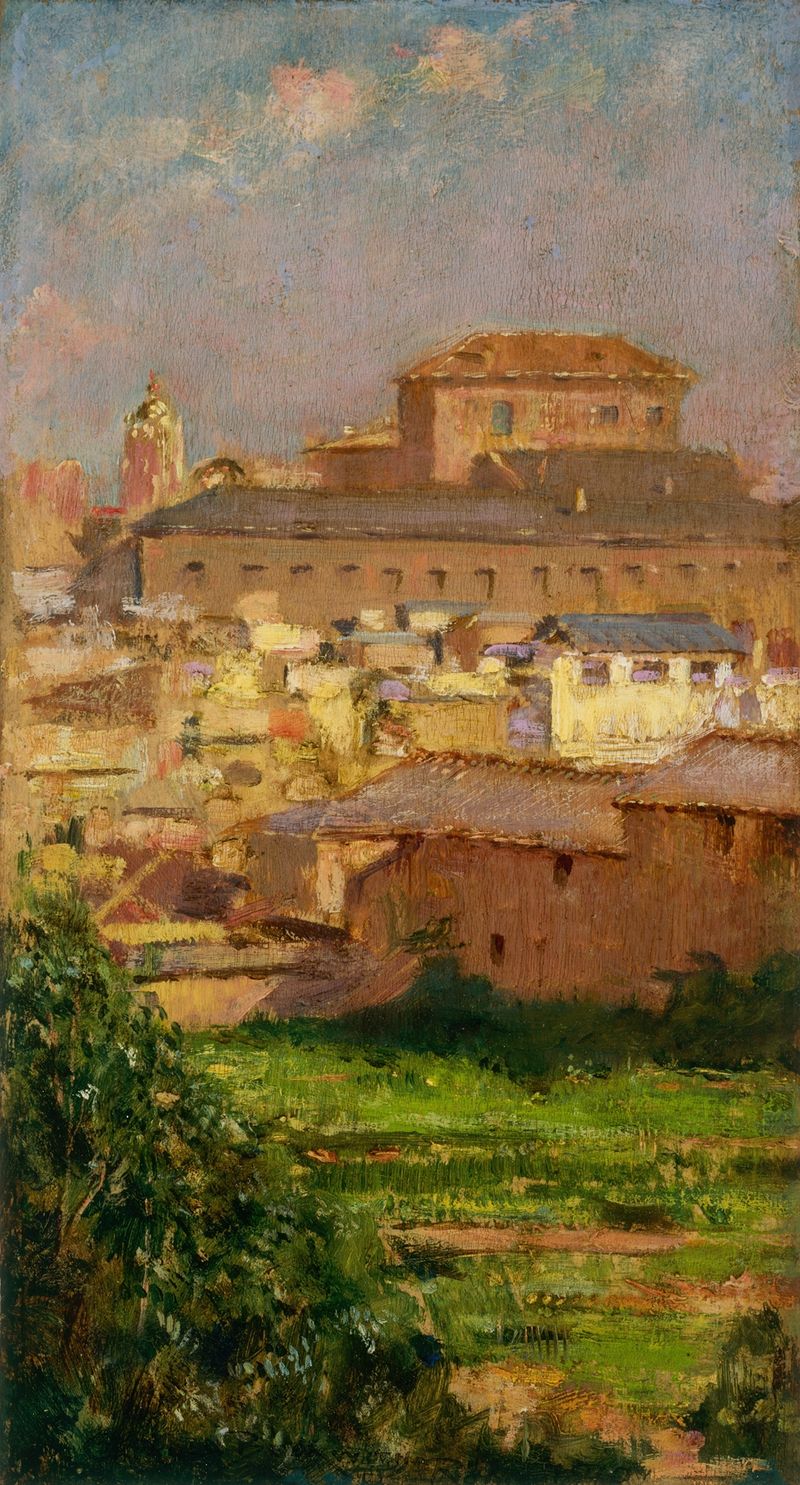
Palazzo Barberini, Rome
James Carroll Beckwith
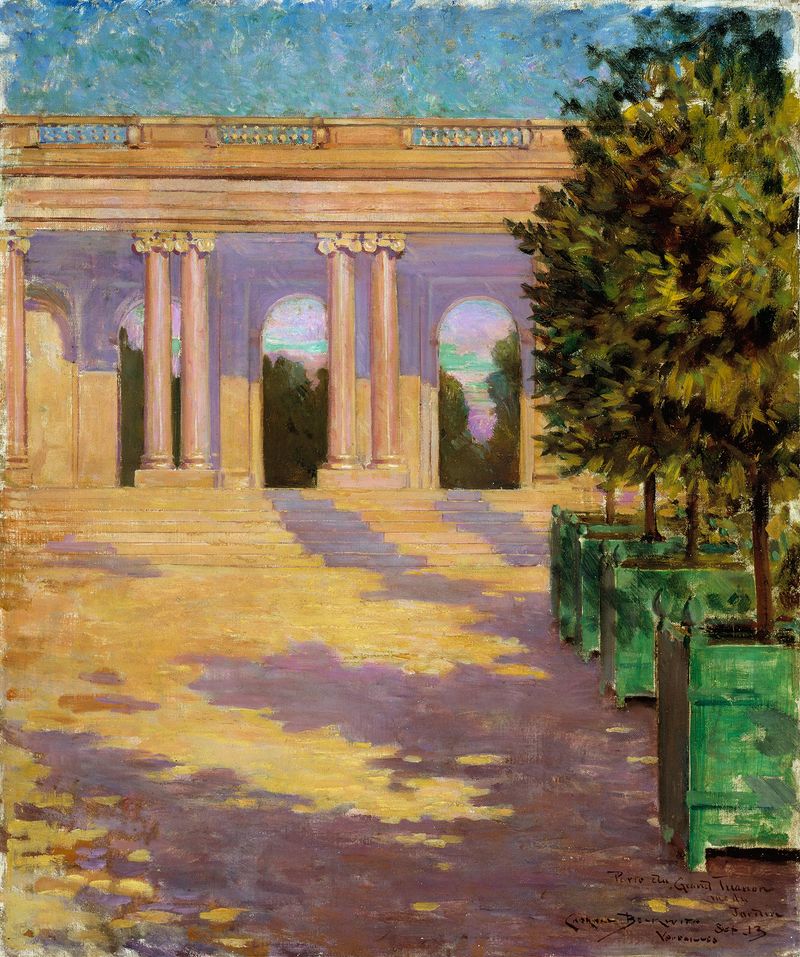
Arcade of the Grand Trianon, Versailles
James Carroll Beckwith

Cathedral at le Puy
James Carroll Beckwith

The Palace of the Popes and Pont d’Avignon
James Carroll Beckwith
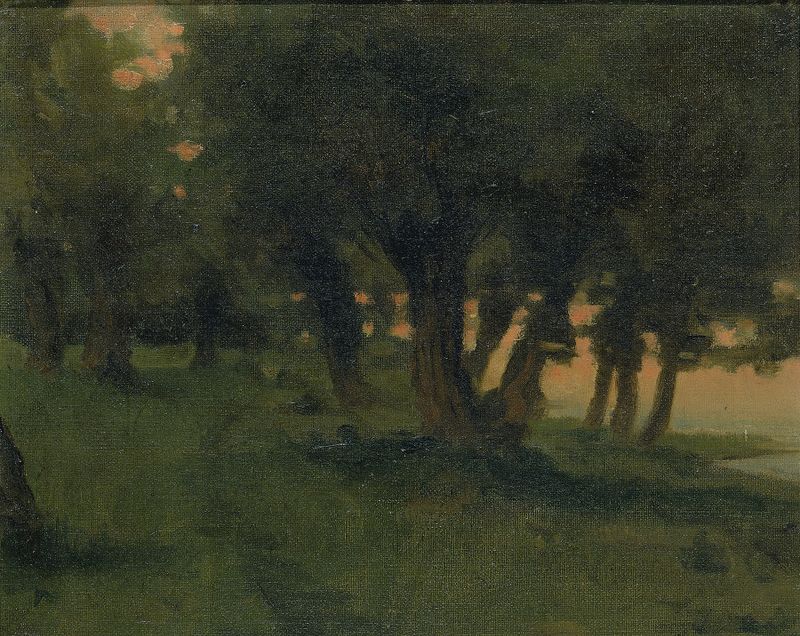
On the Banks of the Rhine, near St. Germain at Mont d’Or
James Carroll Beckwith





