
Palazzo Barberini, Rome — History & Facts
What secret hides in the quiet of the canvas? In the serene embrace of Palazzo Barberini, James Carroll Beckwith invites us to explore the depths of yearning woven into the fabric of an Italian afternoon. Focus on the elegant façade of the palazzo, where soft sunlight bathes the creamy stone in a warm glow. Notice how the gentle arches draw your eye upward, leading to ornate balconies adorned with delicate ironwork. The interplay of light and shadow creates a harmonious balance, while the deep blue sky looms above, hinting at an expansive world just outside the frame.
Each brushstroke speaks of the artist's meticulous attention to detail, rendering texture and atmosphere that feel almost tangible. Within this tranquil composition lie layers of emotional tension. The stillness suggests a mingling of nostalgia and longing, as if the palazzo itself holds memories of those who wandered its halls. The subtle contrast between the vibrant life of nature in the foreground and the stoic permanence of the architecture speaks to the passage of time, reflecting the fleeting nature of human experience against the backdrop of enduring beauty. In 1910, Beckwith painted this evocative piece while living in Rome, where he was deeply influenced by the city's rich artistic heritage.
At this time, he was engaged in exploring themes of light and color, striving to capture the essence of his surroundings. This period marked a blend of personal introspection and cultural appreciation, as he sought to connect with both the historical significance of his subjects and his own artistic identity.
More Artworks by James Carroll Beckwith
Browse all →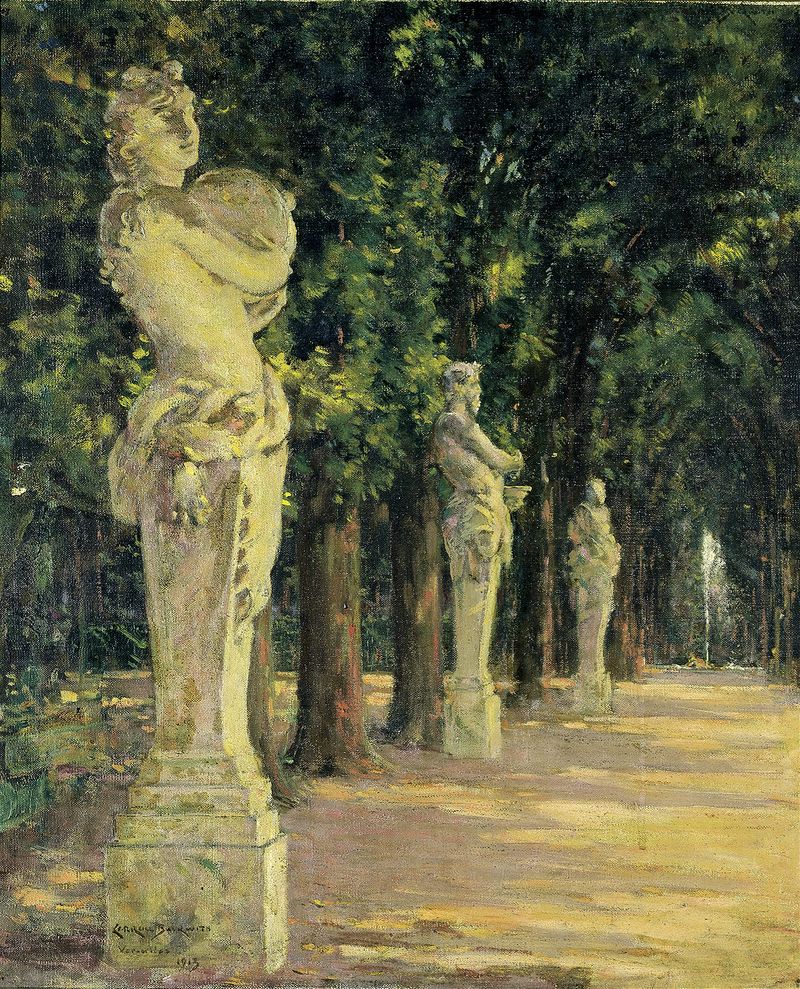
Allee de l’Ete, Versailles
James Carroll Beckwith

Carrefour at the End of the Tapis Vert, Versailles
James Carroll Beckwith

Bassin de Neptune, Versailles
James Carroll Beckwith

Nymph and Cupid
James Carroll Beckwith

George Martin Lane (1823-1897)
James Carroll Beckwith
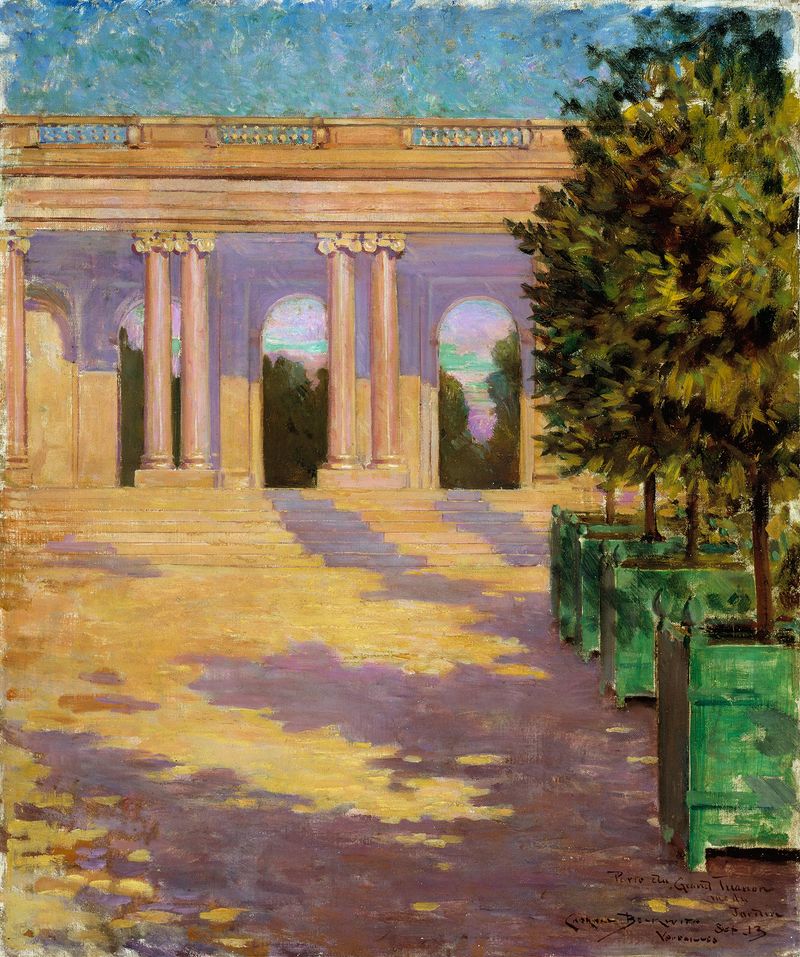
Arcade of the Grand Trianon, Versailles
James Carroll Beckwith

Cathedral at le Puy
James Carroll Beckwith

The Palace of the Popes and Pont d’Avignon
James Carroll Beckwith
On the Banks of the Rhine, near St. Germain at Mont d’Or
James Carroll Beckwith
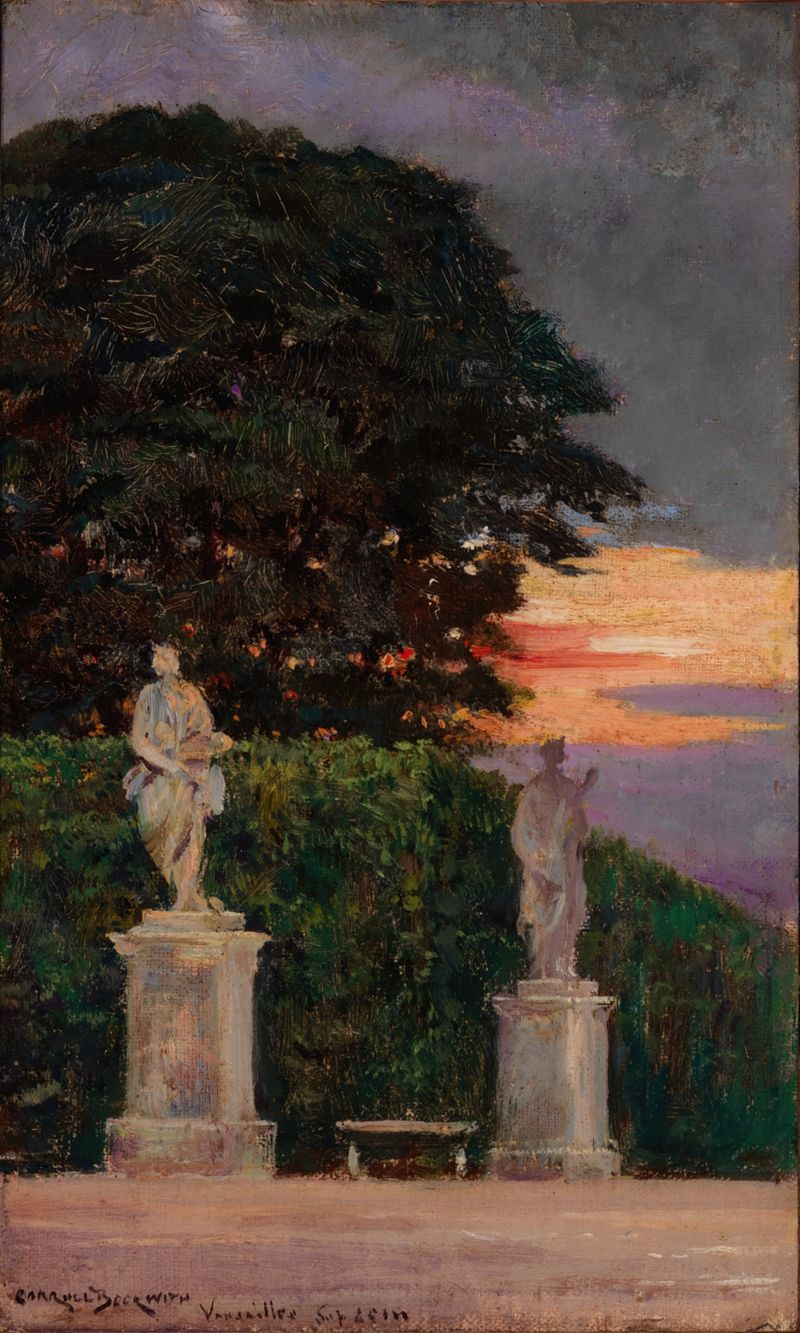
Corner of the Terrace, Versailles
James Carroll Beckwith
More Architecture Art
Browse all →
The statue of Liberty
Frédéric Auguste Bartholdi

View of Houses in Delft, Known as ‘The Little Street’
Johannes Vermeer

View of Houses in Delft, Known as ‘The Little Street’
Johannes Vermeer

The Cathedral in Rouen. The portal, Grey Weather
Claude Monet

The yellow house
Vincent van Gogh

The Church in Auvers-sur-Oise, View from the Chevet
Vincent van Gogh