Nymph and Cupid — History & Facts
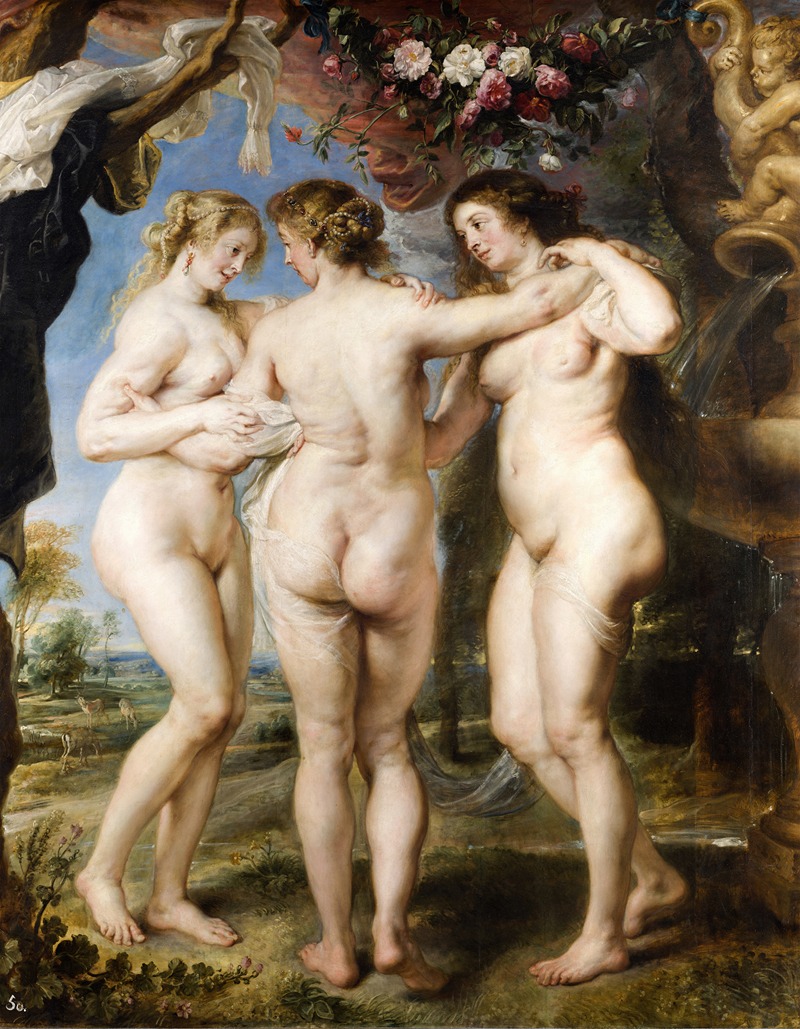
Can beauty exist without sorrow? In Nymph and Cupid, the delicate balance of serenity and longing unfolds, inviting contemplation of love's fleeting nature. Look to the left at the graceful figure of the nymph, her soft contours contrasting with the vibrant foliage surrounding her. Notice how the light plays across her skin, illuminating the gentle curves that evoke both allure and fragility. The lush greens and warm earth tones create a harmonious backdrop, while Cupid, the embodiment of love, gazes at her with an expression that hints at both affection and yearning. Delve deeper into the interactions between these two figures.
The nymph's slightly turned head and downcast eyes suggest a moment of introspection, as if caught in a reverie about love’s bittersweet joys. Meanwhile, Cupid’s poised wings and outstretched arms symbolize desire and vulnerability, making us acutely aware of the tension between the ethereal beauty of their connection and the inevitable pain that often accompanies such emotions. In 1913, when this piece was created, Beckwith was immersed in an era marked by artistic experimentation. Living in the United States, he was influenced by the rich traditions of the Gilded Age while navigating the shifting tides of modernism.
This painting reflects a pivotal moment in his career, combining classical references with a personal exploration of themes that resonate deeply with the human experience.
More Artworks by James Carroll Beckwith
Browse all →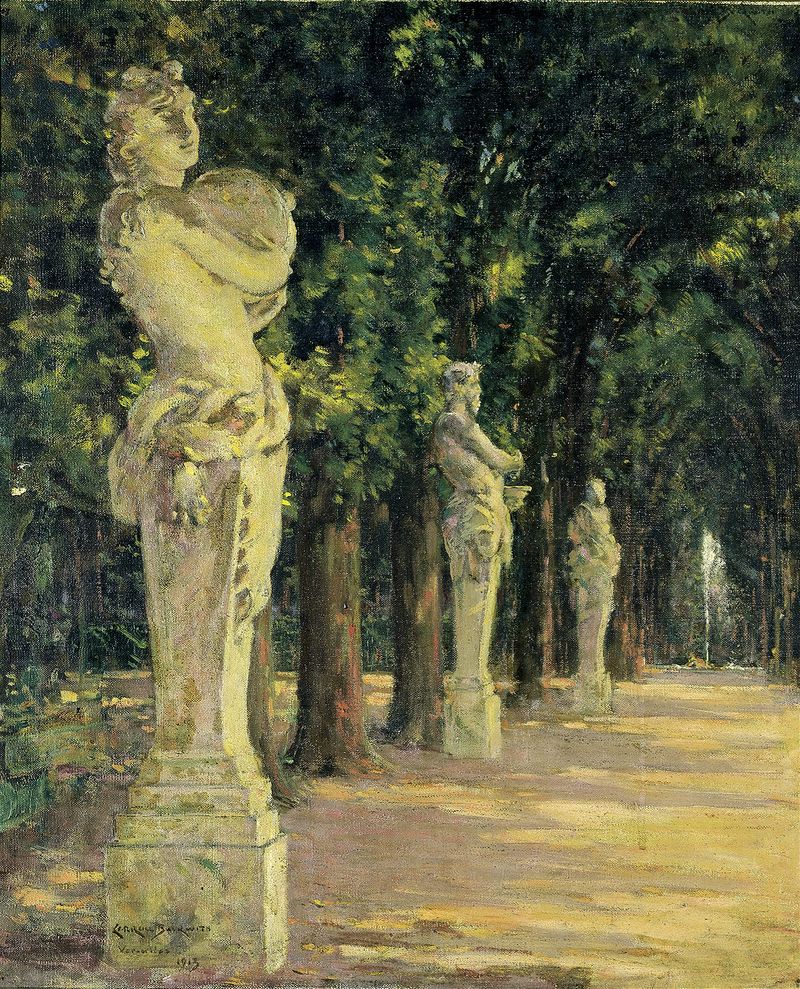
Allee de l’Ete, Versailles
James Carroll Beckwith

Carrefour at the End of the Tapis Vert, Versailles
James Carroll Beckwith

Bassin de Neptune, Versailles
James Carroll Beckwith

George Martin Lane (1823-1897)
James Carroll Beckwith
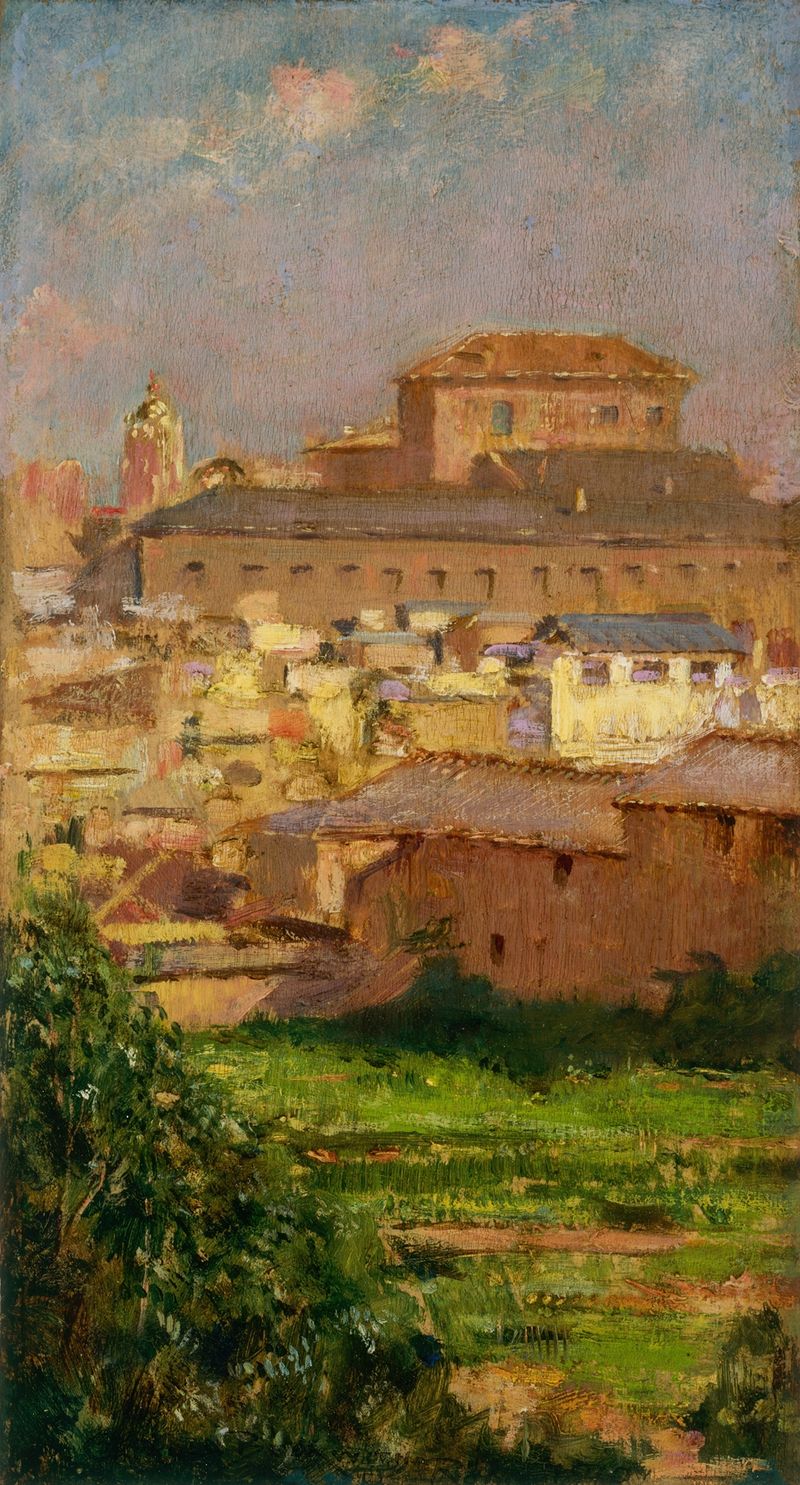
Palazzo Barberini, Rome
James Carroll Beckwith
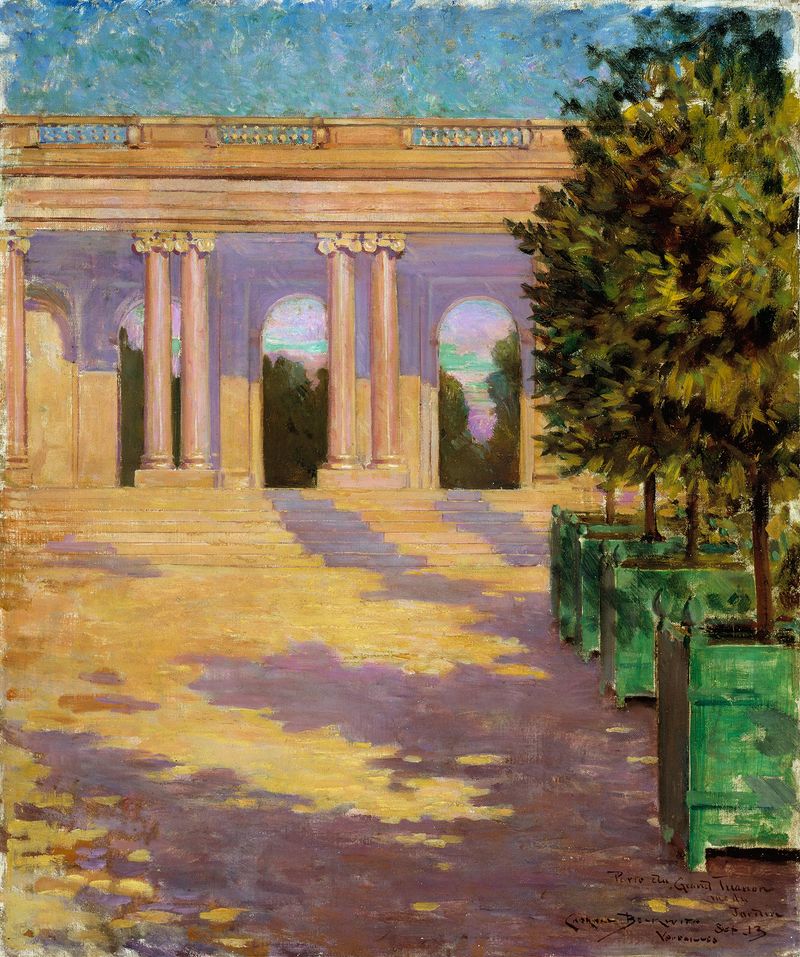
Arcade of the Grand Trianon, Versailles
James Carroll Beckwith

Cathedral at le Puy
James Carroll Beckwith

The Palace of the Popes and Pont d’Avignon
James Carroll Beckwith
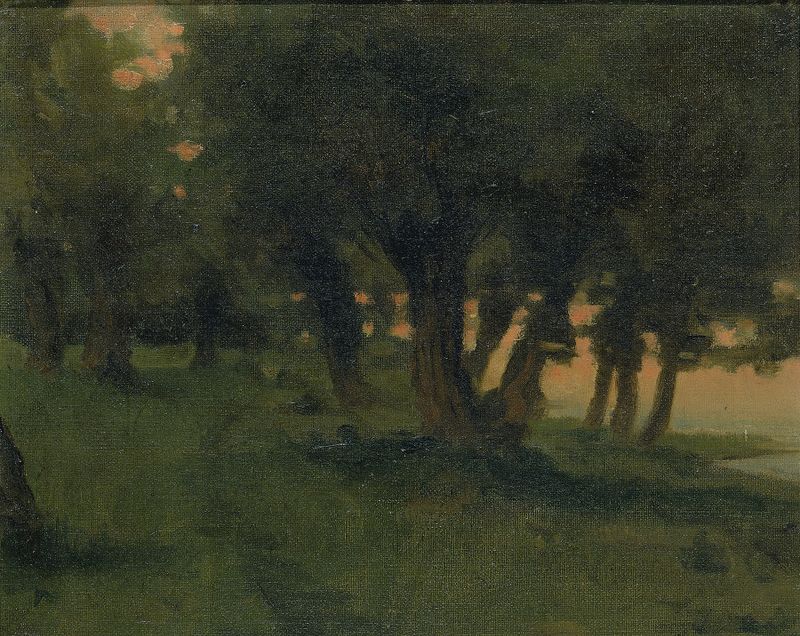
On the Banks of the Rhine, near St. Germain at Mont d’Or
James Carroll Beckwith
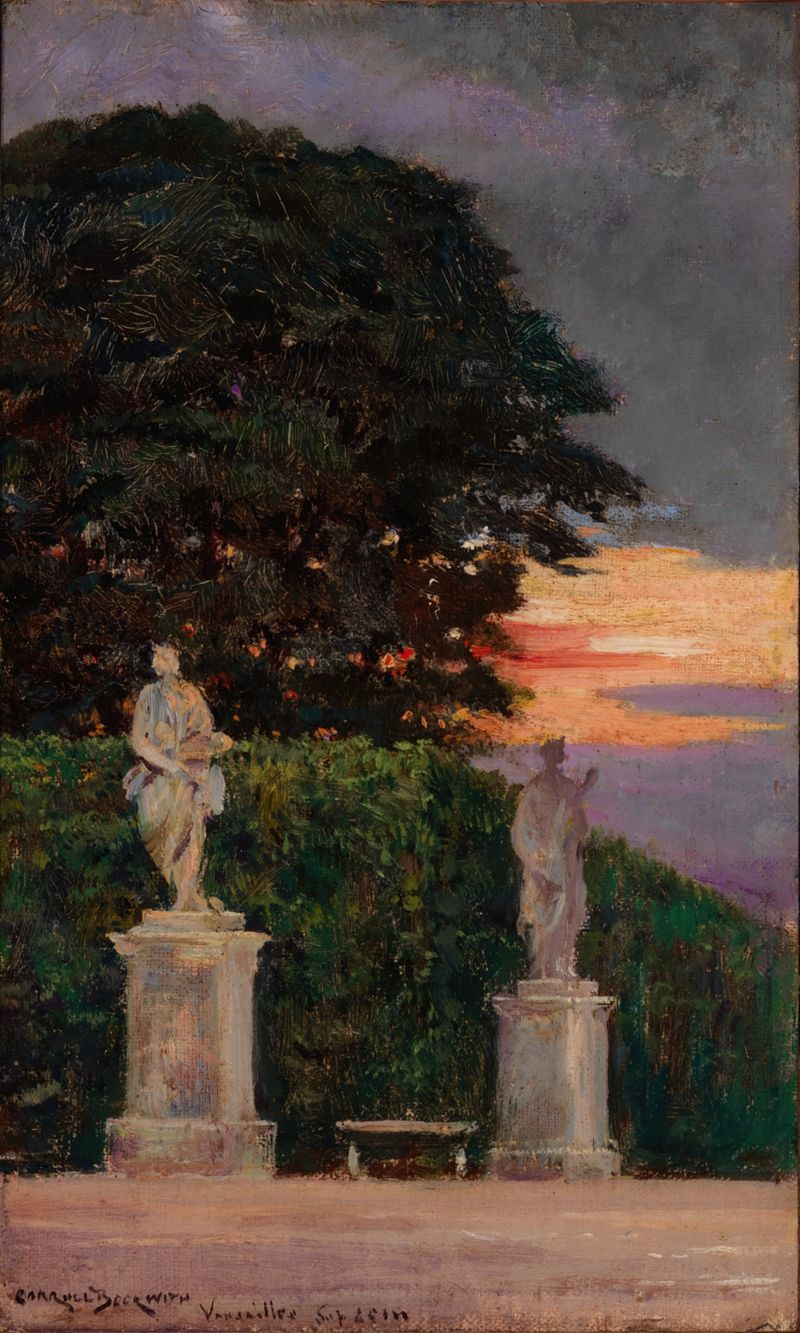
Corner of the Terrace, Versailles
James Carroll Beckwith