
Côte De Provence 7 — History & Facts
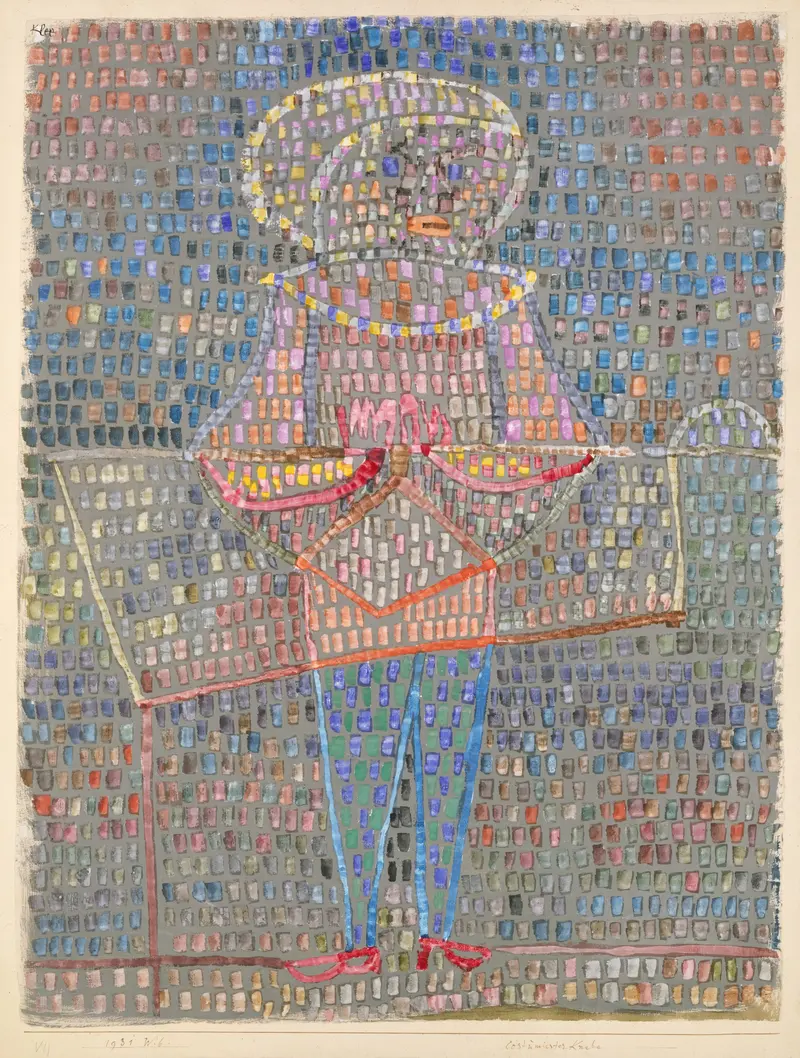
In Côte De Provence 7, Paul Klee uses a vibrant palette dominated by blues, greens, and yellows. The painting features abstract forms that suggest rolling hills and a bright sky. Klee's characteristic use of geometric shapes creates a sense of rhythm and movement.
The overall composition feels lively and dynamic, inviting the viewer into a dreamlike landscape. The painting is executed in oil on canvas, showcasing Klee's signature style of abstraction. The brushwork is expressive, with visible strokes that add texture and depth to the piece. The dimensions are approximately 60 x 80 cm, making it a relatively medium-sized work.
The use of color and form reflects Klee's exploration of emotion and perception in art. Paul Klee was a Swiss painter known for his unique approach to color and form. Created in the early 1910s, Côte De Provence 7 is part of Klee's exploration of landscapes, where he often blended reality with imagination. An interesting fact about this work is that it reflects Klee's fascination with the Mediterranean region, capturing its essence through abstraction.
Klee's influence extends beyond painting, impacting various art movements and inspiring countless artists.
More Artworks by Paul Klee

More Landscape Art

The Starry Night
Vincent van Gogh

View of Delft
Johannes Vermeer

Water Lilies
Claude Monet

The Grand Canal, Venice, looking north-west from the Ca' Corner to the Ca' Contarini degli Scrigni, with the campanile of Santa Maria della Carità
Canaletto

Windsor Castle
Canaletto

The Grand Canal looking North-East from the Palazzo Dolfin-Manin to the Rialto Bridge
Canaletto