
Country house and lane — History & Facts
In the quiet corners of our minds, do we not all yearn for the truths that reside in forgotten places? Look to the left at the gentle curve of the lane that meanders through a lush landscape, inviting the viewer’s eye to follow its path. The delicate interplay of greens and browns speaks to the simplicity of rural life, each color choice evoking the tranquility of nature. Notice how the light filters through the trees, casting dappling shadows that add depth and texture, suggesting a moment suspended in time.
The soft, almost ethereal quality of the sky beckons a sense of peace, creating a harmonious backdrop for the modest abode nestled within the scene. Yet, beneath the serene exterior lies a contrast between nature’s lush vibrancy and the stillness of the house, invoking a reflection on solitude and belonging. The house, though modest, stands resilient against the backdrop of an expansive sky, symbolizing the tension between human endeavor and nature’s omnipresent force. Small details, such as the fence that borders the lane, resonate with a sense of stewardship, hinting at the relationship between humanity and the land they inhabit. During the mid-19th century, William James Müller painted this work, likely influenced by the pastoral scenes of his native England.
At the time, the Romantic movement was in full bloom, encouraging a reawakening of fascination with nature and rural life. Müller, who faced personal challenges in his life, sought solace in his art, reflecting the complexities of human experience through the lens of idyllic landscapes.
More Artworks by William James Müller
Browse all →
Cleeve, Somerset, with Bridgewater Bay in the Distance
William James Müller

The Bridge at Llangollen
William James Müller

Cairo Bazaar
William James Müller
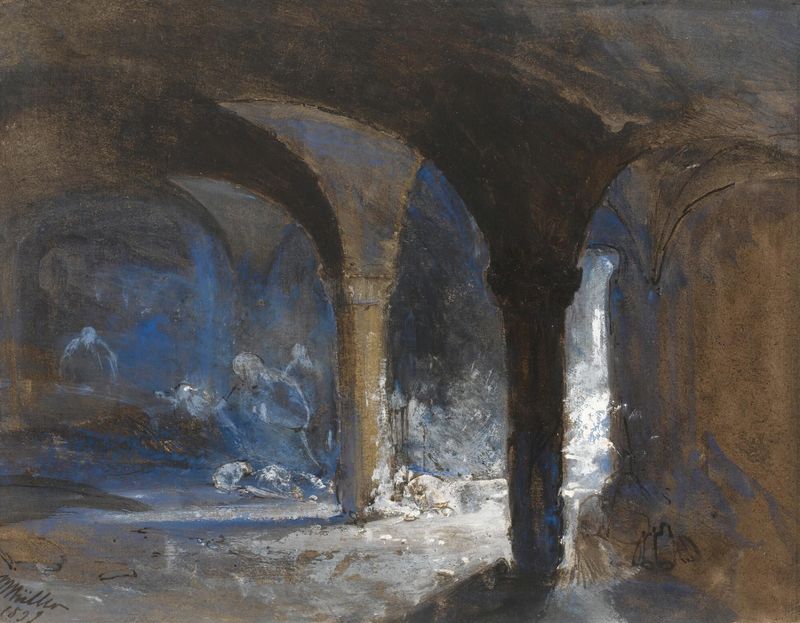
Crypt of the bishop’s palace during the Bristol riots
William James Müller

Near the Caravan Bridge, Smyrna
William James Müller
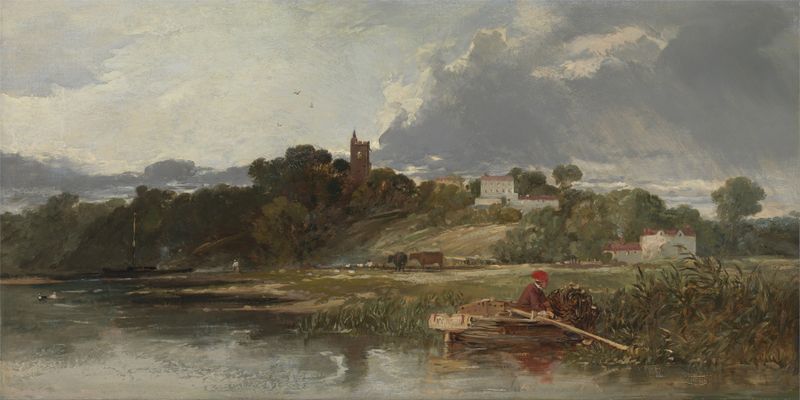
Gillingham on the Medway
William James Müller

The Church of the Holy Sepulchre
William James Müller

A View of Eton and the Fellows Eyot
William James Müller

Tripoli
William James Müller

A Mountain Torrent
William James Müller





