
Cour de ferme à Saint Mammès — History & Facts
Sunlight glances off the uneven red tiles of a farmhouse roof, drawing the eye to the heart of a rural courtyard that seems to pulse with quiet, everyday life. The brushwork is brisk and textured, catching the shifting colors of stone, wood, and sky, while the shadows under the archway hint at a world beyond the frame. Figures go about their work: a woman in a blue apron sits with her hands busy, another stands near a cart laden with greenery, and a third, seated, faces away, absorbed in her own task.
The composition leads us in a gentle arc from foreground to background, inviting us to linger on the play of light across old walls and the subtle choreography of daily labor. The palette, dominated by warm earths and cool sky, sets a mood of calm industry—neither romanticized nor harsh, but attentive to the ordinary. Painted in 1884, this work belongs to the era when Impressionism was reshaping how artists captured the world. Painters like Alfred Sisley turned their attention to the rhythms of rural France, often working outdoors to seize the fleeting effects of light and atmosphere.
Such scenes were rarely grand commissions; instead, they were purchased by the new middle class or by dealers eager to satisfy collectors fascinated by modern life. While history has kept few traces of this particular painting’s journey, its presence in a self-photographed collection speaks to the quiet persistence of these rural visions, inviting us to step into a moment that feels both distant and immediate, as fresh as the sunlight on those old stones.
More Artworks by Alfred Sisley
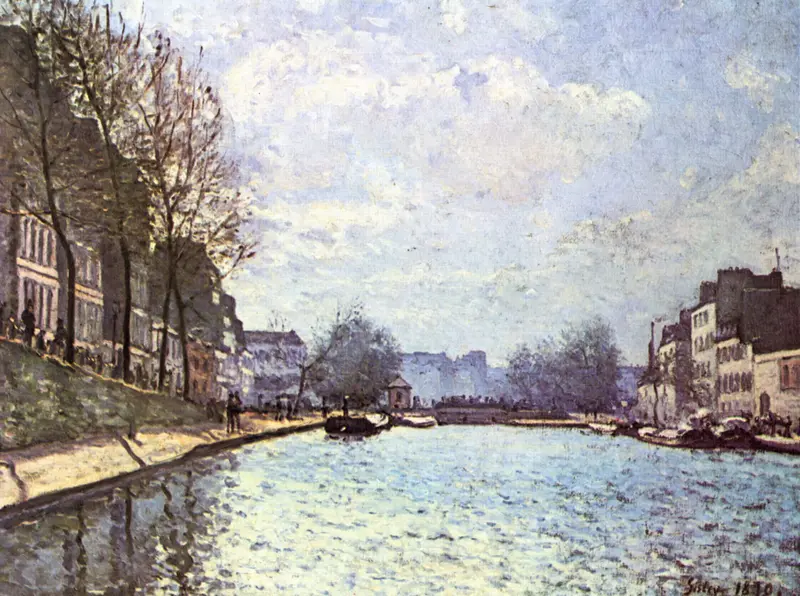
View of the Canal Saint-Martin
Alfred Sisley

Le Loing à Saint-Mammès
Alfred Sisley
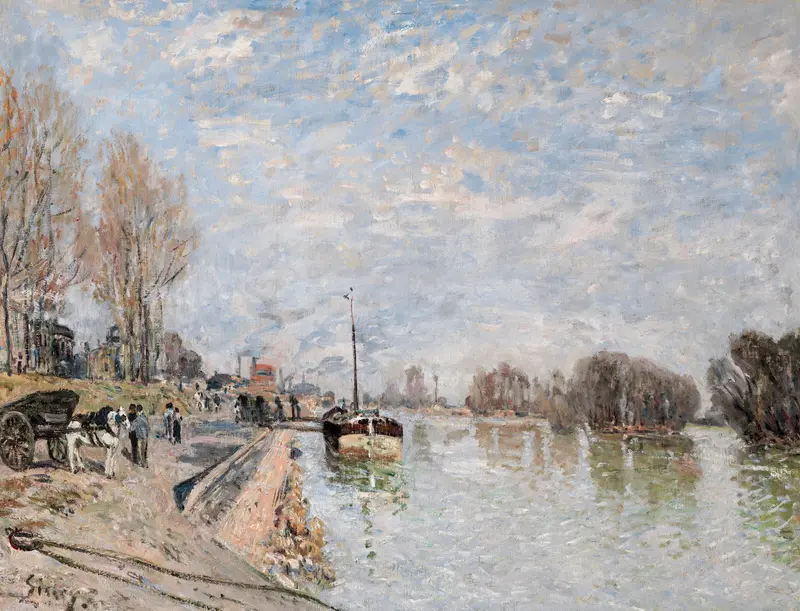
La Seine à Suresnes
Alfred Sisley
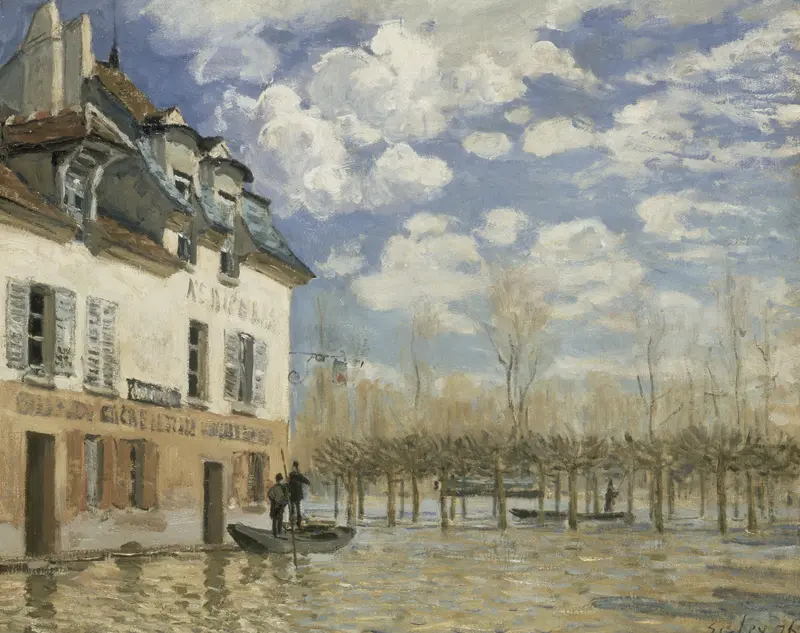
Boat in the Flood at Port Marly
Alfred Sisley
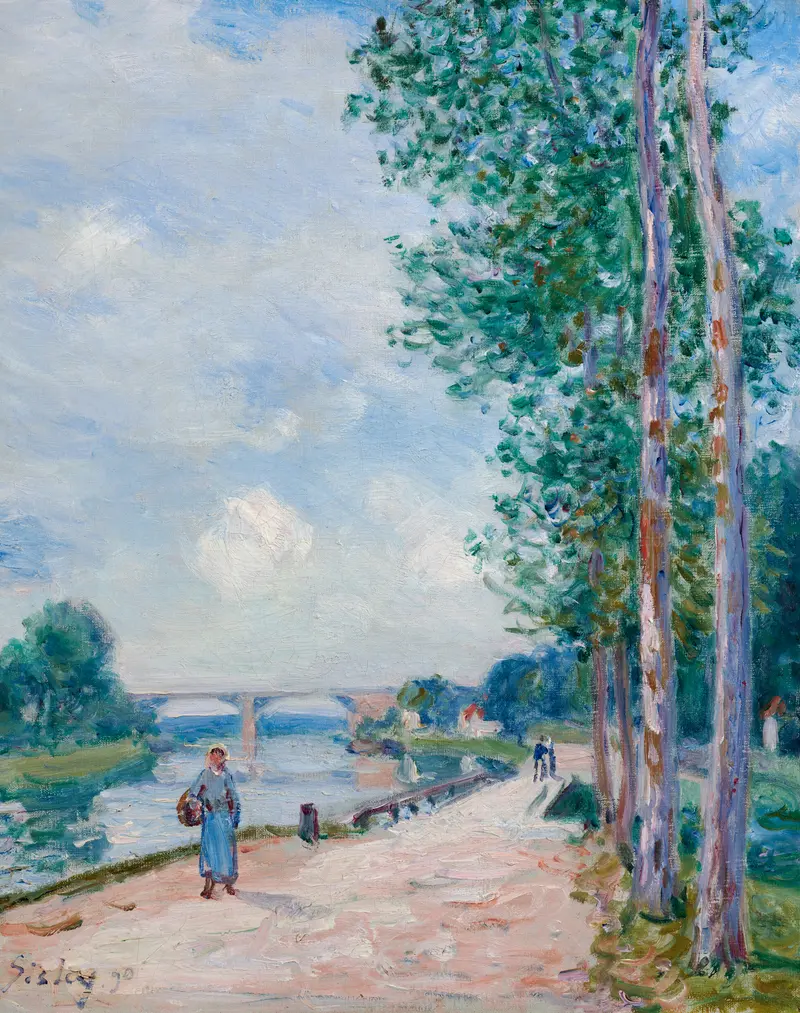
Les bords du Loing près de Moret
Alfred Sisley
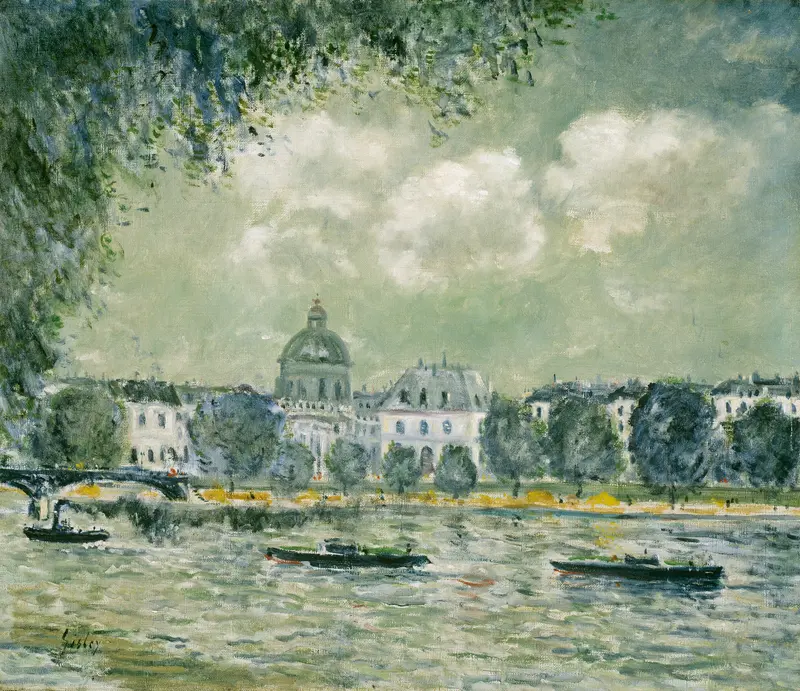
Landscape along the Seine with the Institut de France and the Pont des Arts
Alfred Sisley

Printemps au bord du Loing
Alfred Sisley
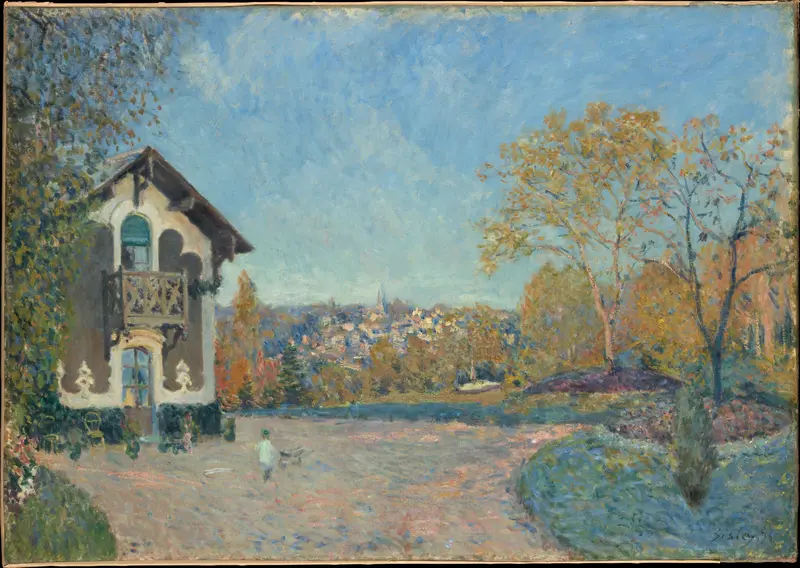
View of Marly-le-Roi from Coeur-Volant
Alfred Sisley
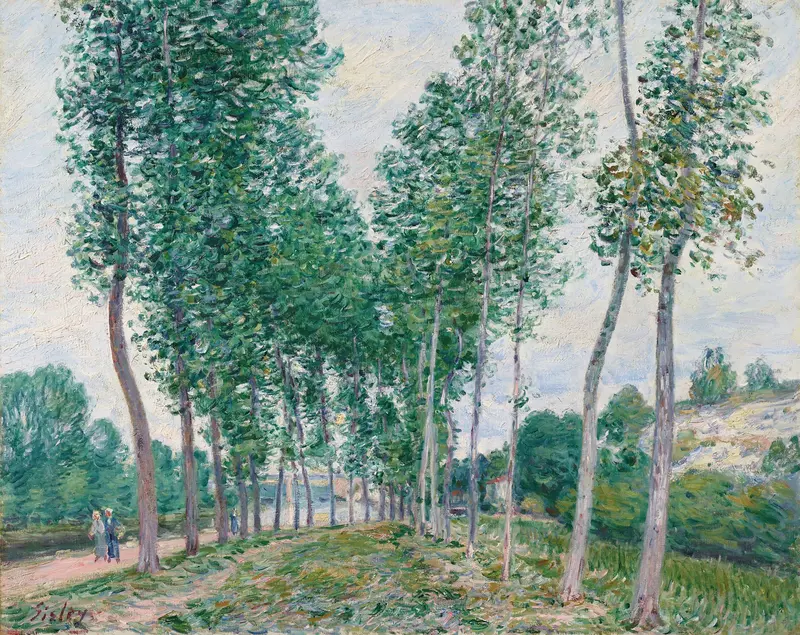
L’allée des peupliers au bord du Loing
Alfred Sisley
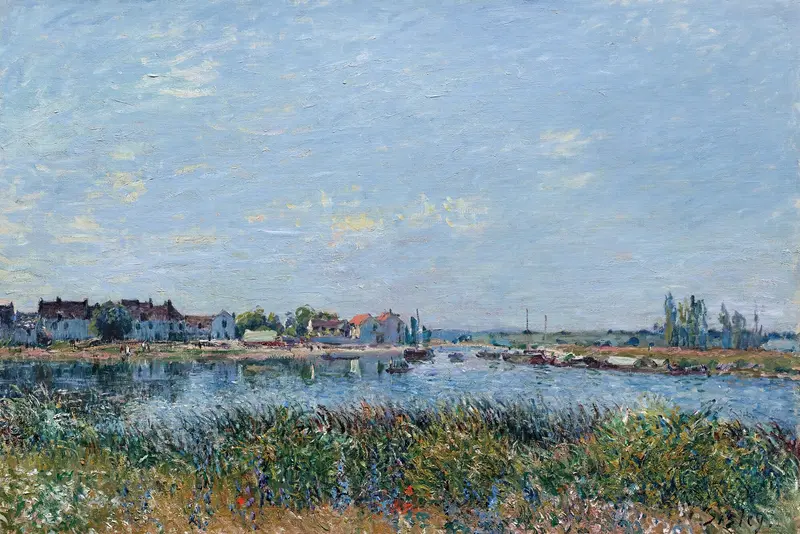
Saint-Mammès, Le Matin
Alfred Sisley
More Genre Scene Art

Banquet of the Officers of the St George Civic Guard
Frans Hals

Rembrandt and Saskia in the Scene of the Prodigal Son
Rembrandt van Rijn

Bal du moulin de la Galette
Pierre-Auguste Renoir

Quadrille at the Moulin Rouge
Henri de Toulouse-Lautrec

A Burial at Ornans
Gustave Courbet

When Will You Marry?
Paul Gauguin