Curl-crested Aracari — History & Facts
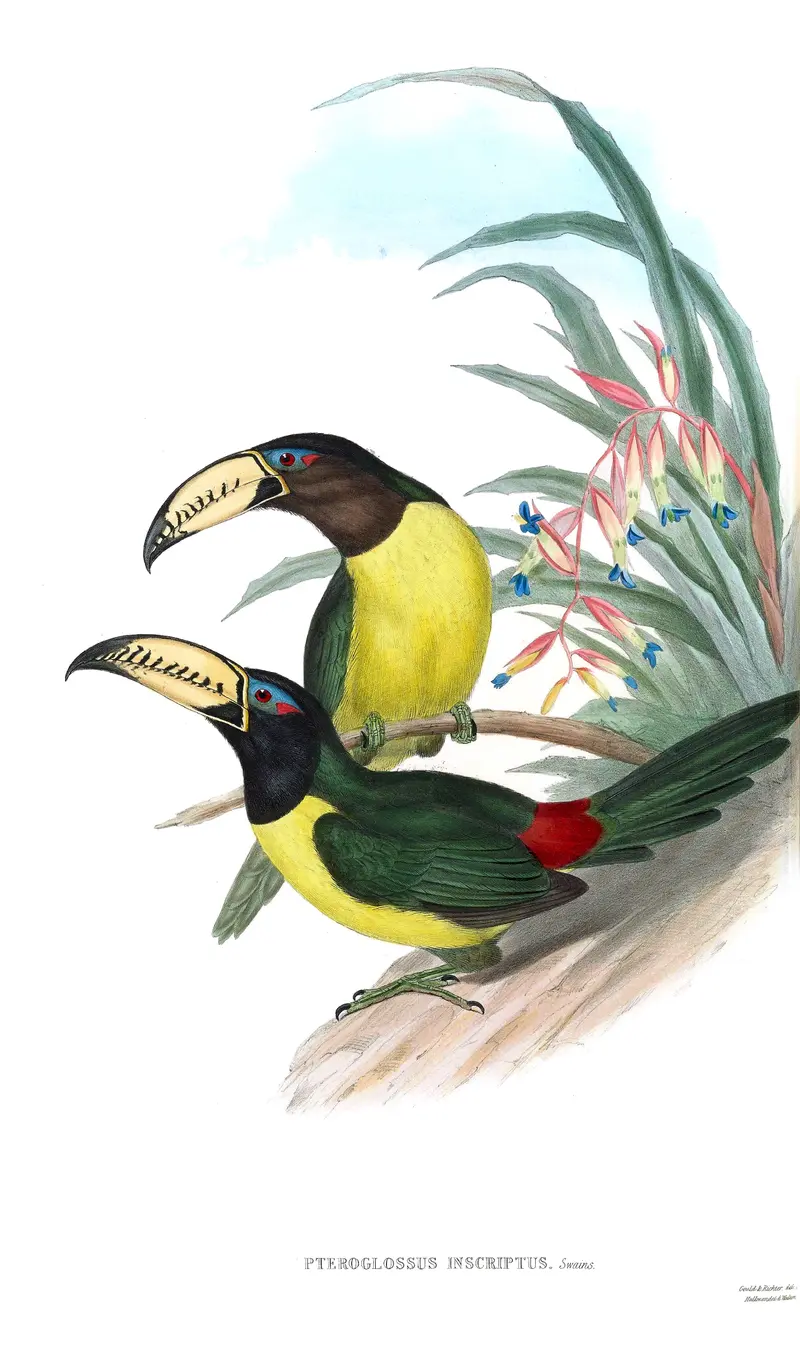
What first catches the eye is the riot of color: two curl-crested aracaris, their beaks striped in improbable reds and greens, their plumage a patchwork of lemon yellow, velvet black, and deep crimson. The birds are nestled among curling leaves and yellow blossoms, their bodies pressed close, as if caught in a private moment. Each feather is rendered with painstaking care, the artist’s hand guiding the viewer’s gaze from the glossy black curls atop their heads to the subtle gradations in their yellow throats.
The background remains faint and misty, letting the birds and foliage leap forward, almost as if they could step from the page. The light falls softly, picking out the iridescence on the wings and the intricate texture of the leaves, inviting the viewer to linger over every detail. This image belongs to a world where science and art were inseparable companions. Created in 1854 for A Monograph of the Ramphastidæ, Or Family of Toucans by John Gould, this plate was part of a grand Victorian project to catalogue the wonders of the natural world.
Such illustrations were prized by collectors, scientists, and explorers alike, providing the only glimpse many would ever have of distant, dazzling creatures. Gould’s works were not just records but celebrations—each plate a testament to the era’s hunger for knowledge and beauty. History has kept few traces of the individual journey of this particular image, but its purpose endures: to astonish, to inform, and to draw the viewer back, again and again, into the tangled green heart of the tropics.