
Dance on the Beach (The Reinhardt Frieze) — History & Facts
A procession of figures drifts across the sand, their gestures and faces blurred into a single, restless rhythm. The eye is drawn first to the cluster of dancers at the heart of the composition, their pale dresses and raised arms forming a living chain beneath a sky streaked with blue and violet. The brushwork is loose, almost urgent, as if the scene is being remembered rather than witnessed.
To the left, a solitary figure in white stands apart, her gaze turned away, while on the far right, a dark-clad man faces outward, his presence a quiet counterpoint to the swirl of movement. The palette—cool blues, flashes of orange, and the green of the grass—suggests a world suspended between day and night, joy and melancholy. Painted between 1906 and 1907, this work belongs to a moment when artists like Edvard Munch were pushing the boundaries of what painting could express. The elongated format and frieze-like arrangement recall the decorative ambitions of early twentieth-century art, when murals and panels were commissioned for new public spaces and private homes alike.
This piece, once offered at Sotheby’s London in 2023, stands as a testament to a period when the boundaries between fine art and everyday life were dissolving. History has kept few traces of its early journey, but its mood—at once communal and solitary—invites the viewer to step into the dance and linger in the hush that follows.
More Artworks by Edvard Munch

The Scream
Edvard Munch

The Scream (1910 version)
Edvard Munch

Despair
Edvard Munch

The Day After
Edvard Munch
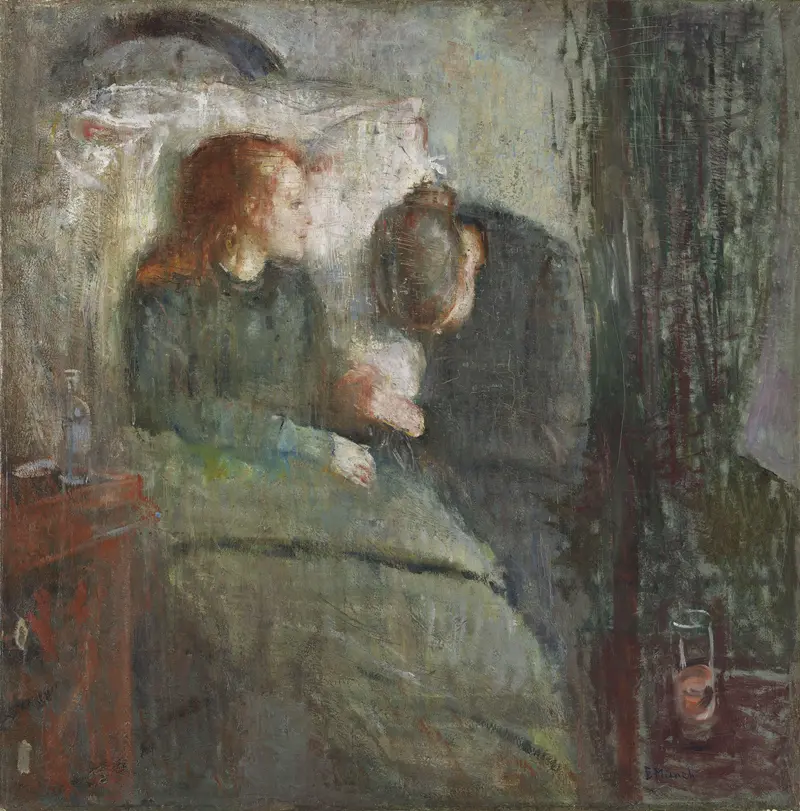
The Sick Child
Edvard Munch
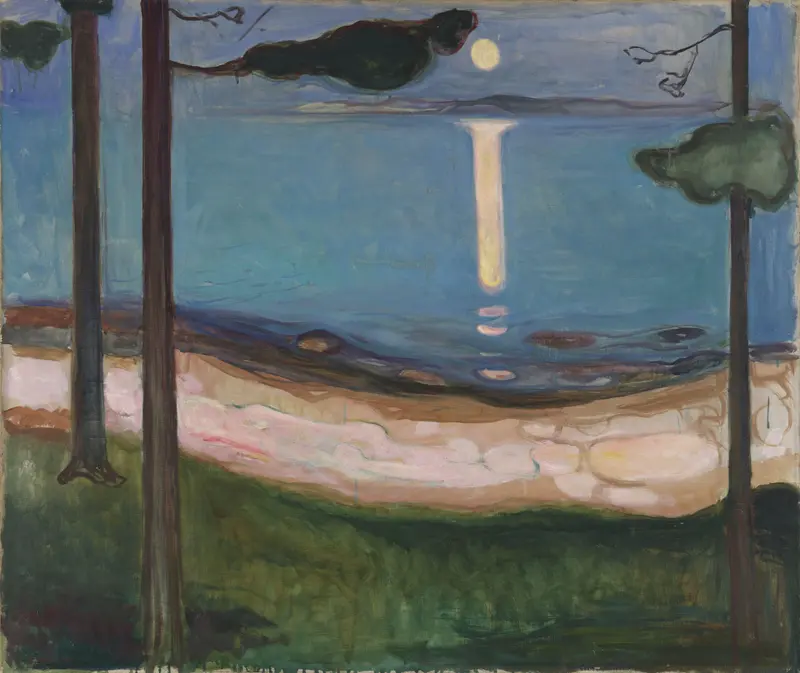
Moonlight
Edvard Munch
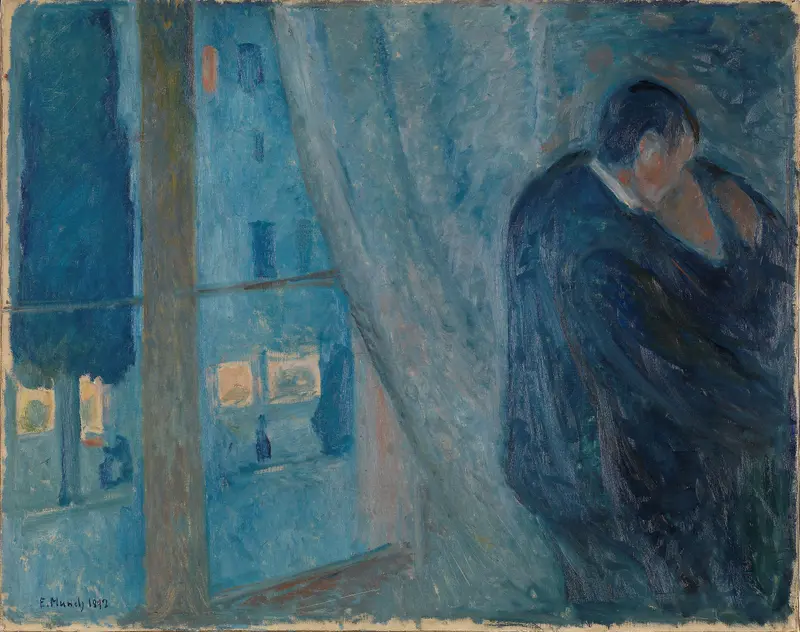
The Kiss
Edvard Munch
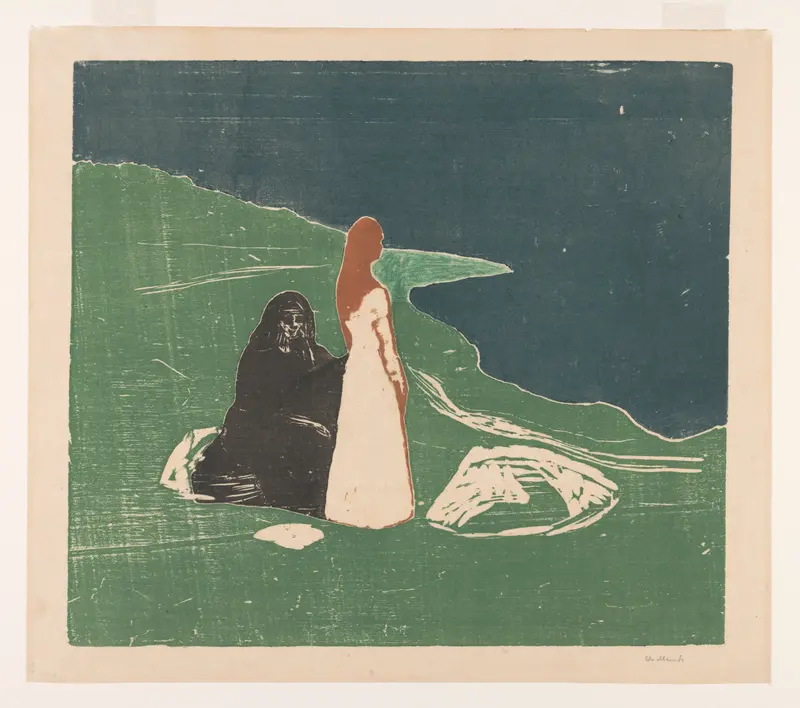
Two Women on the Shore
Edvard Munch
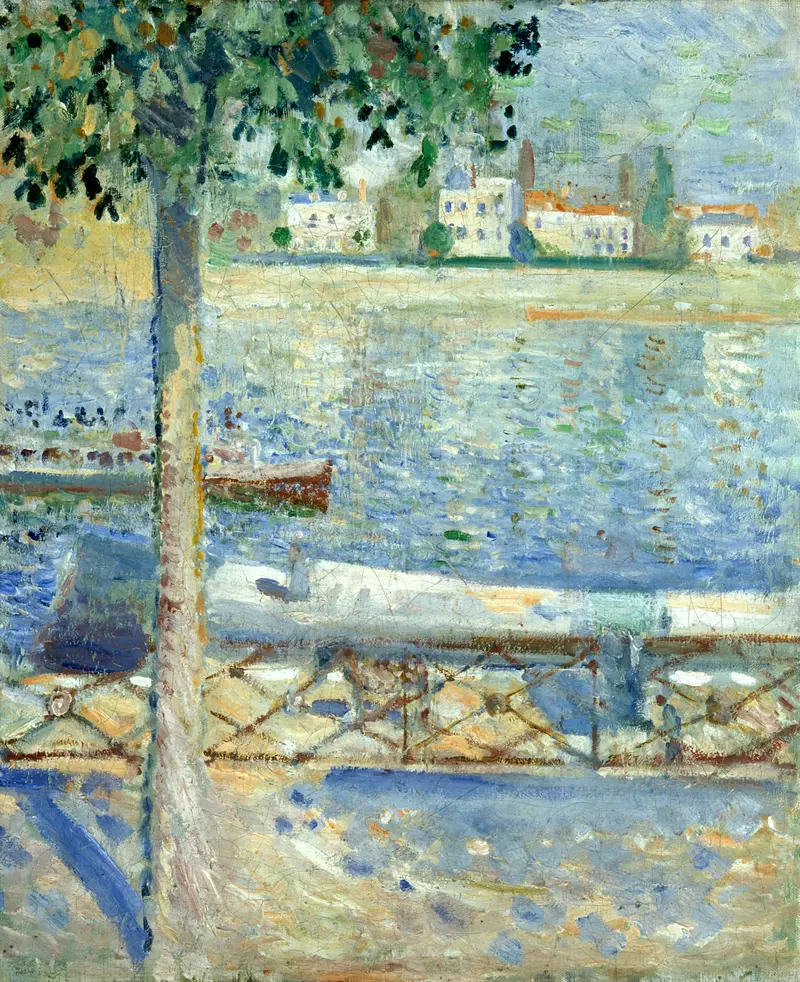
The Seine At Saint-Cloud
Edvard Munch
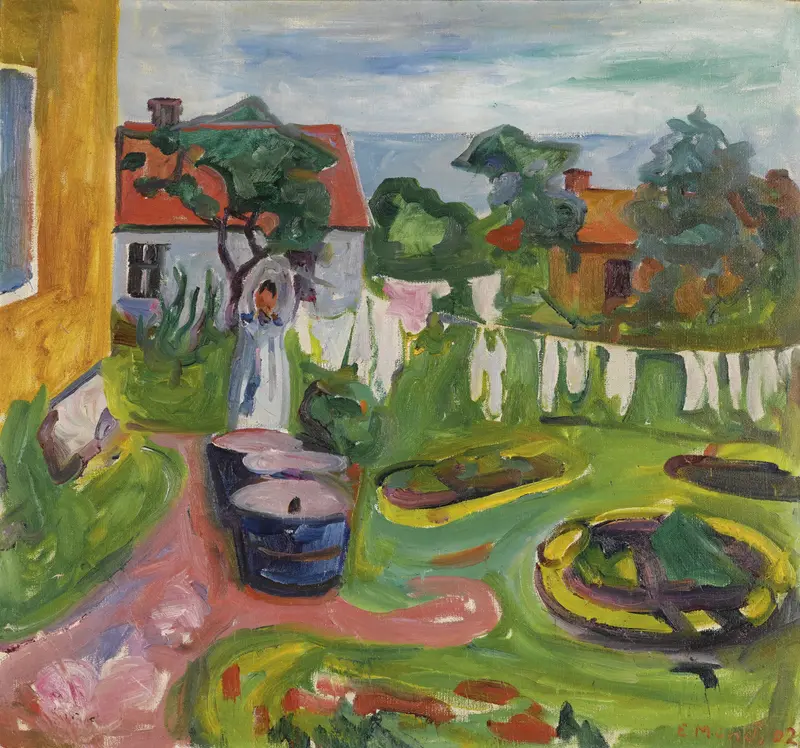
Klestørk I Åsgårdstrand (Clothes On A Line In Åsgårdstrand)
Edvard Munch



