
Dancing Harlequin — History & Facts
No one knows for certain when Henri Privat-Livemont painted Dancing Harlequin, nor for what occasion, but its subject—the Harlequin—was a fixture of European popular culture and theater for centuries, crossing borders from the commedia dell’arte stages of Italy into the cabarets and posters of fin-de-siècle Paris. The Harlequin’s nimble figure and diamond-patterned costume became an emblem for both mischief and melancholy, and artists from Pablo Picasso to Paul Cézanne returned to it again and again. In Privat-Livemont’s hands, the Harlequin is caught mid-motion, captured in a pose that suggests both performance and escape. The painting seizes the Harlequin at the height of his dance, one leg arched, arms outstretched, his mask half-lifted as if inviting the viewer into the joke.
The costume’s bold, geometric patterns—likely rendered in the sinuous lines and flat colors characteristic of Art Nouveau—draw the eye in a rhythmic flow, echoing the movement of the figure. Unlike the blue-tinged melancholy of Picasso’s Harlequin paintings, Privat-Livemont seems to celebrate the theatricality and exuberance of the character, perhaps hinting at the era’s fascination with performance and masquerade. The backdrop, if present, is likely minimal, focusing all attention on the dancer’s energy and the ambiguity of his smile. Little is known about the early history of Dancing Harlequin, and the absence of a date or documented commission leaves its original context uncertain.
Henri Privat-Livemont is best remembered for his Art Nouveau posters—especially the famous Absinthe Robette—and this painting may have been a private exploration of similar themes of festivity, movement, and modernity. The work’s whereabouts for much of the twentieth century remain unrecorded, but it is now recognized as a rare example of Privat-Livemont’s easel painting, offering insight into his broader artistic range beyond graphic design. Today, the painting stands as a lively testament to the enduring allure of the Harlequin figure and the vibrant spirit of the Art Nouveau era.
More Artworks by Henri Privat-Livemont

Oriental Dancers
Henri Privat-Livemont
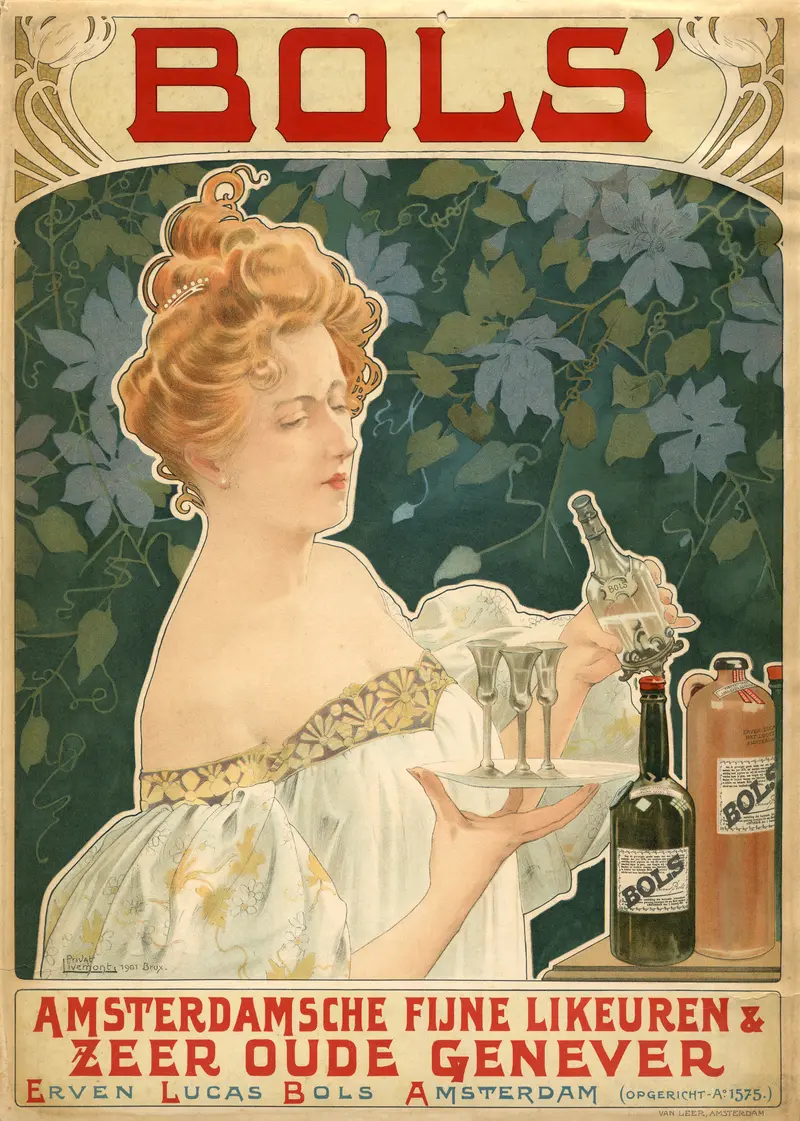
Bols’ Amsterdamsche Fijne Likeuren & zeer oude genever
Henri Privat-Livemont
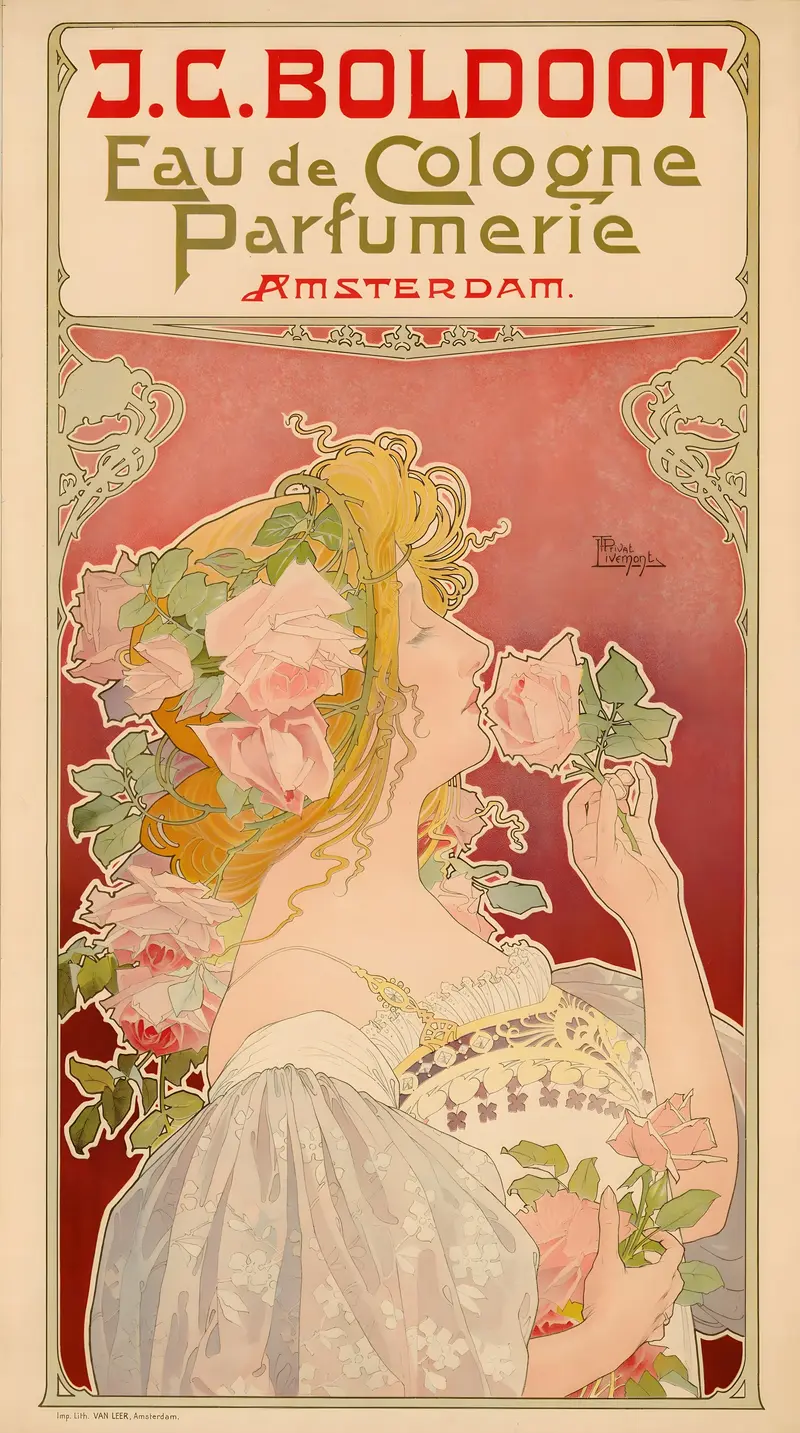
J.C. Boldoot Eau de Cologne; Parfumerie Amsterdam
Henri Privat-Livemont
J.C. Boldoot Eau de Cologne – Parfumerie Amsterdam
Henri Privat-Livemont
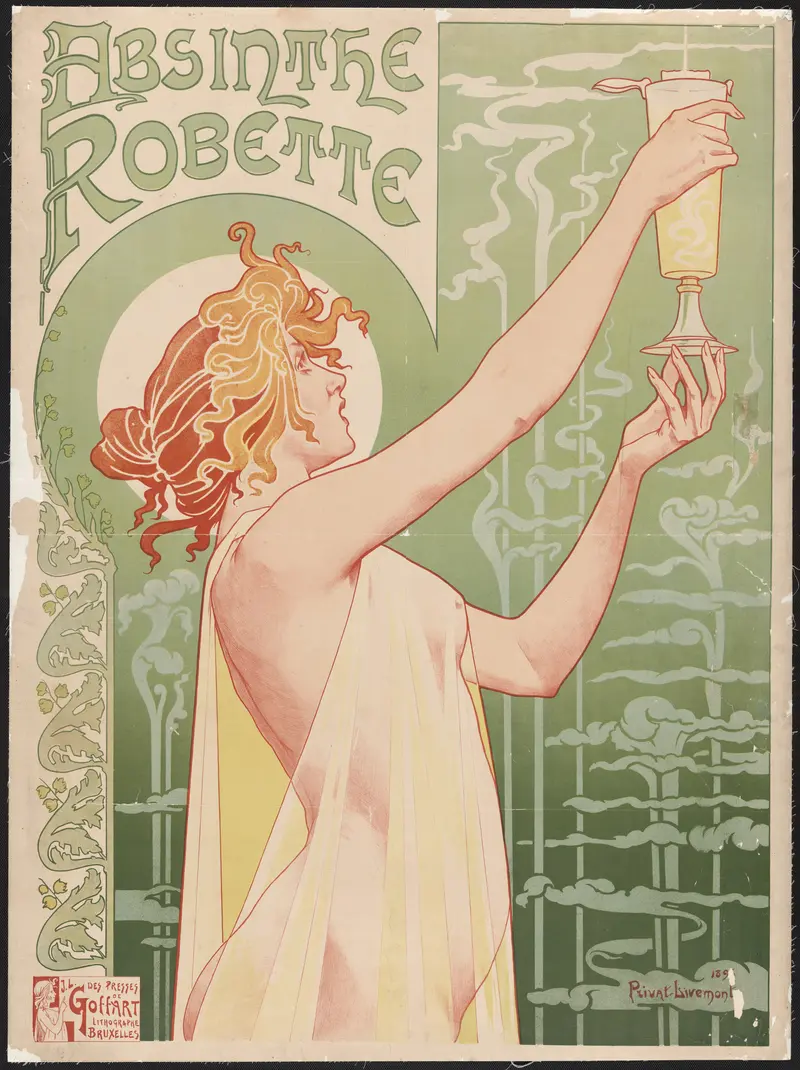
Absinthe Robette
Henri Privat-Livemont
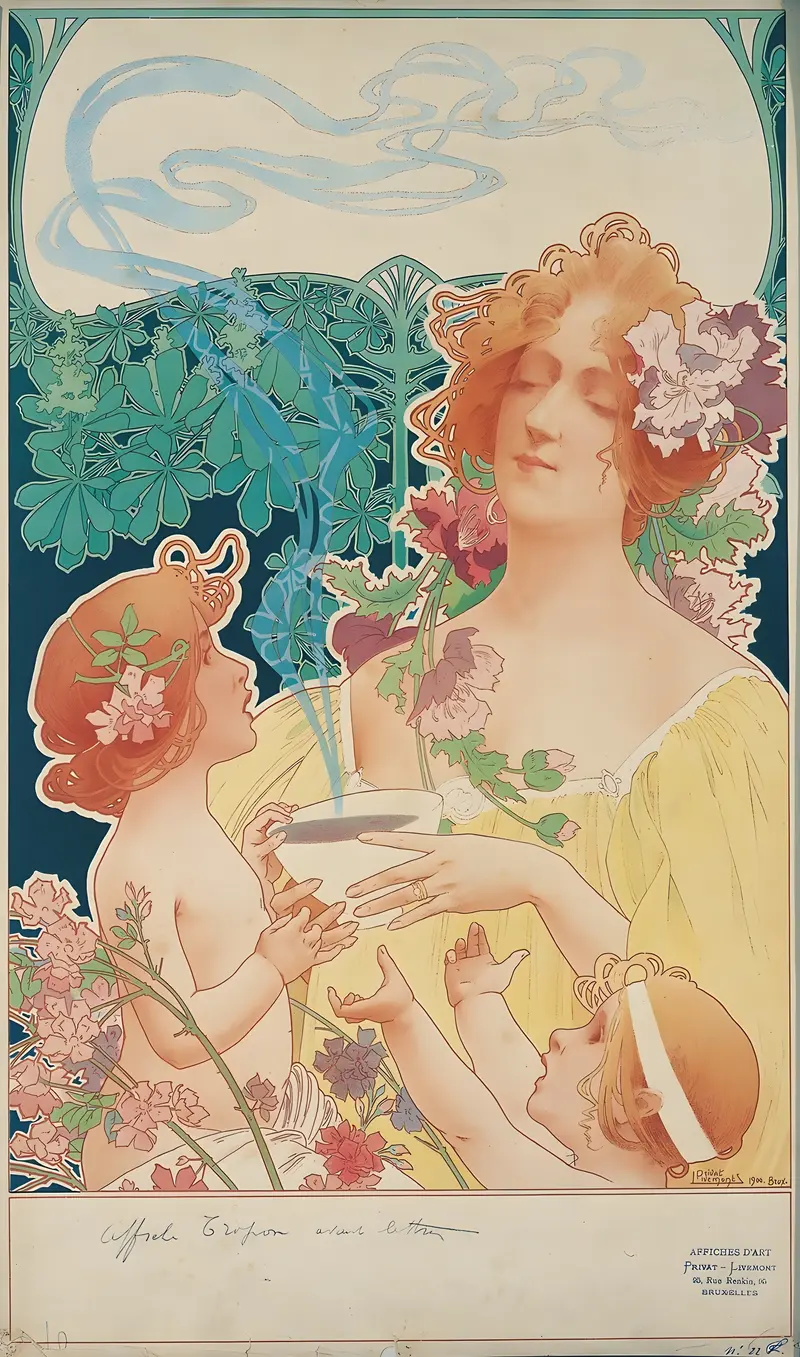
Tropon Chocolat-Cacao
Henri Privat-Livemont
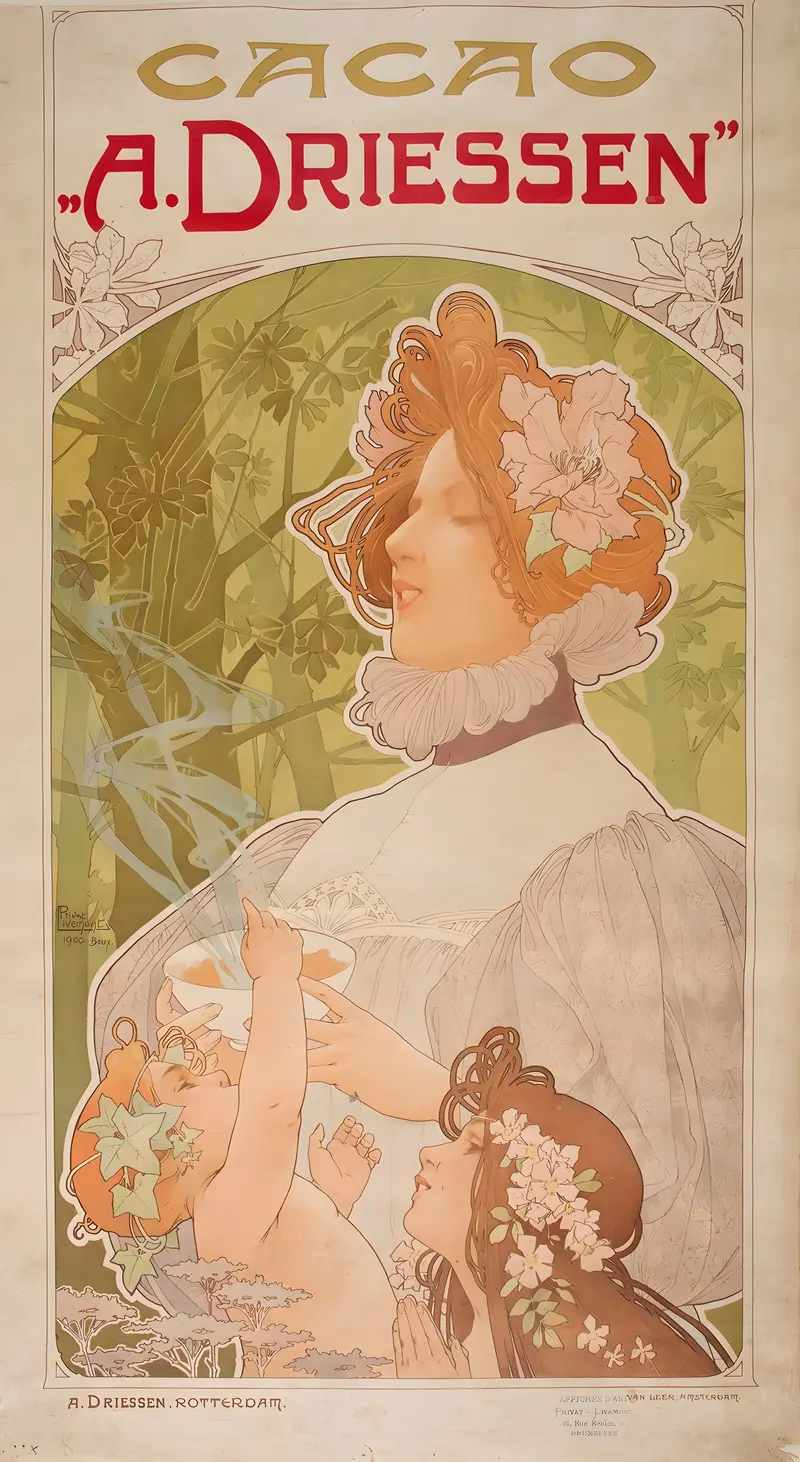
Cacao «A. Driessen»
Henri Privat-Livemont
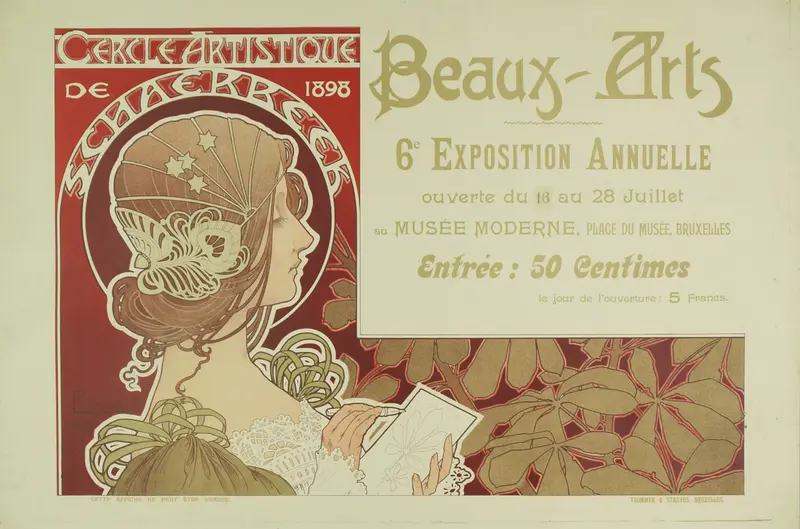
Cercle Artistique De Schaerbeek
Henri Privat-Livemont
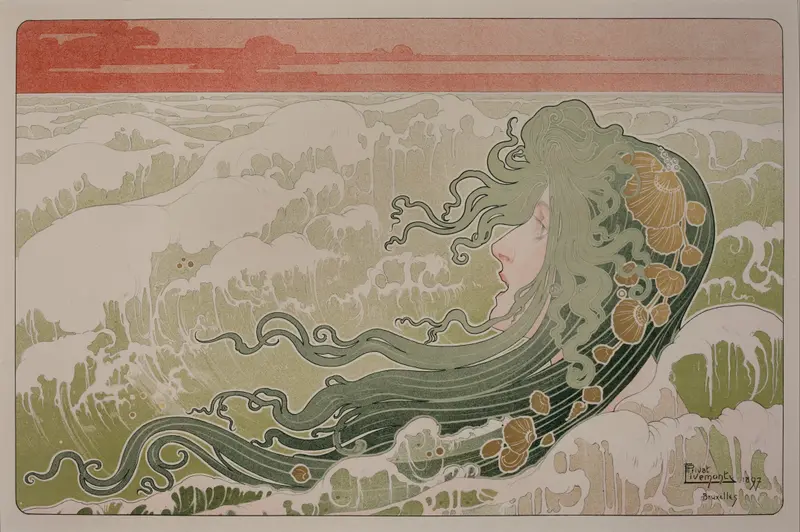
La Vague (The Wave)
Henri Privat-Livemont
Bols
Henri Privat-Livemont



