
Dante Alighieri (c.1265–1321) — History & Facts
When William Blake set out to portray Dante Alighieri around 1800, he was not just painting a poet—he was conjuring the spirit of a man whose vision of the afterlife had shaped centuries of art and thought. The fascination was mutual: Blake would later devote years to illustrating The Divine Comedy, but this early portrait signals the beginning of his lifelong dialogue with Dante. The work stands out because, unlike the many formal likenesses of Dante, Blake’s interpretation is infused with the visionary intensity that defined both men.
In a period when Dante’s reputation in England was still growing, Blake’s engagement was both daring and deeply personal. In this image, Dante is caught in a moment of inward focus, his gaze directed beyond the viewer, as if beholding the realms he would describe in his poetry. The laurel wreath crowning his head marks him as a poet laureate, while his austere profile and furrowed brow suggest the burden of his epic journey through Hell, Purgatory, and Paradise. Blake’s rendering is less concerned with physical likeness than with capturing the fire of Dante’s imagination—his hand perhaps resting on a manuscript, the folds of his robe rendered with a nervous, almost spiritual energy.
Where earlier artists, such as Sandro Botticelli in his own Dante portraits, emphasized the poet’s Florentine dignity, Blake channels a visionary kinship, presenting Dante as a fellow seer. The precise medium of this portrait remains uncertain, as does its early provenance; it may have been intended as a study for a larger project or as a personal homage. Unlike Blake’s later, more famous watercolors for The Divine Comedy, this work stands alone, a testament to the artist’s early fascination with the Italian poet. Today, it is valued as an important intersection of two creative giants—an English Romantic visionary contemplating the father of Italian poetry.
Its place in Blake’s career marks the start of a deep engagement that would culminate, decades later, in some of the most celebrated literary illustrations of the nineteenth century.
More Artworks by William Blake
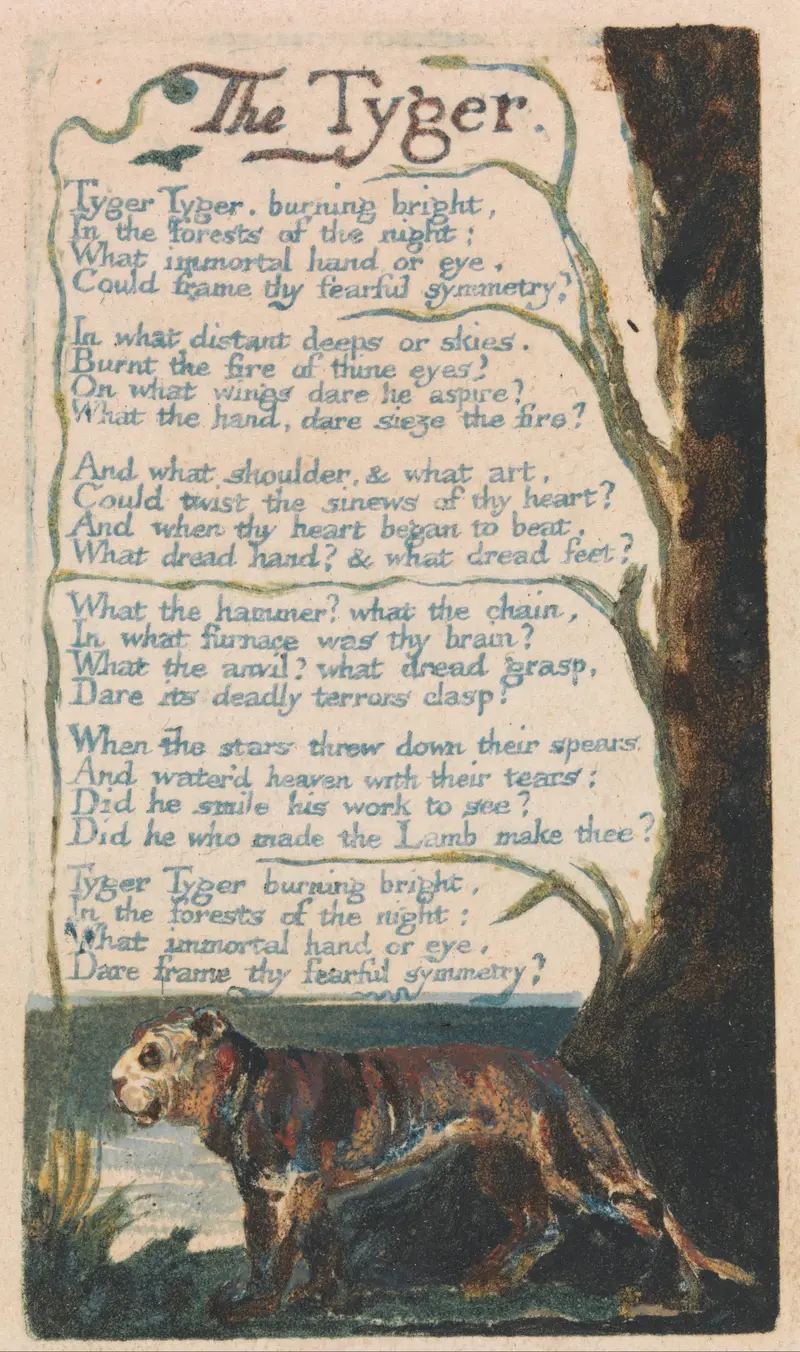
The Tyger
William Blake

Christ Blessing
William Blake
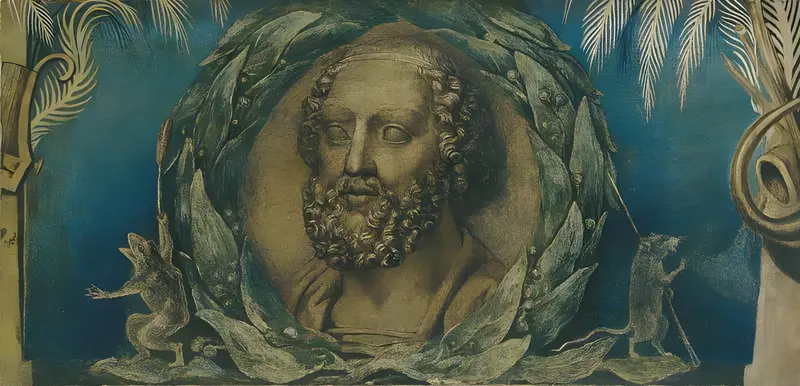
Homer
William Blake
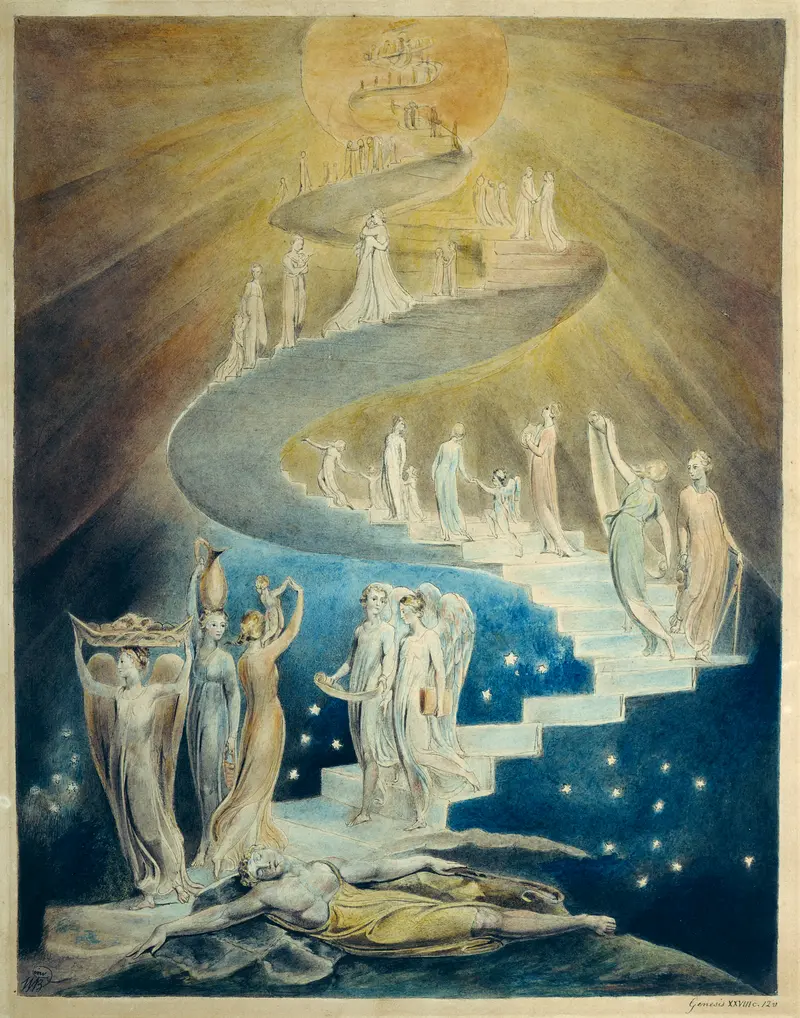
Jacob's Ladder
William Blake
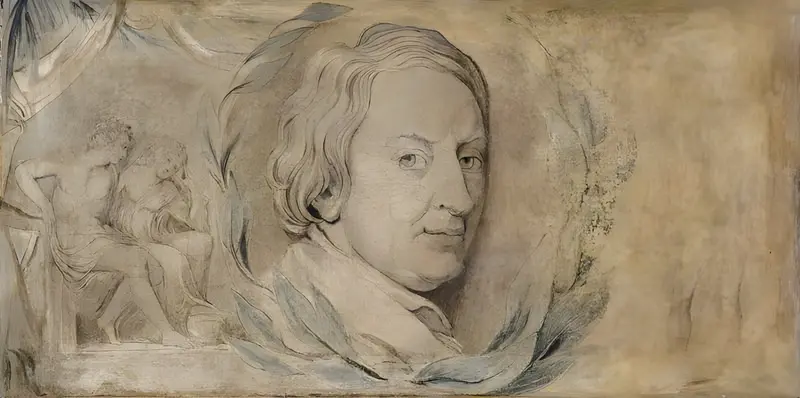
John Dryden (1631–1700)
William Blake
Landscape near Felpham
William Blake
Sacrifice of Job
William Blake
Christ's Entry into Jerusalem
William Blake
The Ancient of Days
William Blake
Adam Naming the Beasts
William Blake





