
Sacrifice of Job — History & Facts
When William Blake first exhibited his Sacrifice of Job in 1805, he did so as part of a remarkable series of watercolors commissioned by Thomas Butts, a civil servant and one of Blake’s most important patrons. This cycle, illustrating the Book of Job, was not intended for public display but for private devotion and study—a rare arrangement that allowed Blake to pursue his visionary style without compromise. The Sacrifice of Job stands out among these works for its intense focus on a single, harrowing moment, capturing the spiritual crisis of a man tested by unimaginable loss. In this scene, Job kneels in anguish as he offers a burnt sacrifice, his hands raised in supplication while his family and friends look on.
The altar smokes at the center, its flames a stark reminder of the trials inflicted upon Job by Satan, with God's permission, as recounted in the Old Testament. Blake’s use of swirling forms and luminous washes draws the eye to Job’s uplifted face, marked by both suffering and steadfast faith. The presence of his wife and companions, rendered with expressive gestures, underscores the isolation and misunderstanding Job endures.
Unlike the grand, theatrical renditions by artists such as Le Sueur or Gerard Hoet, Blake’s interpretation is intimate and psychological, focusing on the inner drama rather than external spectacle. The original Sacrifice of Job watercolor remains part of the Butts set, now dispersed among several collections, with this particular work housed in the Morgan Library & Museum in New York. Its journey reflects the shifting appreciation of Blake’s art: initially overlooked by the mainstream, these Job illustrations are now considered central to his legacy. The medium—watercolor heightened with pen and ink—shows Blake’s mastery of delicate line and radiant color, techniques he developed throughout his career as both painter and printmaker.
Today, the Sacrifice of Job is recognized not only as a testament to Blake’s visionary imagination but also as a deeply personal meditation on faith under trial.
More Artworks by William Blake
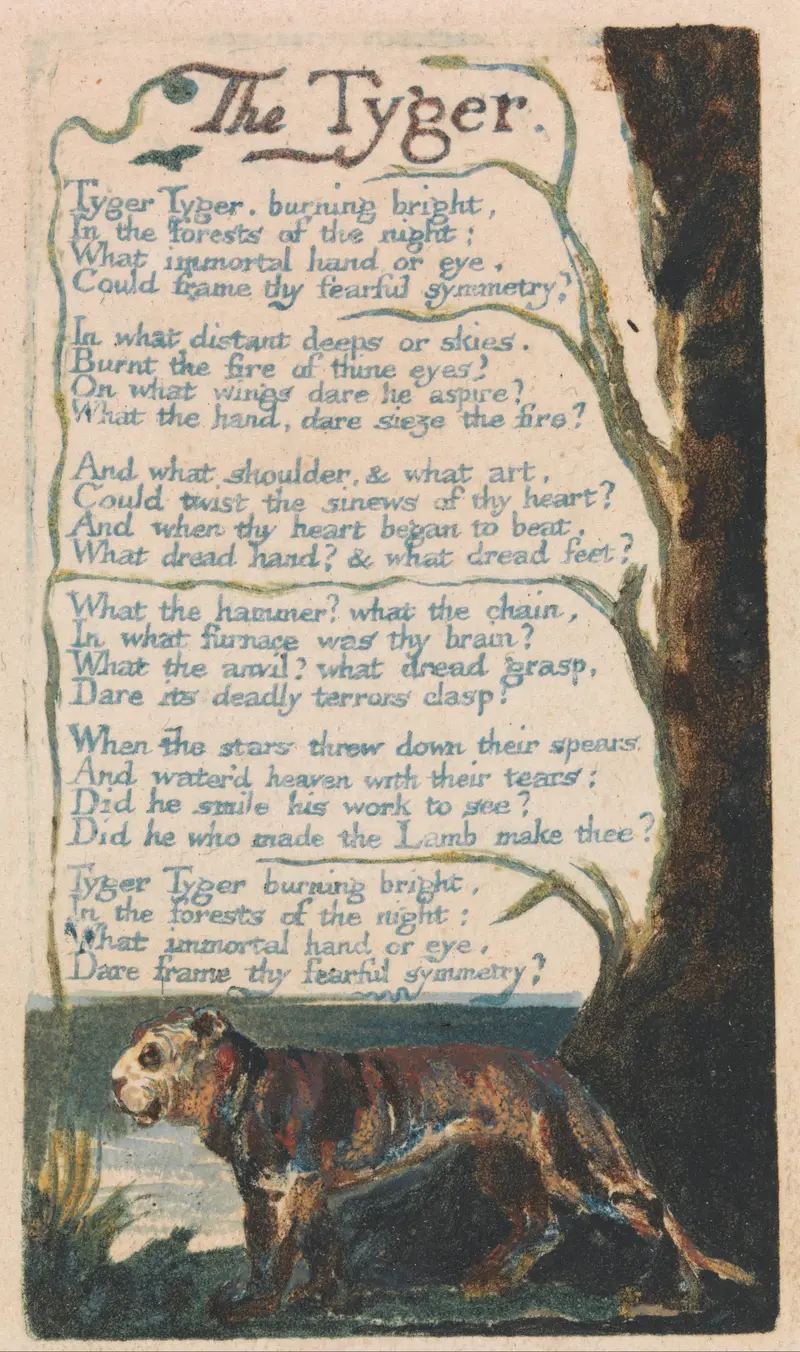
The Tyger
William Blake

Christ Blessing
William Blake
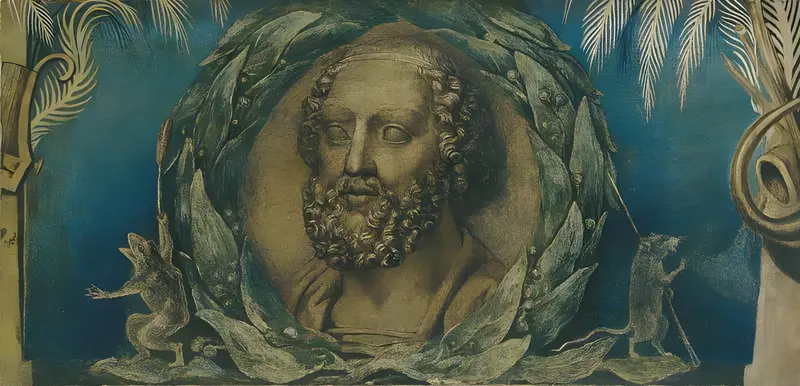
Homer
William Blake
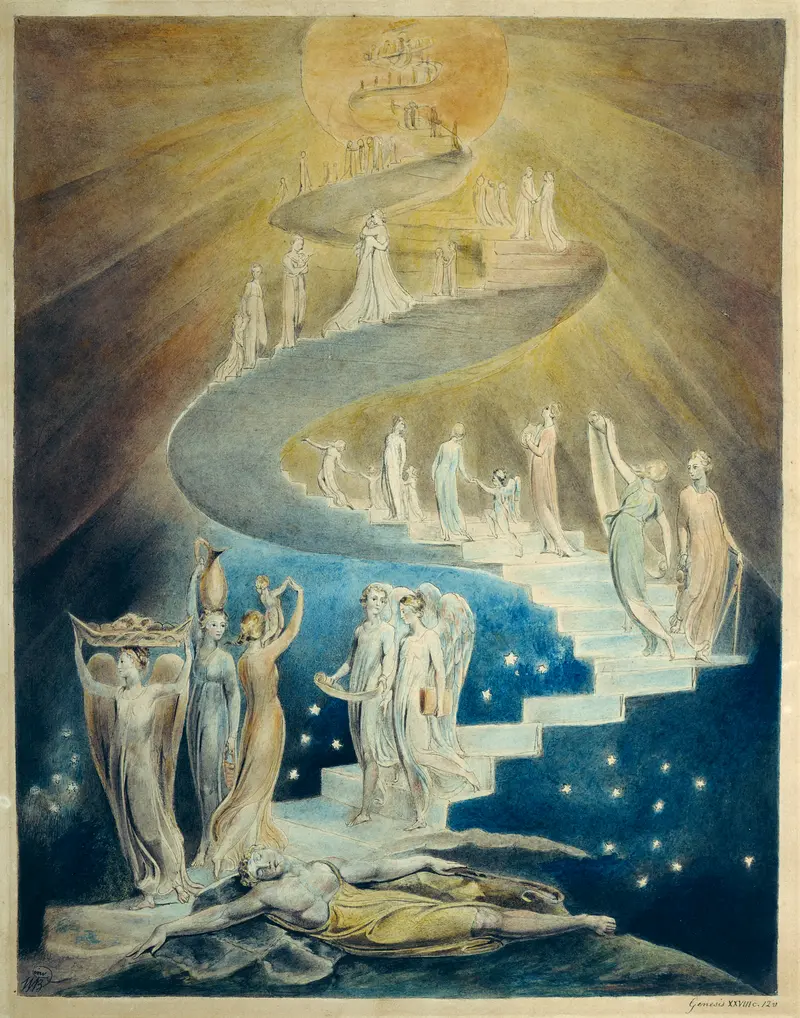
Jacob's Ladder
William Blake
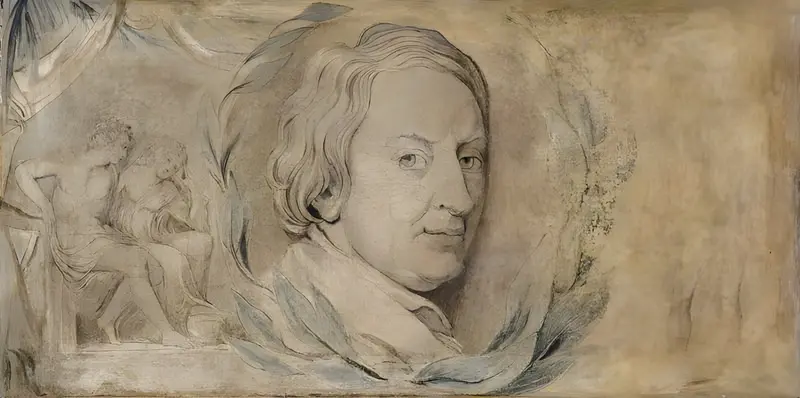
John Dryden (1631–1700)
William Blake
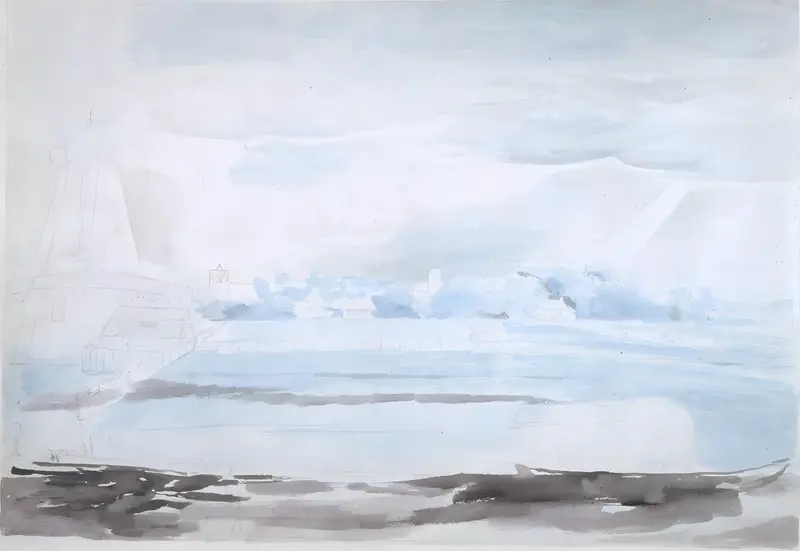
Landscape near Felpham
William Blake
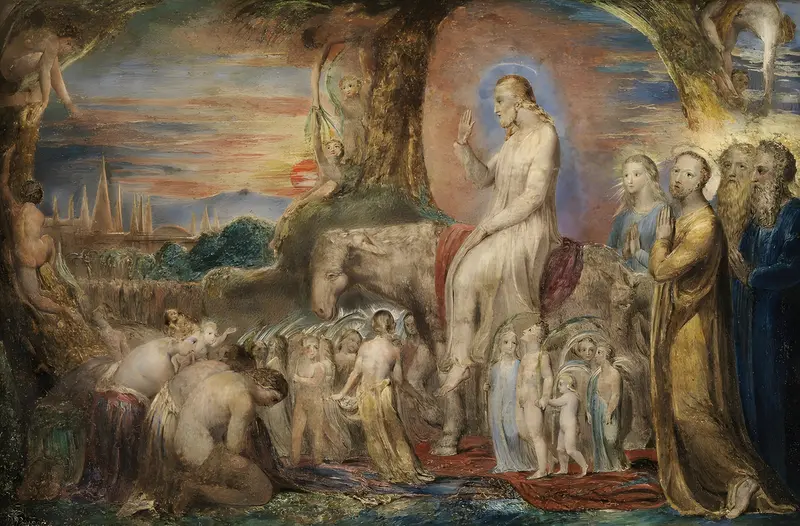
Christ's Entry into Jerusalem
William Blake
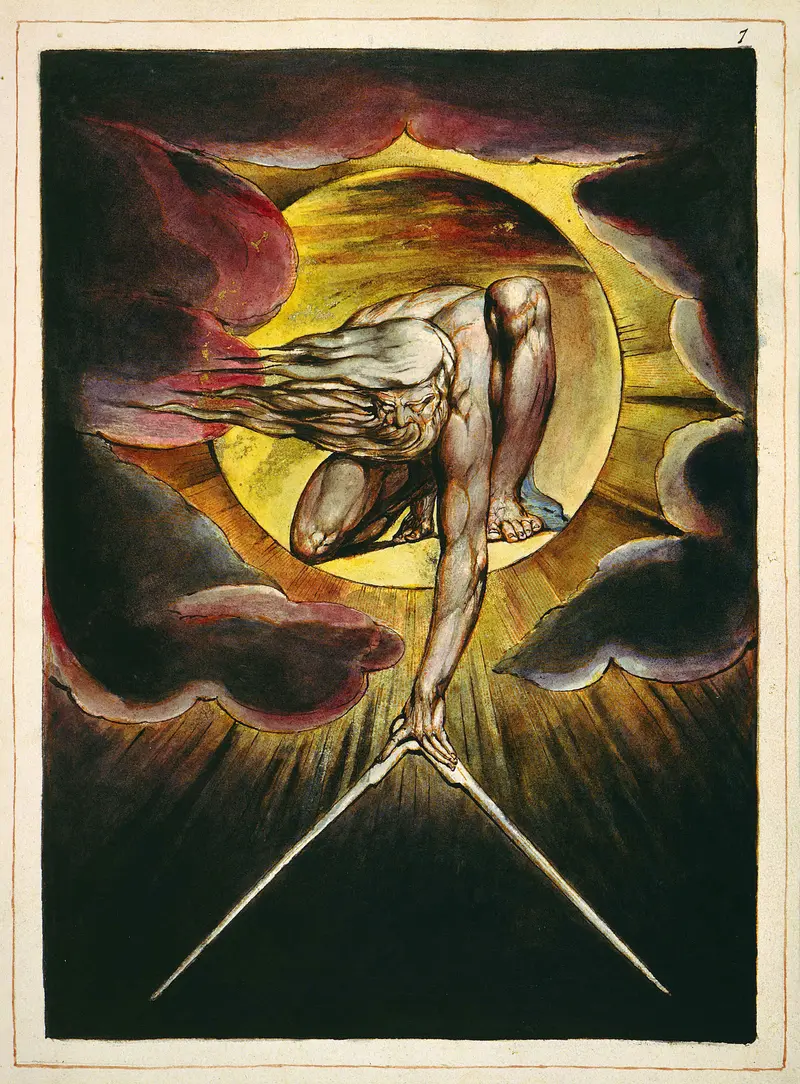
The Ancient of Days
William Blake
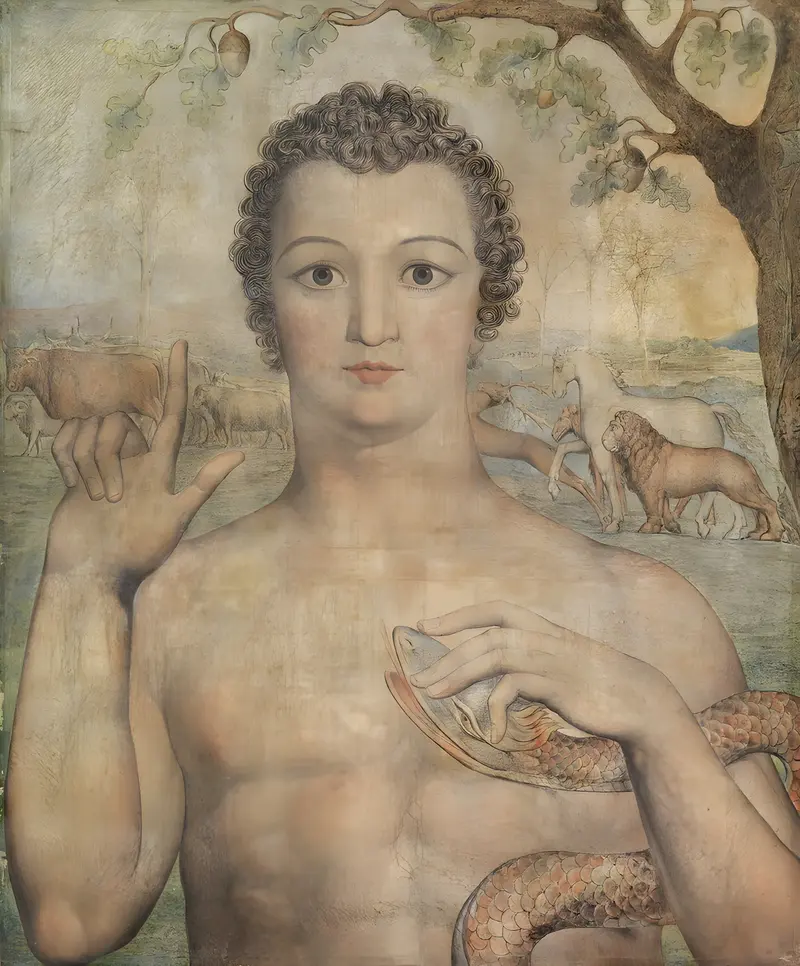
Adam Naming the Beasts
William Blake
Beatrice Addressing Dante from the Car
William Blake





