
John Dryden (1631–1700) — History & Facts
When William Blake painted John Dryden (1631–1700) in 1800, he was not simply honoring a literary giant—he was also staking a claim for the poet’s place in the English imagination at a time when Dryden’s reputation was being hotly debated. The portrait emerges from a moment when Blake, recently arrived in Felpham under the patronage of William Hayley, was exploring the lineage of English poets and their spiritual significance. The painting is one of a series Blake made of literary figures, a project that reflected both his admiration and his rivalry with the canonical voices of the past.
The very act of painting Dryden—whose rationalism and classicism were often contrasted with Blake’s visionary style—was itself a statement. Blake chooses to present Dryden not as a remote, marble bust, but as a living, searching presence. The poet’s gaze is direct, his features rendered with a nervous energy, as if caught between inspiration and doubt. The background is spare, focusing all attention on Dryden’s expressive face and hands, which seem to hover over an unseen manuscript.
Unlike the stately, composed portraits by Godfrey Kneller or Michael Dahl, Blake’s Dryden is restless, almost haunted, hinting at the inner struggles beneath the laureate’s public persona. The light falls unevenly, illuminating the brow and casting the lower face in shadow—a visual metaphor for the dualities in Dryden’s life and work. The precise medium of this portrait remains uncertain, though it likely combines drawing and watercolor, typical of Blake’s approach to portraiture of the period. Commissioned as part of Hayley’s circle in Sussex, the work was intended to accompany literary projects celebrating English poets.
Over the years, the portrait’s whereabouts were not always clear, and it has sometimes been overshadowed by Blake’s more visionary works. Today, John Dryden (1631–1700) stands as a testament to Blake’s complex relationship with literary tradition, offering a rare glimpse into his engagement with the figures he both revered and sought to surpass.
Sources: Wikidata Q119647169 · Image source (Wikimedia Commons)
More Artworks by William Blake
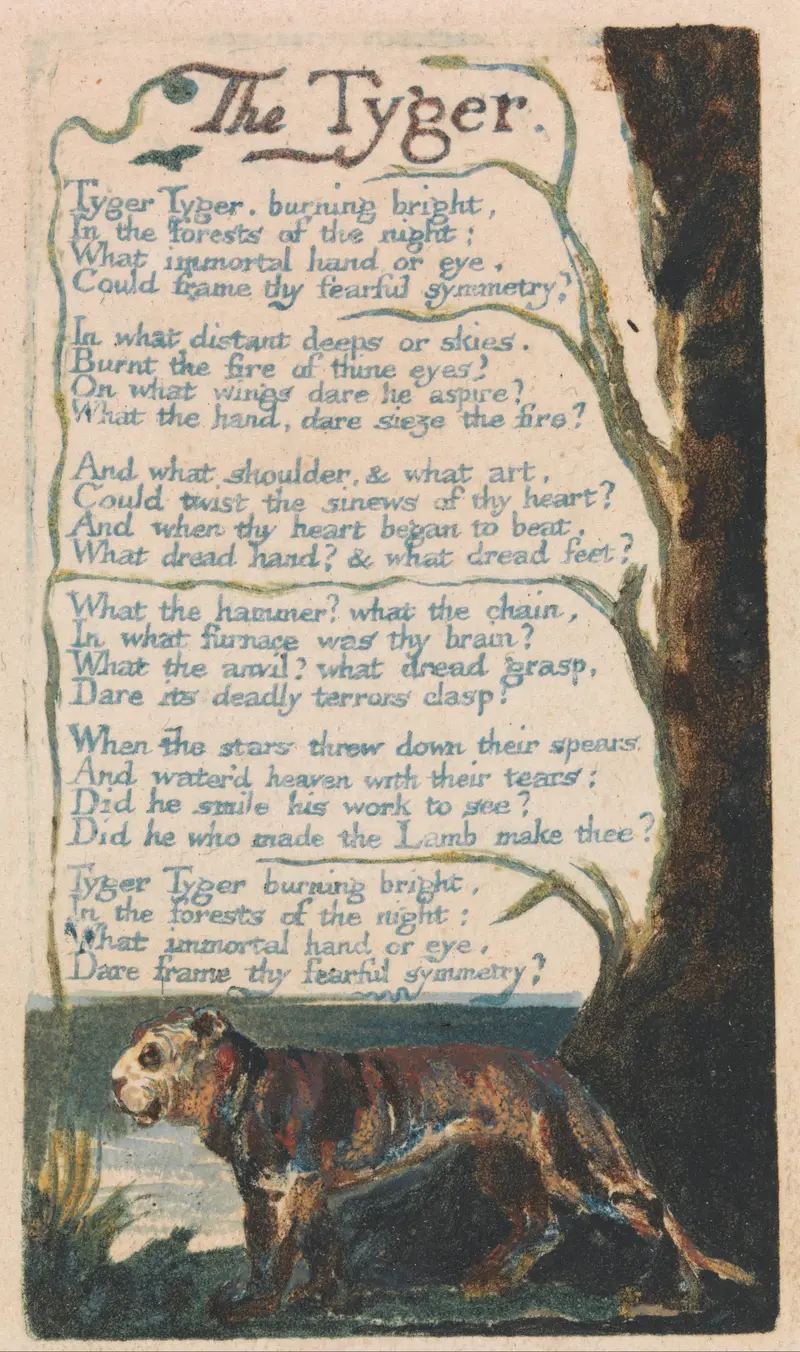
The Tyger
William Blake

Christ Blessing
William Blake
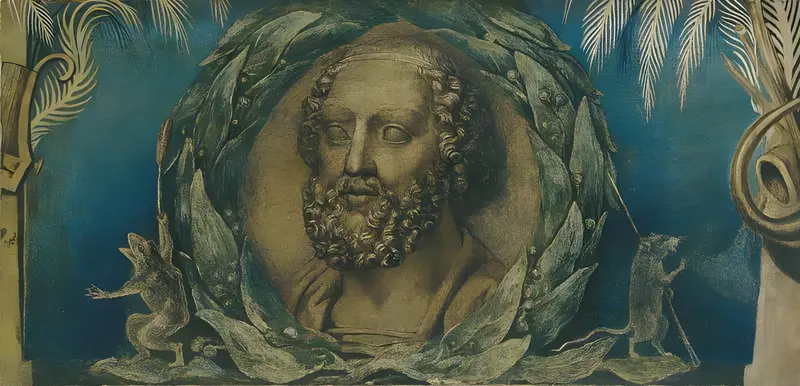
Homer
William Blake
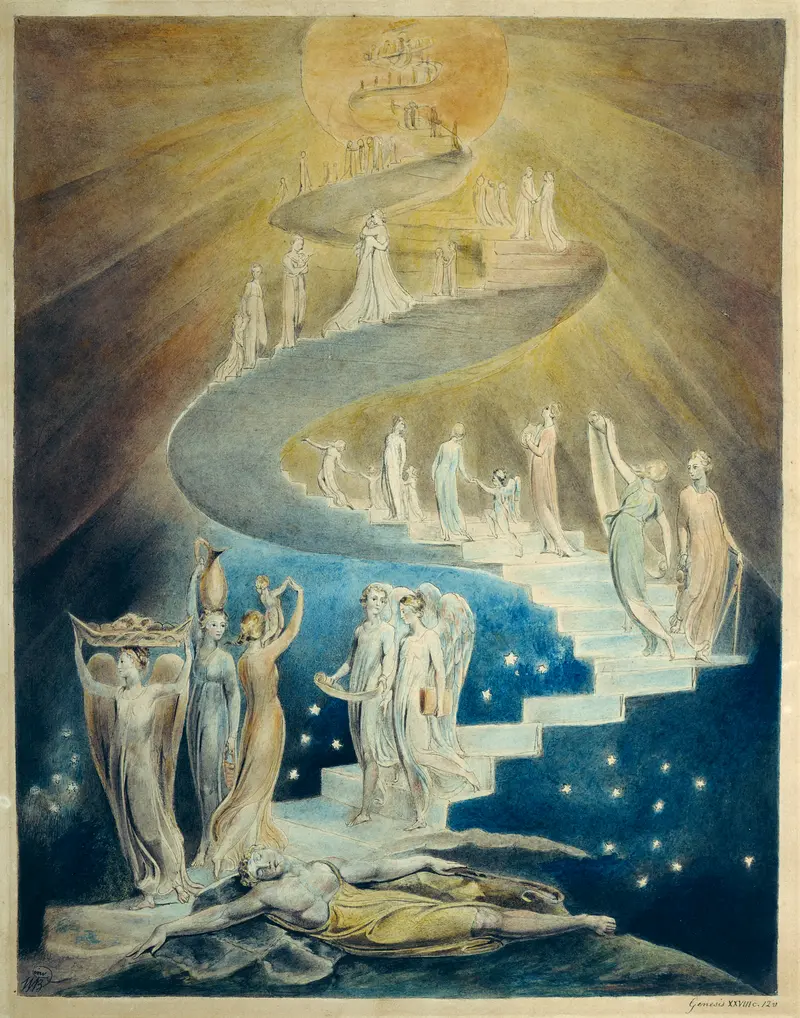
Jacob's Ladder
William Blake
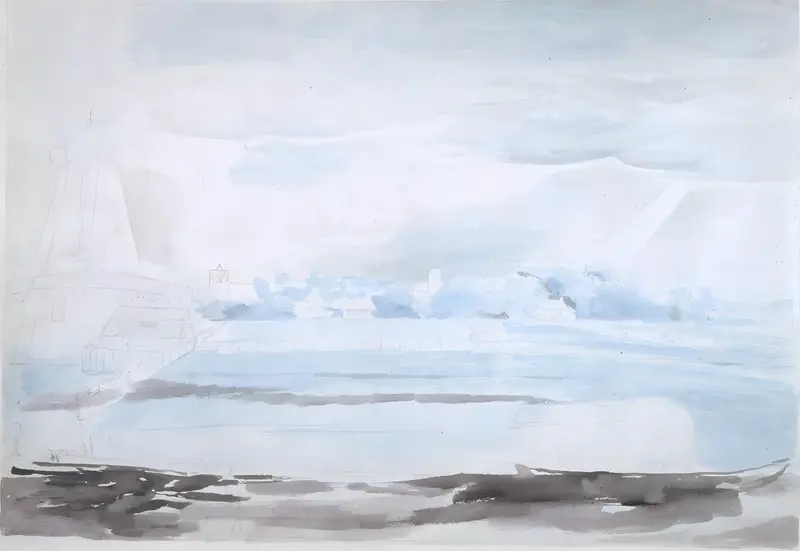
Landscape near Felpham
William Blake
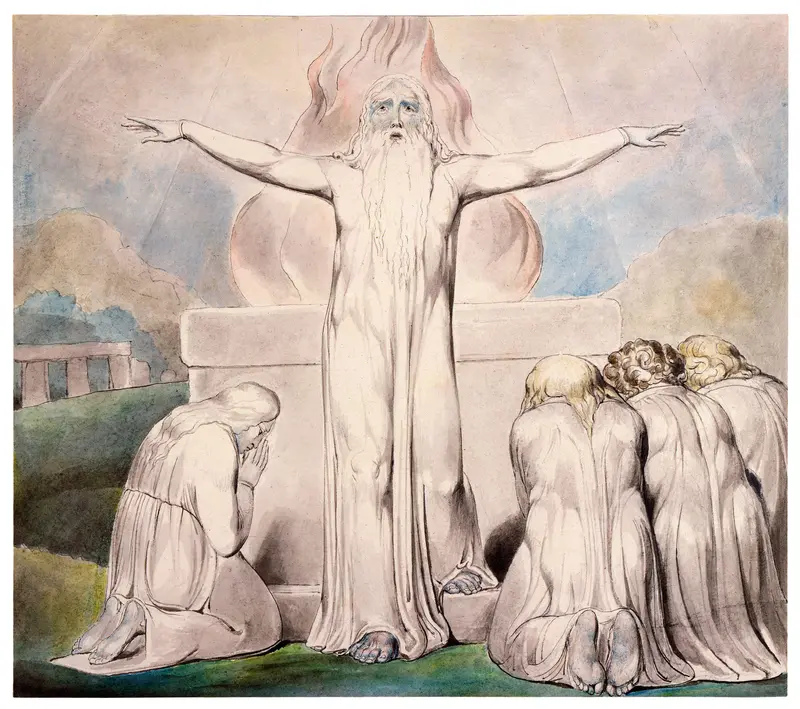
Sacrifice of Job
William Blake
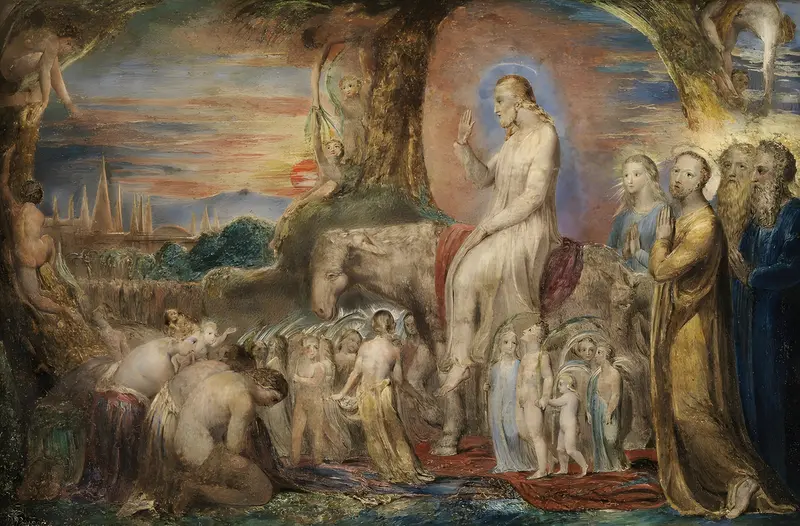
Christ's Entry into Jerusalem
William Blake
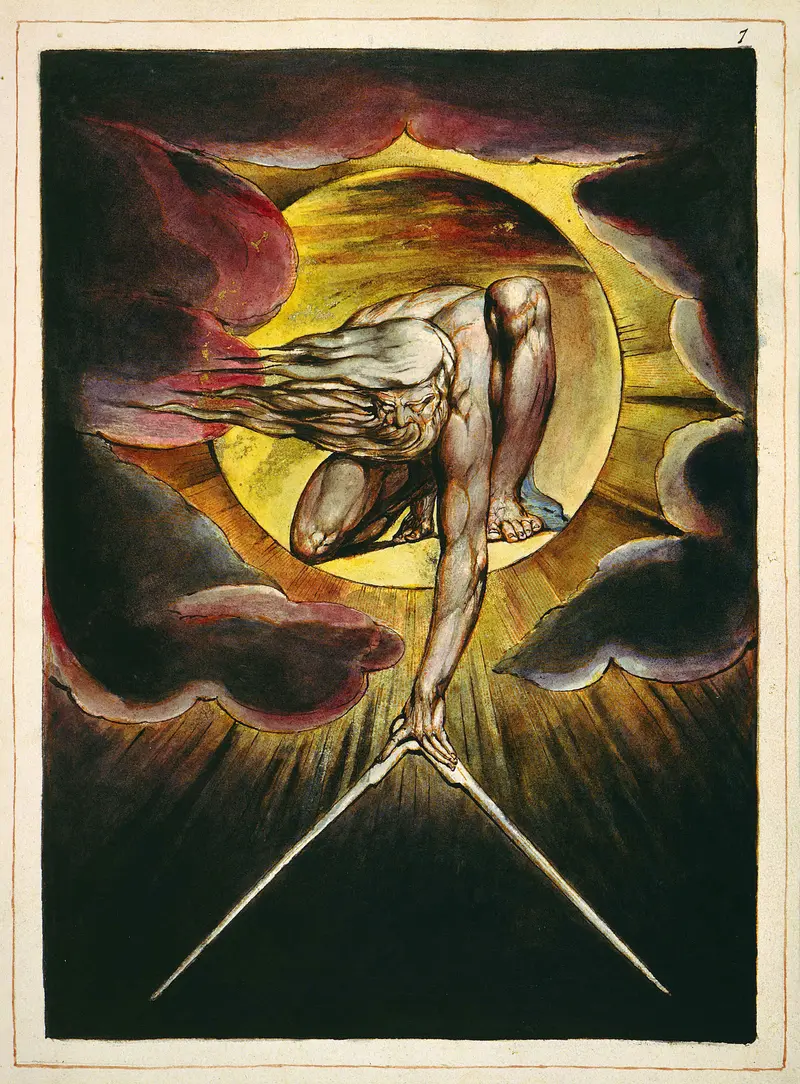
The Ancient of Days
William Blake
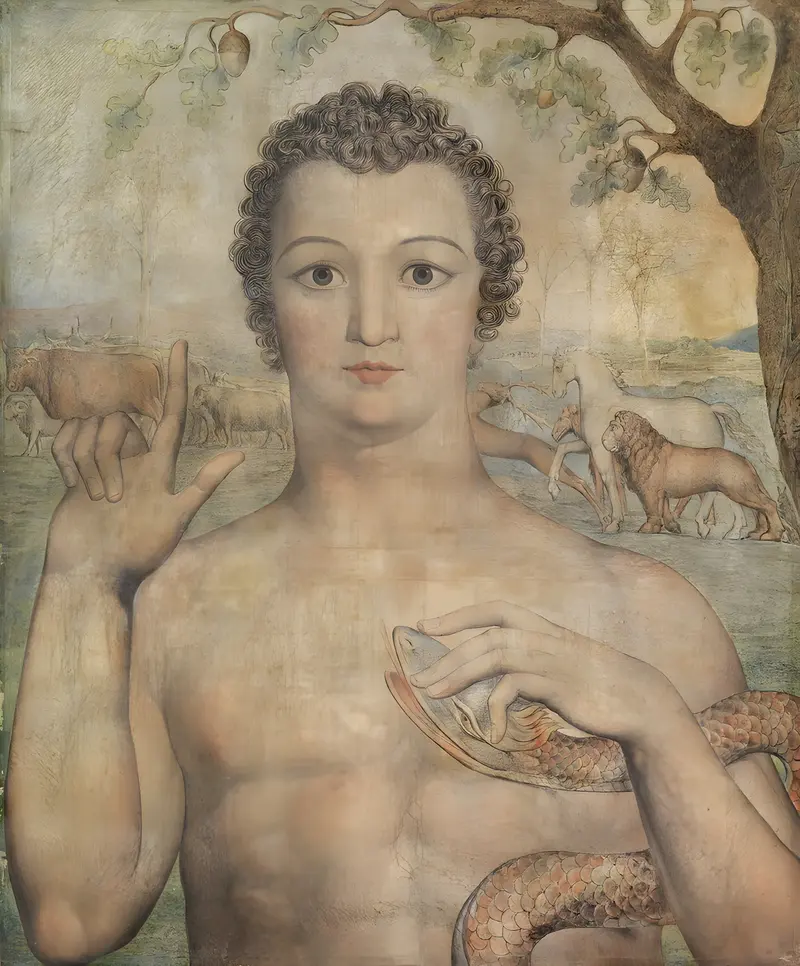
Adam Naming the Beasts
William Blake
Beatrice Addressing Dante from the Car
William Blake





