
Landscape near Felpham — History & Facts
When William Blake moved to the Sussex coast in 1800, he found himself in Felpham, a village whose gentle landscape would inspire some of his rare ventures into pure scenery. Landscape near Felpham stands out as one of the few times Blake turned his visionary eye away from myth and prophecy to depict the world around him. Scholars have long noted the curiosity of this work: Blake, known for his fiery imagination and spiritual subjects, here records a real place, yet infuses it with the same intensity as his more famous allegories.
The painting’s origins are linked to Blake’s stay at the invitation of the poet William Hayley, who hoped the fresh air and rural calm would soothe Blake’s restless spirit. The scene captures a moment of tranquil observation: rolling fields, a winding path, and the soft light of late afternoon. Yet, as in so many of Blake’s works, the ordinary becomes charged with meaning. The trees seem to lean and shimmer, their forms bordering on the fantastical, while the sky glows with a peculiar radiance that suggests something more than mere weather—a hint, perhaps, of the spiritual presences Blake often claimed to see.
Unlike the structured landscapes of John Constable, who would later paint the English countryside with empirical detail, Blake’s vision is filtered through imagination, turning Felpham’s fields into a threshold between the visible and the invisible. The physical history of Landscape near Felpham is less documented than many of Blake’s illuminated books and engravings. The medium itself is debated—some believe it to be watercolor, others tempera or even a rare oil—reflecting Blake’s experimental approach to materials. The painting has passed through private collections and, like much of Blake’s work, was largely overlooked by the public until the late 19th century, when a revival of interest in his art brought it to wider attention.
Today, it serves as a rare window into the artist’s brief pastoral interlude, a moment when the visionary poet paused to see the world as it was, and as he imagined it could be.
Sources: Wikidata Q18542676 · Image source (Wikimedia Commons)
More Artworks by William Blake
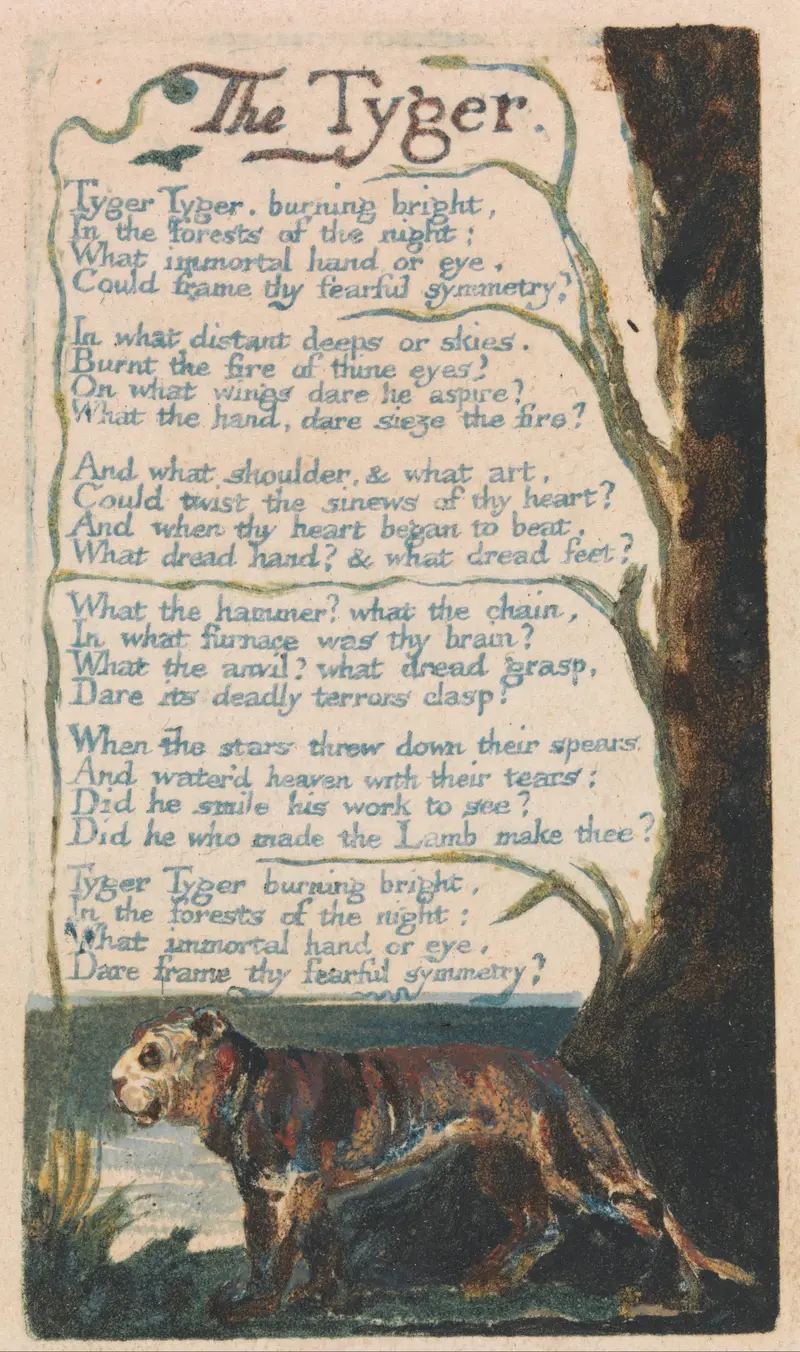
The Tyger
William Blake

Christ Blessing
William Blake
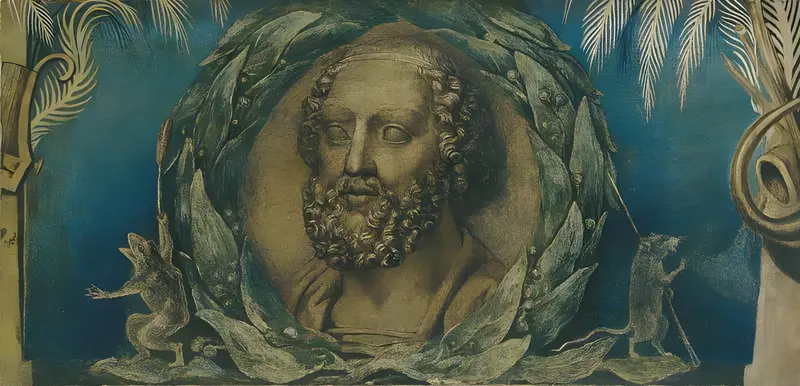
Homer
William Blake
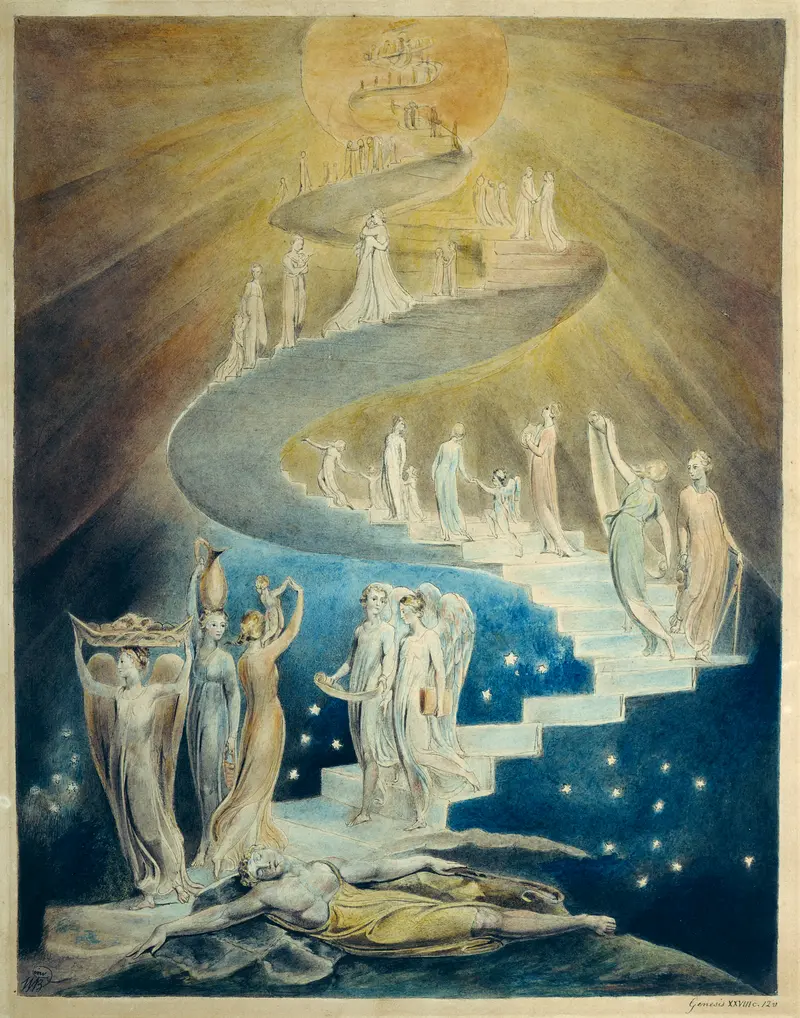
Jacob's Ladder
William Blake
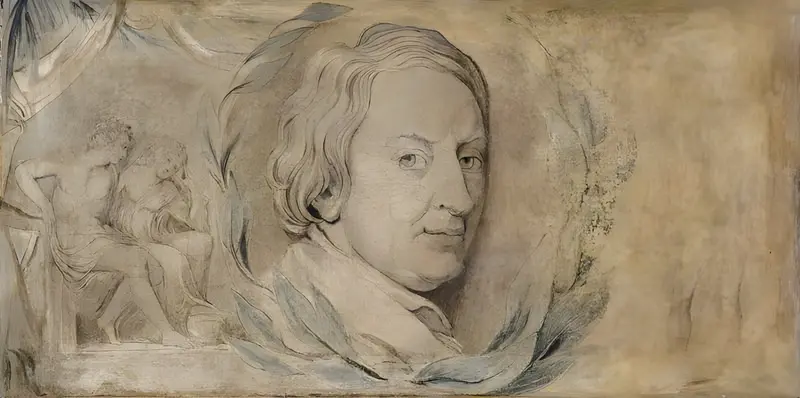
John Dryden (1631–1700)
William Blake
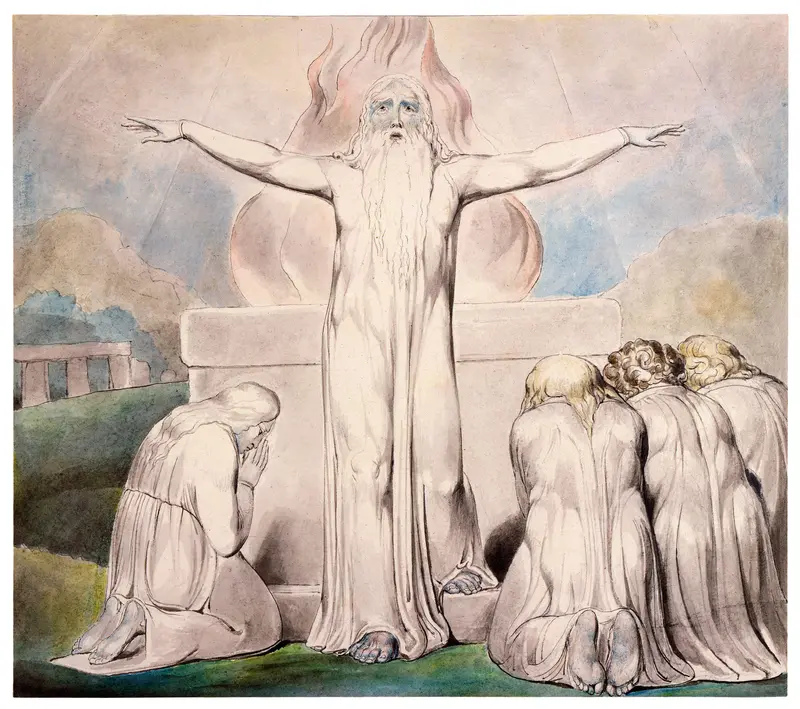
Sacrifice of Job
William Blake
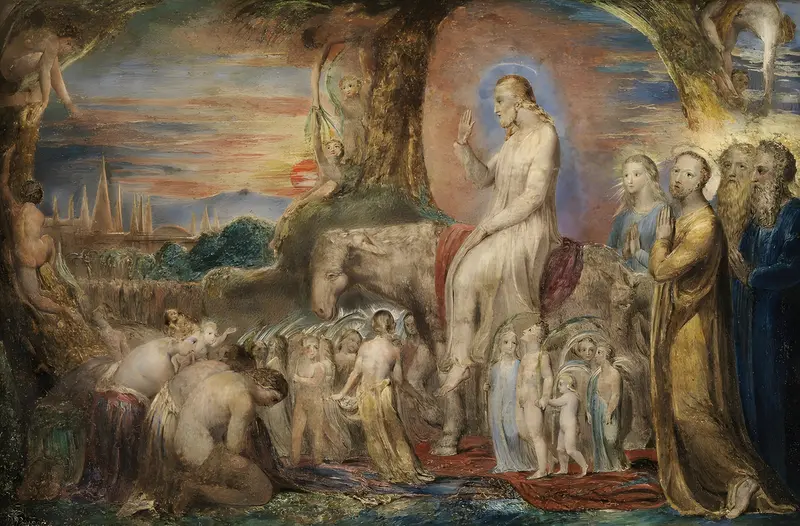
Christ's Entry into Jerusalem
William Blake
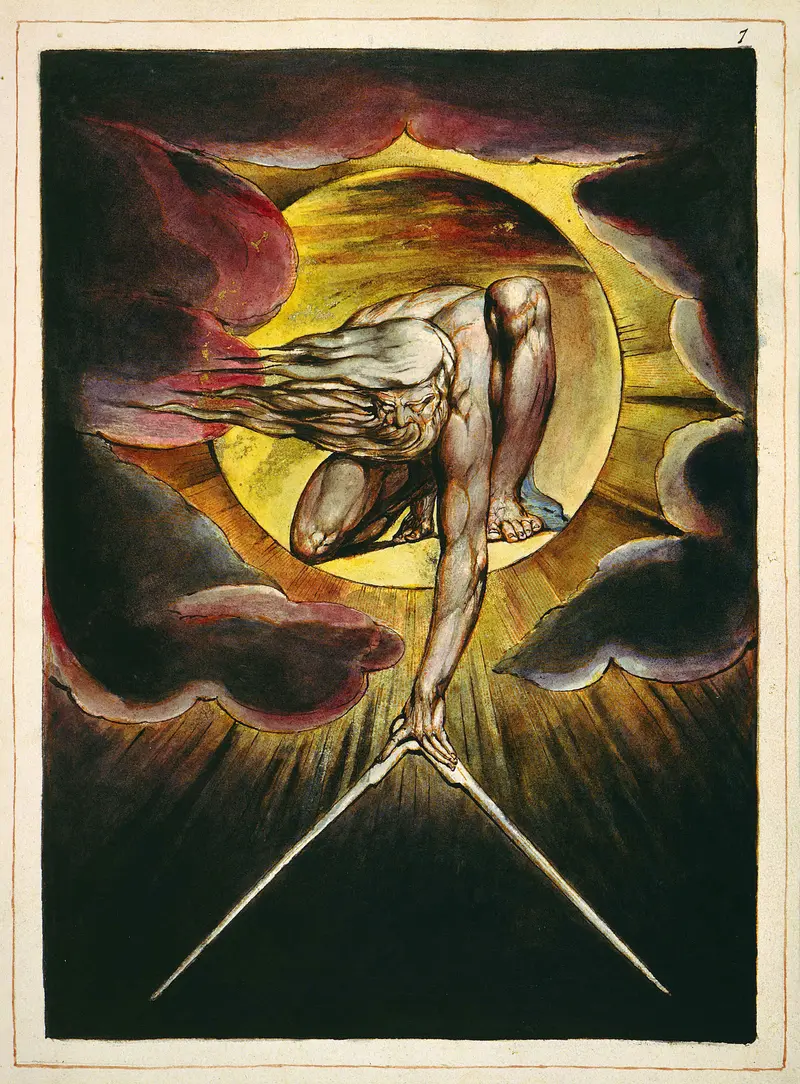
The Ancient of Days
William Blake
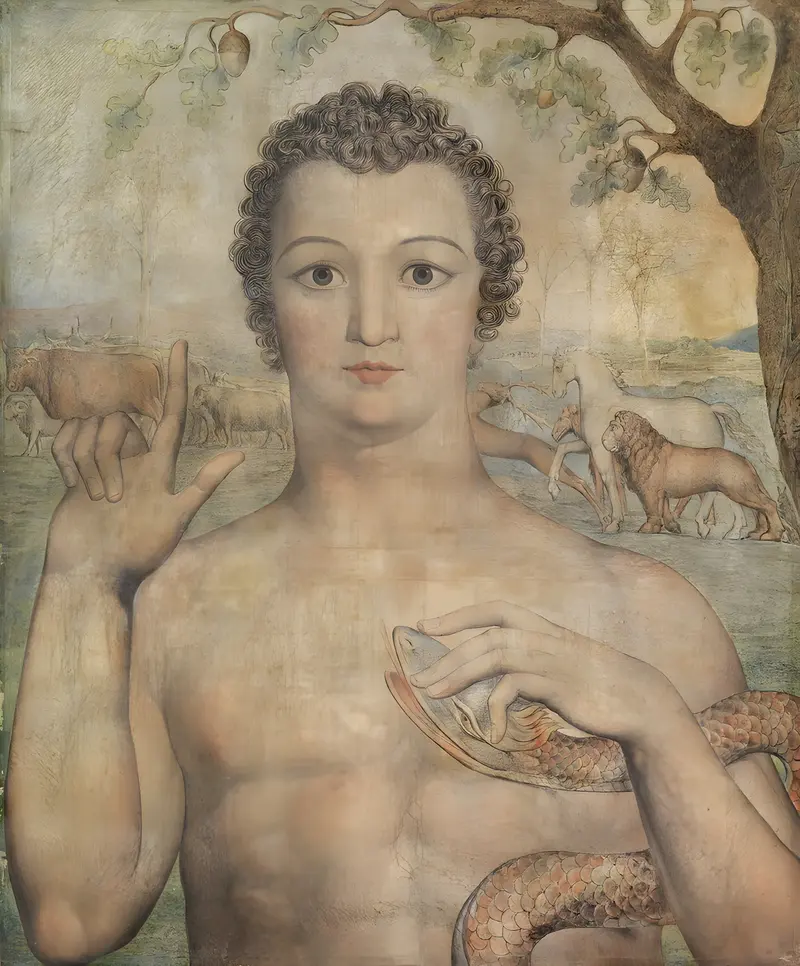
Adam Naming the Beasts
William Blake
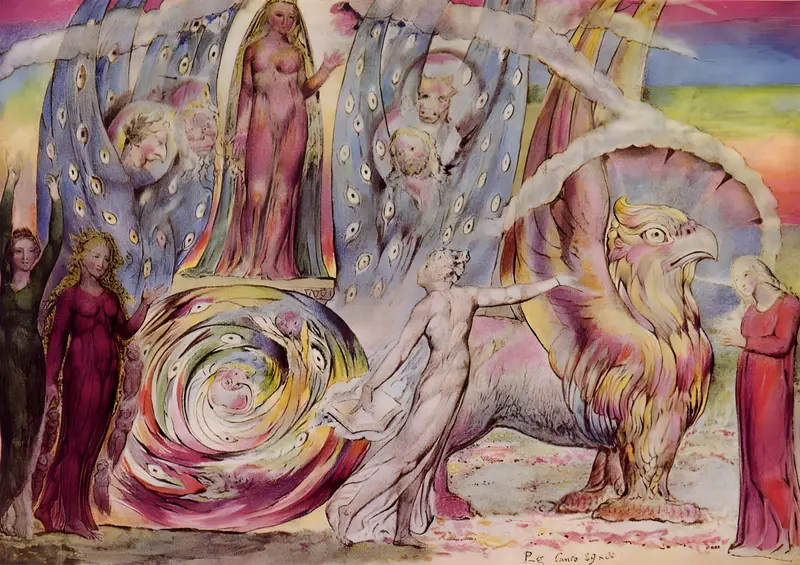
Beatrice Addressing Dante from the Car
William Blake
More Landscape Art

The Starry Night
Vincent van Gogh

View of Delft
Johannes Vermeer

Water Lilies
Claude Monet

The Grand Canal, Venice, looking north-west from the Ca' Corner to the Ca' Contarini degli Scrigni, with the campanile of Santa Maria della Carità
Canaletto

Windsor Castle
Canaletto

The Grand Canal looking North-East from the Palazzo Dolfin-Manin to the Rialto Bridge
Canaletto