
De geseling van Christus — History & Facts
Could beauty survive in a century of chaos? In De geseling van Christus, serenity and suffering coexist, inviting deep contemplation on the nature of human experience. The juxtap of grace and turmoil serves as a powerful reminder of the resilience of the spirit amid adversity. Look to the left at the figure of Christ, his serene expression standing in stark contrast to the violent actions around him. Notice how the artist employs a muted color palette, allowing the deep reds and soft golds to draw the eye towards the central figure, highlighting both his vulnerability and dignity.
The intricate details of the figures surrounding him, their faces twisted in a mix of cruelty and fervor, provide a haunting backdrop to this poignant moment. The dynamic tension between suffering and calm is palpable; each lash depicted carries with it both a physical and emotional weight. As the figures wield their instruments of punishment, they embody the chaos of the time, while Christ's tranquil countenance reflects a profound hope that transcends his anguish. This duality speaks to the broader human experience, suggesting that within our darkest moments, there exists an enduring light. Lucas van Leyden painted this powerful work in 1509, amidst the tumult of early Renaissance Europe, a period marked by both artistic blossoming and social upheaval.
As a young artist, he was already gaining recognition for his exceptional skill in engraving and painting, positioning himself as a significant figure in the shift towards humanism in art. In capturing this moment, he not only responded to the religious fervor of his time but also laid the groundwork for future explorations of emotional depth and complexity in art.
More Artworks by Lucas van Leyden
Browse all →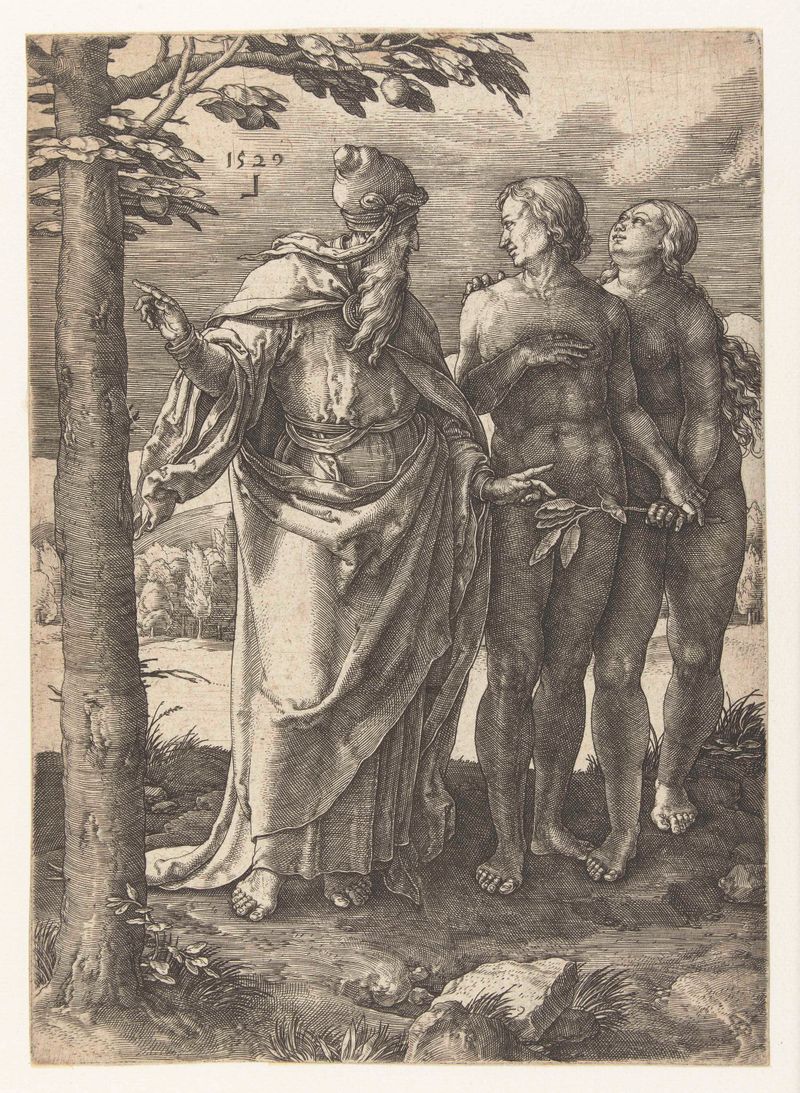
Het eerste verbod
Lucas van Leyden
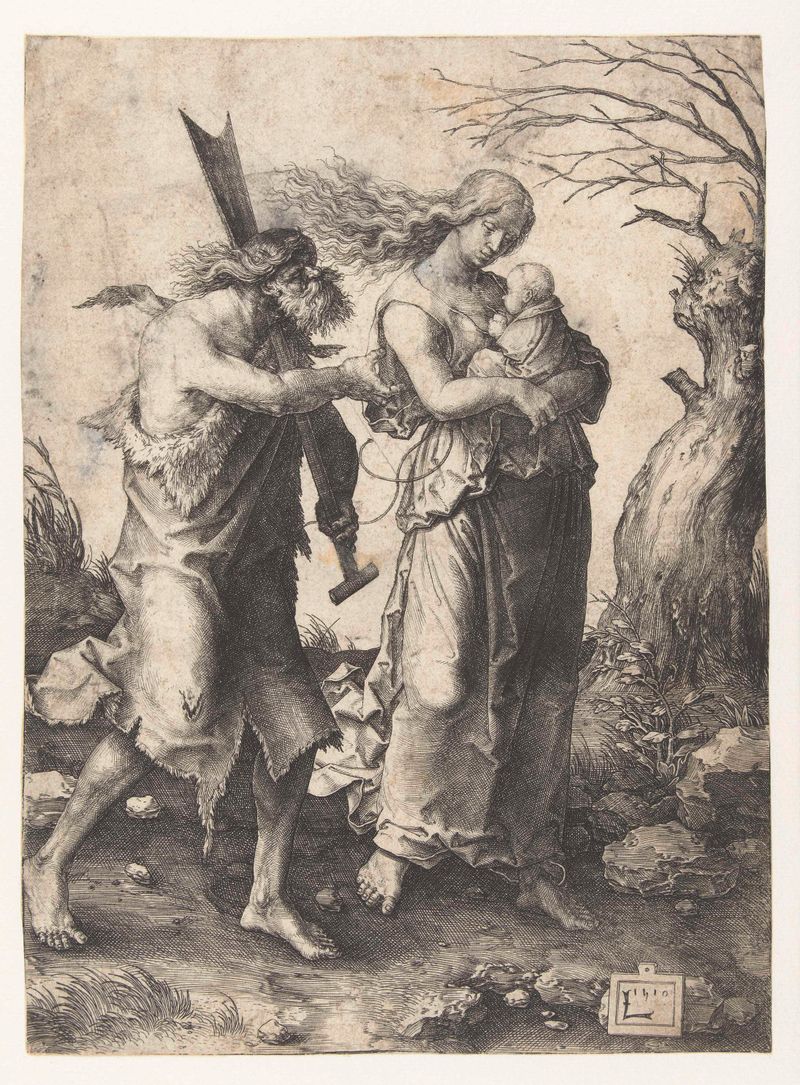
Adam en Eva na de verdrijving uit het paradijs
Lucas van Leyden
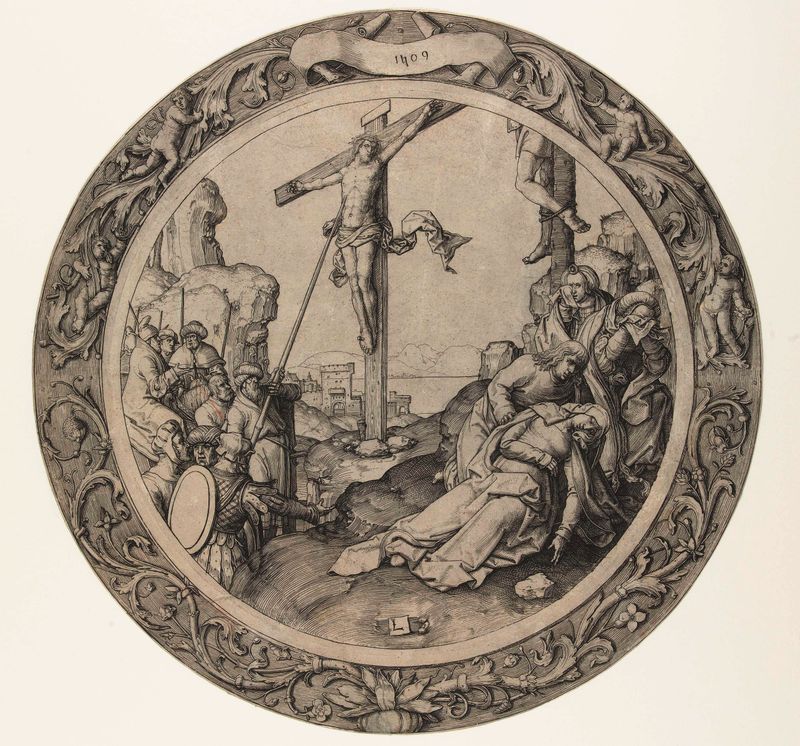
De kruisiging
Lucas van Leyden
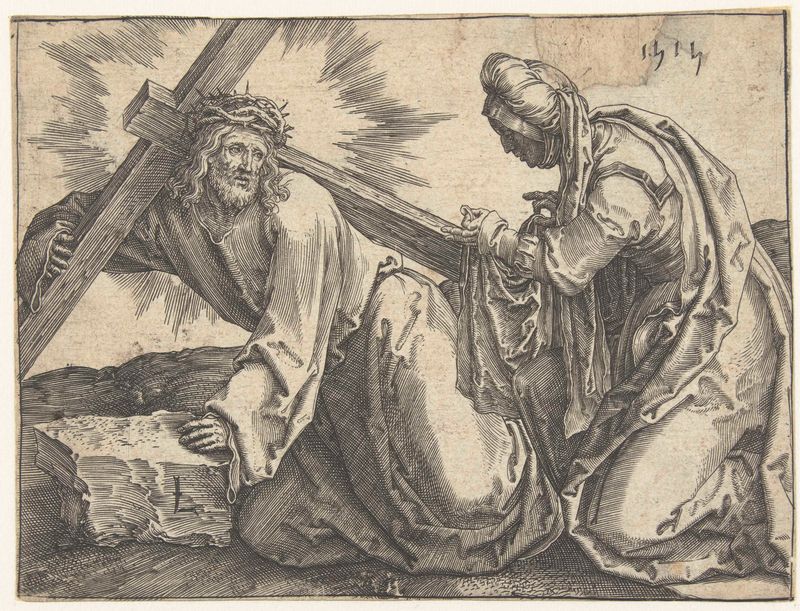
Kruisdraging
Lucas van Leyden
De vrouw van Potifar beschuldigt Jozef
Lucas van Leyden
De stigmatisatie van de heilige Franciscus
Lucas van Leyden
De zondeval
Lucas van Leyden
De grote Ecce Homo
Lucas van Leyden
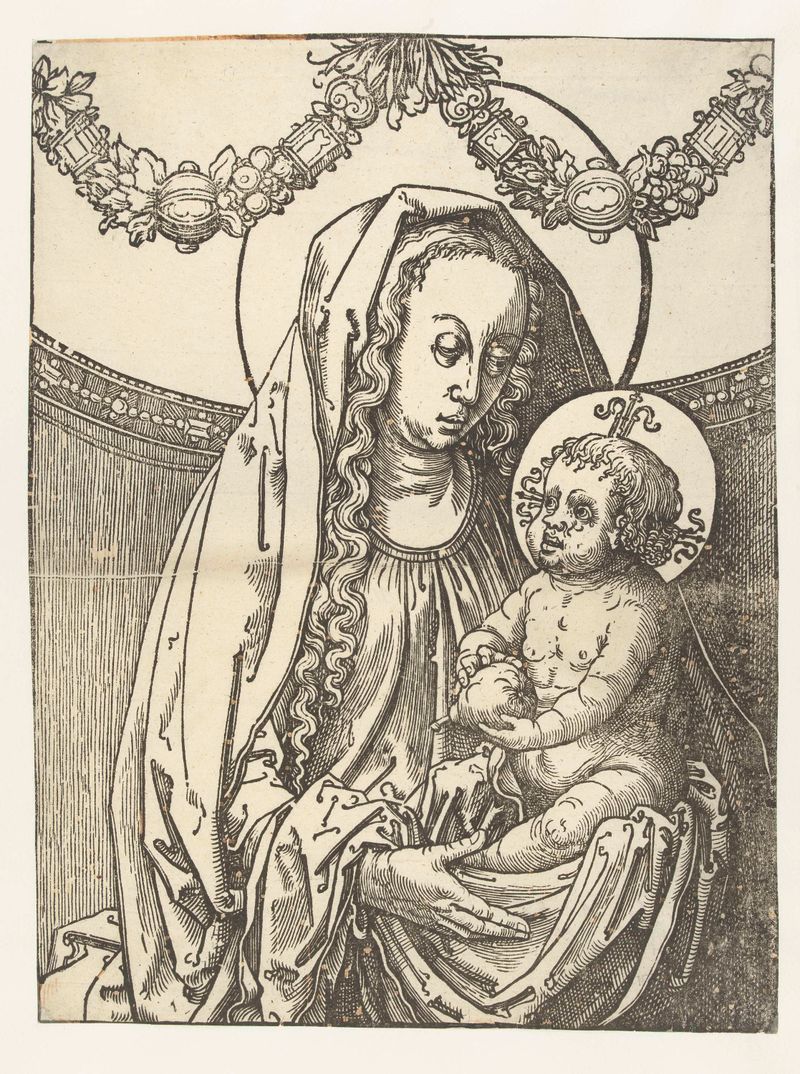
Maria met kind
Lucas van Leyden

Doornenkroning
Lucas van Leyden
More Religious Art
Browse all →
The Return of the Prodigal Son
Rembrandt van Rijn

The Garden of Earthly Delights
El Bosco

Count Orgaz’ funeral
El Greco

The Hundred Guilder Print: the central piece with Christ preaching, the plate arched
Rembrandt van Rijn

The Descent from the Cross
Rogier van der Weyden

The return of the prodigal son
Rembrandt van Rijn