
De punt van een houten gevel in het Klapdorp — History & Facts
Did the painter know this moment would outlive them? A fleeting glimpse of innocence, captured in the delicate interplay of light and shadow, echoes through time, whispering secrets of a bygone era. Look to the left at the weathered wooden façade, its textures narrating stories of resilience. The artist employs a subtle palette of earth tones, allowing rich browns and soft creams to coexist in harmony, bathing the scene in a warm glow. Notice how the light falls upon the intricate carvings, illuminating the craftsmanship and inviting you to trace your fingers over the surfaces, while inviting your imagination to wander alongside the figures portrayed. Beneath the surface, the painting speaks of contrasts: the permanence of the wooden structure juxtaposed against the ephemeral nature of human existence.
The stillness of the scene resonates with the viewer, evoking a sense of nostalgia and longing, suggesting that even in simplicity, profound stories await discovery. The silence that envelops the scene suggests a moment suspended in time, an echo of lives intertwined with the very walls that surround them. In 1837, Edward Dujardin painted this work during a period of significant artistic evolution in Europe, influenced by Romanticism’s embrace of emotion and the sublime. He was immersed in a world that sought to explore the depth of human experience while reflecting the changing landscape of society.
This painting stands as a testament to the artist’s keen observation and his ability to convey the innocence of a moment that resonates deeply with generations to come.
More Artworks by Edward Dujardin
Browse all →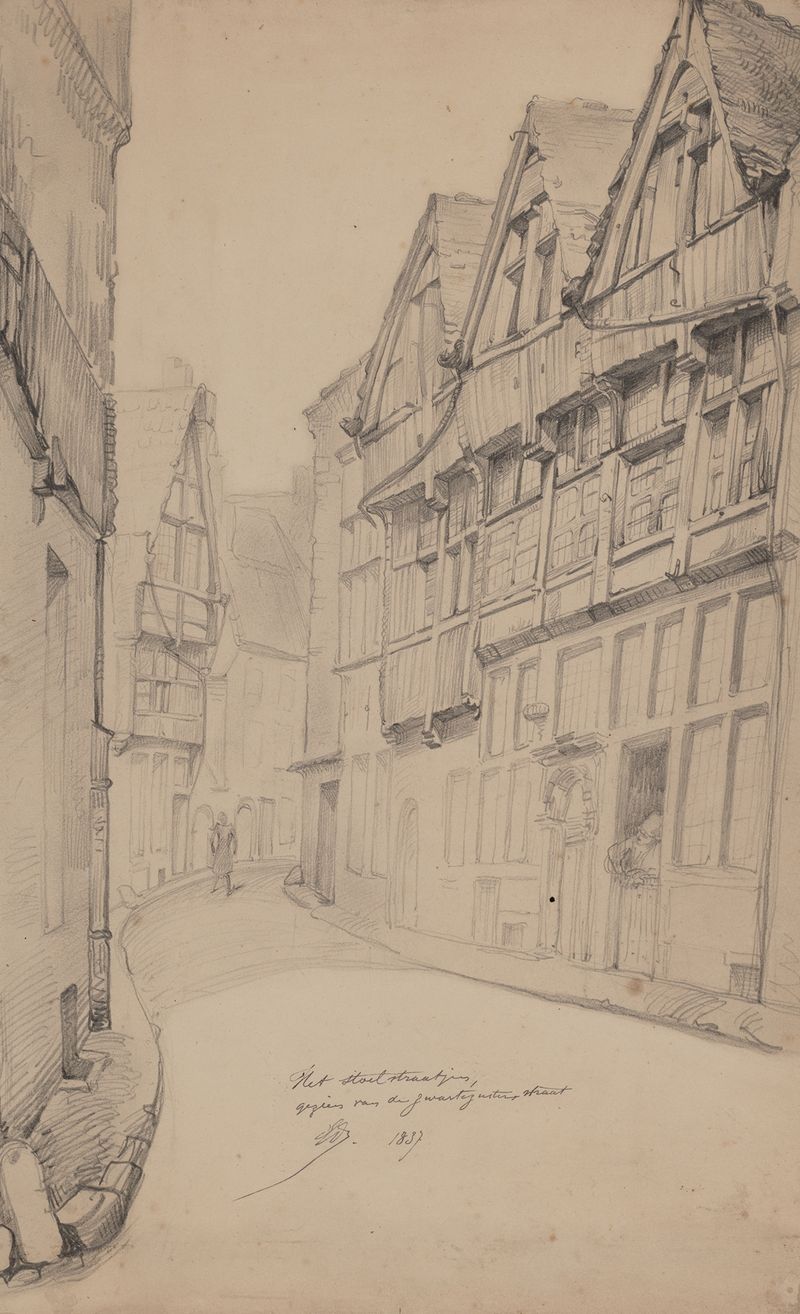
De Stoelstraat, gezien vanuit de Zwarte Zusterstraat
Edward Dujardin
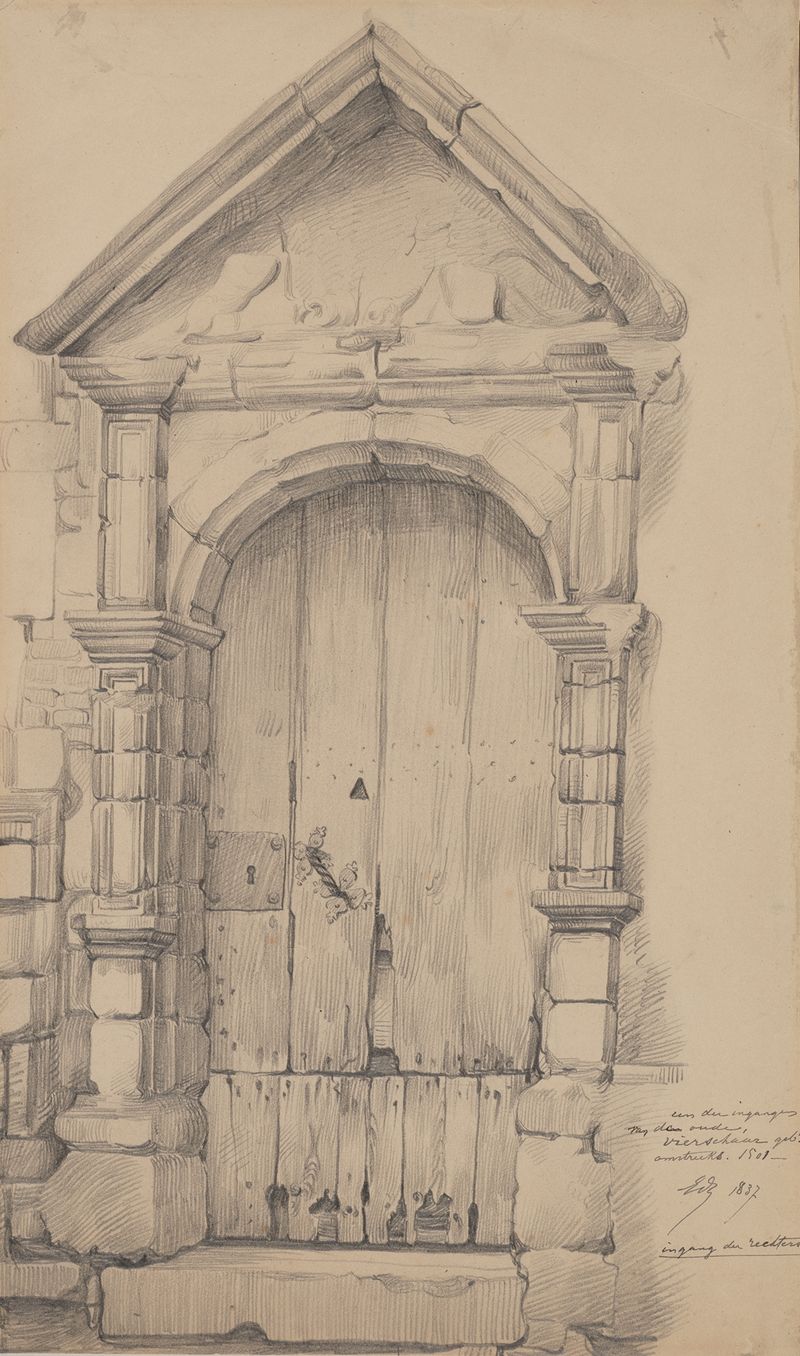
De ingang der rechters van de oude Vierschaar
Edward Dujardin
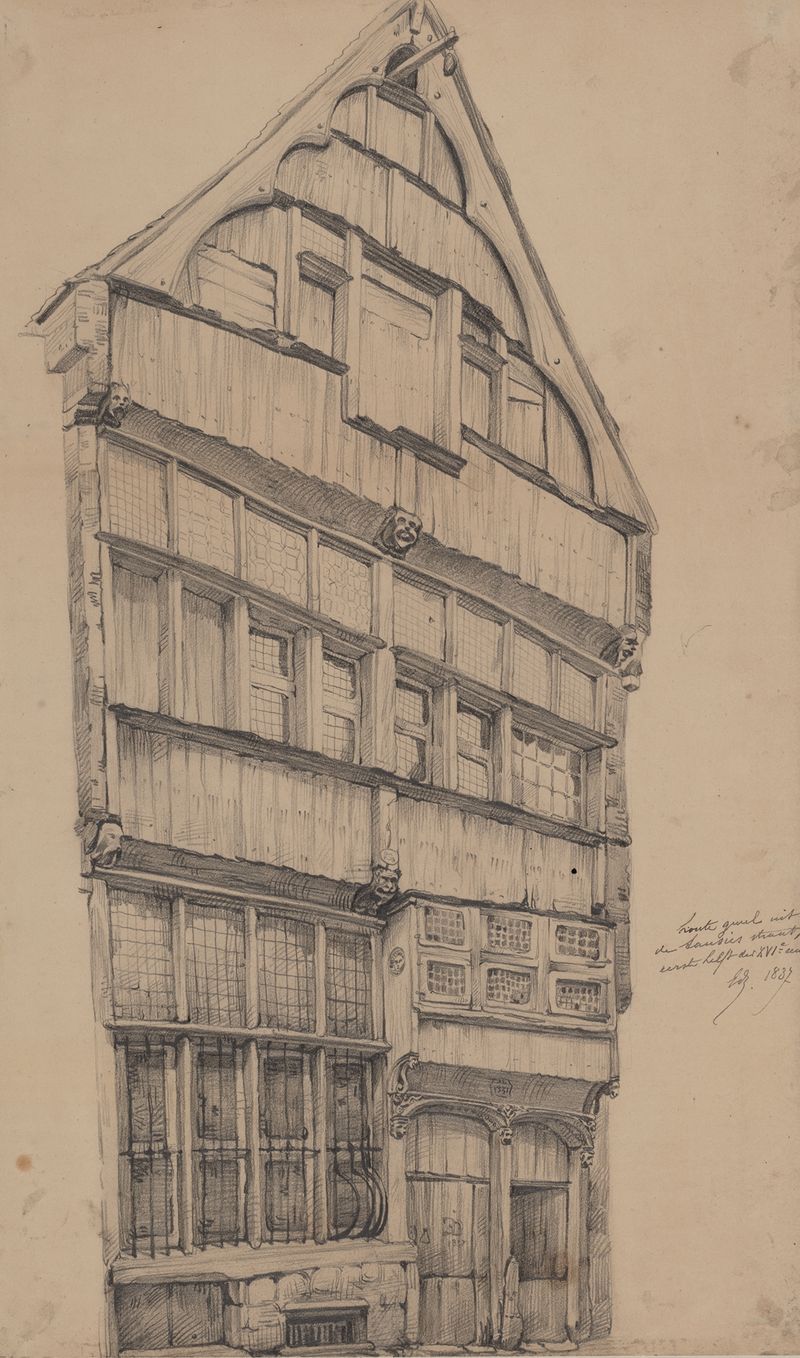
Houten gevel in de Saucierstraat.
Edward Dujardin
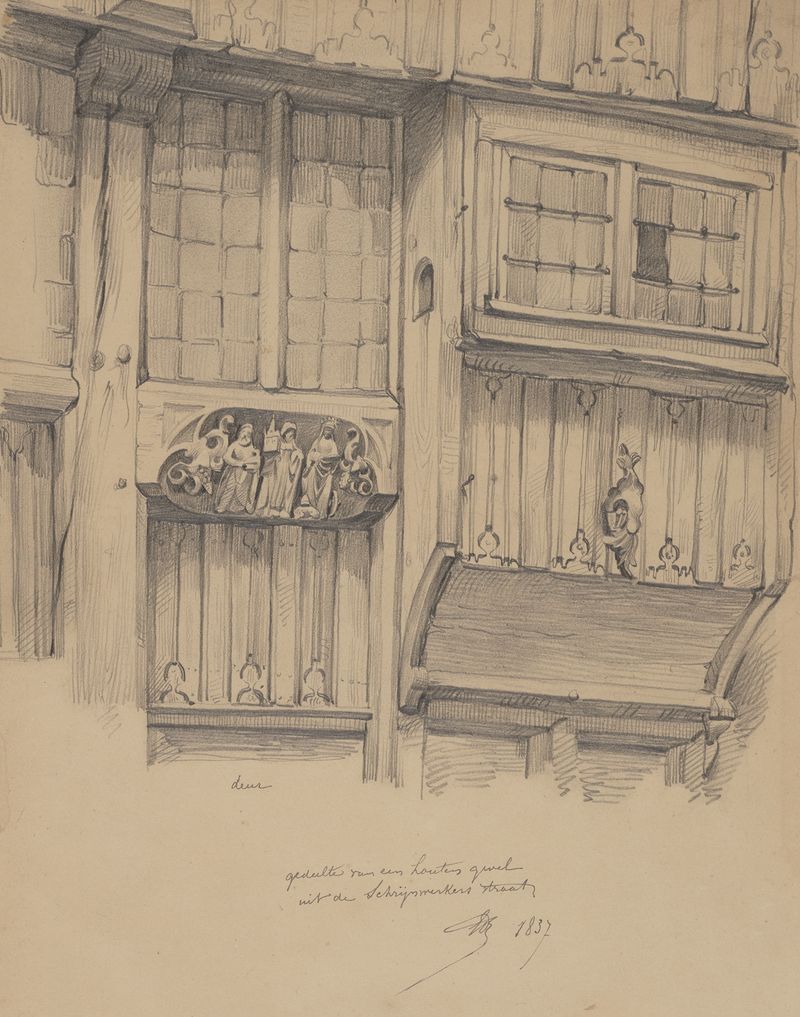
Gedeelte van een houten gevel uit de Schrijnwerkersstraat
Edward Dujardin
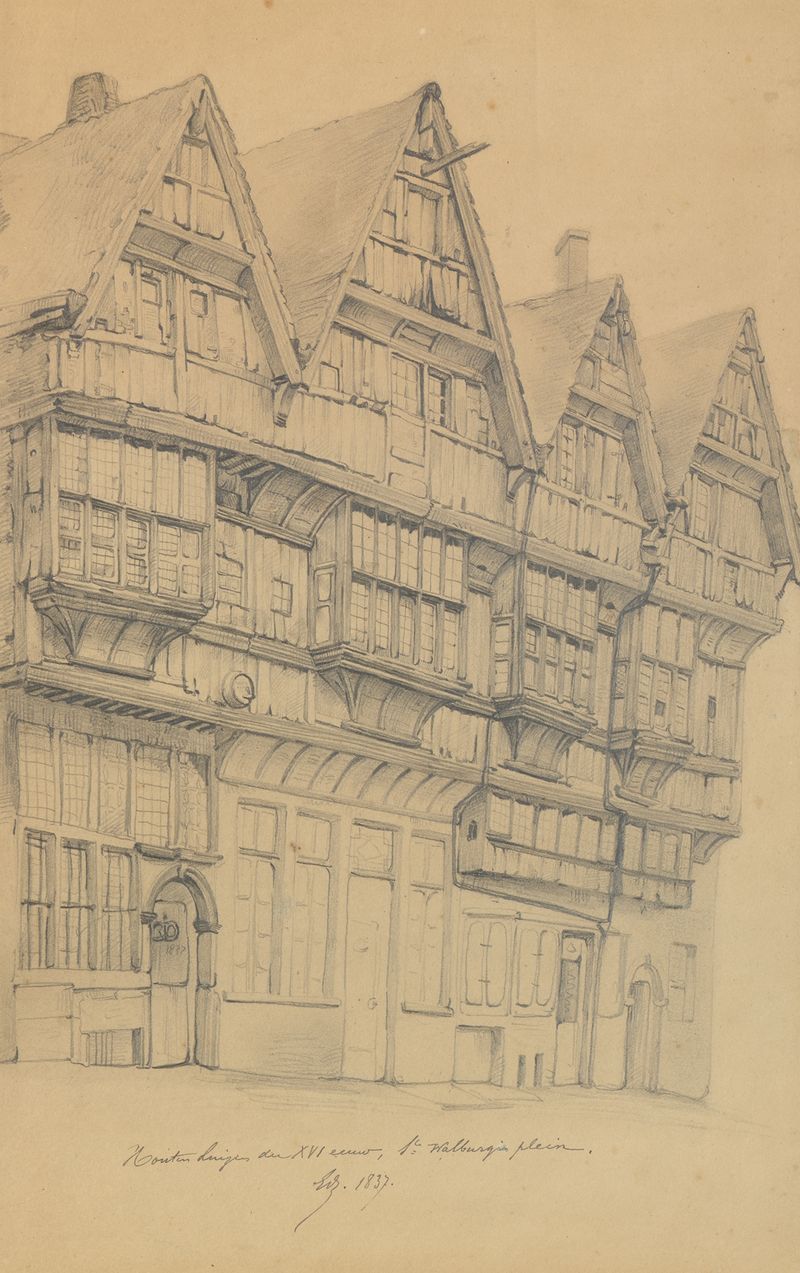
Houten huizen der XVI eeuw, Sint-Walburgisplein
Edward Dujardin
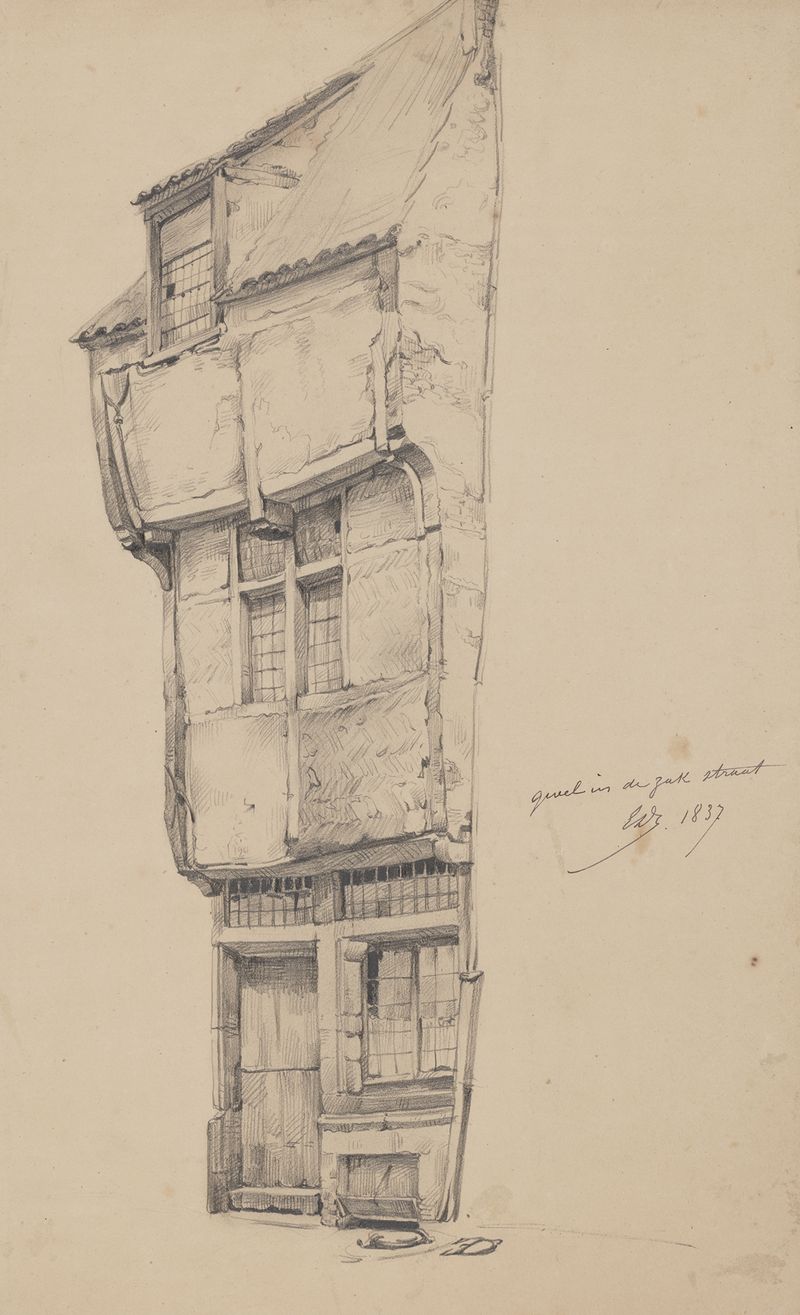
Gevel in de Zakstraat
Edward Dujardin
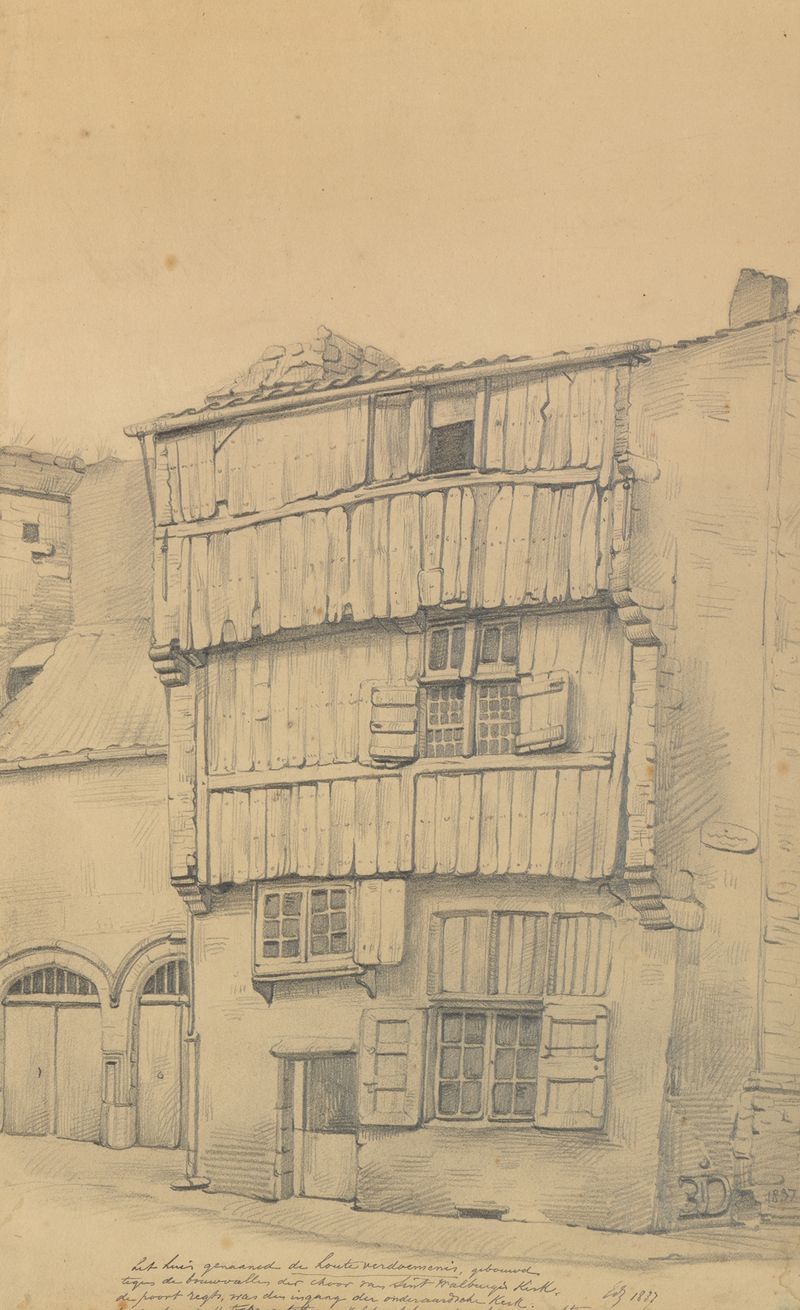
Het huis ‘De Houte Verdoemenis’, gebouwd tegen het koor van de Sint-Walburgiskerk
Edward Dujardin
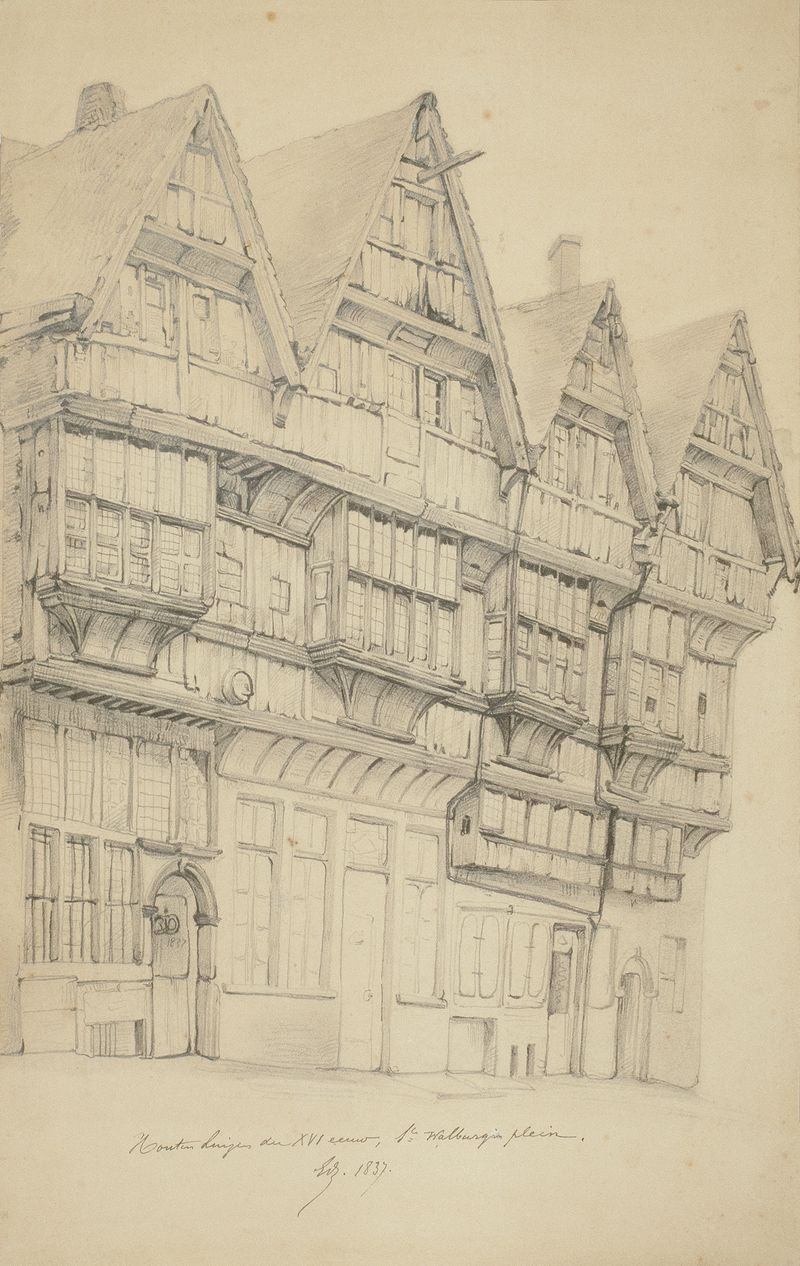
Houten huizen der XVI eeuw, Sint-Walburgisplein
Edward Dujardin

Ingangspoort van het Sint-Julianusgodshuis
Edward Dujardin
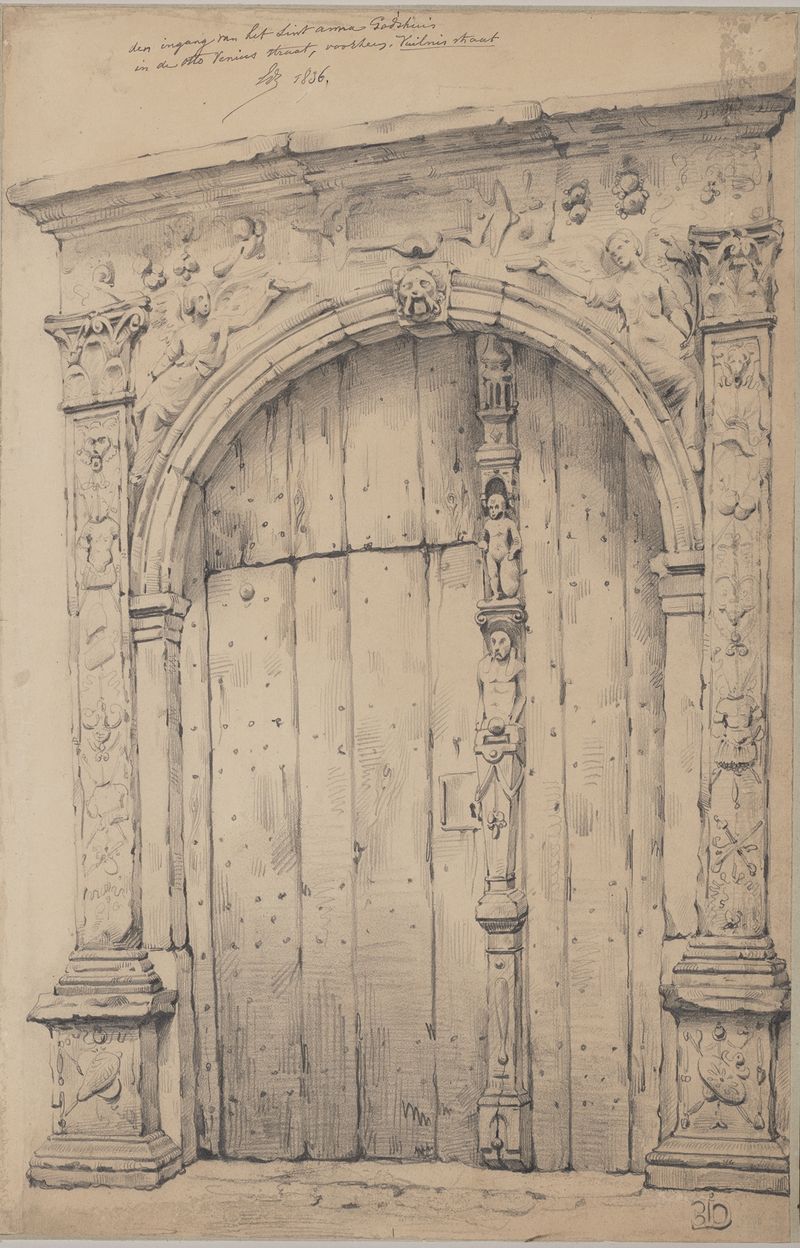
Ingang van het St.-Annagodshuis
Edward Dujardin





