
Ingangspoort van het Sint-Julianusgodshuis — History & Facts
Did the painter know this moment would outlive them? In Ingangspoort van het Sint-Julianusgodshuis, Edward Dujardin captures a fleeting revelation, a stillness that reverberates through time. Look to the left at the intricate stone archway, where each chiseled detail stands in sharp relief against the soft pastel sky. The warm golden hues of the sun bathe the façade in light, guiding your gaze toward the figures meandering beneath. The carefully rendered shadows add depth, creating an inviting yet solemn atmosphere, as if the entrance itself is a threshold to both the physical and spiritual realms. Beneath this serene exterior lies a world of contrast.
The splendor of the architecture hints at the weight of history, while the presence of pedestrians signifies the continuity of life—past and present converging effortlessly. The juxtaposition of light and shadow invites contemplation; it evokes a sense of reverence for both the sacred space and the ordinary acts of daily life, a reminder of the ephemeral nature of existence. In 1832, Dujardin painted this work during a period of significant artistic evolution in Europe, marked by the transition from romanticism to realism. Living in Paris, he was part of a vibrant community of artists exploring new techniques and themes.
This piece reflects his keen observation of architectural beauty and the connection between humanity and its environment, capturing a moment that transcends the ordinary and invites viewers into a profound dialogue with the past.
More Artworks by Edward Dujardin
Browse all →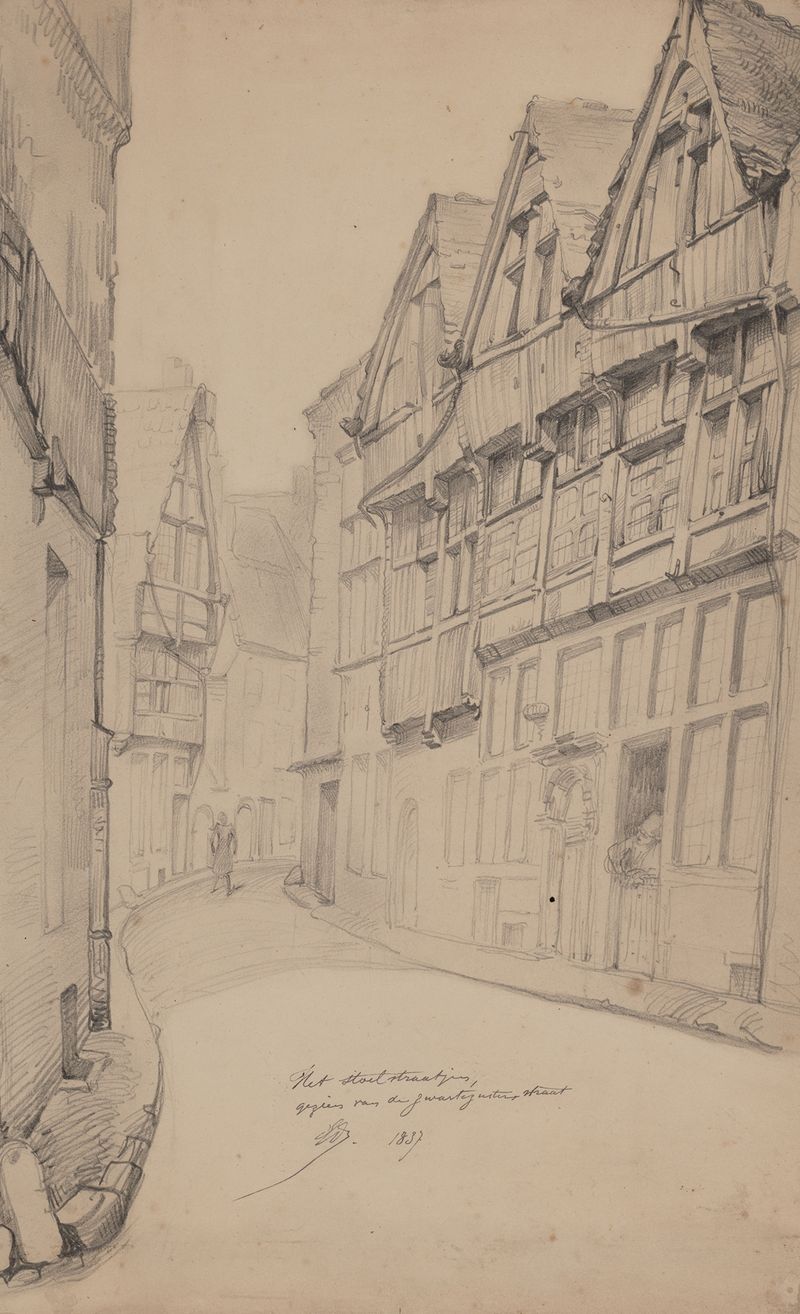
De Stoelstraat, gezien vanuit de Zwarte Zusterstraat
Edward Dujardin
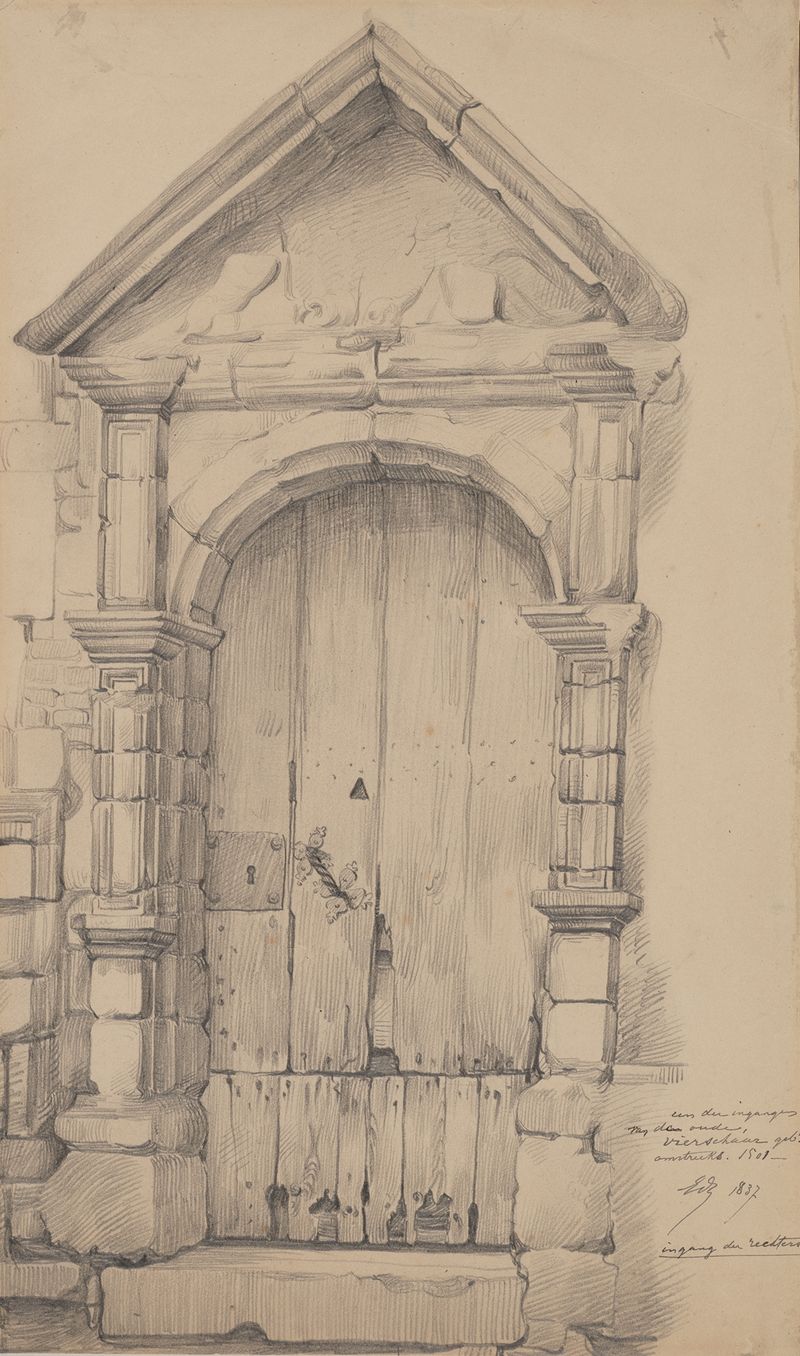
De ingang der rechters van de oude Vierschaar
Edward Dujardin
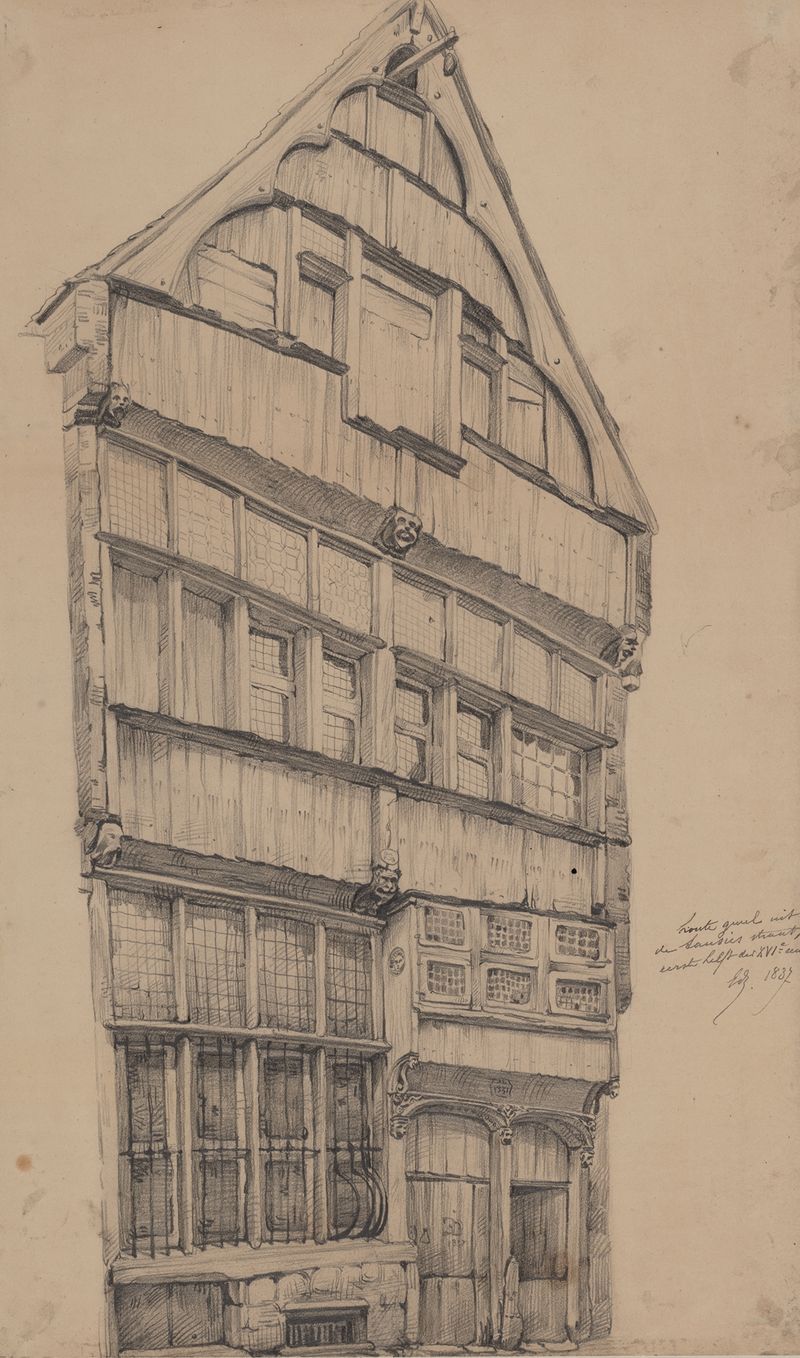
Houten gevel in de Saucierstraat.
Edward Dujardin
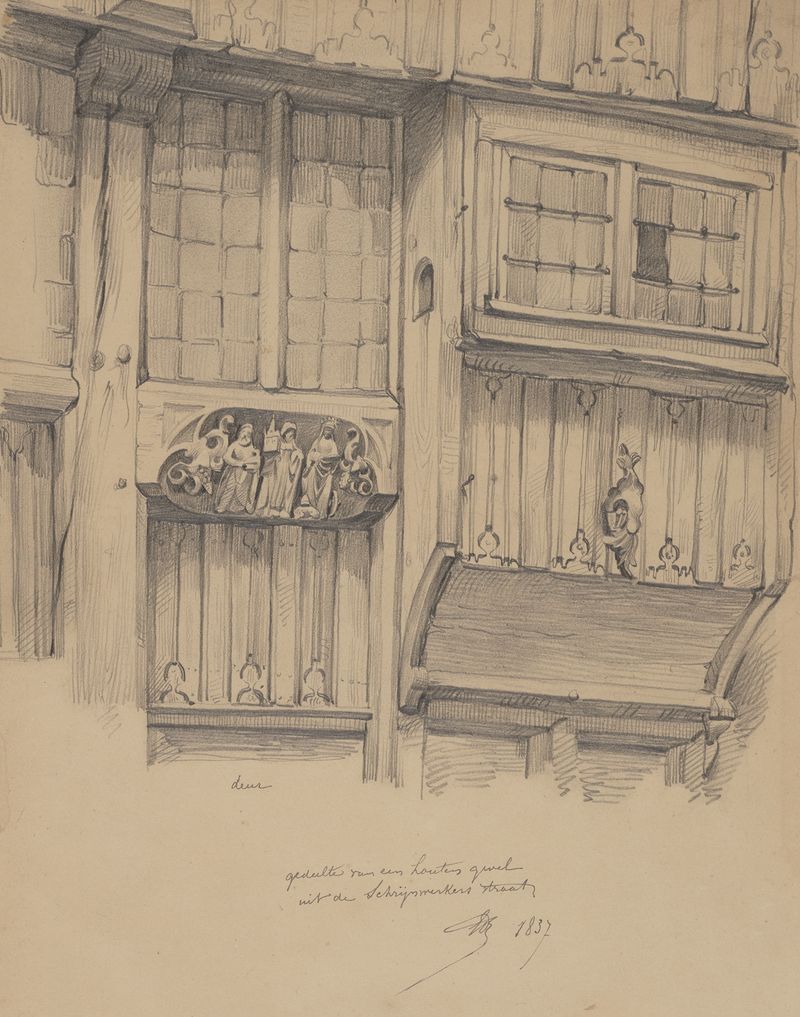
Gedeelte van een houten gevel uit de Schrijnwerkersstraat
Edward Dujardin
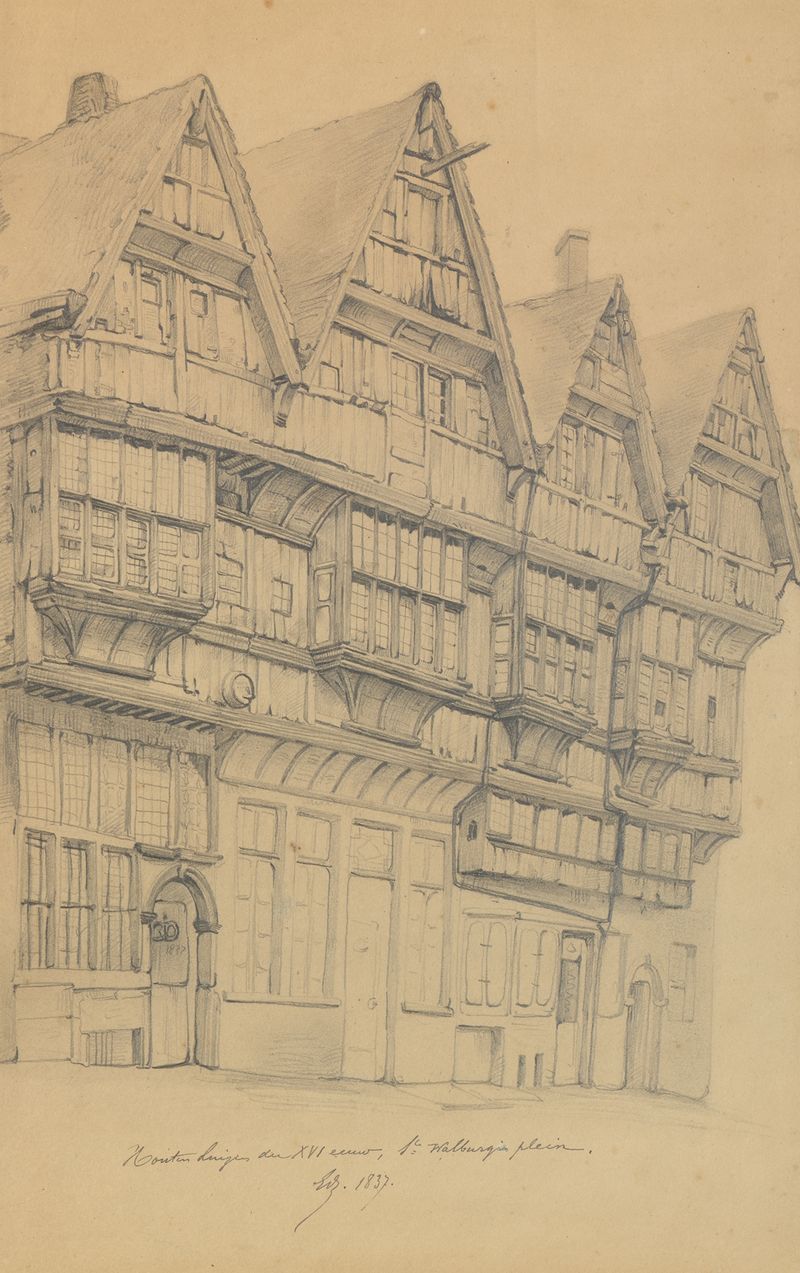
Houten huizen der XVI eeuw, Sint-Walburgisplein
Edward Dujardin
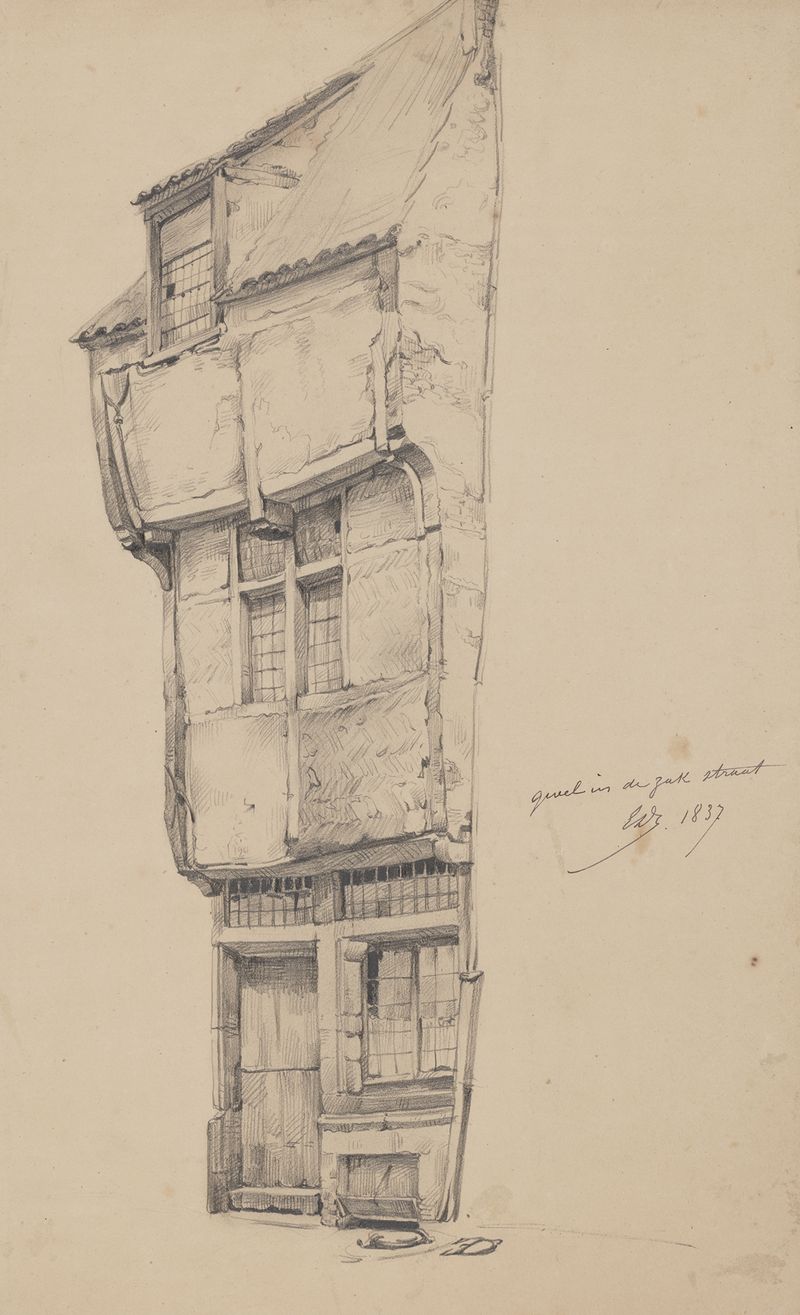
Gevel in de Zakstraat
Edward Dujardin
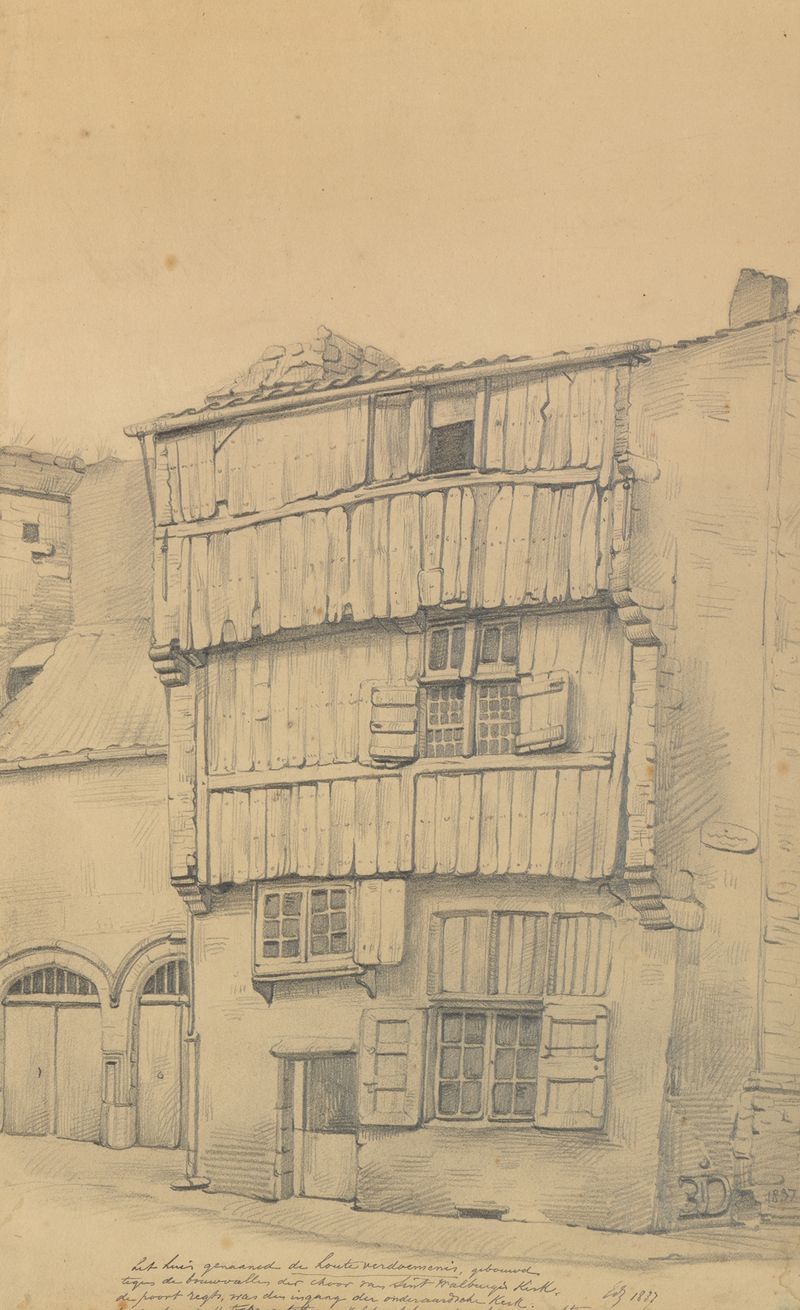
Het huis ‘De Houte Verdoemenis’, gebouwd tegen het koor van de Sint-Walburgiskerk
Edward Dujardin
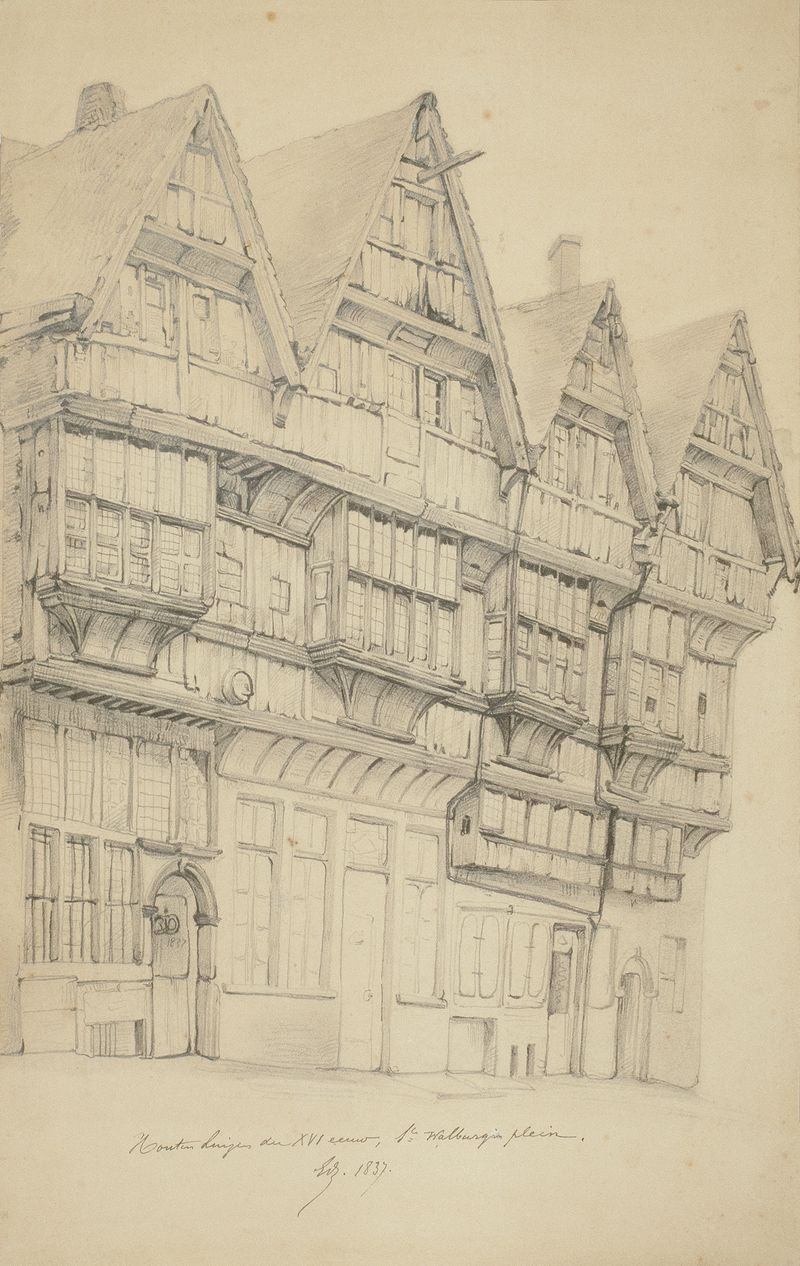
Houten huizen der XVI eeuw, Sint-Walburgisplein
Edward Dujardin
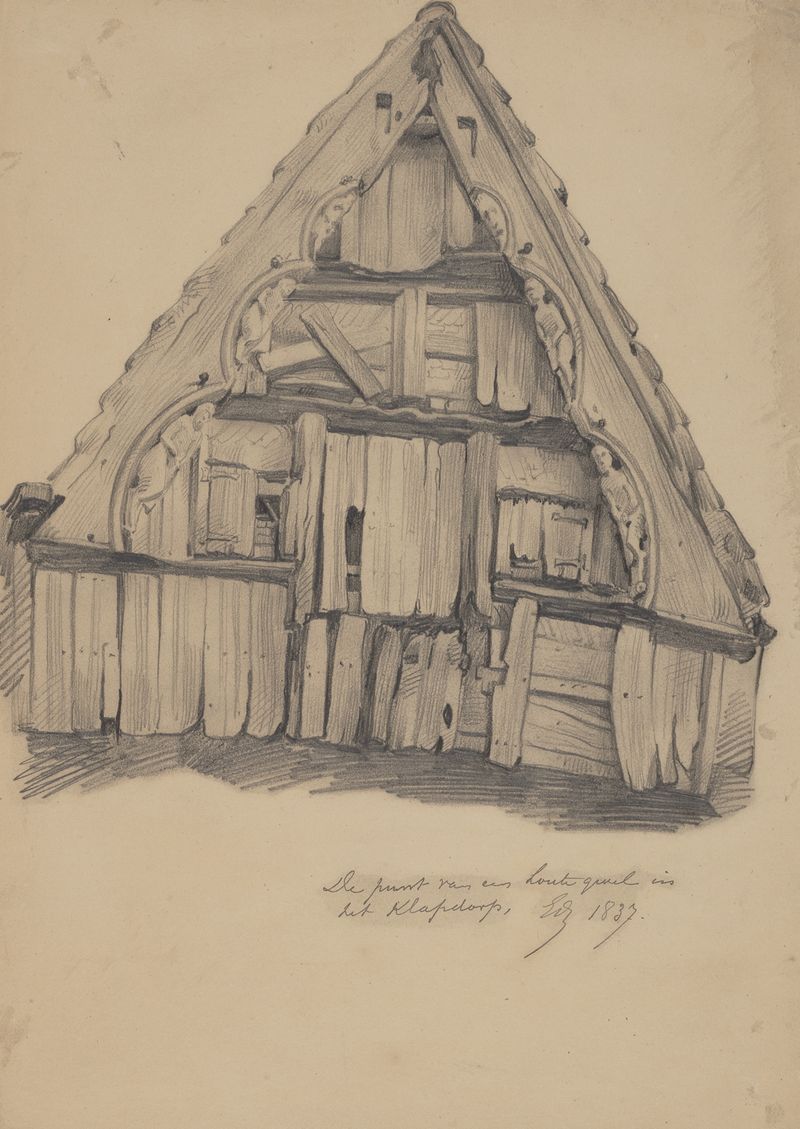
De punt van een houten gevel in het Klapdorp
Edward Dujardin
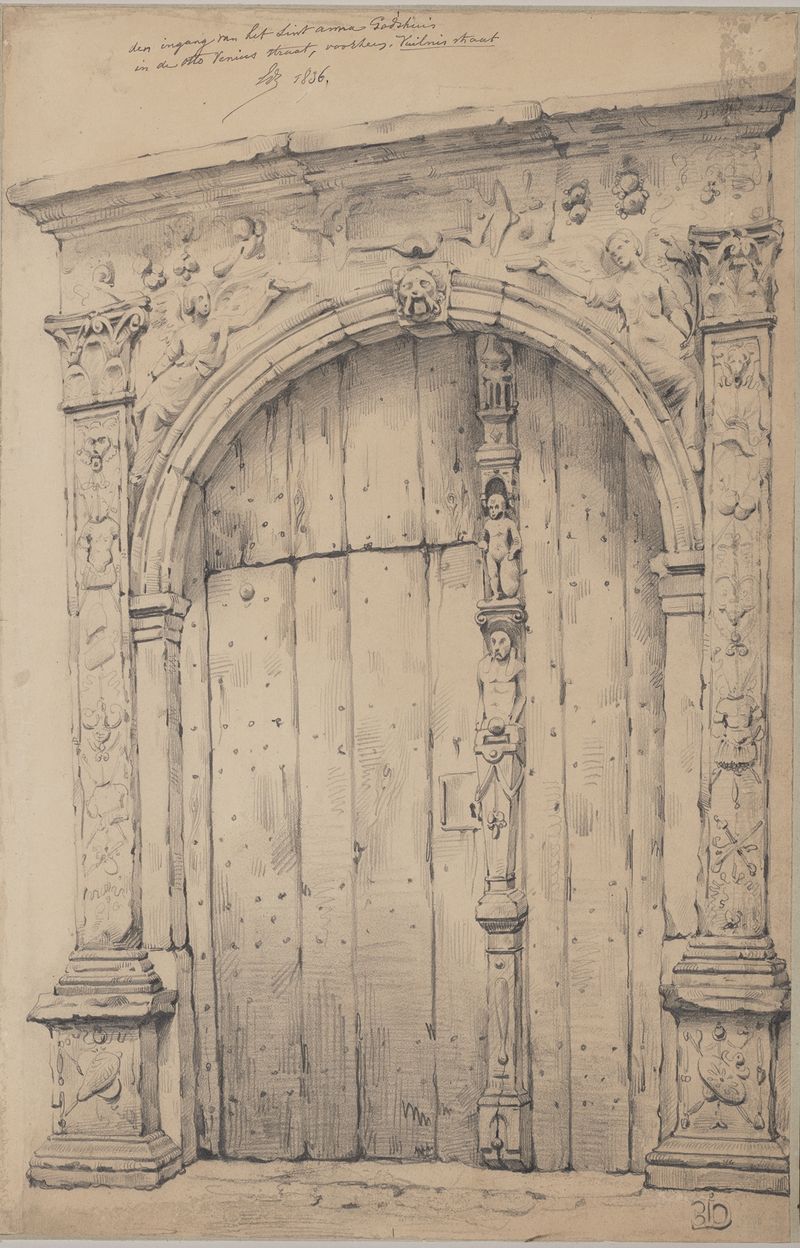
Ingang van het St.-Annagodshuis
Edward Dujardin
More Architecture Art
Browse all →
The statue of Liberty
Frédéric Auguste Bartholdi

View of Houses in Delft, Known as ‘The Little Street’
Johannes Vermeer

View of Houses in Delft, Known as ‘The Little Street’
Johannes Vermeer

The Cathedral in Rouen. The portal, Grey Weather
Claude Monet

The yellow house
Vincent van Gogh

The Church in Auvers-sur-Oise, View from the Chevet
Vincent van Gogh