
Houten gevel in de Saucierstraat. — History & Facts
In that quiet act of creation lies the transformative power of art, a bridge between past and present, reality and memory. Focus your gaze on the façade at the center of the canvas, where weathered bricks meet delicate shadows. The muted palette, with its earthy tones and soft blues, invites a sense of nostalgia while emphasizing the architectural details. Notice how the light caresses the edges, revealing textures that speak of age and endurance.
Each brushstroke seems deliberate, as if the artist is coaxing the viewer to linger awhile, absorbing the history embedded within the walls. As you explore further, consider the contrast between the stillness of the scene and the dynamic life that once radiated within those walls. The composition hints at a world in transition, where the passage of time is palpable yet intimate. Each window, closed and silent, bears witness to countless stories—echoes of laughter and whispers of sorrow.
The façade stands as a relic, a guardian of memories, challenging us to confront our own transformations and the impermanence of life. In 1837, Edward Dujardin painted this work amidst a burgeoning artistic community in the Netherlands, embracing Romantic ideals while navigating the changes brought by industrialization. His focus on architectural subjects marked a departure from traditional landscapes, reflecting a societal shift towards urban life. During this period, artists sought to capture both the beauty and the fragility of their surroundings, a theme that resonates deeply in this poignant piece.
More Artworks by Edward Dujardin
Browse all →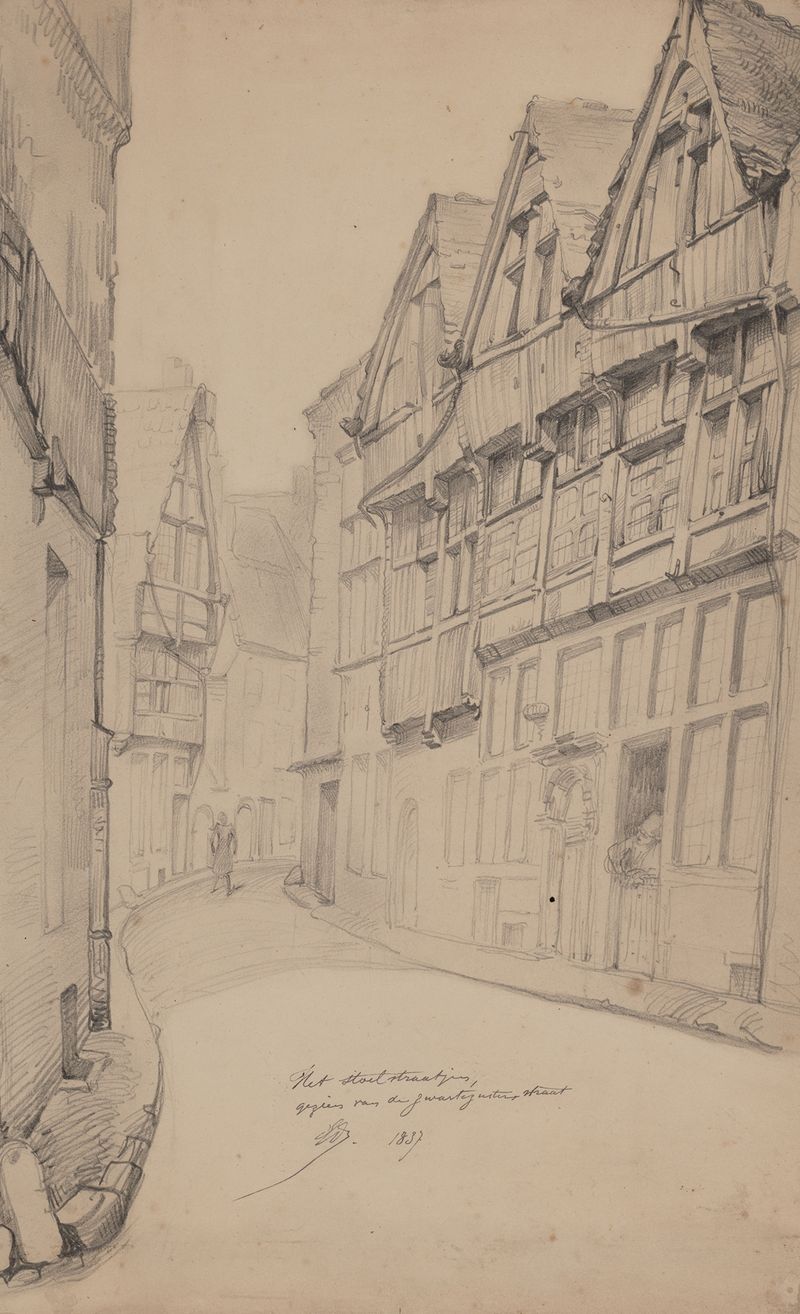
De Stoelstraat, gezien vanuit de Zwarte Zusterstraat
Edward Dujardin
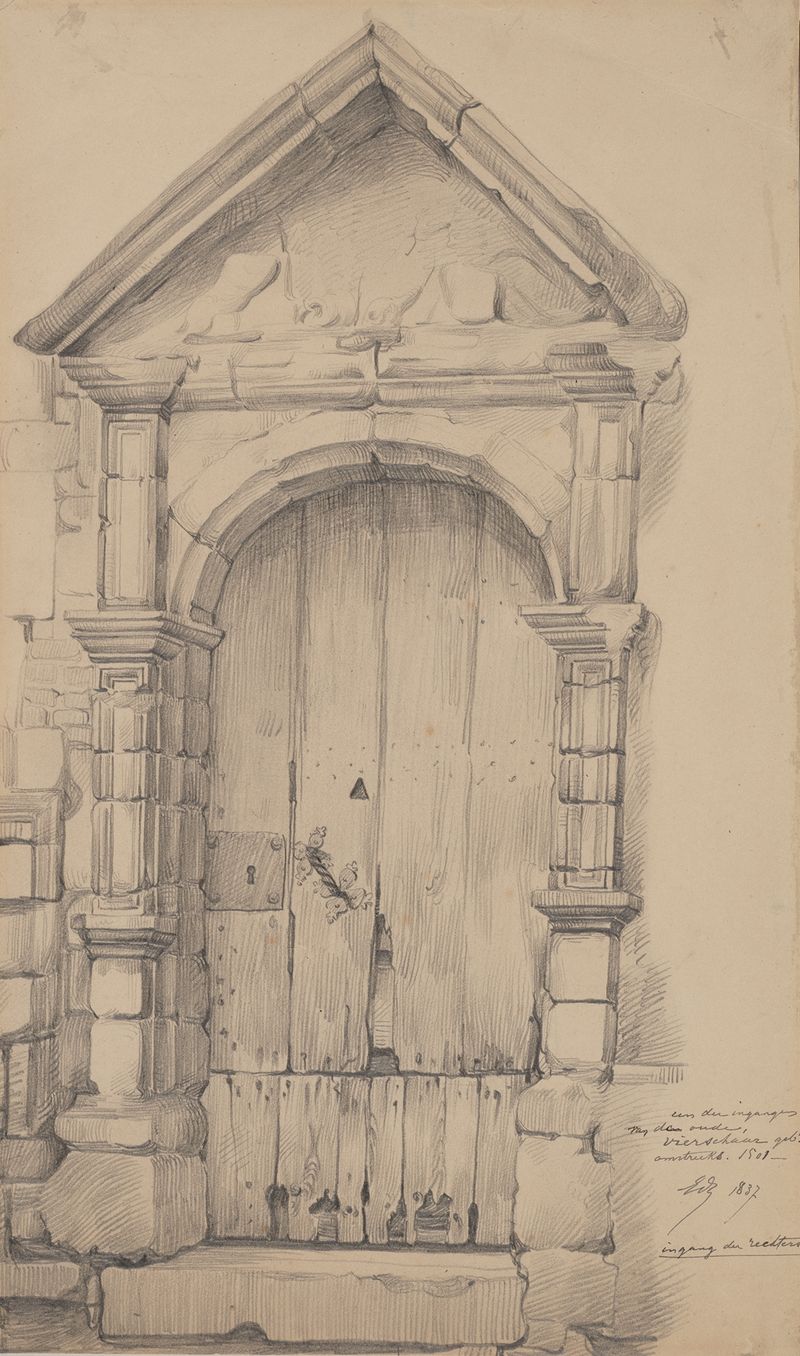
De ingang der rechters van de oude Vierschaar
Edward Dujardin
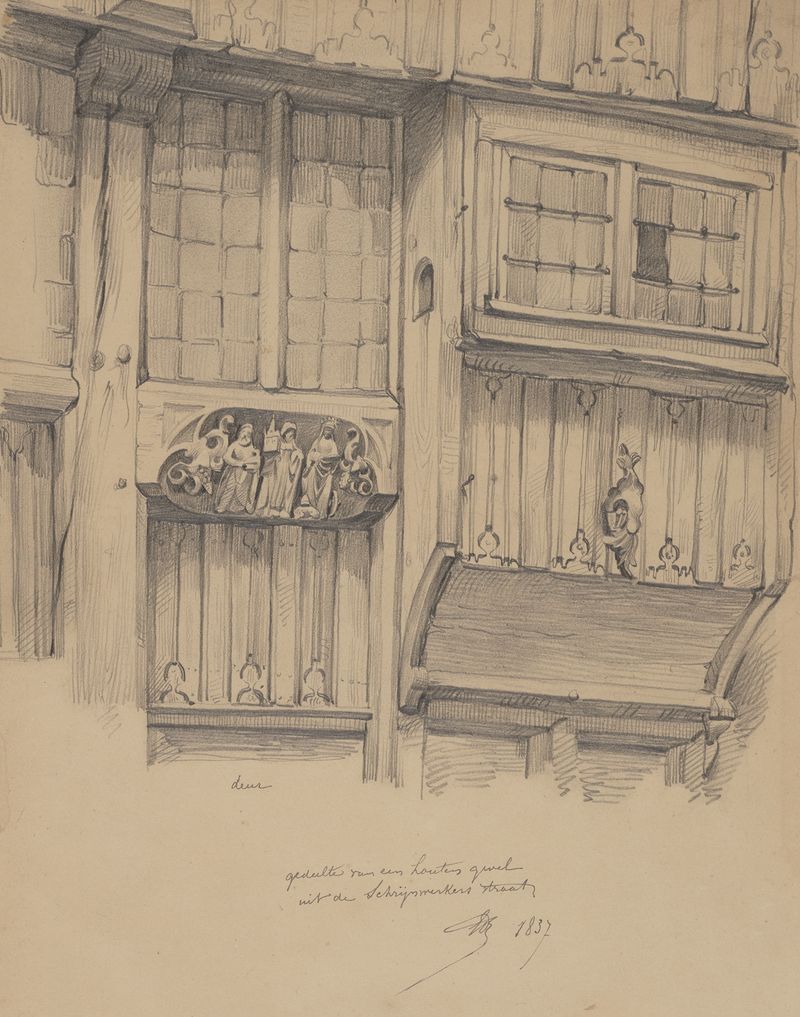
Gedeelte van een houten gevel uit de Schrijnwerkersstraat
Edward Dujardin
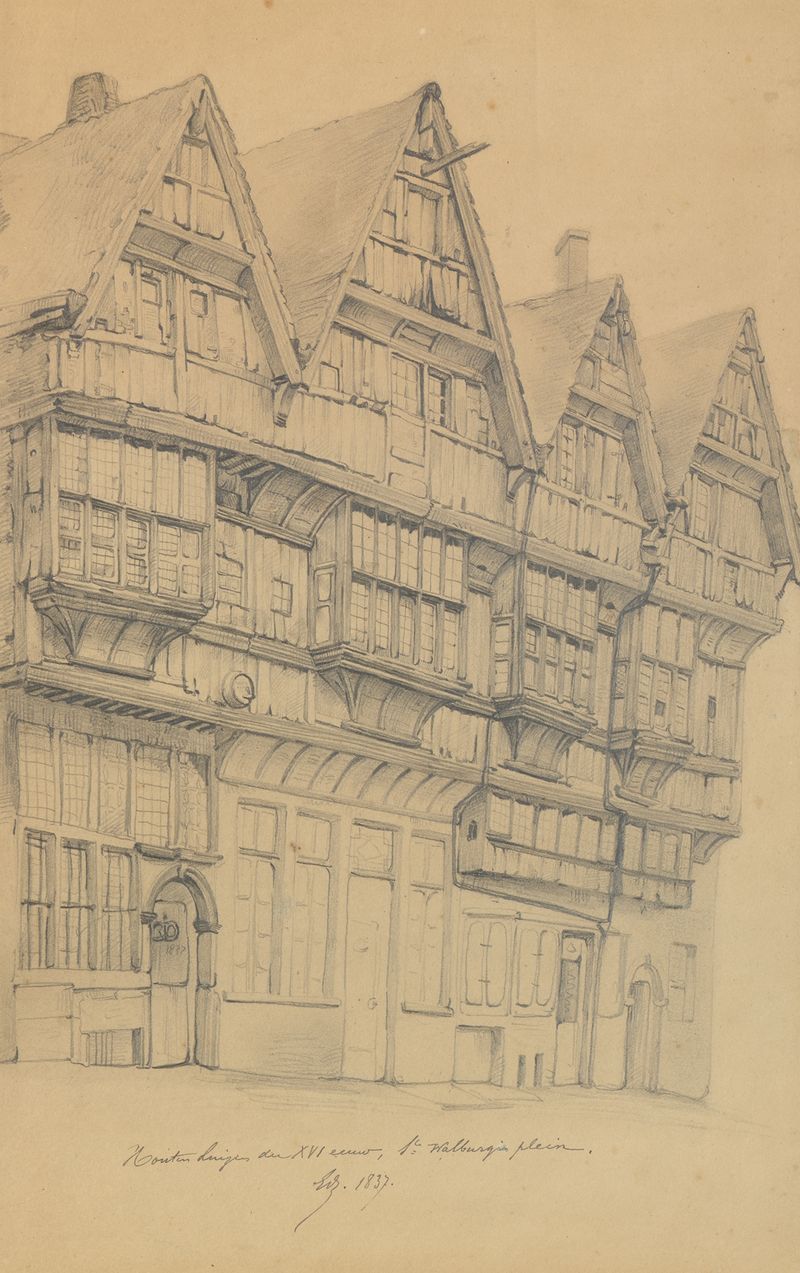
Houten huizen der XVI eeuw, Sint-Walburgisplein
Edward Dujardin
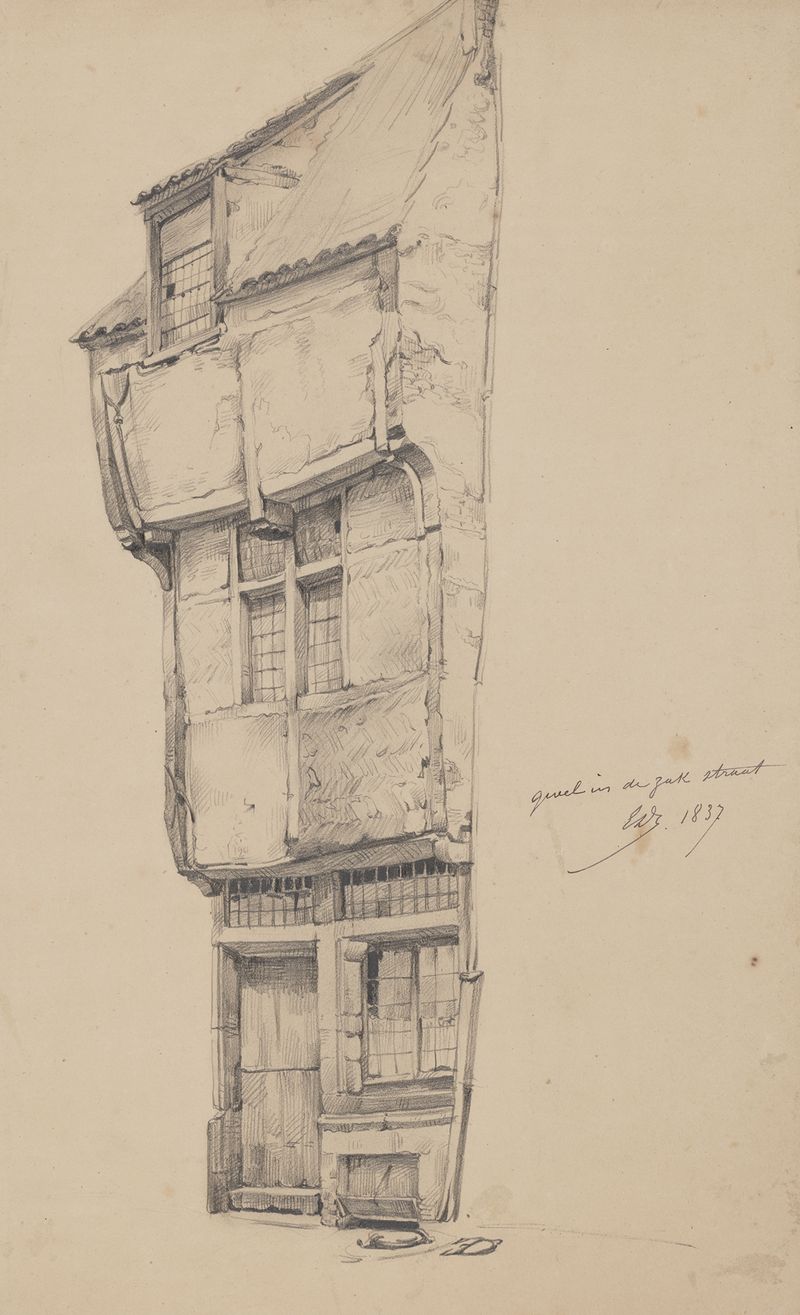
Gevel in de Zakstraat
Edward Dujardin
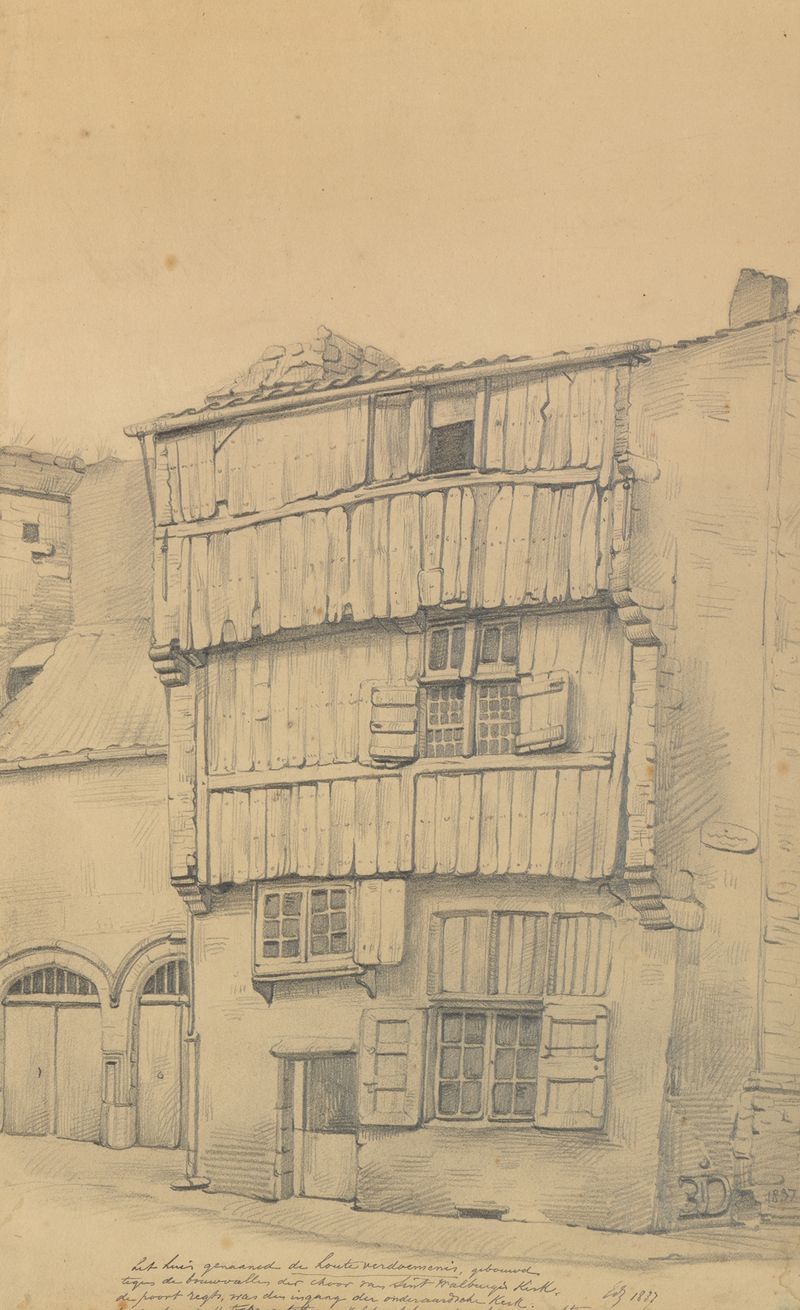
Het huis ‘De Houte Verdoemenis’, gebouwd tegen het koor van de Sint-Walburgiskerk
Edward Dujardin
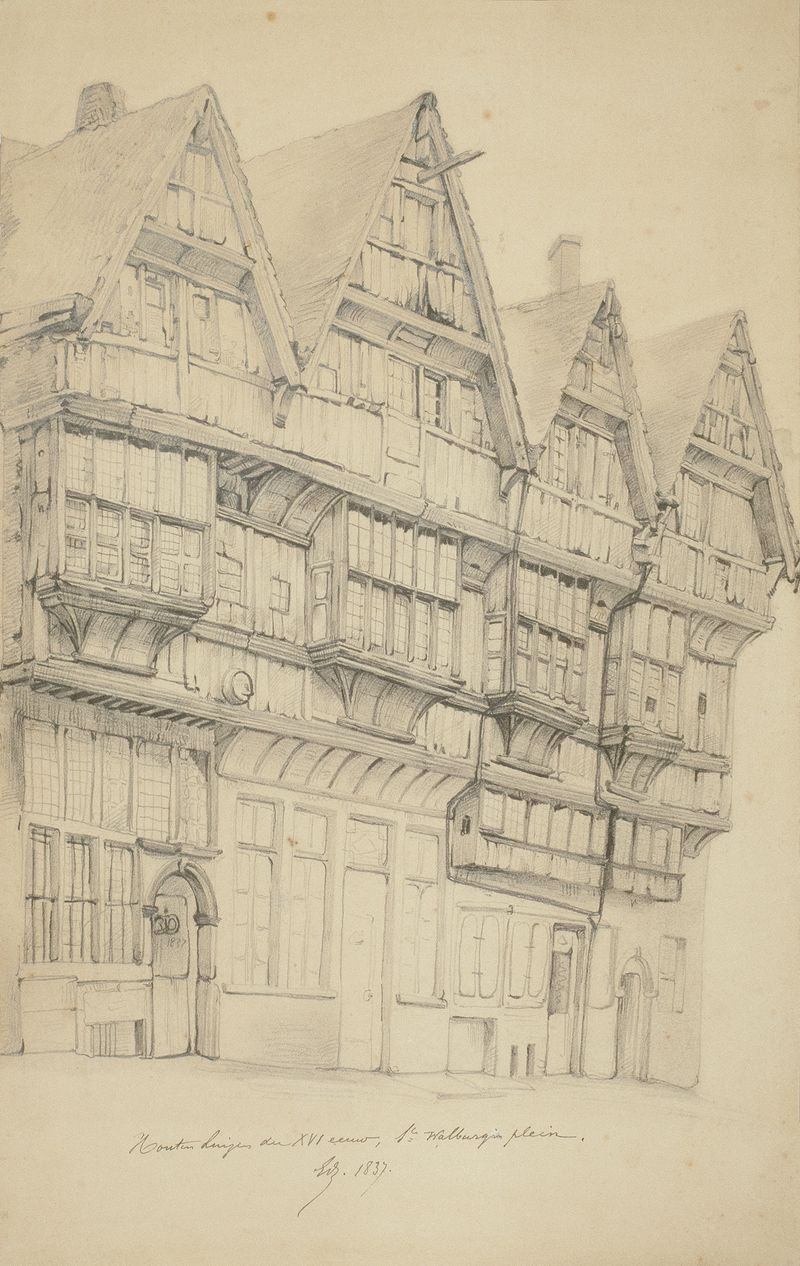
Houten huizen der XVI eeuw, Sint-Walburgisplein
Edward Dujardin

Ingangspoort van het Sint-Julianusgodshuis
Edward Dujardin
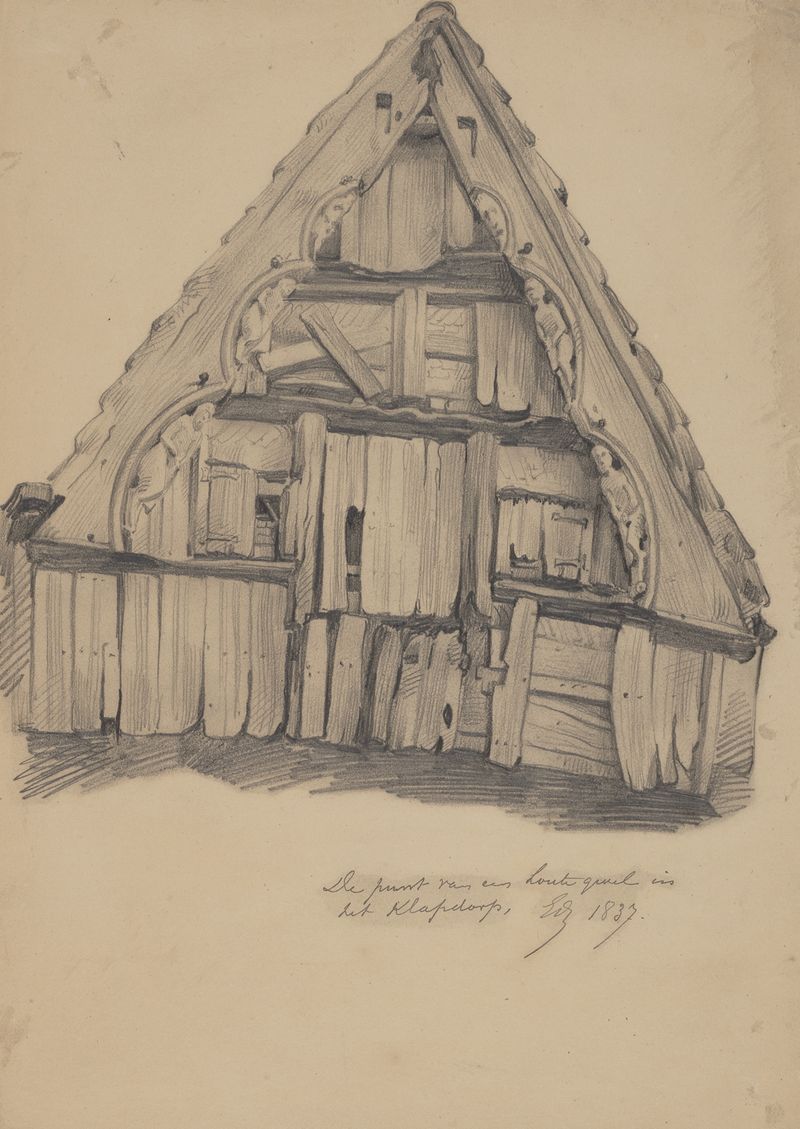
De punt van een houten gevel in het Klapdorp
Edward Dujardin
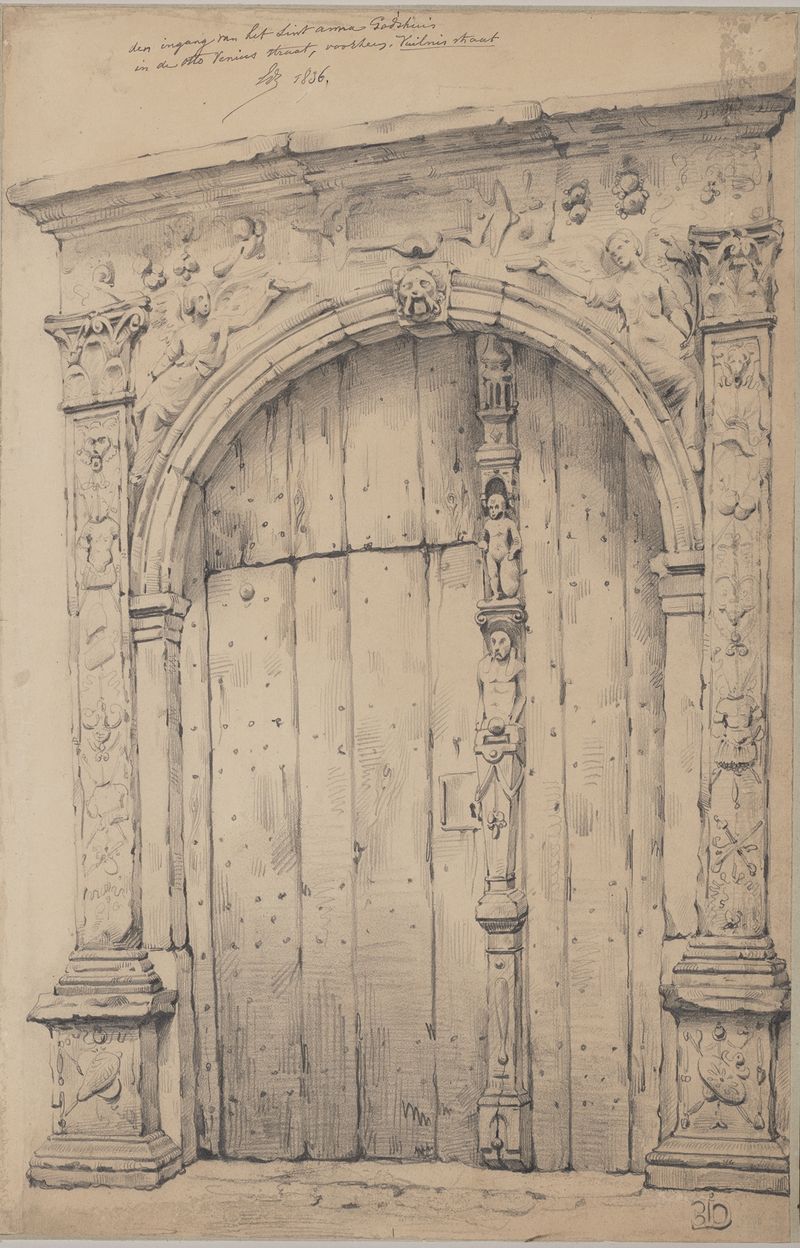
Ingang van het St.-Annagodshuis
Edward Dujardin
More Architecture Art
Browse all →
The statue of Liberty
Frédéric Auguste Bartholdi

View of Houses in Delft, Known as ‘The Little Street’
Johannes Vermeer

View of Houses in Delft, Known as ‘The Little Street’
Johannes Vermeer

The Cathedral in Rouen. The portal, Grey Weather
Claude Monet

The yellow house
Vincent van Gogh

The Church in Auvers-sur-Oise, View from the Chevet
Vincent van Gogh