
Houten huizen der XVI eeuw, Sint-Walburgisplein — History & Facts
Did the painter know this moment would outlive them? In Edward Dujardin's Houten huizen der XVI eeuw, Sint-Walburgisplein, the very essence of a fleeting moment is captured, intertwining time, architecture, and destiny. It is not merely a depiction of buildings but an exploration of their stories—of lives lived within their wooden frames, of history resting beneath the weight of the sky. Look to the left at the meticulously rendered houses, their wooden facades emanating a warmth that contrasts with the cool blue of the sky above. The artist’s precision in detail invites the viewer to appreciate the intricacies of the architecture—notice the delicate craftsmanship of the window frames, the unique tiling of the rooftops, and how the shadows dance gently across the cobblestone square.
The palette, dominated by earthy tones, speaks to the age and character of the structures, while the soft light suggests a moment caught between day and dusk, hinting at the passage of time. Beneath the surface, there lies an emotional resonance that echoes the juxtaposition of permanence and transience. The timber houses, while seemingly robust, serve as a metaphor for the fragility of existence—each brick and beam holding memories of the past. Yet, the open square invites the viewer to ponder the future, as people may come and go, yet these homes stand still, steadfast witnesses to the unfolding of life.
This contrast between the enduring and the ephemeral unveils a rich narrative about heritage and the relentless march of time. In 1837, while creating this work, Edward Dujardin resided in Belgium, a nation grappling with its cultural identity. This period saw a rising interest in historical scenes, reflecting a yearning to connect with the past amidst the rapid changes of the industrial era. In capturing the essence of this square and its wooden houses, Dujardin sought to preserve a moment in time, ensuring that the stories etched into these structures would not fade into oblivion.
More Artworks by Edward Dujardin
Browse all →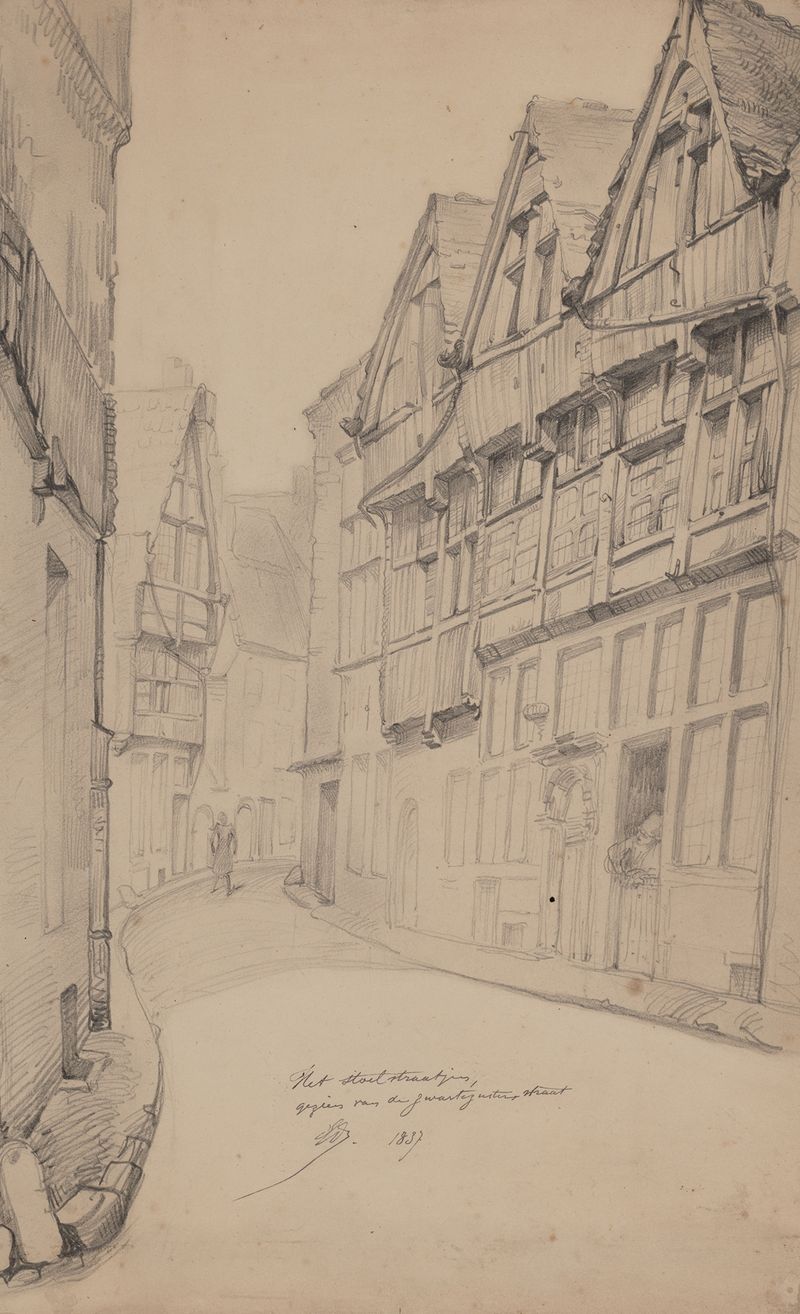
De Stoelstraat, gezien vanuit de Zwarte Zusterstraat
Edward Dujardin
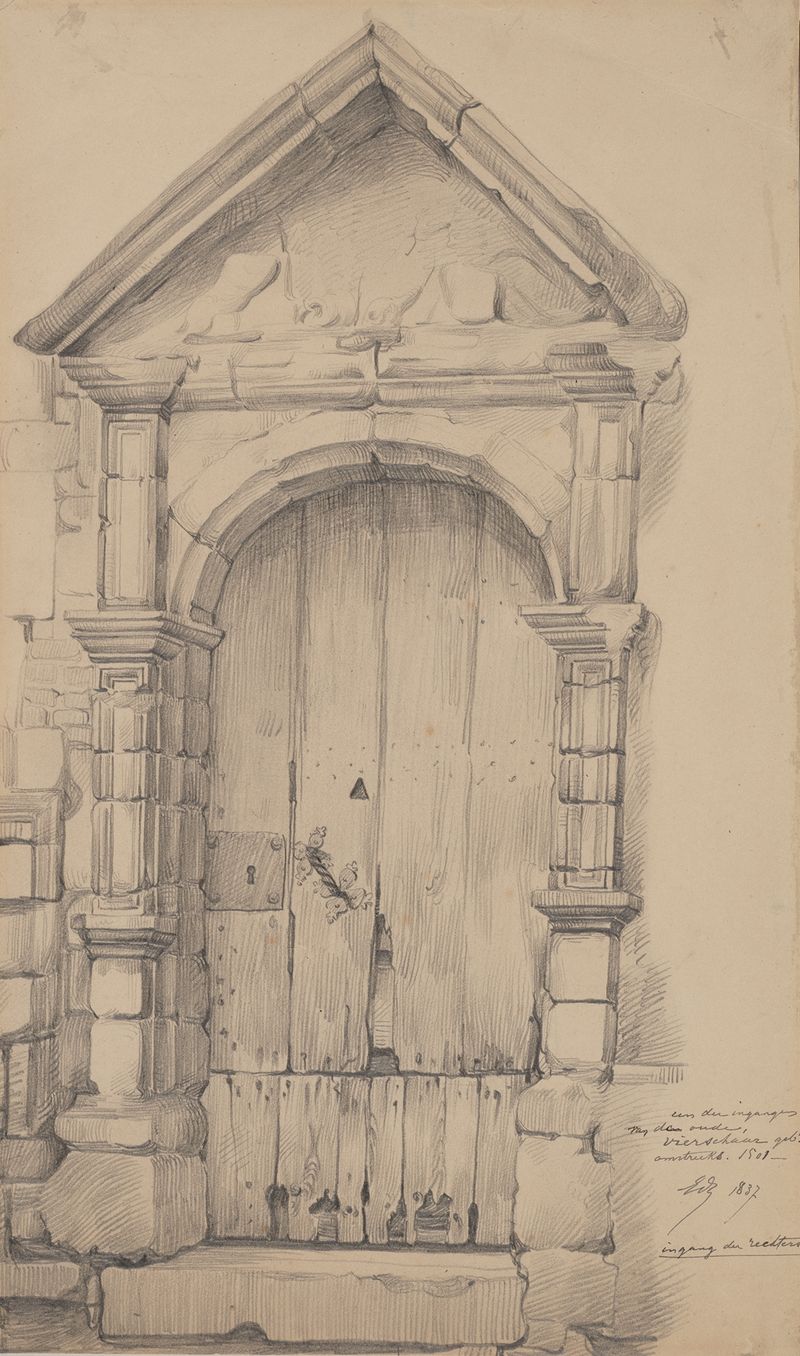
De ingang der rechters van de oude Vierschaar
Edward Dujardin
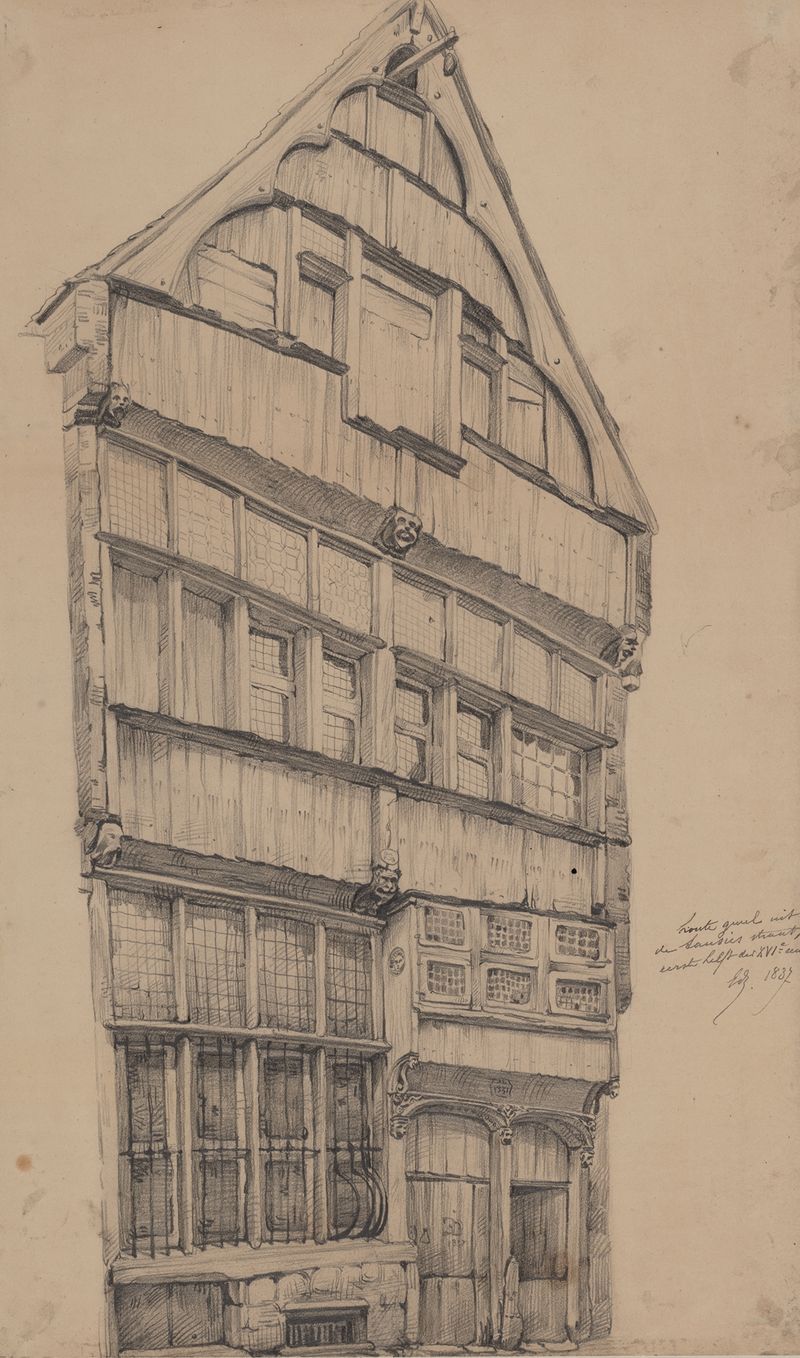
Houten gevel in de Saucierstraat.
Edward Dujardin
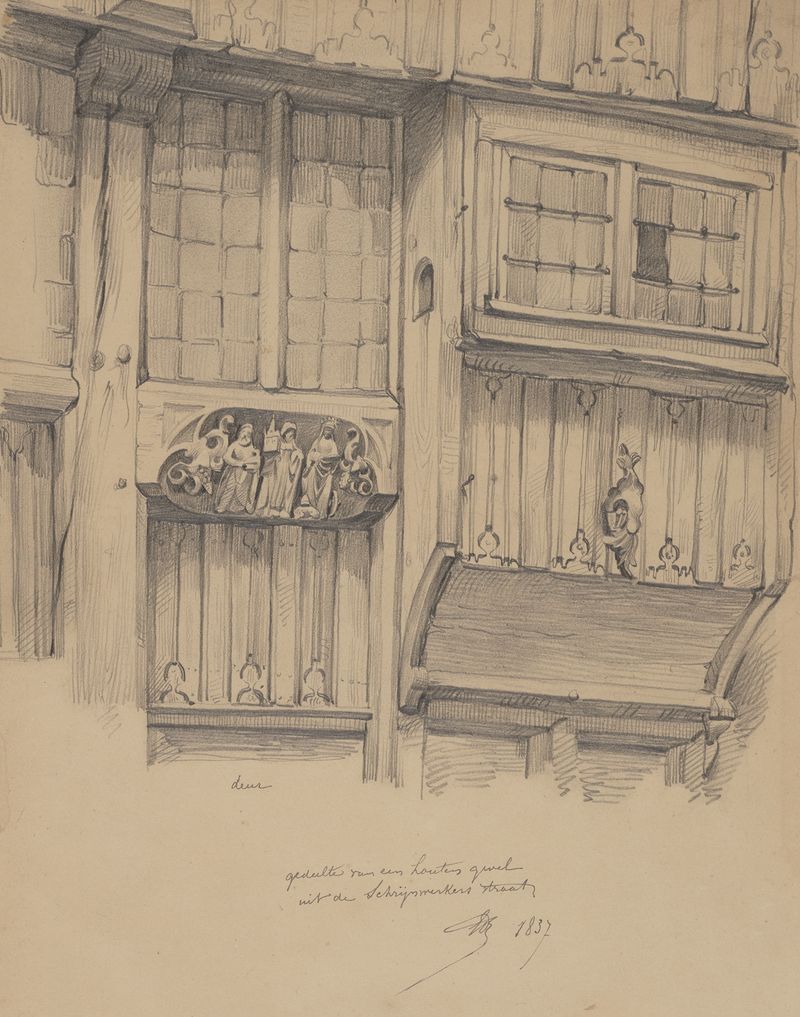
Gedeelte van een houten gevel uit de Schrijnwerkersstraat
Edward Dujardin
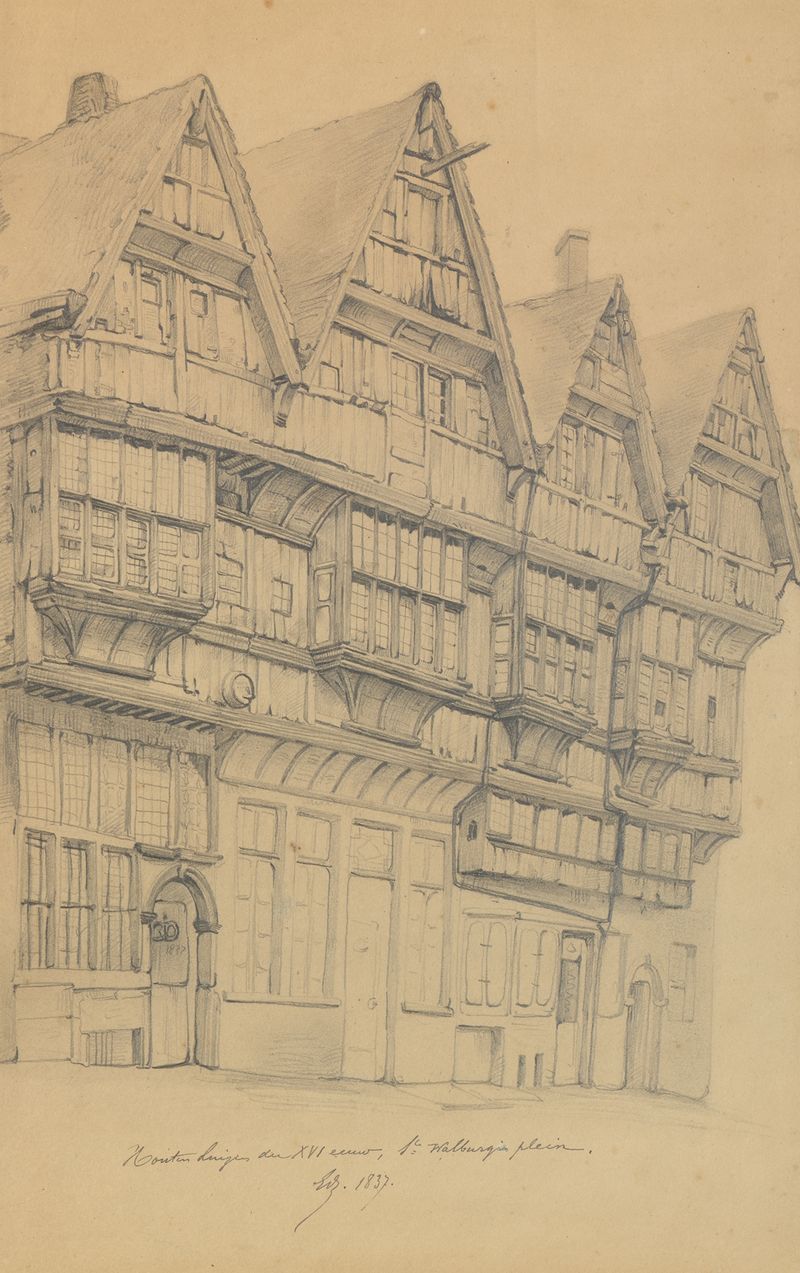
Houten huizen der XVI eeuw, Sint-Walburgisplein
Edward Dujardin
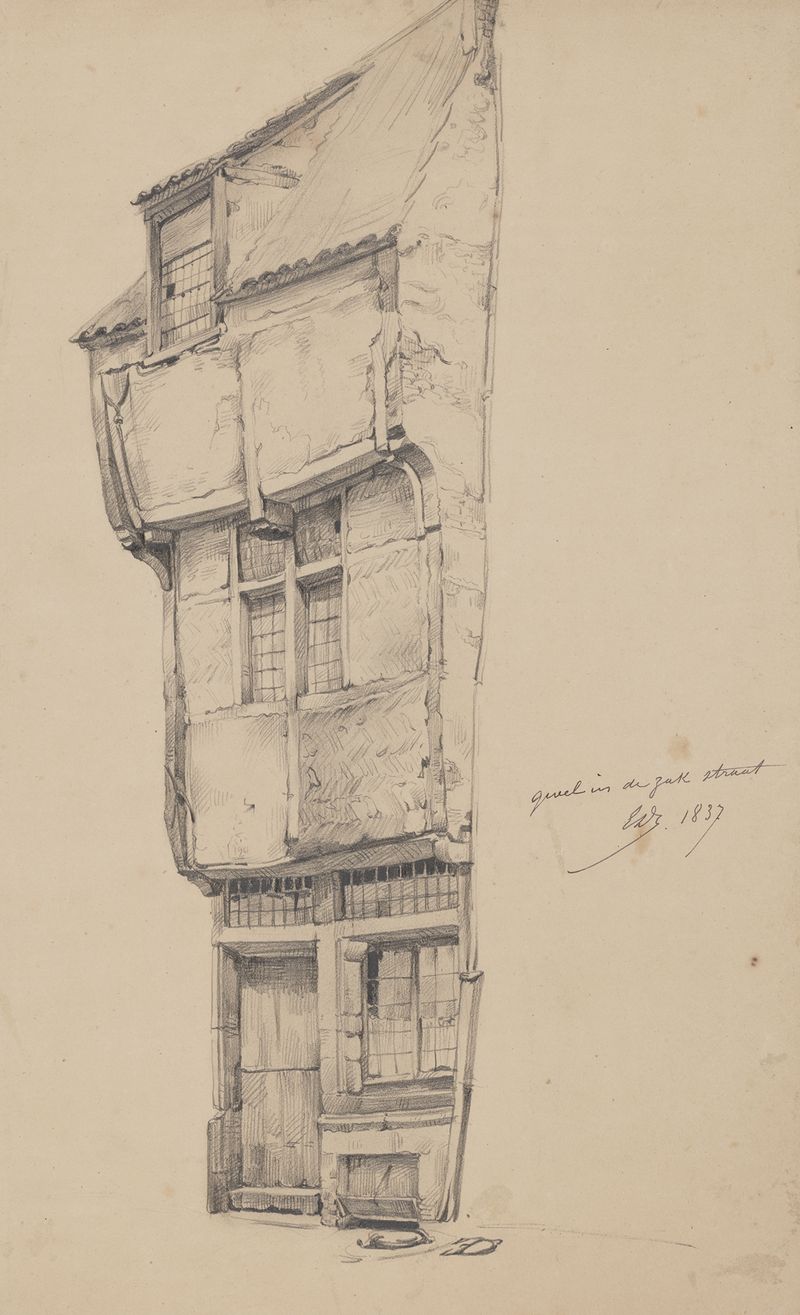
Gevel in de Zakstraat
Edward Dujardin
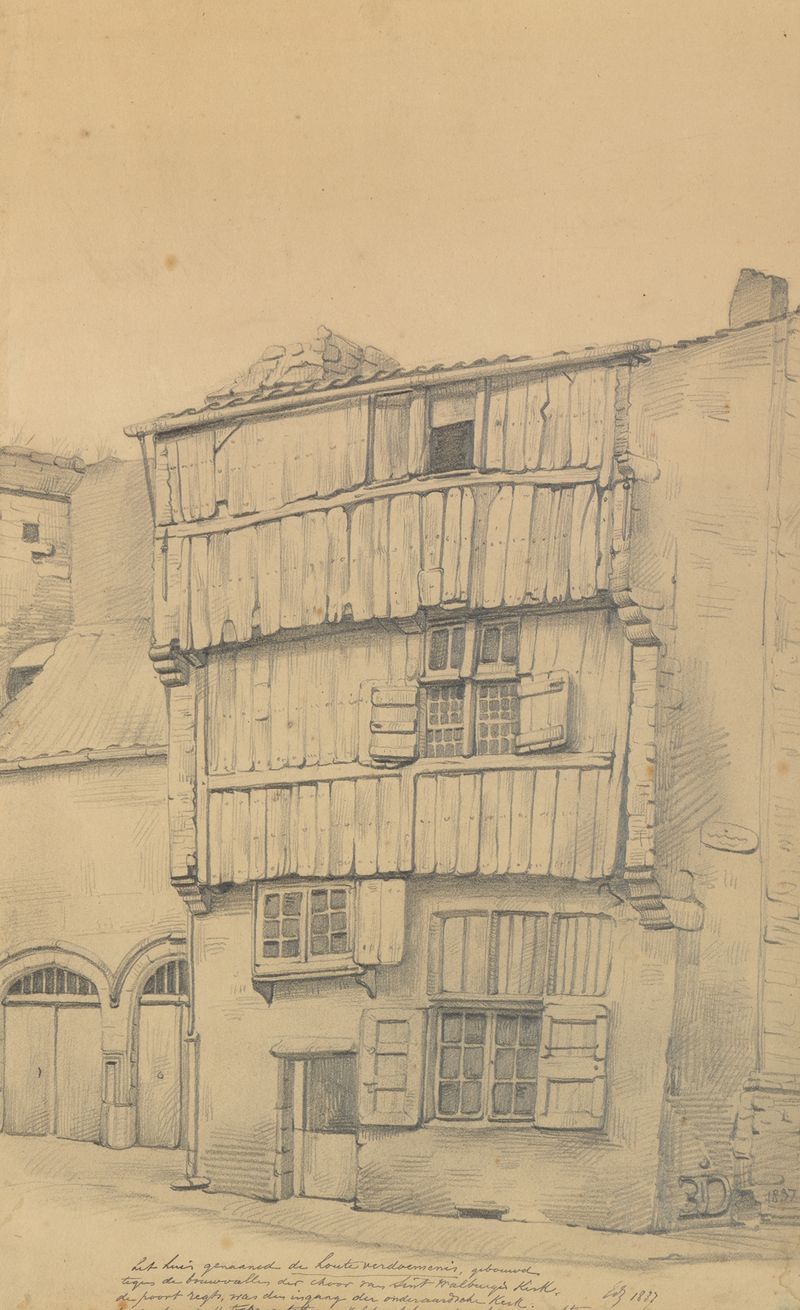
Het huis ‘De Houte Verdoemenis’, gebouwd tegen het koor van de Sint-Walburgiskerk
Edward Dujardin

Ingangspoort van het Sint-Julianusgodshuis
Edward Dujardin
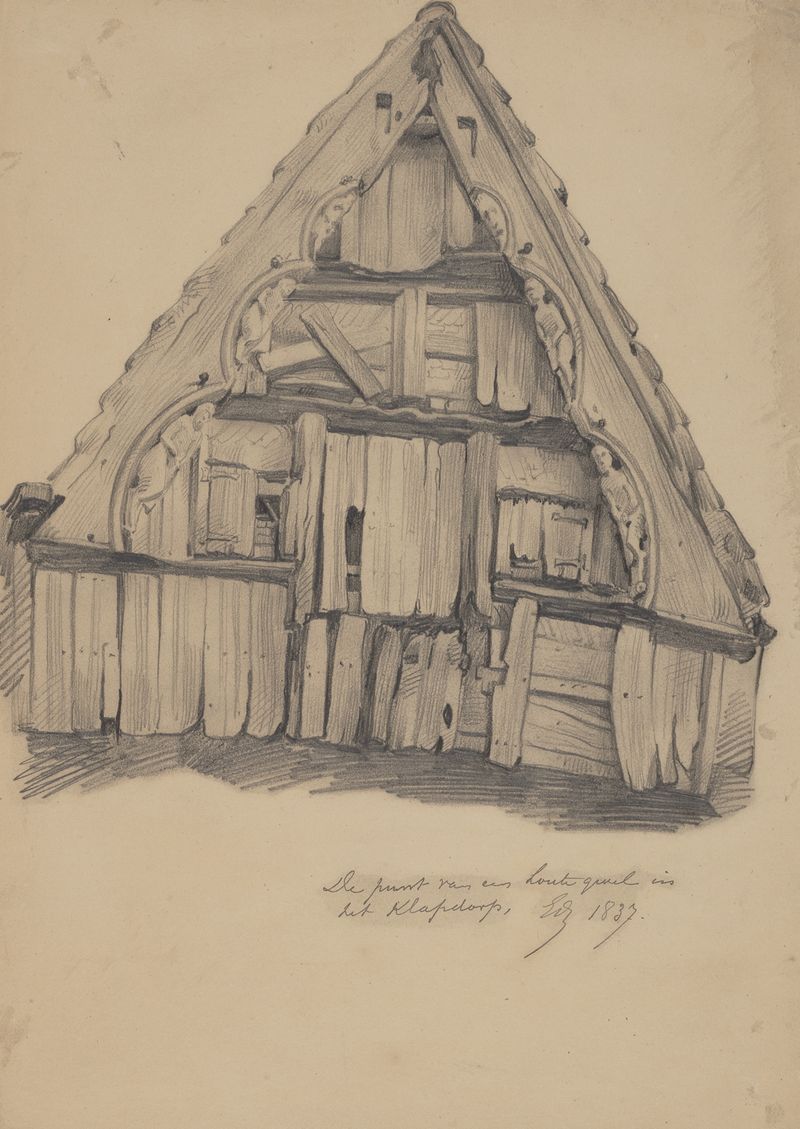
De punt van een houten gevel in het Klapdorp
Edward Dujardin
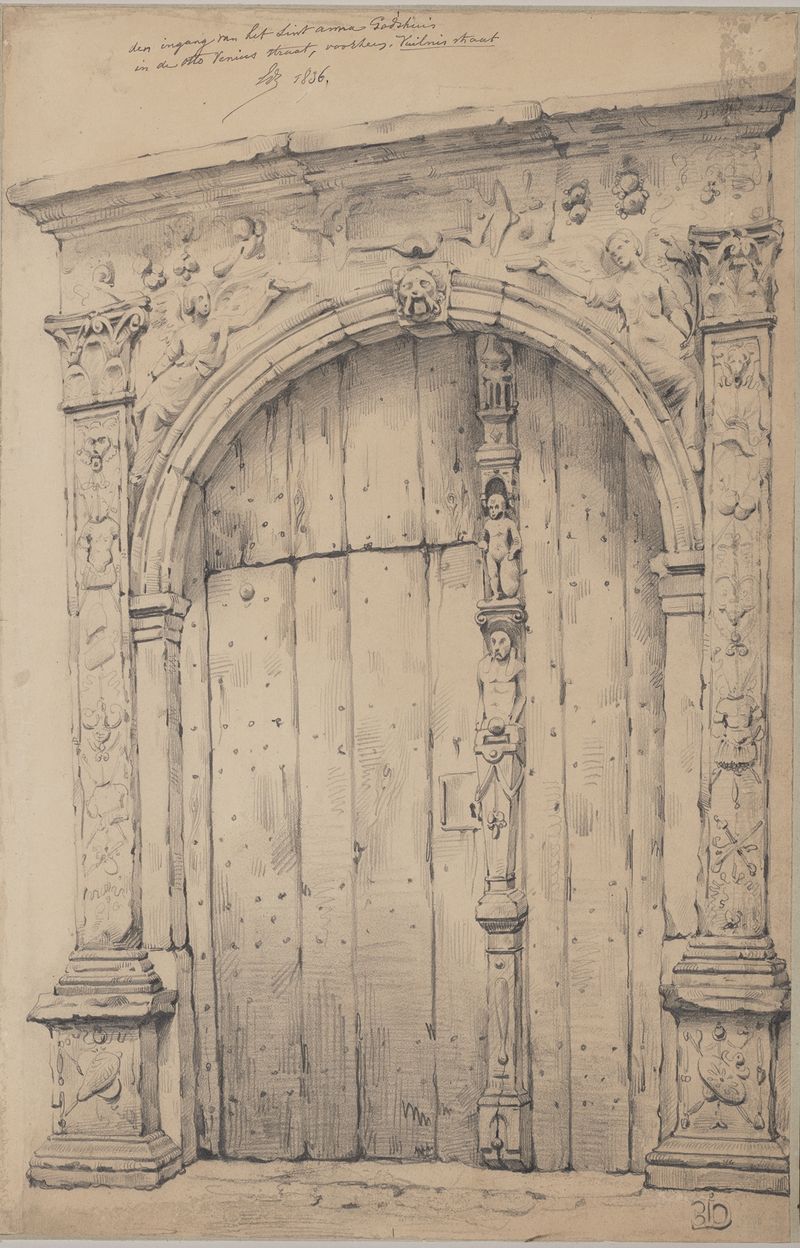
Ingang van het St.-Annagodshuis
Edward Dujardin
More Architecture Art
Browse all →
The statue of Liberty
Frédéric Auguste Bartholdi

View of Houses in Delft, Known as ‘The Little Street’
Johannes Vermeer

View of Houses in Delft, Known as ‘The Little Street’
Johannes Vermeer

The Cathedral in Rouen. The portal, Grey Weather
Claude Monet

The yellow house
Vincent van Gogh

The Church in Auvers-sur-Oise, View from the Chevet
Vincent van Gogh