
Gedeelte van een houten gevel uit de Schrijnwerkersstraat — History & Facts
This sentiment reverberates through the intricate details of this captivating wooden façade, inviting us to contemplate the layers behind its craftsmanship. Look to the left at the delicate carvings that flow seamlessly into one another, revealing the artist’s meticulous attention to texture and form. The light dances upon the surface, highlighting the contrast between shadow and brilliance, as if the wood itself breathes under the gentle caress of illumination. Notice how every curve and line is deliberate, guiding the eye through a narrative that unfolds like a story whispered through generations. Within this façade lies a world of untold stories, echoing both the splendor and the transience of life.
The ornate designs suggest a celebration of craftsmanship, yet the rawness of the material hints at impermanence. Each intricate groove and flourish speaks to the delicate balance between beauty and decay, a reminder that beauty can often harbor deeper sorrows just beneath the surface. In 1837, Edward Dujardin was immersed in the artistic currents of Belgium, a time when Romanticism was giving way to the burgeoning Realism movement. Working in Brussels, he sought to capture the essence of his surroundings, amidst a backdrop of social and political change.
This piece, reflecting both his technical prowess and emotional depth, stands as a testament to the era's exploration of everyday life and the stories it contains.
More Artworks by Edward Dujardin
Browse all →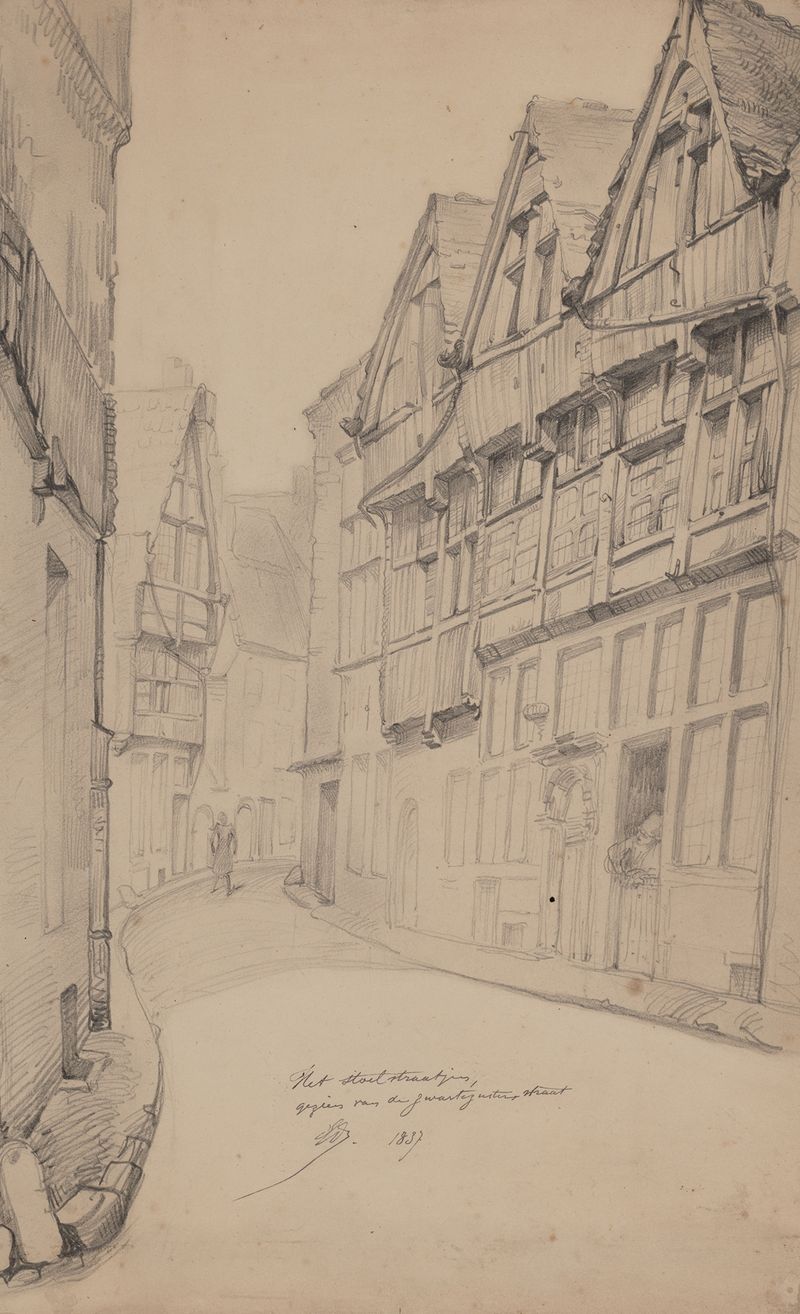
De Stoelstraat, gezien vanuit de Zwarte Zusterstraat
Edward Dujardin
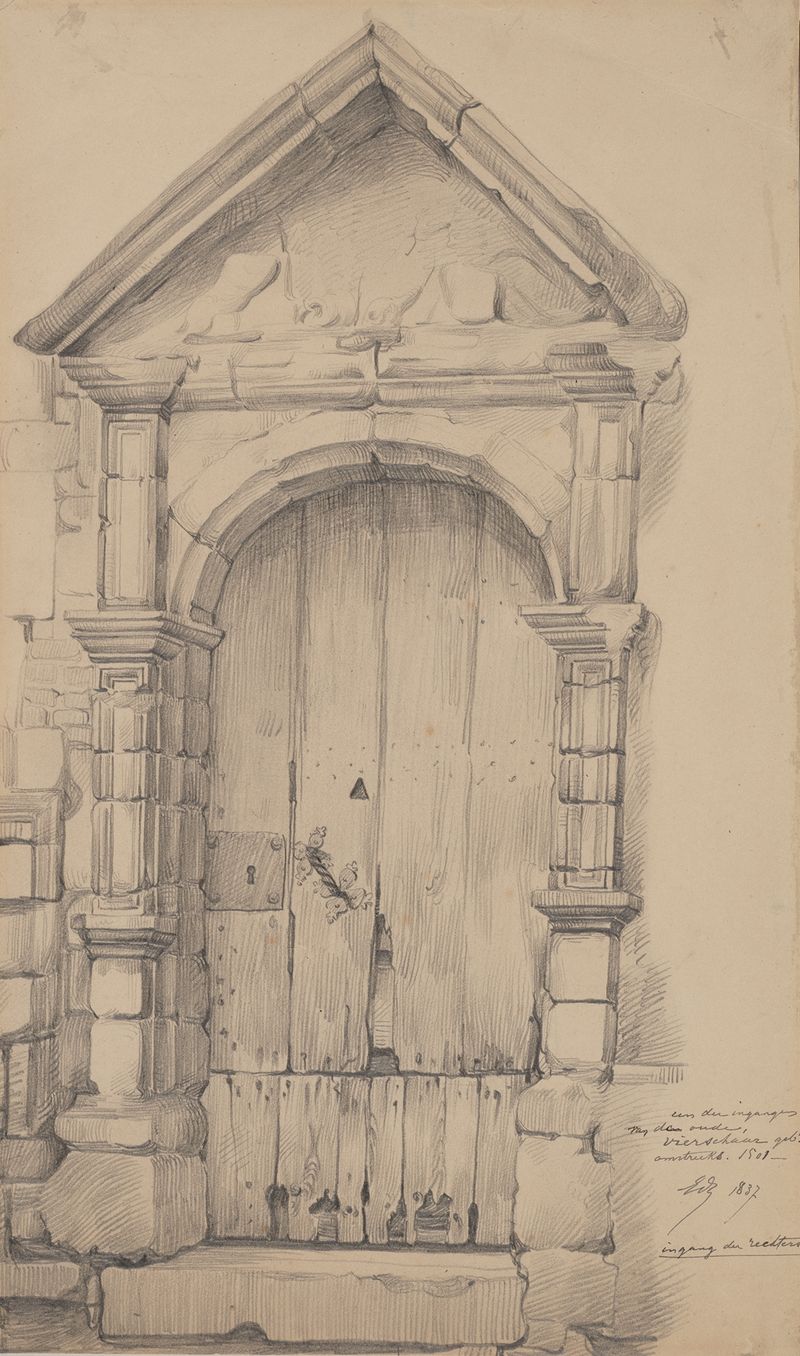
De ingang der rechters van de oude Vierschaar
Edward Dujardin
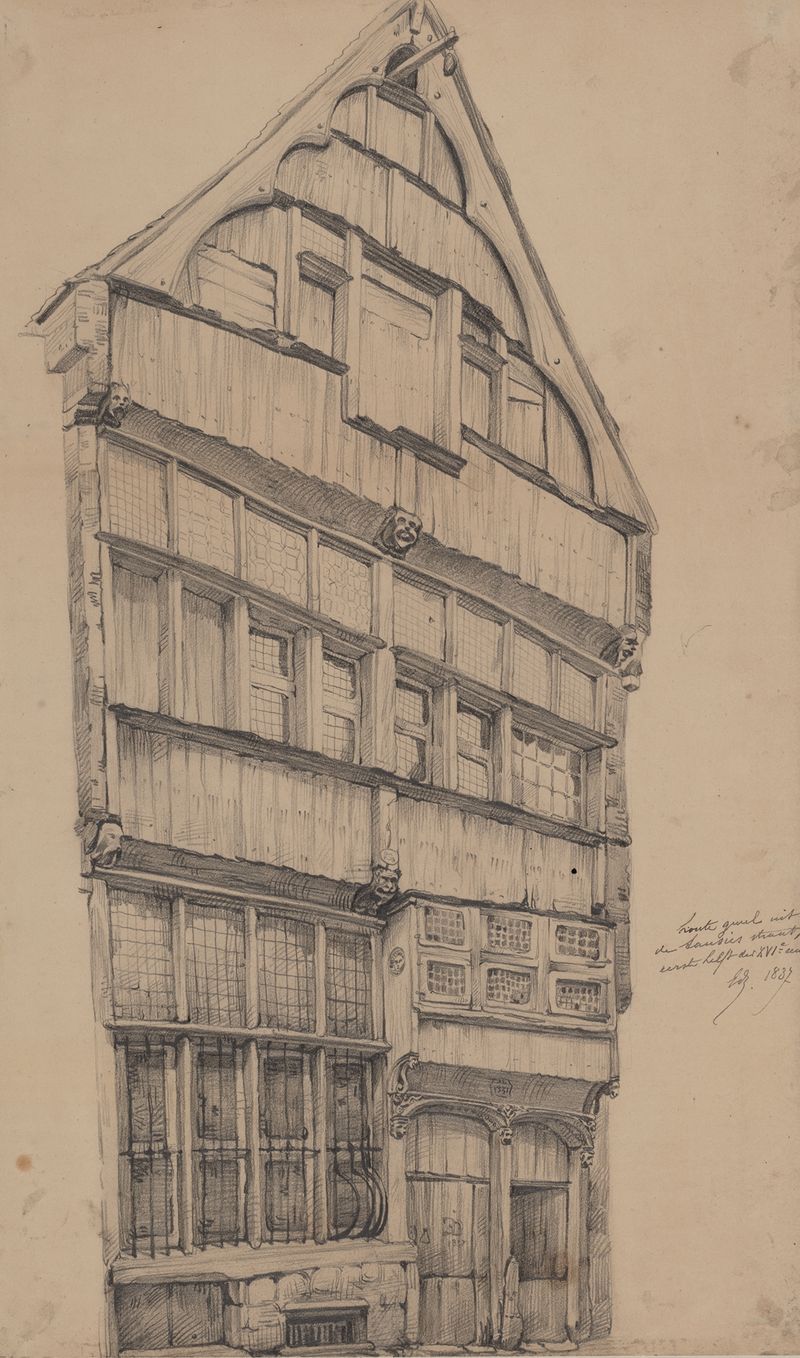
Houten gevel in de Saucierstraat.
Edward Dujardin
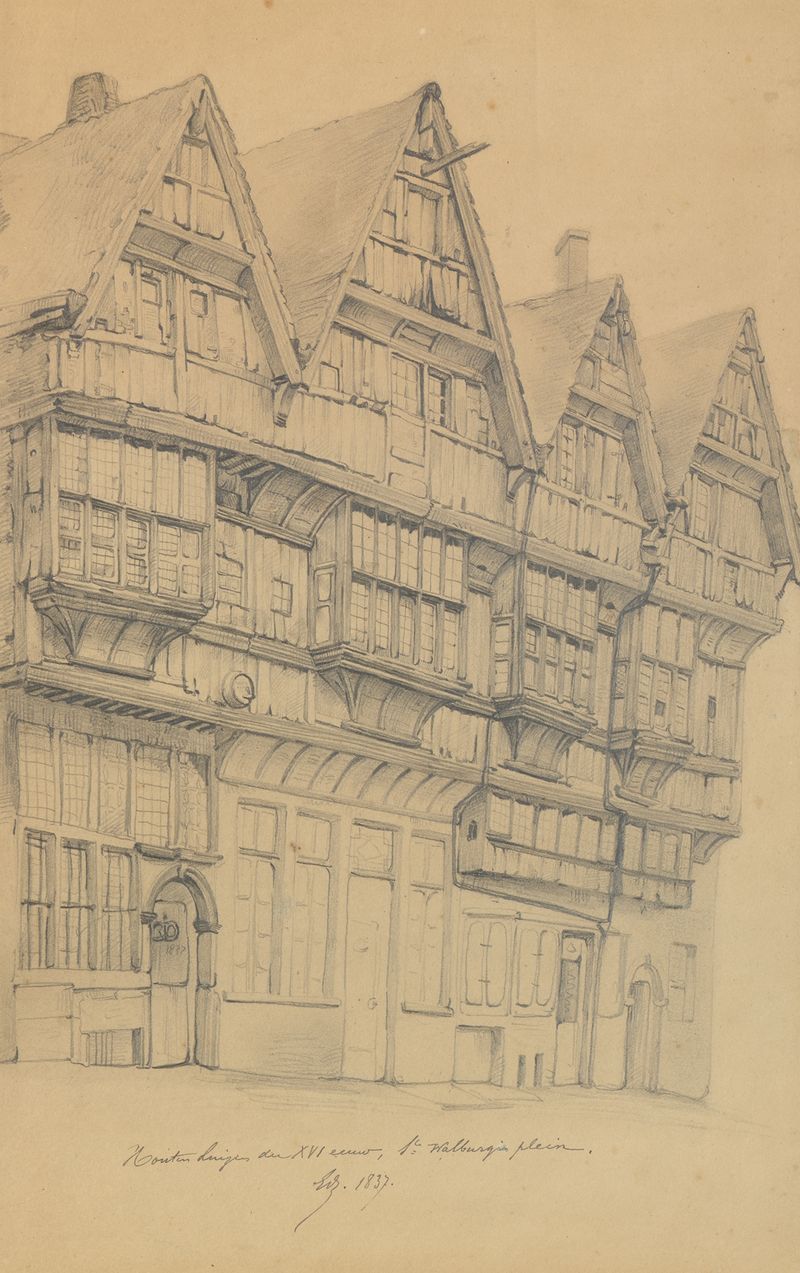
Houten huizen der XVI eeuw, Sint-Walburgisplein
Edward Dujardin
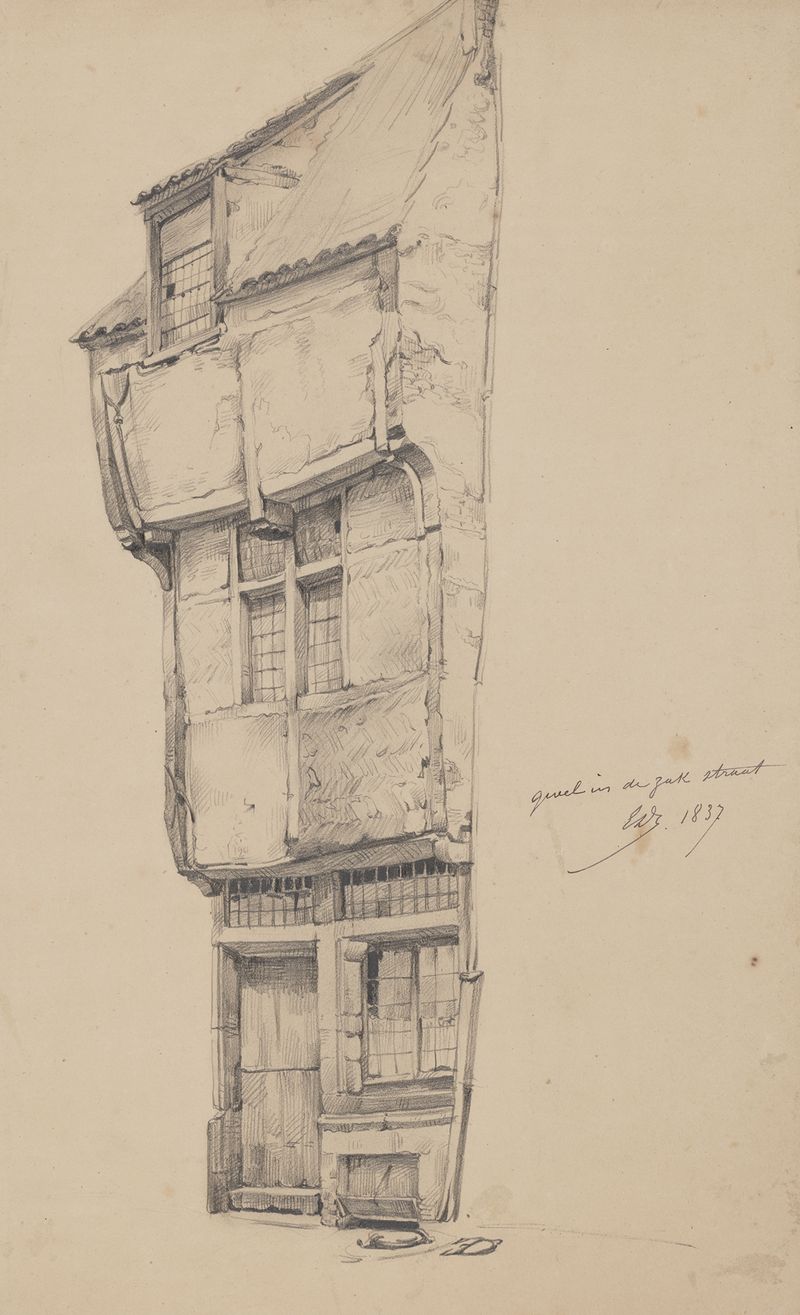
Gevel in de Zakstraat
Edward Dujardin
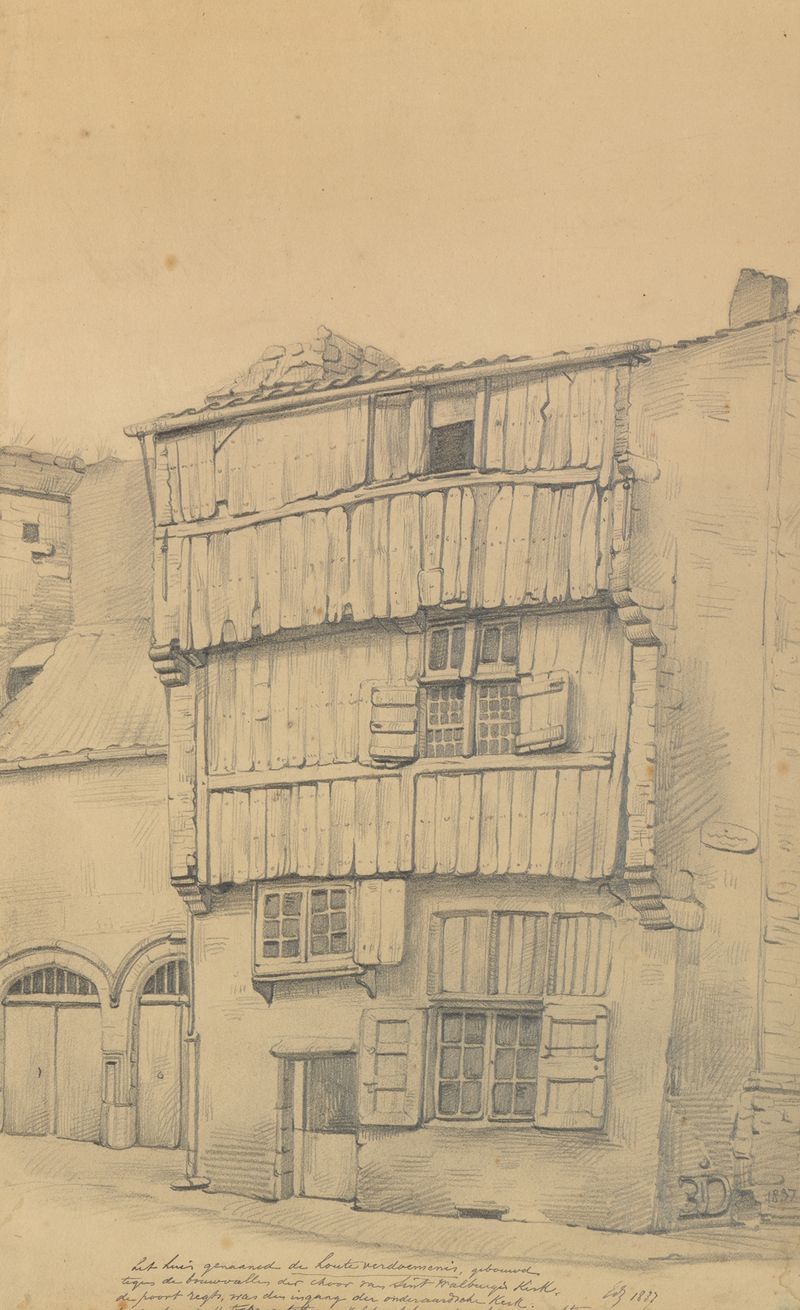
Het huis ‘De Houte Verdoemenis’, gebouwd tegen het koor van de Sint-Walburgiskerk
Edward Dujardin
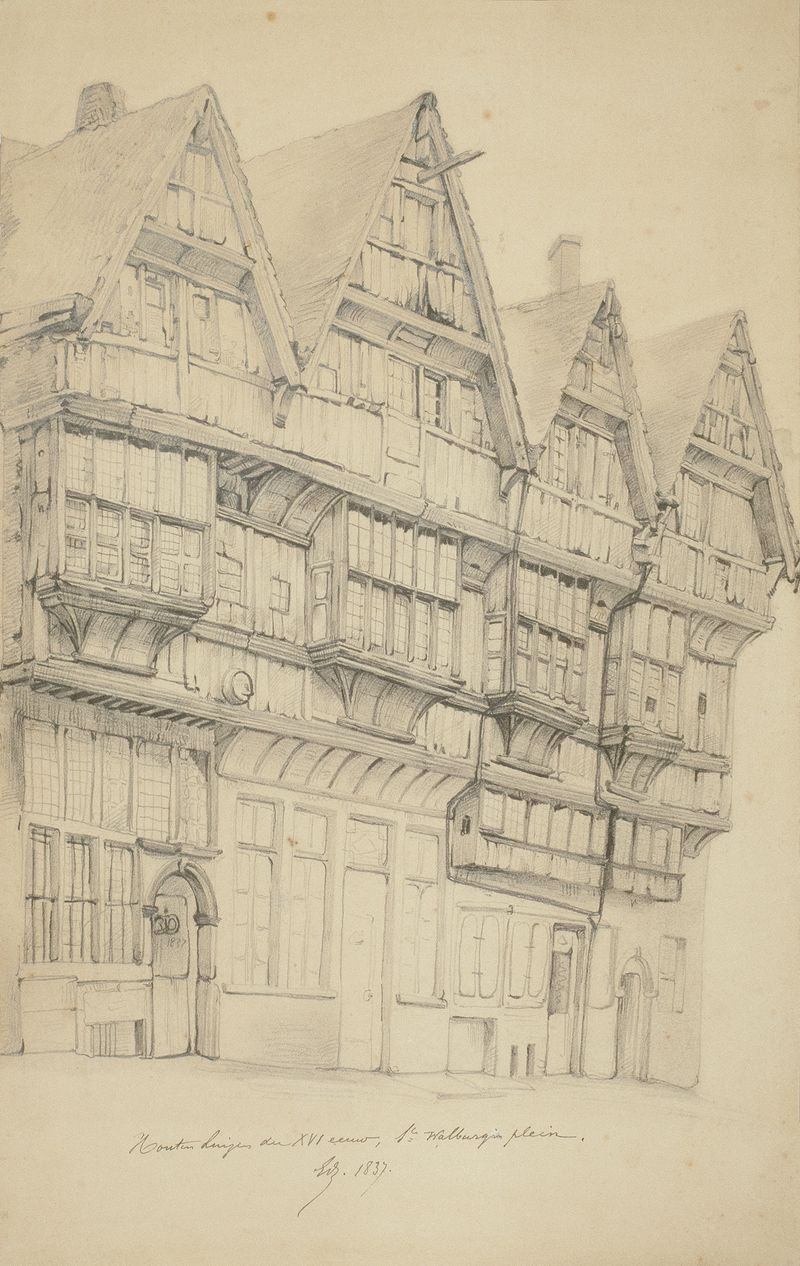
Houten huizen der XVI eeuw, Sint-Walburgisplein
Edward Dujardin

Ingangspoort van het Sint-Julianusgodshuis
Edward Dujardin
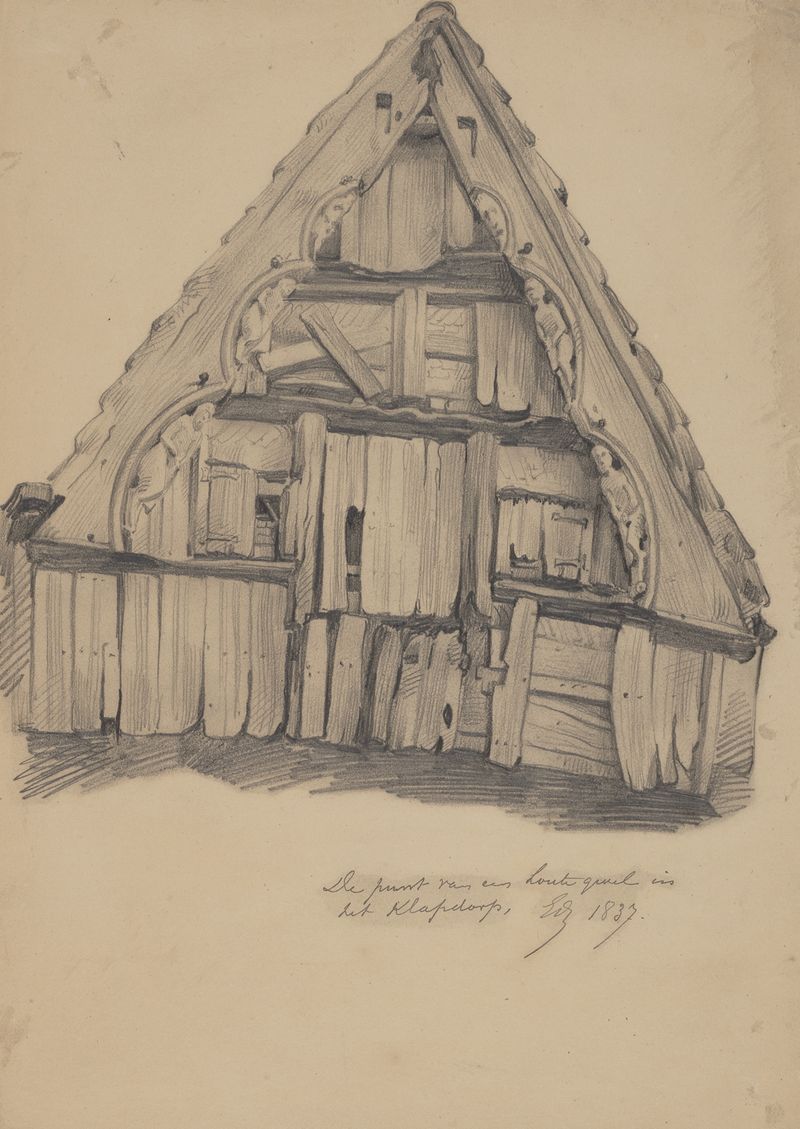
De punt van een houten gevel in het Klapdorp
Edward Dujardin
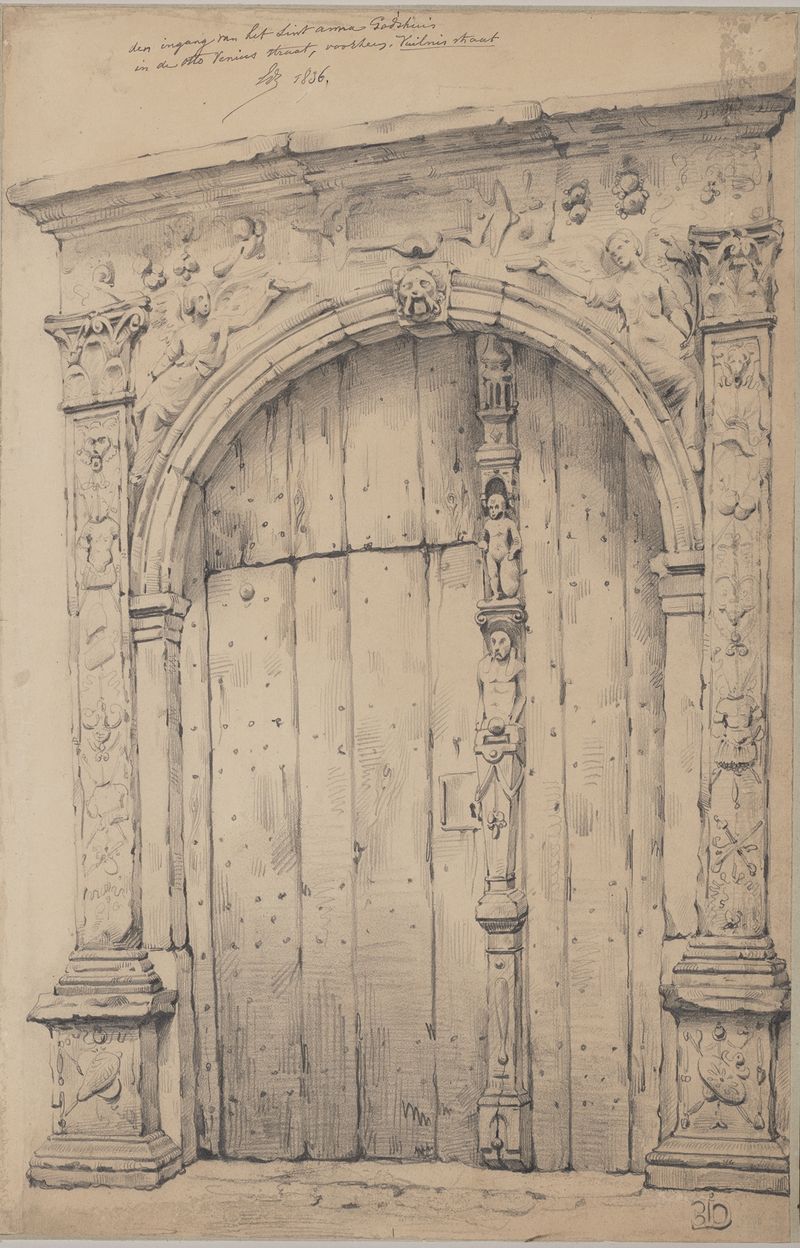
Ingang van het St.-Annagodshuis
Edward Dujardin
More Architecture Art
Browse all →
The statue of Liberty
Frédéric Auguste Bartholdi

View of Houses in Delft, Known as ‘The Little Street’
Johannes Vermeer

View of Houses in Delft, Known as ‘The Little Street’
Johannes Vermeer

The Cathedral in Rouen. The portal, Grey Weather
Claude Monet

The yellow house
Vincent van Gogh

The Church in Auvers-sur-Oise, View from the Chevet
Vincent van Gogh