
Het huis ‘De Houte Verdoemenis’, gebouwd tegen het koor van de Sint-Walburgiskerk — History & Facts
Where does light end, and longing begin? In Edward Dujardin’s Het huis ‘De Houte Verdoemenis’, a house looms ominously beside a church, embodying a subtle violence that lies in the distance between sacred and profane. Focus first on the sharp outlines of the house, a stark contrast against the warm, inviting glow of the church's window. Dujardin's use of shadow evokes a sense of foreboding, as deep greens and muted grays envelop the structure. The brushwork is deliberate, with each stroke lending texture to the aged facade, while the church, bathed in gentle light, draws the viewer’s eye upward, suggesting an unseen tension between the two buildings.
The intersection of light and shadow creates a dialogue between the peaceful sanctuary of faith and the potential chaos of earthly existence. The house, nicknamed "De Houte Verdoemenis," translates to "The House of Wooden Damnation," hinting at themes of sin, isolation, and perhaps despair. The juxtaposition of the church, a symbol of hope and salvation, against the dark edifice speaks to the duality of human experience—the yearning for transcendence in a world fraught with anguish. The viewer might sense the stories contained within its walls, each window reflecting not just light, but the whispered secrets of lives lived in its shadow. Dujardin painted this work in 1837, during a period marked by a growing interest in Romanticism and its exploration of emotion and nature.
Living in the Netherlands, he was influenced by the shifting currents of European art, yet he carved out a unique space for himself by merging the architectural with the emotional. This piece encapsulates a moment in a world grappling with industrial change, and the artist’s own navigation of personal and societal strife.
More Artworks by Edward Dujardin
Browse all →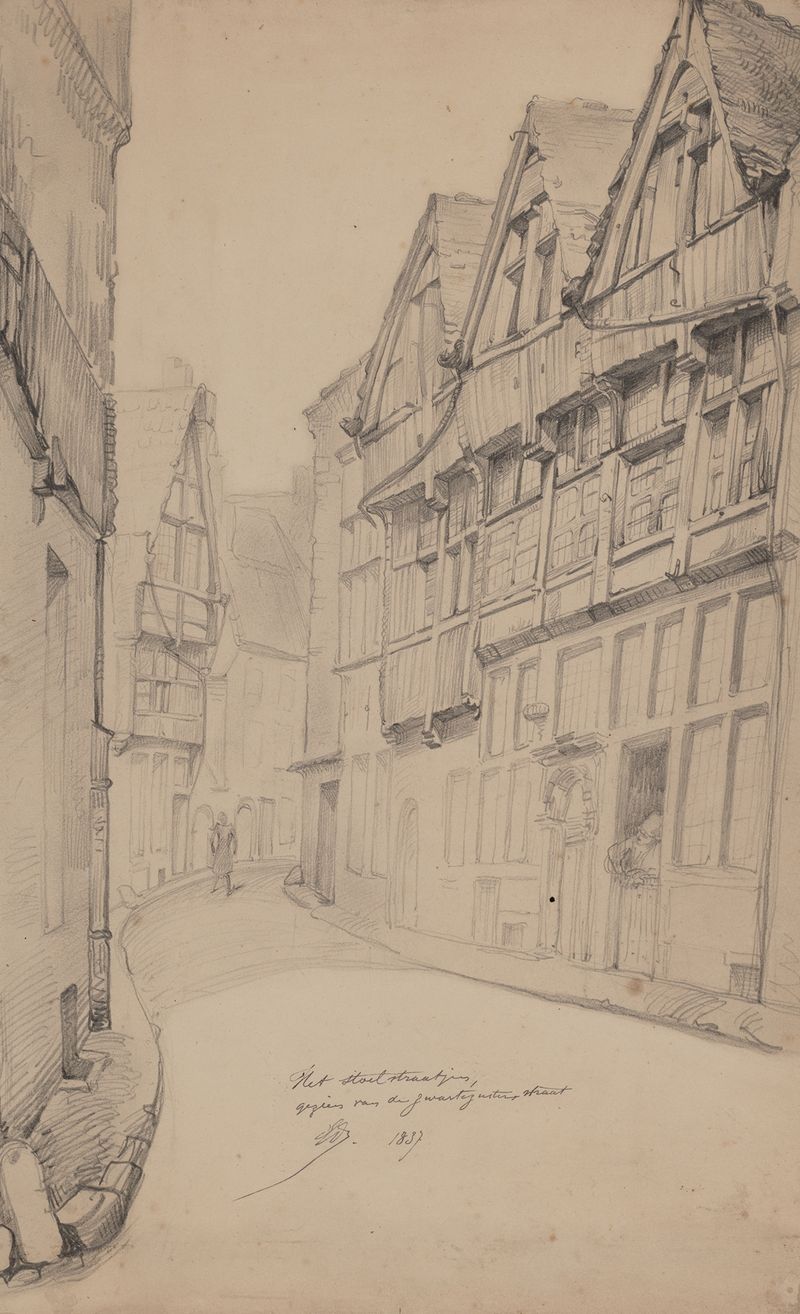
De Stoelstraat, gezien vanuit de Zwarte Zusterstraat
Edward Dujardin
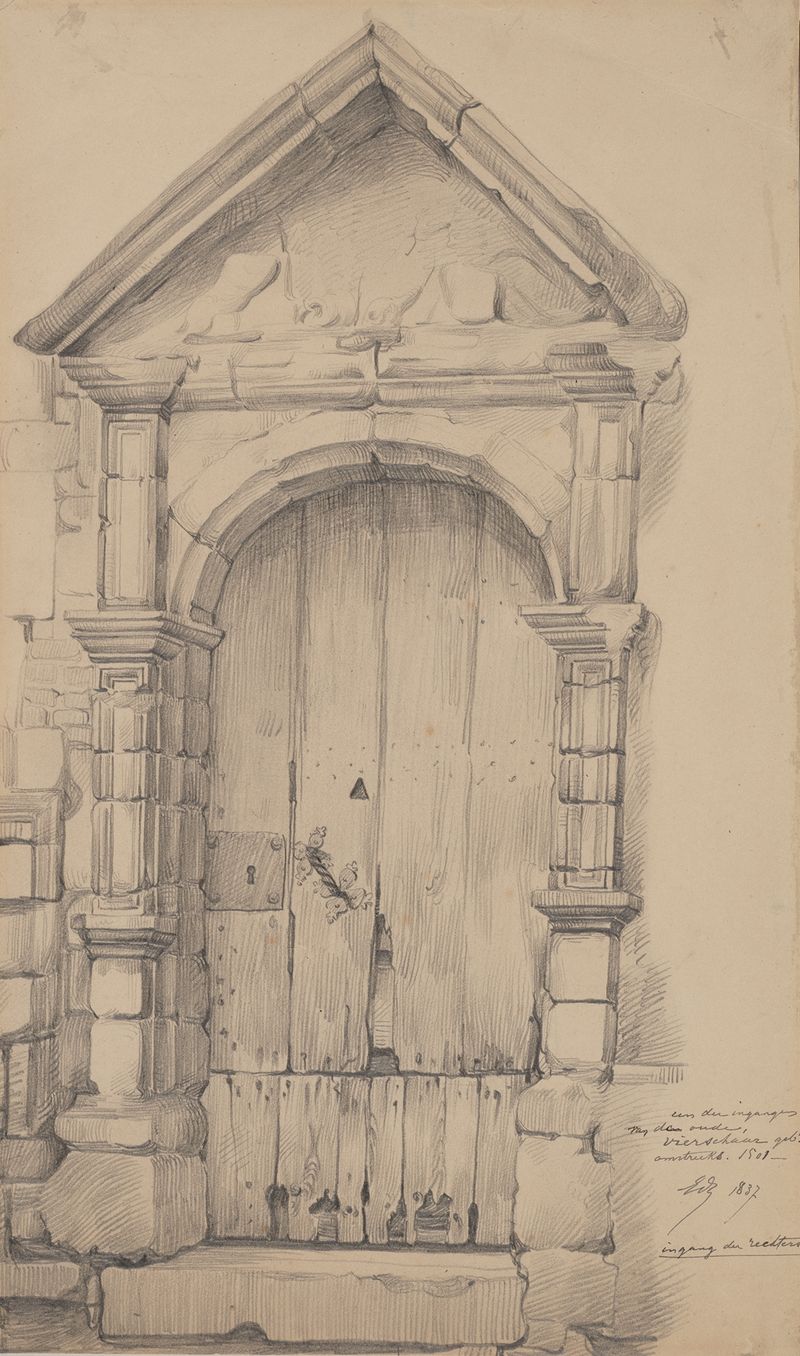
De ingang der rechters van de oude Vierschaar
Edward Dujardin
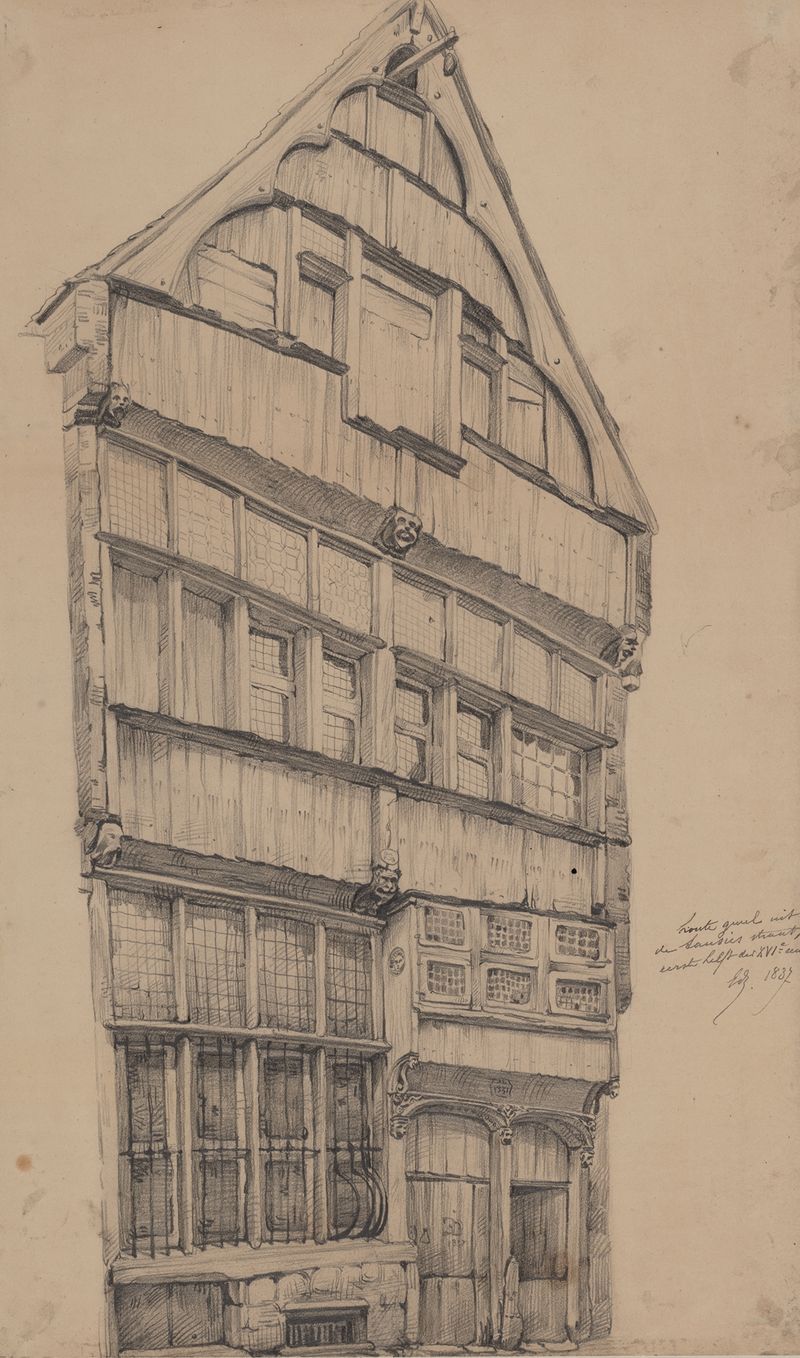
Houten gevel in de Saucierstraat.
Edward Dujardin
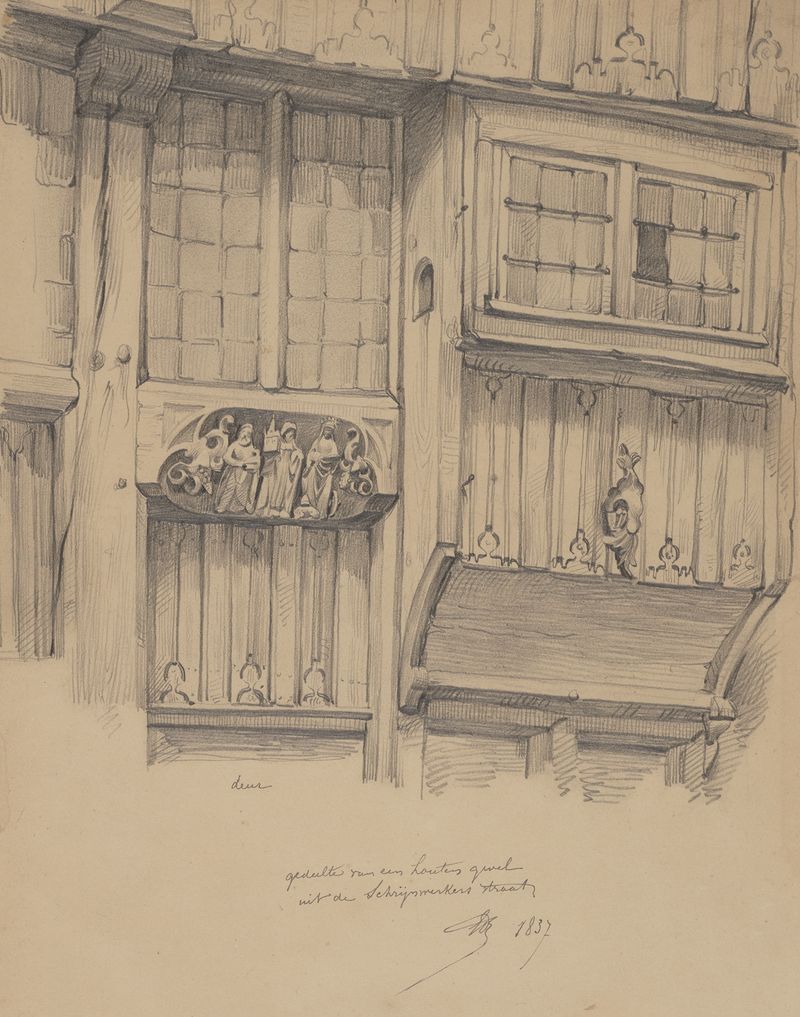
Gedeelte van een houten gevel uit de Schrijnwerkersstraat
Edward Dujardin
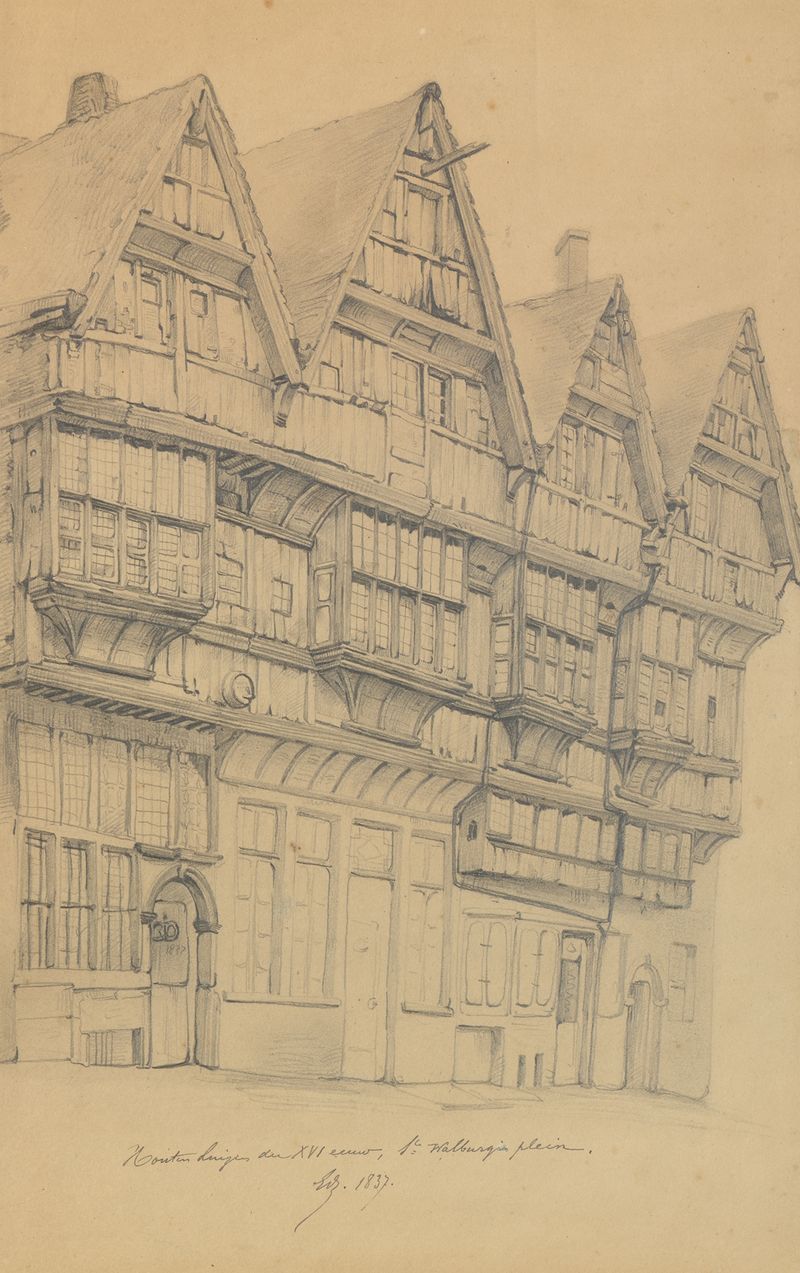
Houten huizen der XVI eeuw, Sint-Walburgisplein
Edward Dujardin
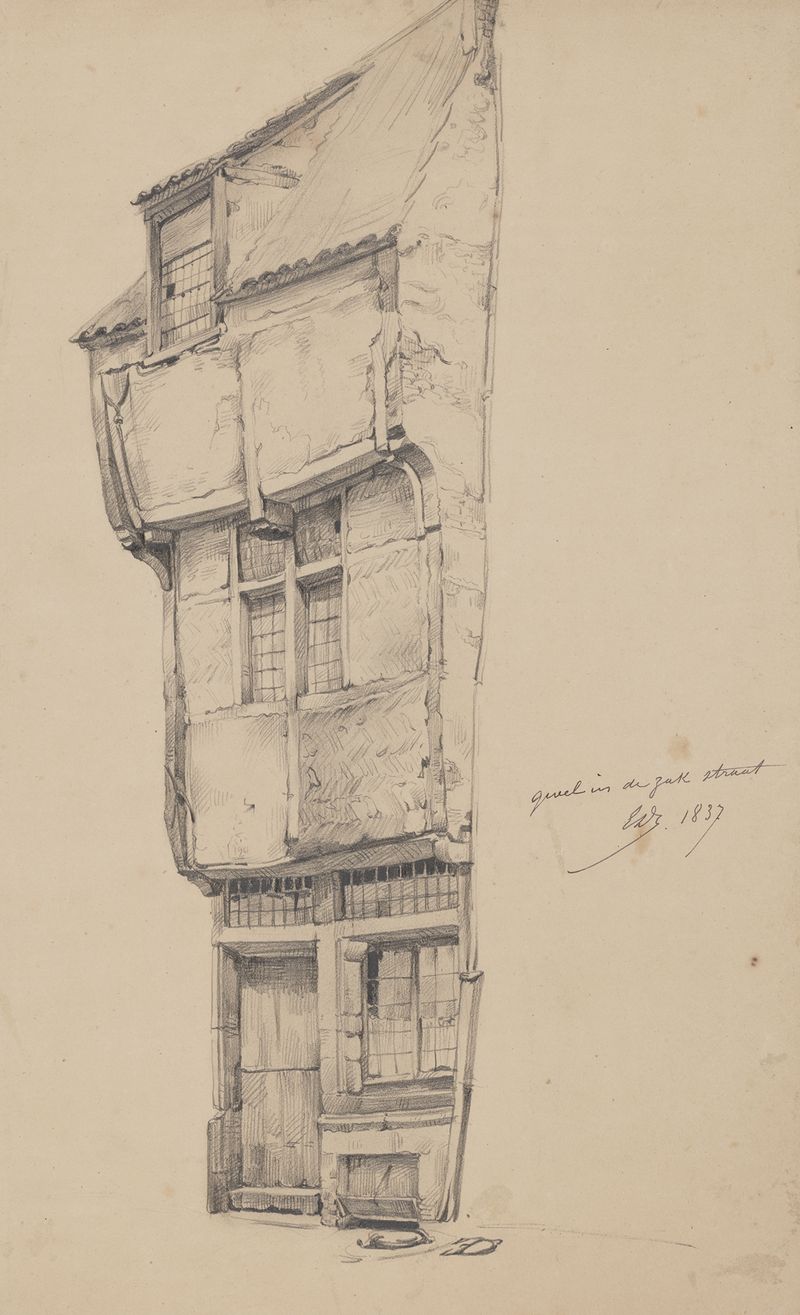
Gevel in de Zakstraat
Edward Dujardin
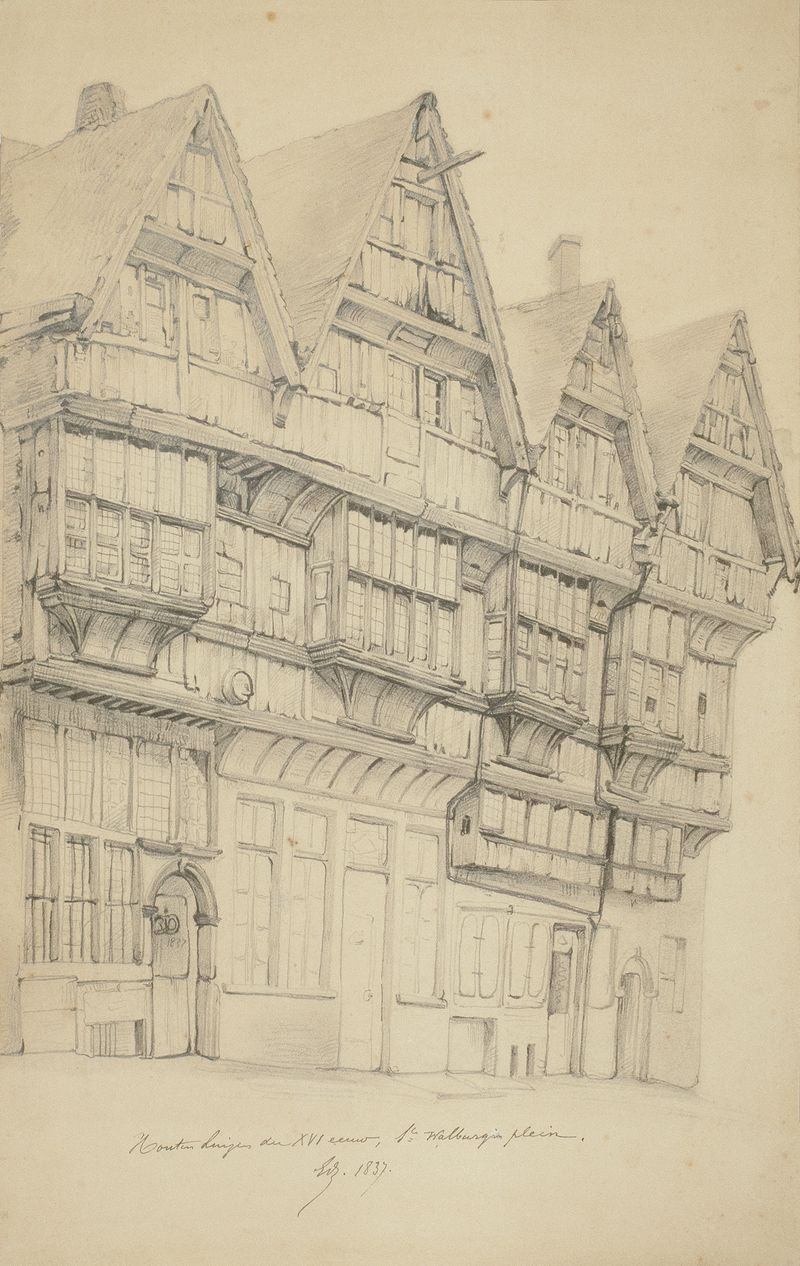
Houten huizen der XVI eeuw, Sint-Walburgisplein
Edward Dujardin

Ingangspoort van het Sint-Julianusgodshuis
Edward Dujardin
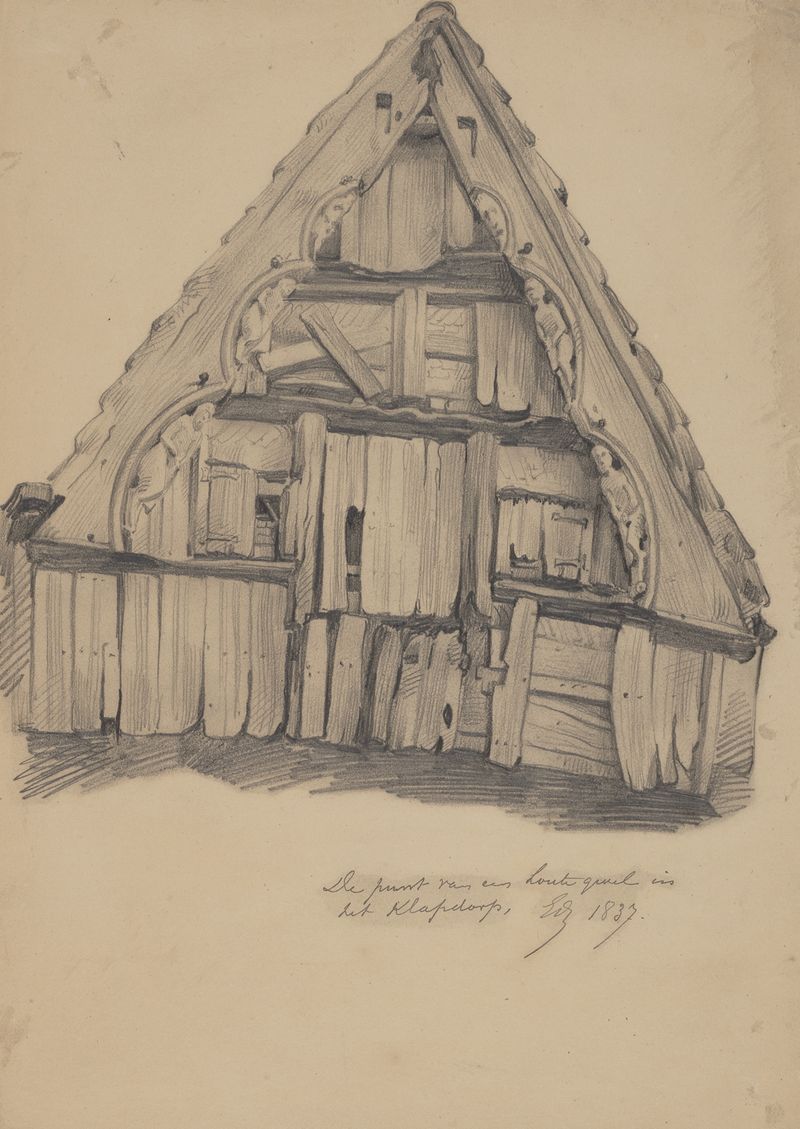
De punt van een houten gevel in het Klapdorp
Edward Dujardin
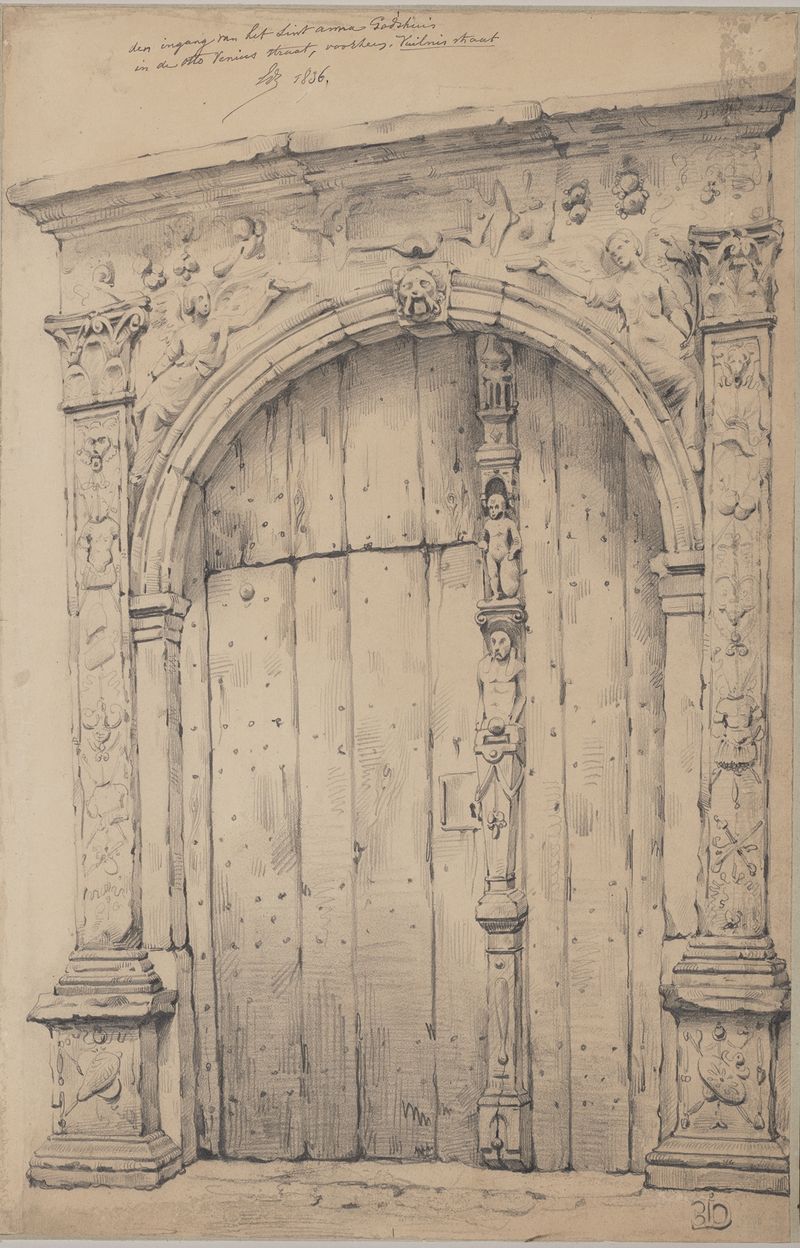
Ingang van het St.-Annagodshuis
Edward Dujardin
More Architecture Art
Browse all →
The statue of Liberty
Frédéric Auguste Bartholdi

View of Houses in Delft, Known as ‘The Little Street’
Johannes Vermeer

View of Houses in Delft, Known as ‘The Little Street’
Johannes Vermeer

The Cathedral in Rouen. The portal, Grey Weather
Claude Monet

The yellow house
Vincent van Gogh

The Church in Auvers-sur-Oise, View from the Chevet
Vincent van Gogh