
Ingang van het St.-Annagodshuis — History & Facts
Art reveals the soul when the world turns away. In Ingang van het St.-Annagodshuis, Edward Dujardin captures a moment where transcendence meets the beauty of the everyday, inviting the viewer to ponder the deeper meanings of existence. Look to the right at the elegant archway that serves as the entrance to the sanctuary. The soft, diffused light filtering through the trees bathes the scene in a gentle glow, illuminating the faces of the figures gathered outside.
Notice how the delicate brushwork brings out the texture of the stone and foliage, while the muted color palette evokes a sense of tranquility and reverence. The composition expertly guides your eye through the open doorway, as if beckoning you into the sacred space beyond. Within this seemingly serene moment lies a poignant contrast: the juxtaposition of the bustling life outside and the contemplative atmosphere within. The figures, caught in a moment of anticipation, embody both hope and melancholy, revealing an emotional tension that resonates with the viewer.
The archway symbolizes a threshold, a passage not just into a building, but into a deeper understanding of faith, community, and the human experience. In 1836, Dujardin painted this work during a time when the Romantic movement flourished in Europe, promoting emotional depth and individual experience. Living in the Netherlands, he was influenced by the changing landscape of art, shifting away from Neoclassicism towards more intimate and personal expressions. This piece reflects both his artistic evolution and the broader cultural currents of the era, emphasizing the importance of human connection within the sacred.
More Artworks by Edward Dujardin
Browse all →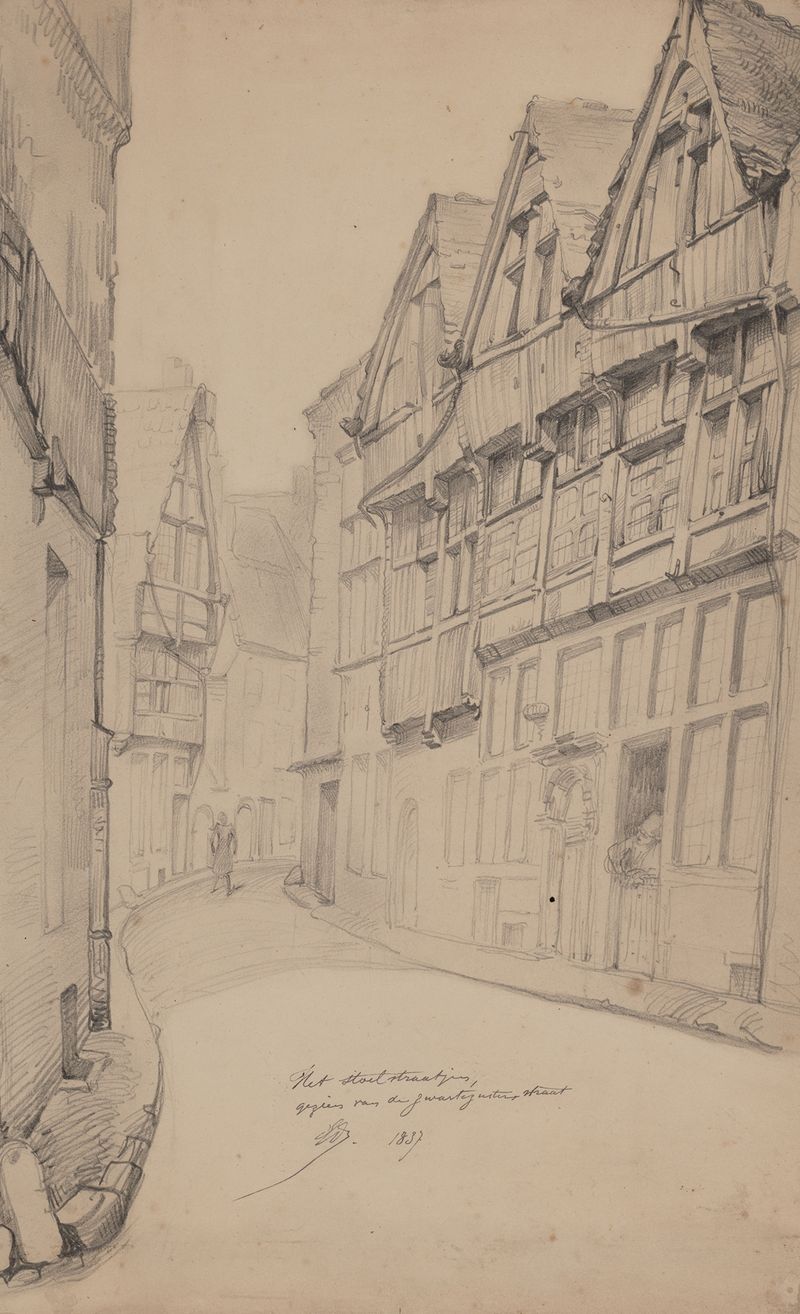
De Stoelstraat, gezien vanuit de Zwarte Zusterstraat
Edward Dujardin
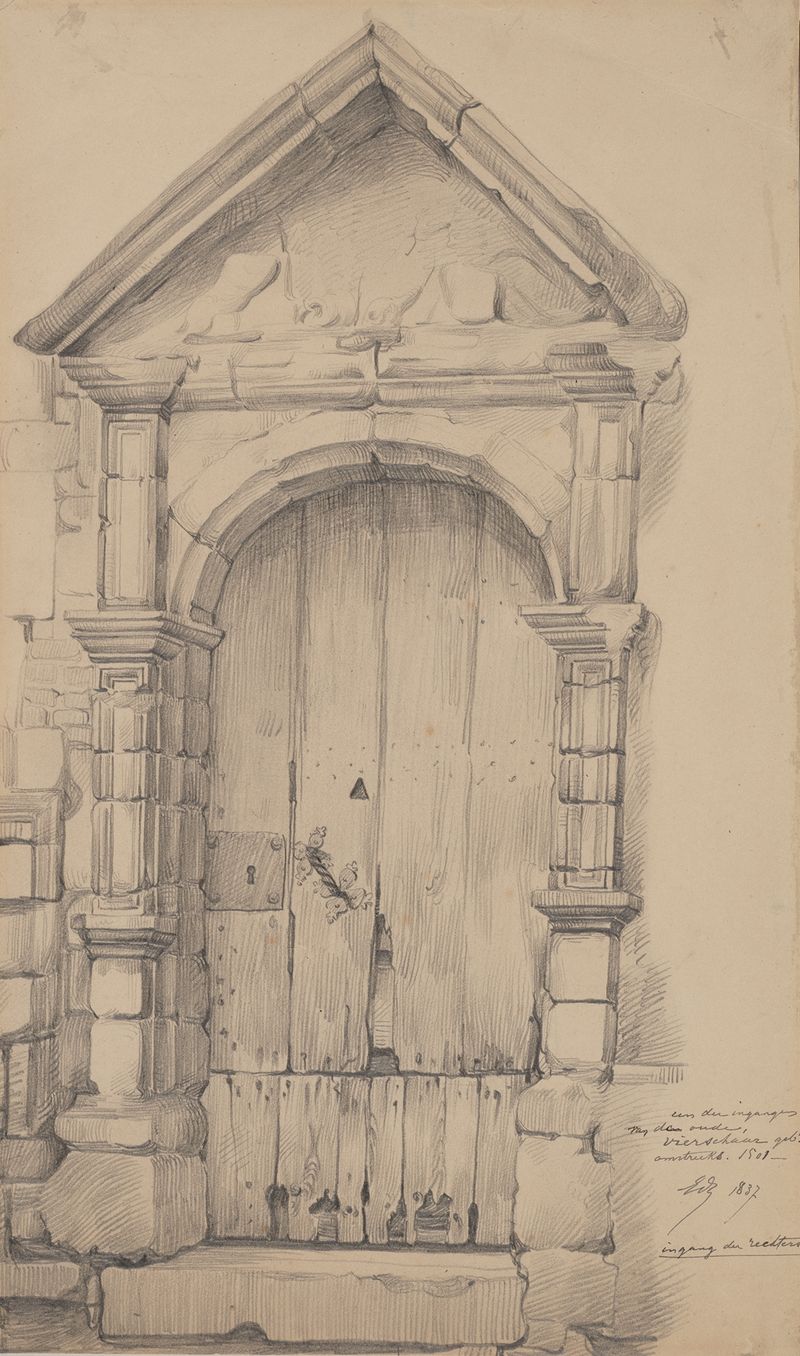
De ingang der rechters van de oude Vierschaar
Edward Dujardin
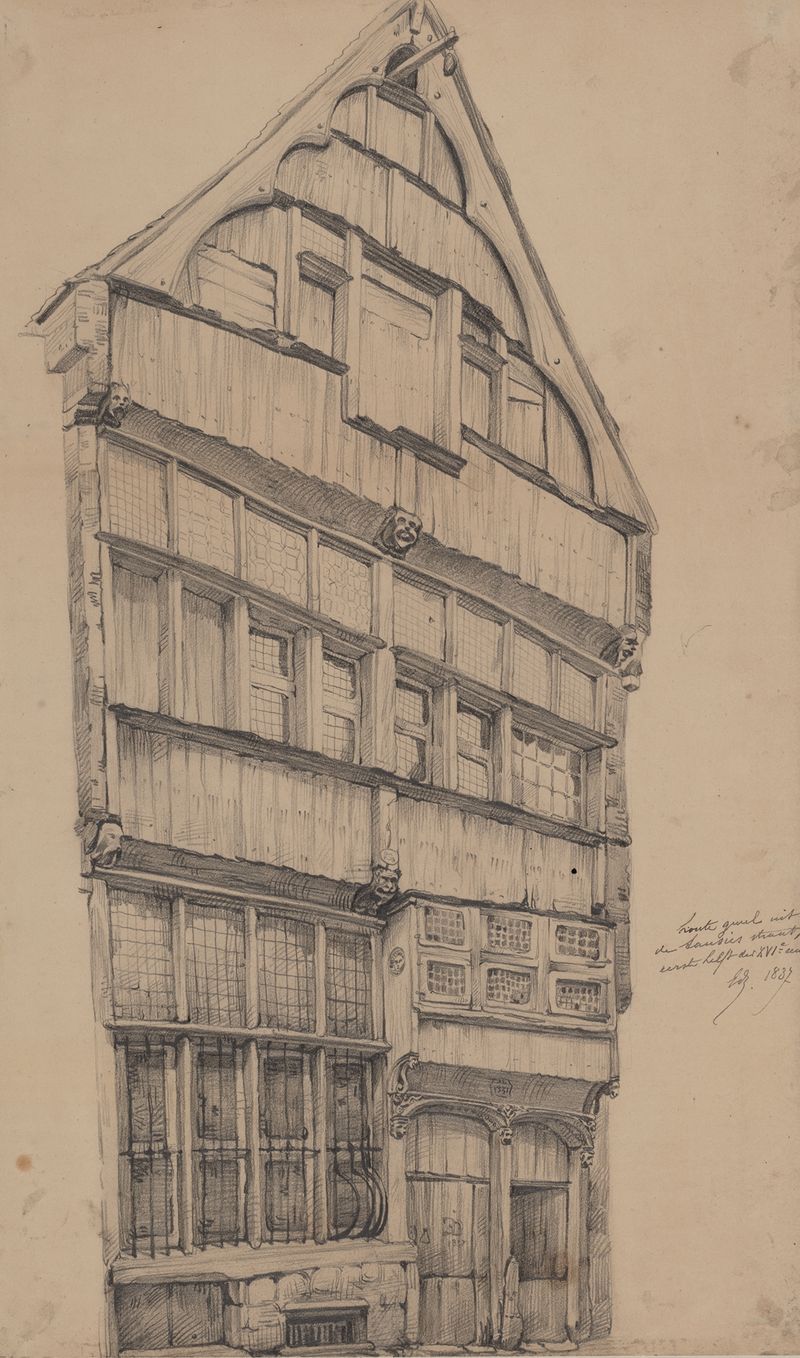
Houten gevel in de Saucierstraat.
Edward Dujardin
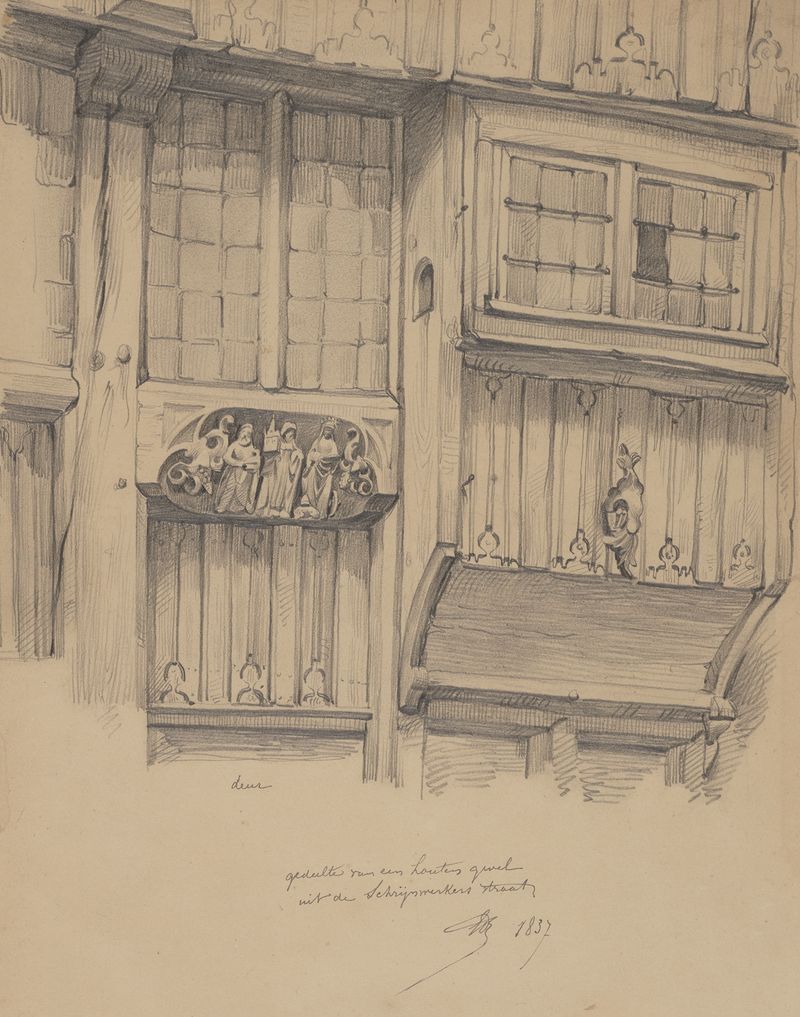
Gedeelte van een houten gevel uit de Schrijnwerkersstraat
Edward Dujardin
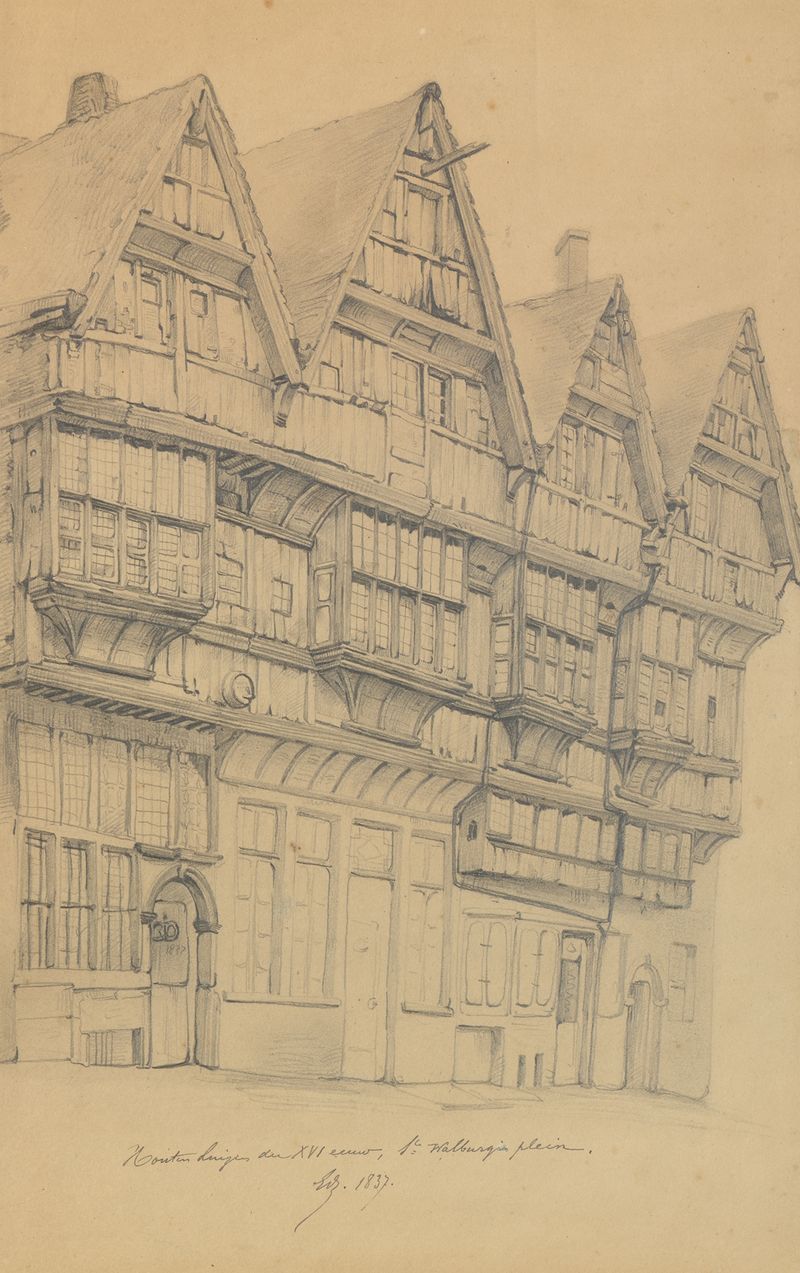
Houten huizen der XVI eeuw, Sint-Walburgisplein
Edward Dujardin
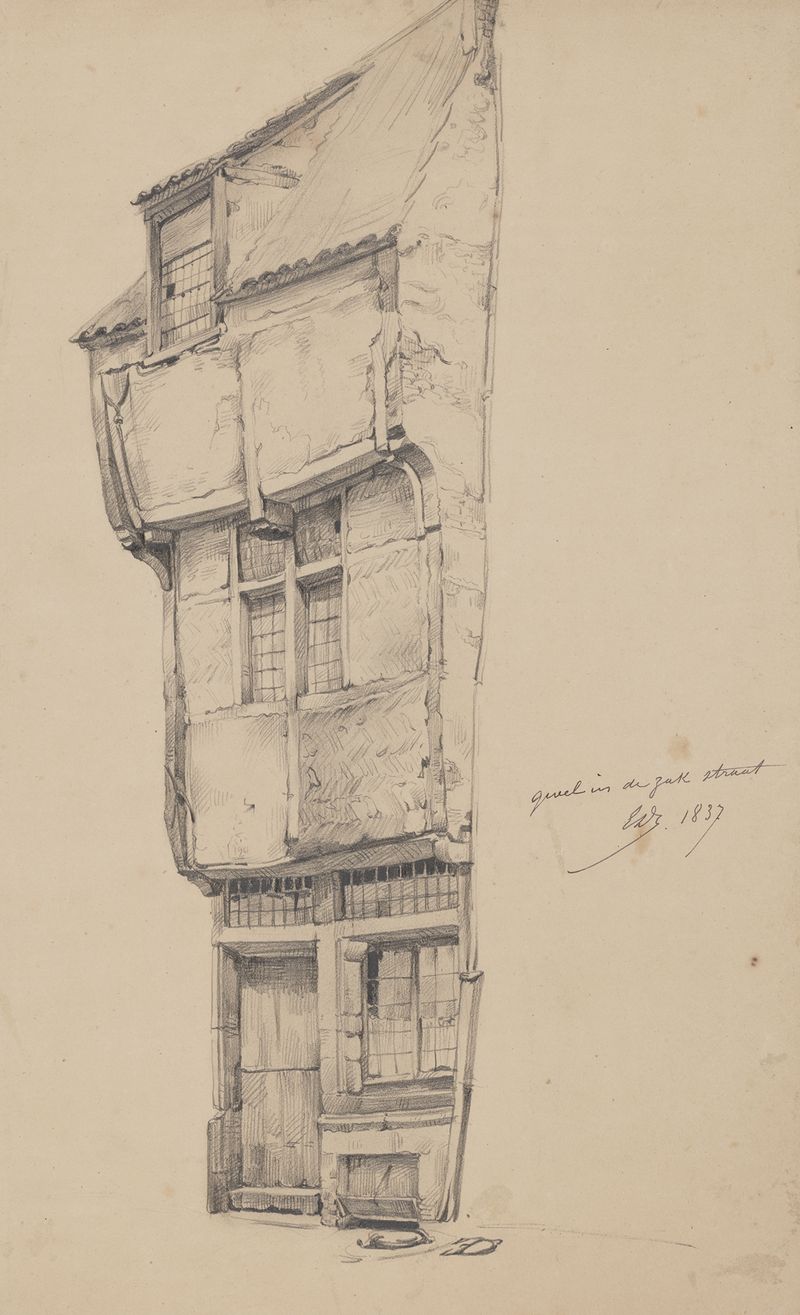
Gevel in de Zakstraat
Edward Dujardin
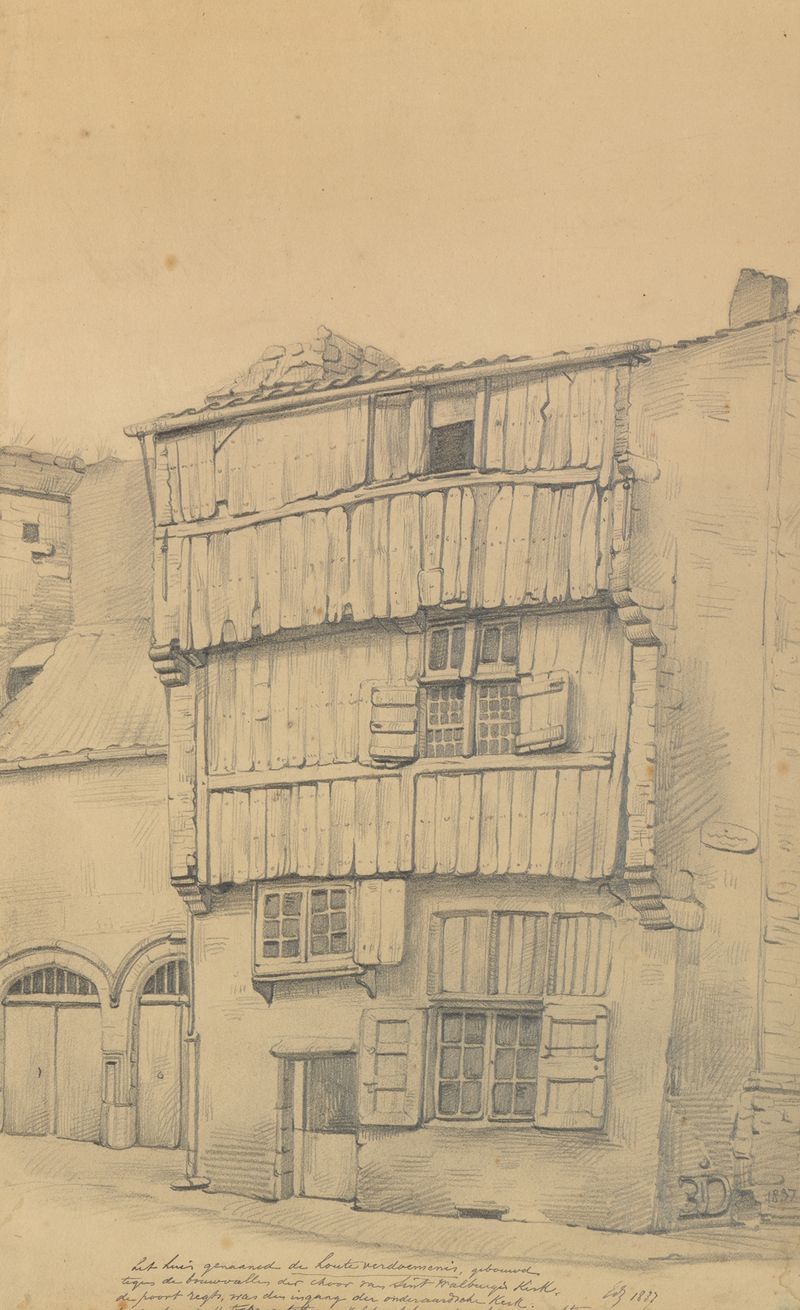
Het huis ‘De Houte Verdoemenis’, gebouwd tegen het koor van de Sint-Walburgiskerk
Edward Dujardin
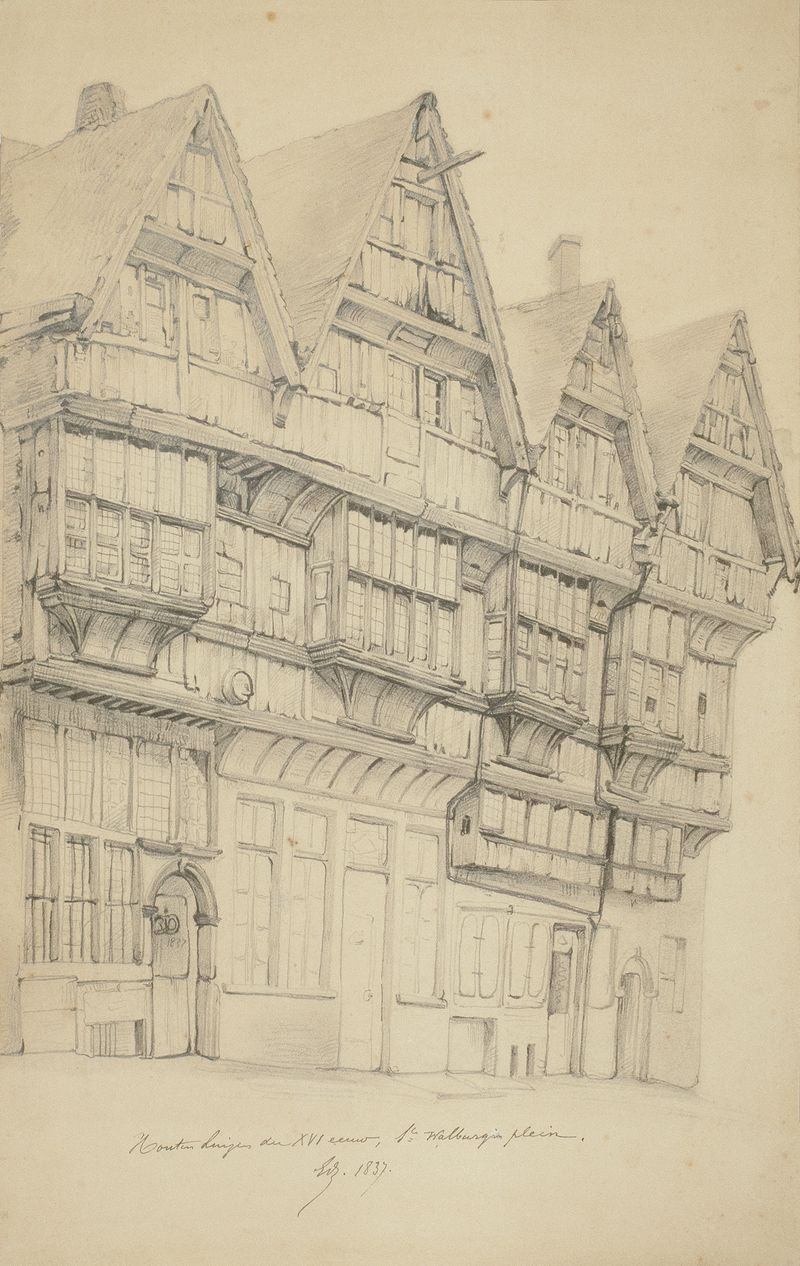
Houten huizen der XVI eeuw, Sint-Walburgisplein
Edward Dujardin

Ingangspoort van het Sint-Julianusgodshuis
Edward Dujardin
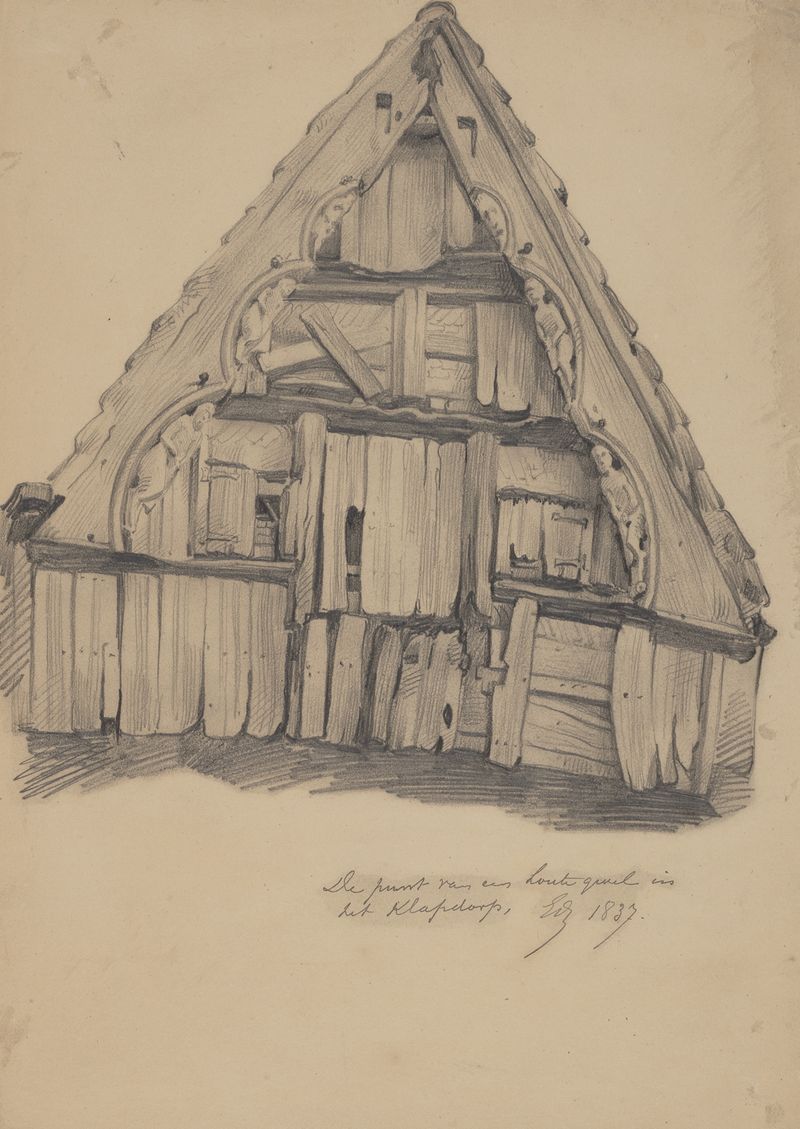
De punt van een houten gevel in het Klapdorp
Edward Dujardin
More Architecture Art
Browse all →
The statue of Liberty
Frédéric Auguste Bartholdi

View of Houses in Delft, Known as ‘The Little Street’
Johannes Vermeer

View of Houses in Delft, Known as ‘The Little Street’
Johannes Vermeer

The Cathedral in Rouen. The portal, Grey Weather
Claude Monet

The yellow house
Vincent van Gogh

The Church in Auvers-sur-Oise, View from the Chevet
Vincent van Gogh