
Deer in Forest — History & Facts
What first holds the viewer here is the hush—a clearing deep in the woods, where a cluster of deer rest in a patch of filtered sunlight, caught in a rare moment of perfect stillness. The largest doe, her gaze meeting ours, becomes the painting’s quiet anchor; her alert ears and steady eyes suggest a world where every sound matters. Around her, the other deer, some half-hidden in shadow, seem to dissolve into the forest floor, their forms shaped by the cool, greenish gloom and the shafts of late-day light.
The artist leads the eye from the sunlit fur of the foreground animals to the tangled darkness beyond, where trunks and branches knit together in a nearly impenetrable wall. The effect is not simply to show deer in a forest, but to make us feel the tension between safety and vigilance, openness and concealment. Painted in 1857, Deer in Forest belongs to a moment in American art when landscapes and wildlife scenes were prized for their ability to conjure both the beauty and the wildness of the continent. Works like this, now in the Princeton Art Museum, were often collected by those who longed for a vision of untouched nature, even as cities and railroads spread.
Arthur Fitzwilliam Tait, known for his keen observation of animals, was part of a generation fascinated by the American wilderness—his paintings were sometimes used as models for engravings, bringing such scenes into parlors far from the woods themselves. History has kept few traces of this particular canvas’s early life, but its careful light and attentive detail still invite us to linger, to imagine the quiet breath of the forest, and to wonder what might happen if one of those deer were to rise and vanish into the trees.
More Artworks by Arthur Fitzwilliam Tait
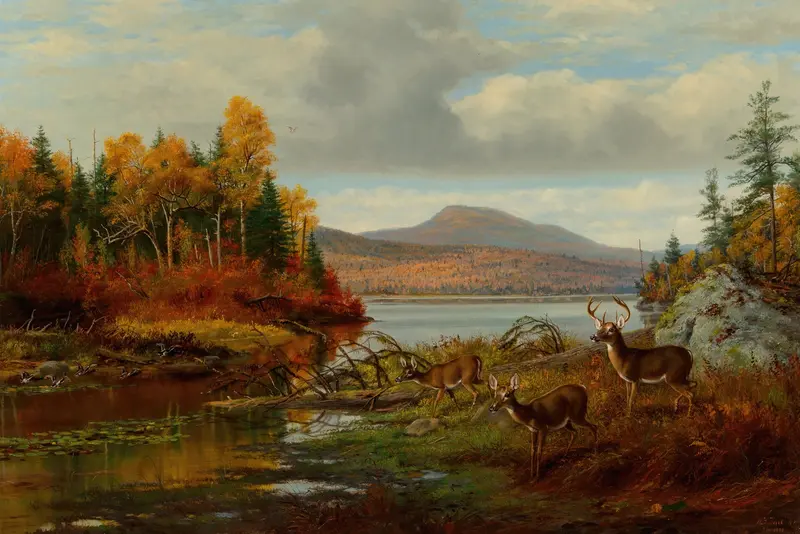
Late Autumn, Long Lake, Hamilton Co., New York, Adirondacks
Arthur Fitzwilliam Tait
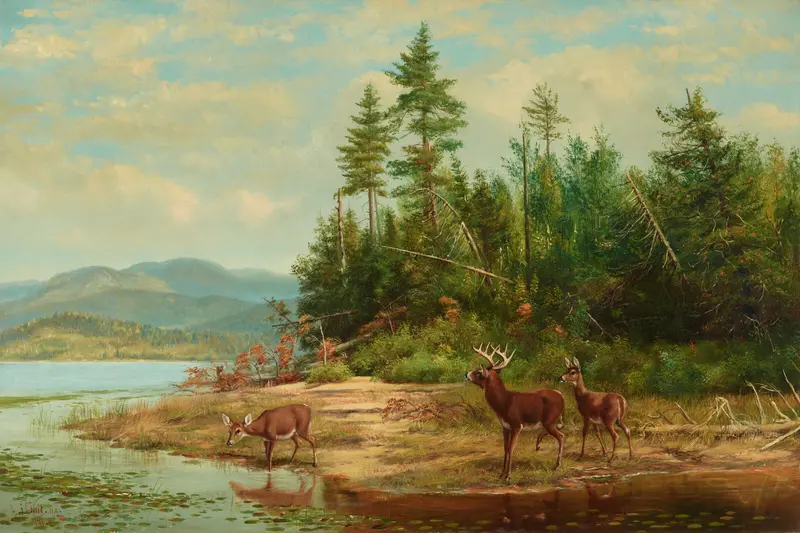
View on Long Lake
Arthur Fitzwilliam Tait
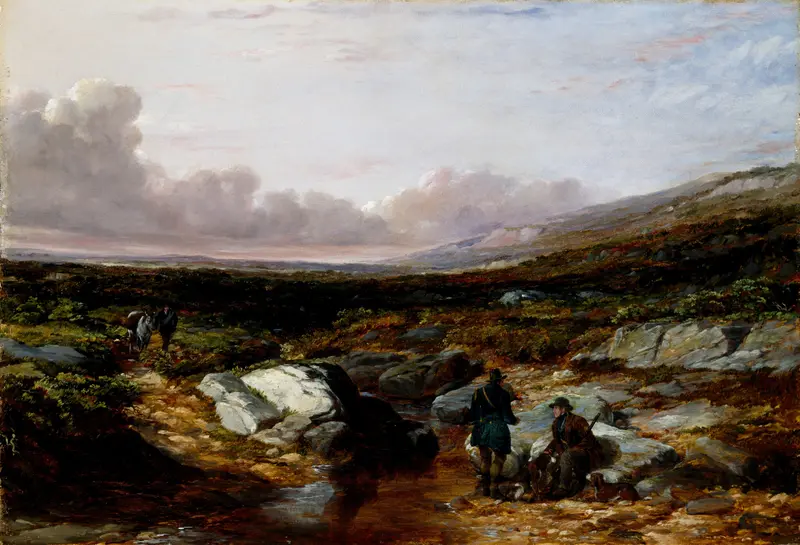
Deer Stalking in Scotland; Getting Ready
Arthur Fitzwilliam Tait
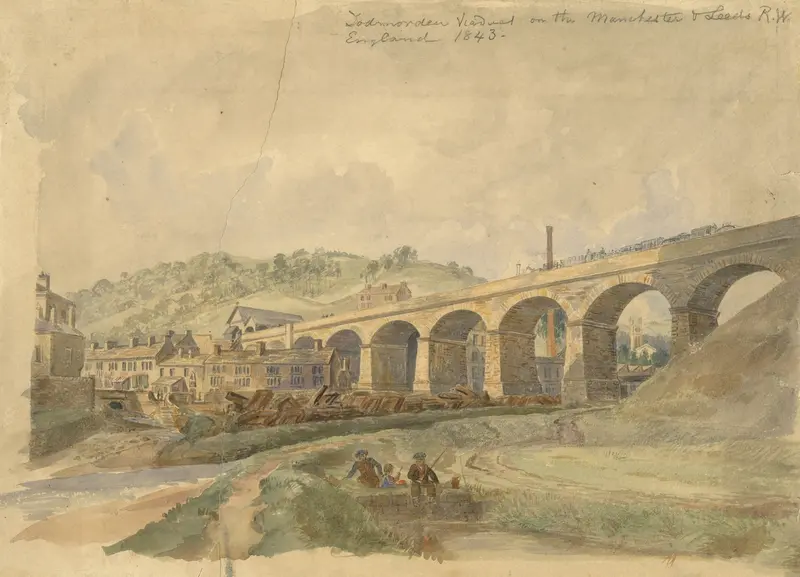
Todmorden Viaduct on the Manchester and Leeds Railway, England
Arthur Fitzwilliam Tait
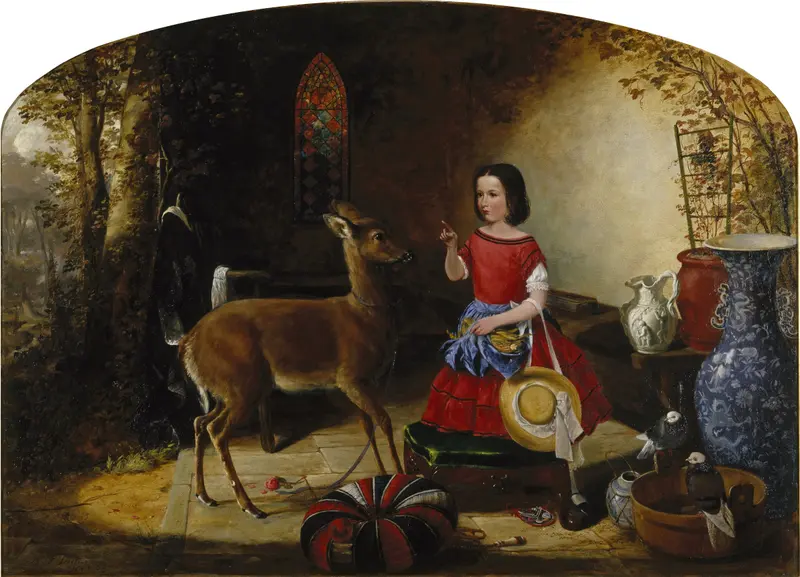
The Reprimand. Ah! You Naughty Fawn, You Have Been Eating the Flowers Again.
Arthur Fitzwilliam Tait
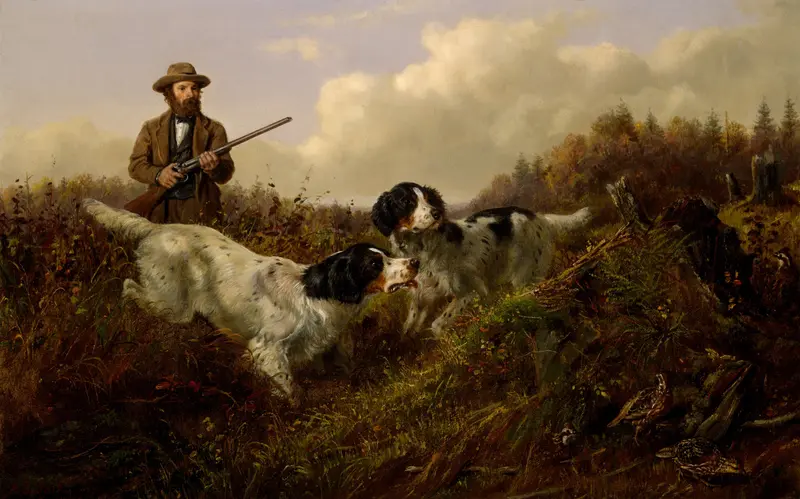
Flushing Grouse, Long Lake, Hamilton County, New York
Arthur Fitzwilliam Tait
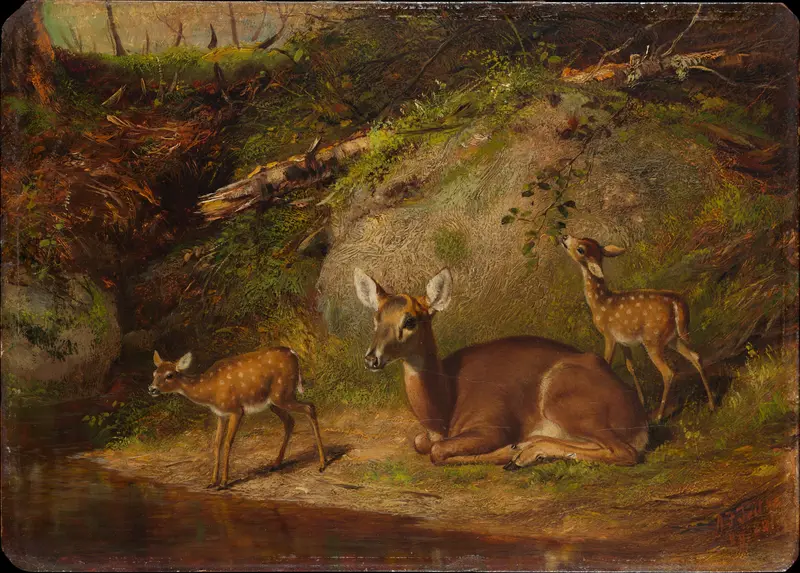
Doe and Two Fawns
Arthur Fitzwilliam Tait
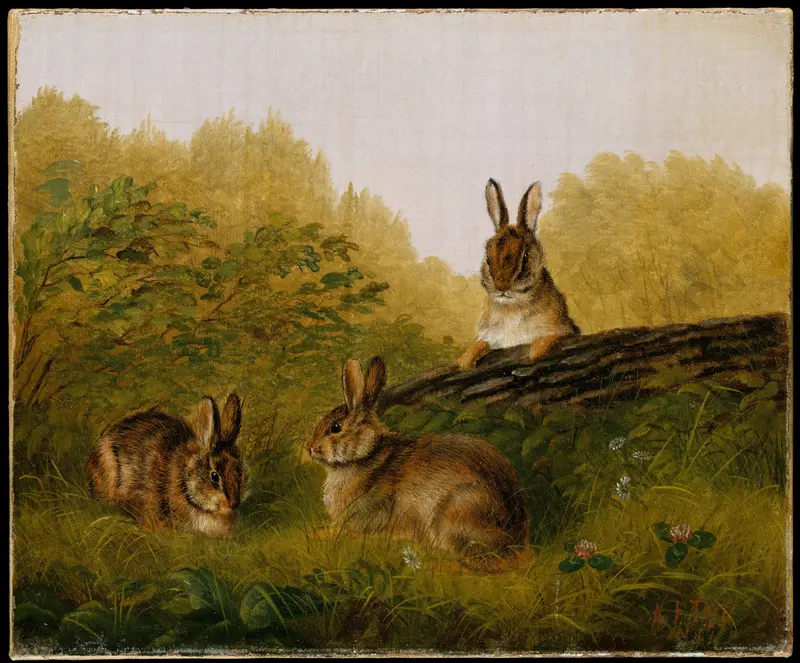
Rabbits on a Log
Arthur Fitzwilliam Tait
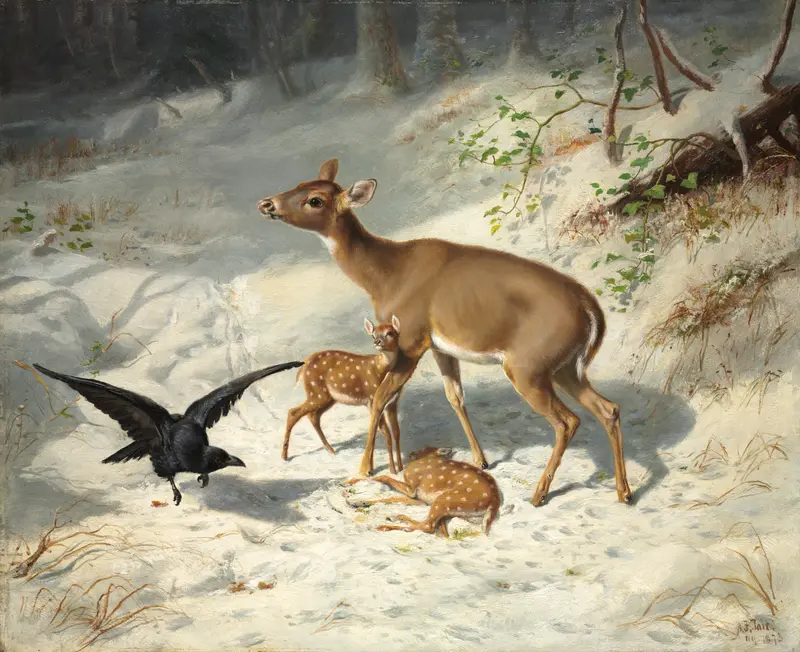
Maternal Solicitude
Arthur Fitzwilliam Tait
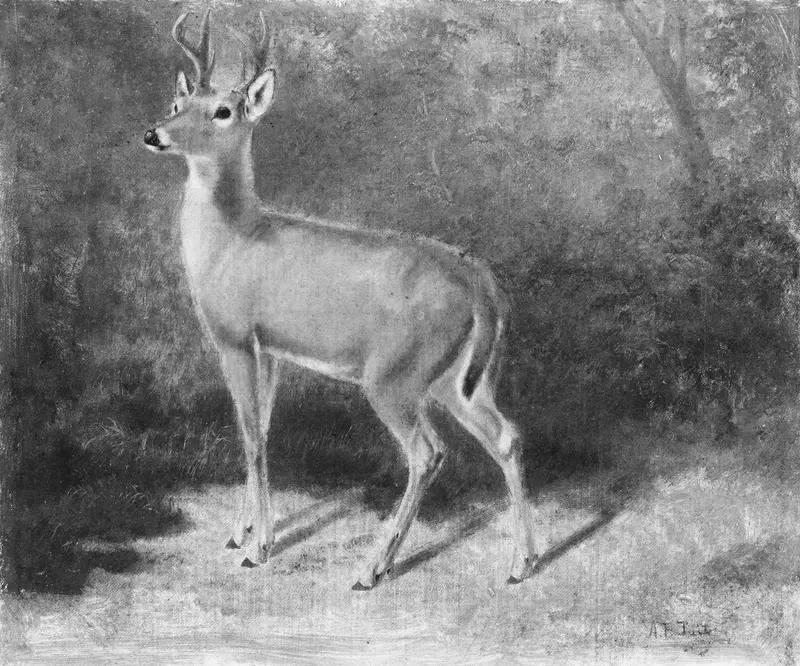
Deer—Sketch from Nature
Arthur Fitzwilliam Tait





