
Maternal Solicitude — History & Facts
A single moment of tension animates the snowy clearing: a doe, her head lifted and ears alert, stands sentinel over two spotted fawns, one of which lies motionless on the ground. A black crow, wings outstretched, advances with unmistakable intent, its shadow stretching across the pale snow. The eye is drawn first to the drama between animal and bird, then to the careful arrangement of bodies—one fawn pressed close to its mother, the other exposed and vulnerable.
The winter light, cold and clear, sharpens every edge: the delicate spots on the fawns, the slick feathers of the crow, the crisp shadows that carve out the forms. Every gesture is a signal—the doe’s protective stance, the fawn’s wary gaze, the crow’s opportunistic poise—inviting the viewer to read the language of survival and care. Painted in 1873, Maternal Solicitude belongs to a world where American artists like Arthur Fitzwilliam Tait made the wild landscapes and creatures of North America their subject, often for an audience hungry for images of nature’s drama and beauty. Such works were prized by collectors who sought to bring the untamed outdoors into parlors and galleries, at a time when the frontier was both a reality and a myth.
Tait, known for his precise observation of animals, captures not just the anatomy but the psychology of his subjects, reflecting a broader 19th-century fascination with both natural history and sentiment. Now in the Cleveland Museum of Art, this painting stands as a quiet testament to the era’s blend of scientific curiosity and emotional storytelling—inviting you to linger over every detail, and to imagine the silent stories that unfold each winter in the woods.
More Artworks by Arthur Fitzwilliam Tait
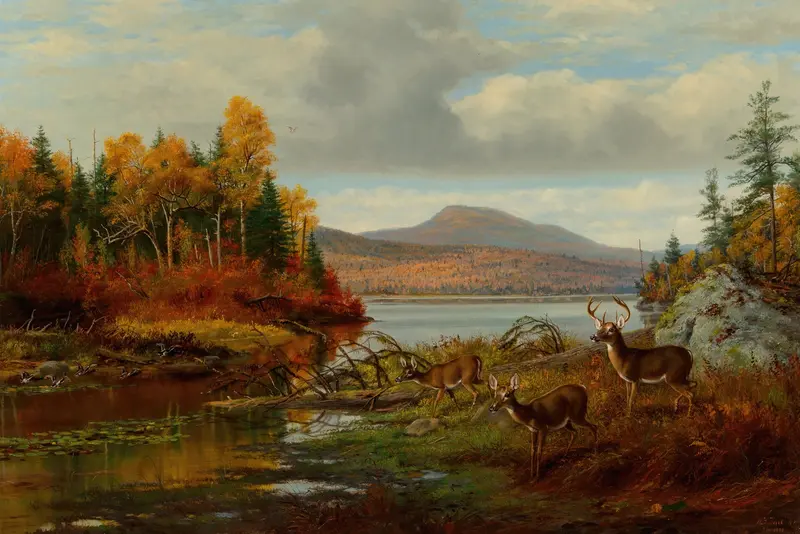
Late Autumn, Long Lake, Hamilton Co., New York, Adirondacks
Arthur Fitzwilliam Tait
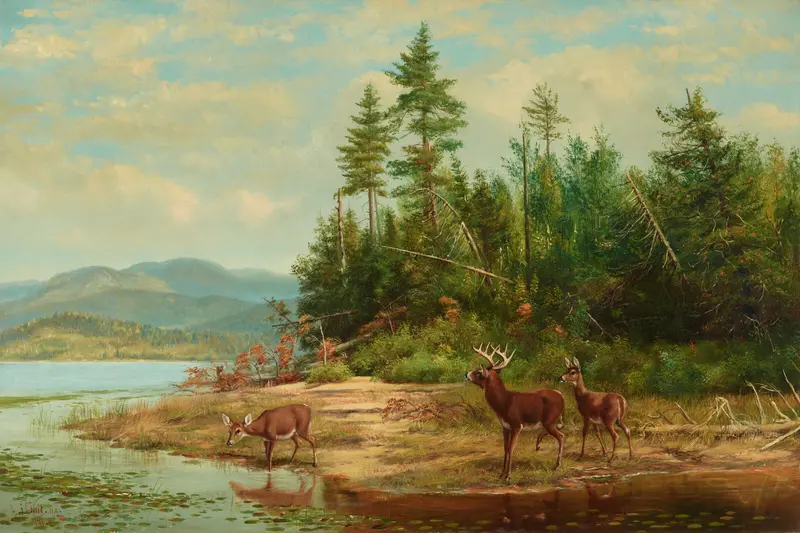
View on Long Lake
Arthur Fitzwilliam Tait
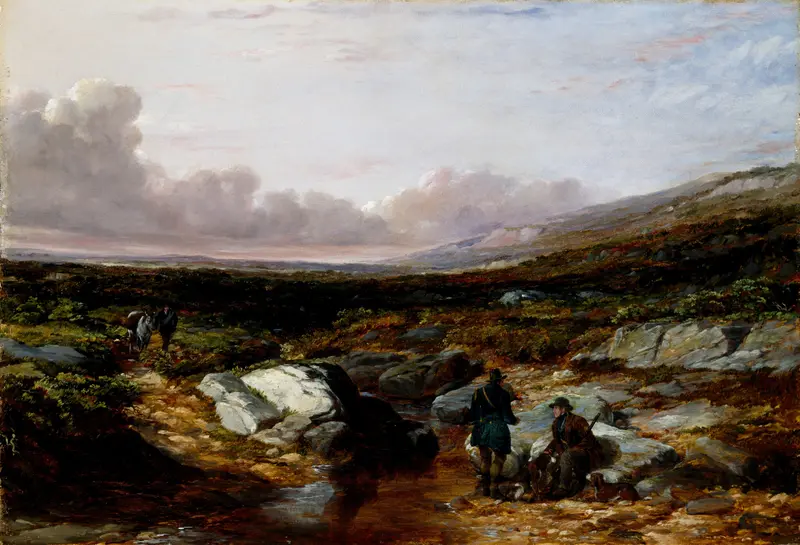
Deer Stalking in Scotland; Getting Ready
Arthur Fitzwilliam Tait
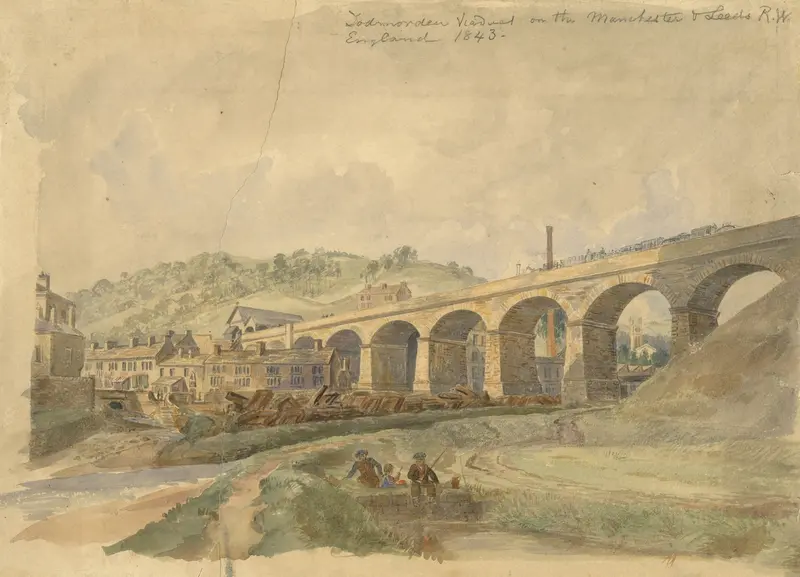
Todmorden Viaduct on the Manchester and Leeds Railway, England
Arthur Fitzwilliam Tait
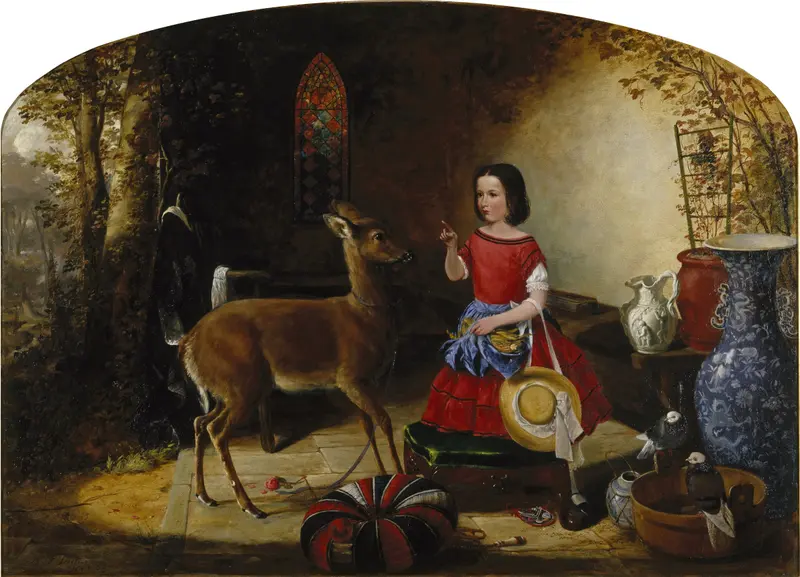
The Reprimand. Ah! You Naughty Fawn, You Have Been Eating the Flowers Again.
Arthur Fitzwilliam Tait
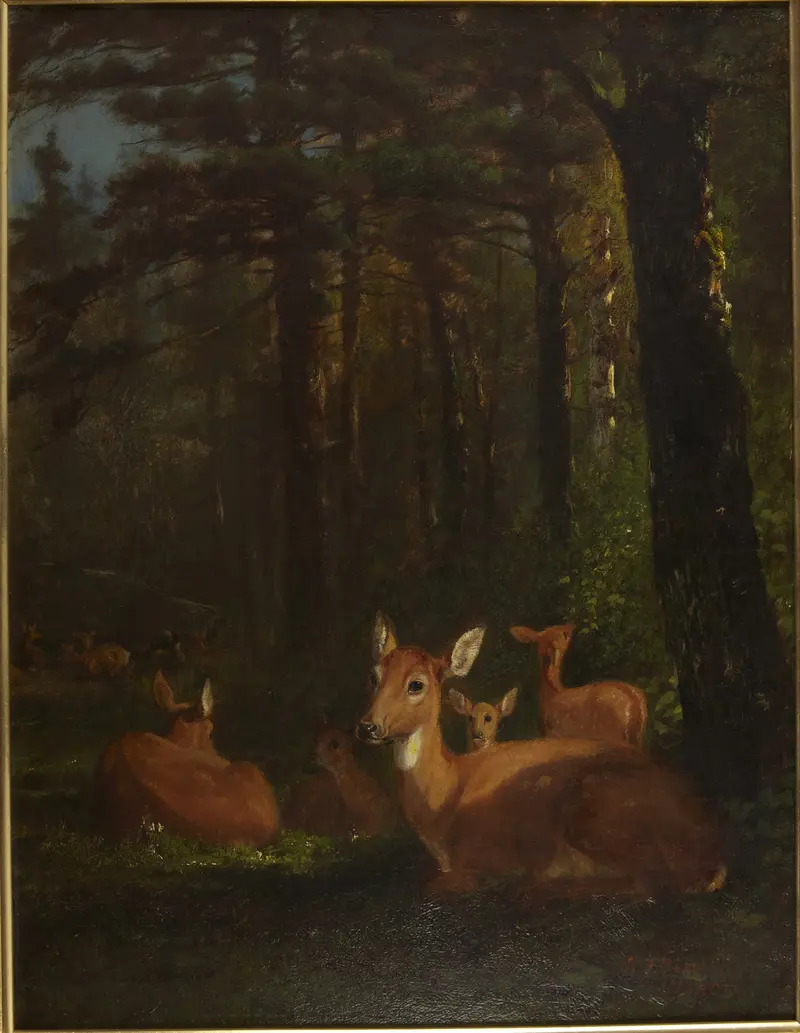
Deer in Forest
Arthur Fitzwilliam Tait
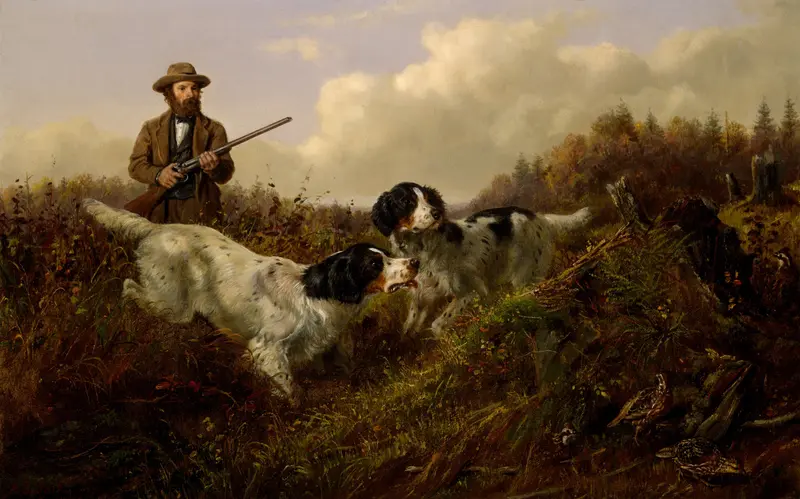
Flushing Grouse, Long Lake, Hamilton County, New York
Arthur Fitzwilliam Tait
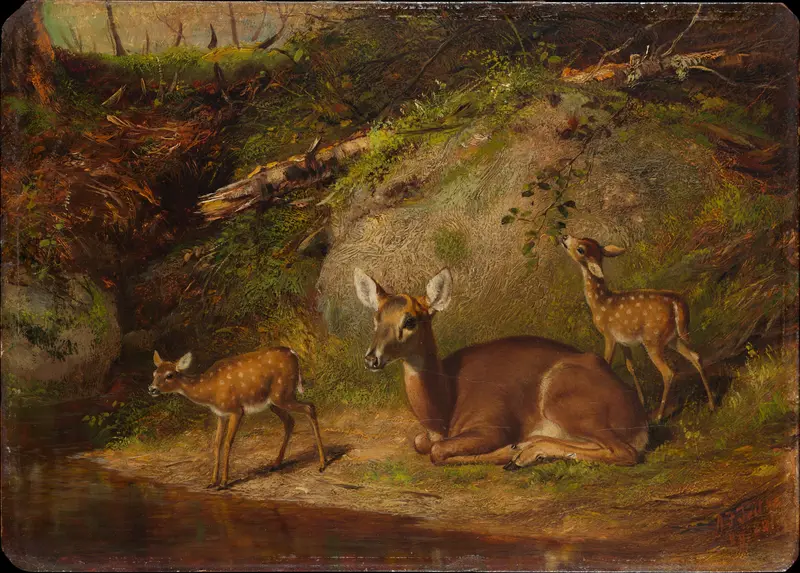
Doe and Two Fawns
Arthur Fitzwilliam Tait
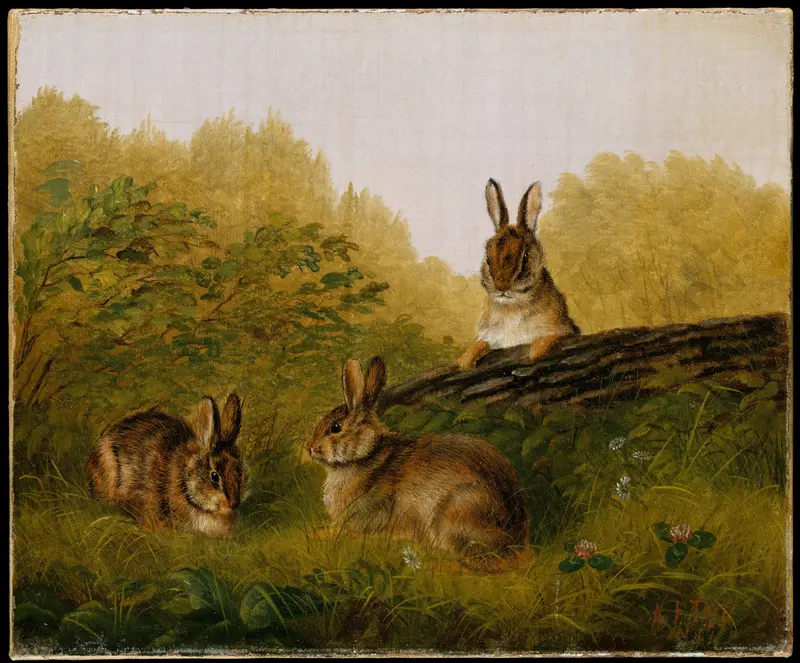
Rabbits on a Log
Arthur Fitzwilliam Tait
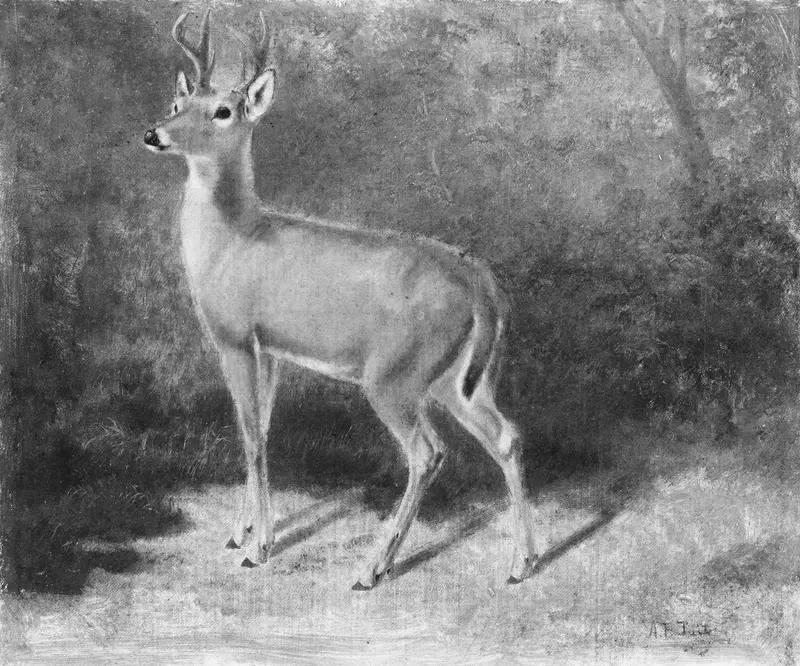
Deer—Sketch from Nature
Arthur Fitzwilliam Tait





