Departure for Greenwich (Depart pour Greenwich) — History & Facts
A swirl of motion and anticipation animates the heart of Departure for Greenwich by Auguste Louis Lepère. The eye is drawn first to the central figure—a woman in a voluminous dress, her hat braced against the wind, caught in the act of settling herself on a bench. Around her, the suggestion of steam and the blur of bustling passengers fill the background, conjuring the restless energy of departure.
The artist’s quick, almost nervous linework captures the fleeting nature of travel: coats pulled tight, faces half-turned, a world in transit. The benches and railings slice the space into compartments, reinforcing the sense of public movement and private anticipation. Created in 1891, this work belongs to a moment when industrial progress was reshaping daily life in Europe. Steamships and trains were shrinking distances, and scenes of embarkation became a new genre for artists eager to capture the pulse of modernity.
Lepère, known for his prints and urban views, here sets aside grandeur for immediacy, focusing on the everyday drama of ordinary people on the move. Though little is recorded about the specific journey of this print, its presence today in the National Gallery of Art—thanks to open access initiatives—invites us to step into the shoes of its travelers, feeling the rush of departure and the promise of the unknown just beyond the frame.
More Artworks by Auguste Louis Lepère

Notre Dame vue du Marché aux pommes
Auguste Louis Lepère
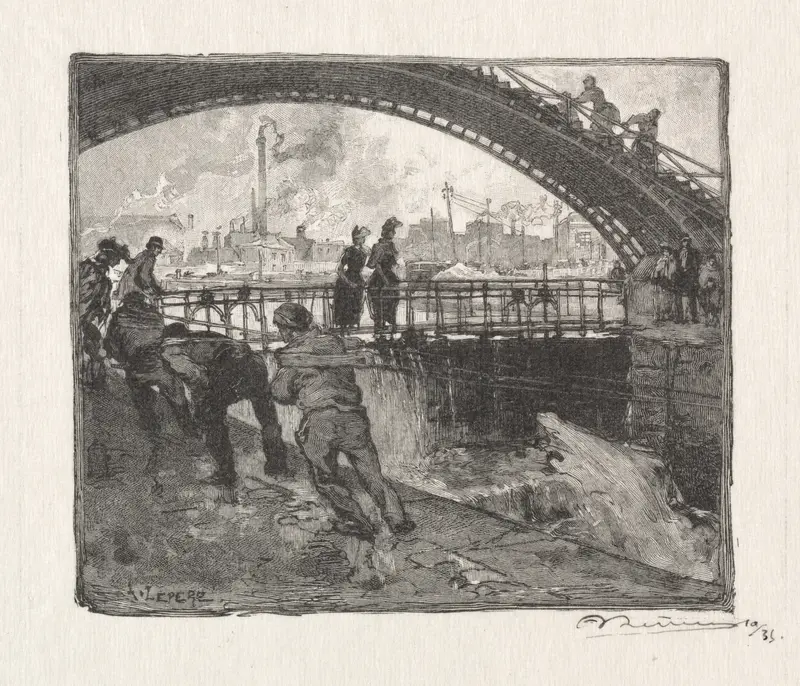
L’Ecluse du Canal St. Martin
Auguste Louis Lepère
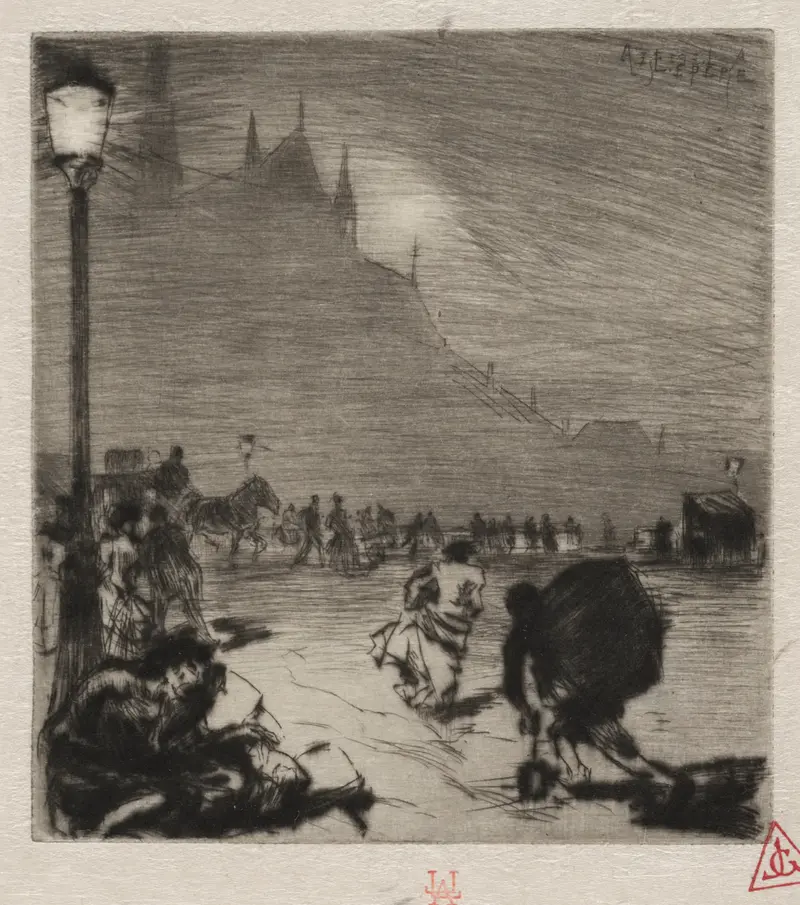
Au Coin du Pont-aux-Doubles
Auguste Louis Lepère
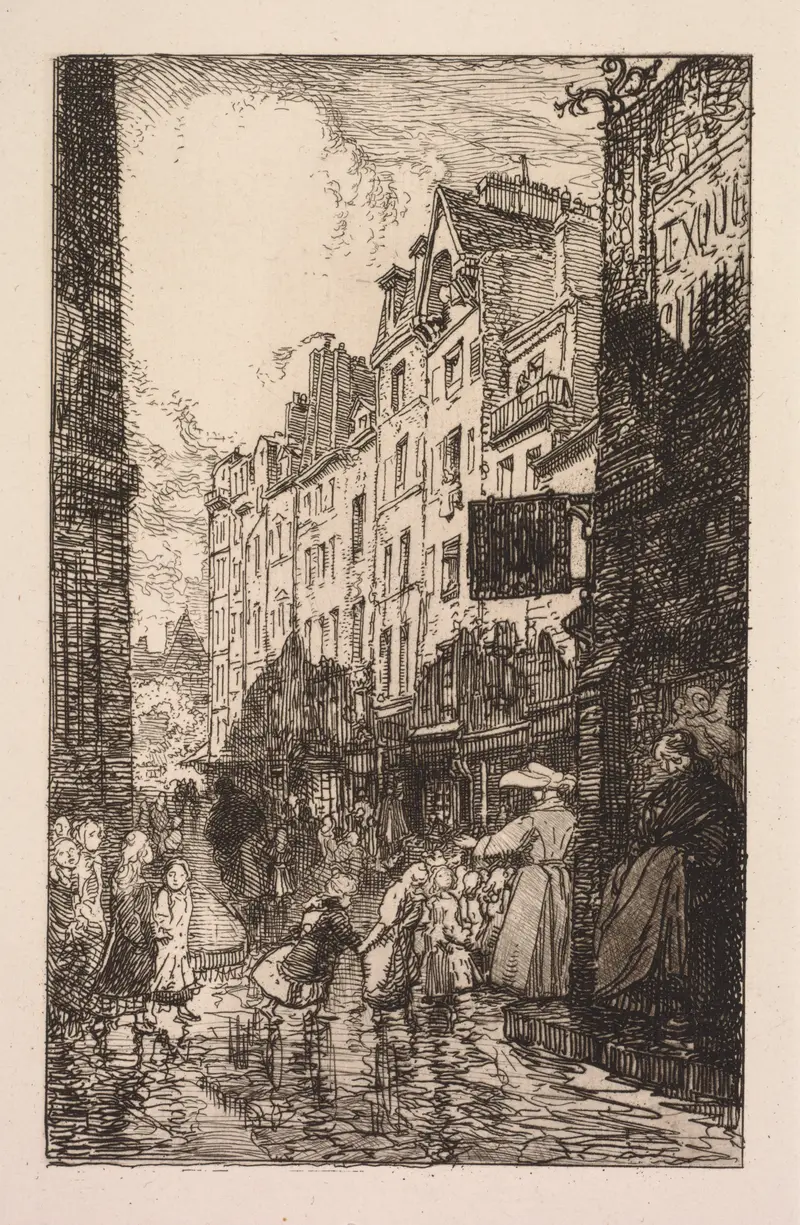
La Rue des Prêtres Saint-Séverin
Auguste Louis Lepère
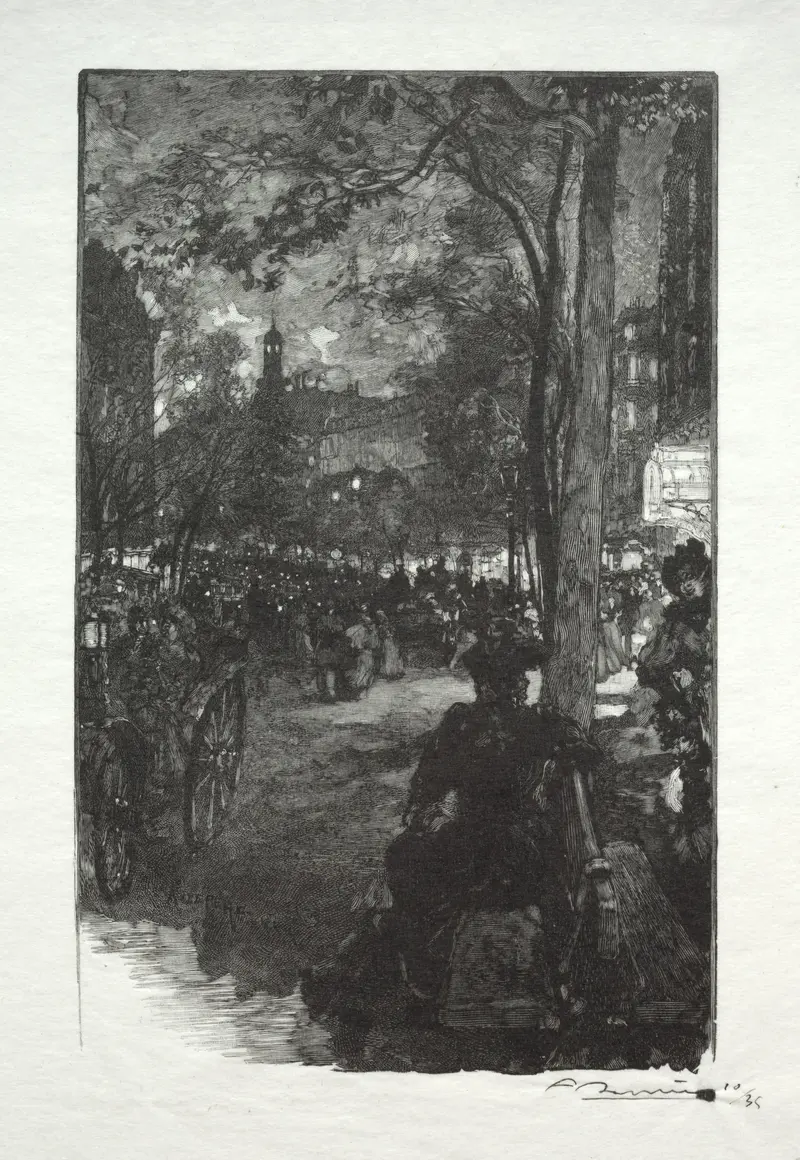
Le Boulevard Montmartre, le Soir
Auguste Louis Lepère
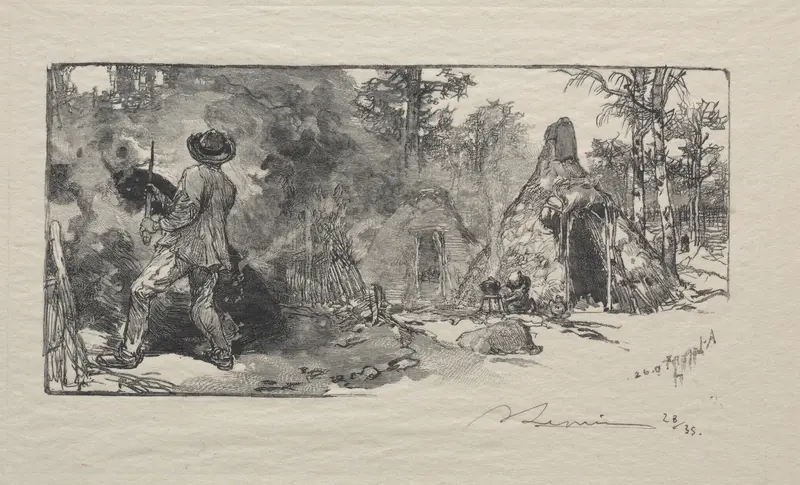
Les Charbonniere
Auguste Louis Lepère
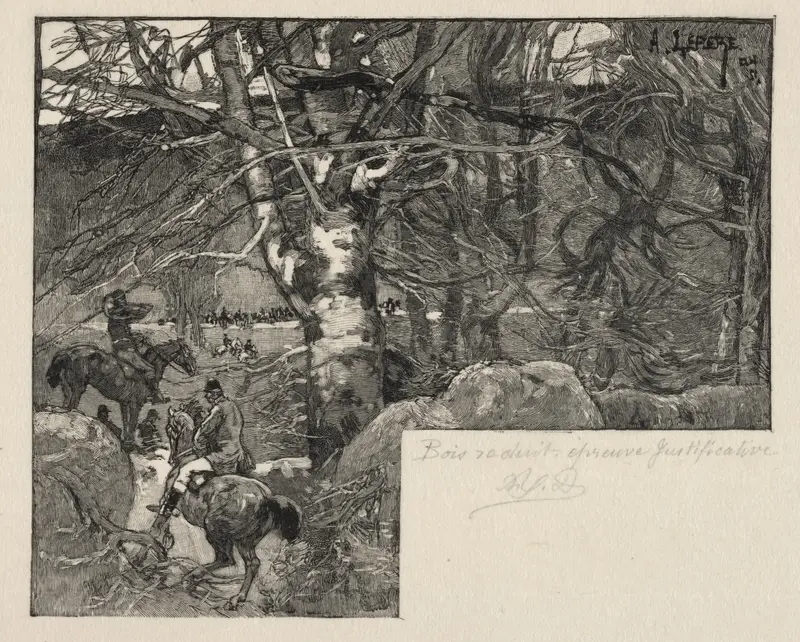
Une Chasse au Mont Gérard
Auguste Louis Lepère
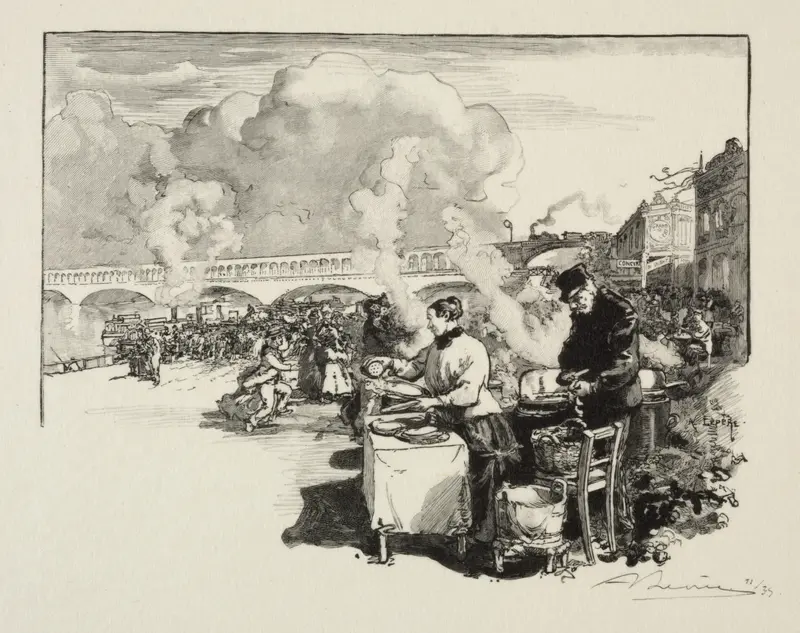
Debarcadère des bateaux-omnibus
Auguste Louis Lepère

La Seine, au quai de la Rapée
Auguste Louis Lepère

Le Palais des Arts Liberaux, Intèrieur
Auguste Louis Lepère