
Der Arme Poet (The Poor Poet) — History & Facts
In Der Arme Poet, we see a solitary figure of a poet surrounded by a cluttered room filled with books and papers. The colors are warm and earthy, with browns and yellows dominating the scene. The poet appears deep in thought, his expression reflecting both struggle and creativity.
The setting is intimate, suggesting a personal space where inspiration and despair coexist. The painting is characterized by its detailed depiction of the poet's environment, showcasing various objects that hint at his literary pursuits. The use of light creates a soft glow, illuminating the poet's face while casting shadows that add depth to the scene. The brushwork is meticulous, capturing the textures of the books and the fabric of the poet's clothing.
Overall, the composition draws the viewer into the poet's world, inviting them to ponder his thoughts. Carl Spitzweg was a prominent German painter known for his depictions of middle-class life and romanticized themes. Der Arme Poet is one of his most famous works, created around the late 1830s. An interesting fact about this painting is that it reflects the struggles of artists during a time when the Romantic movement was flourishing, emphasizing the tension between creativity and poverty.
Spitzweg's ability to blend humor and melancholy in his works has made him a beloved figure in 19th-century art.
More Artworks by Carl Spitzweg

Die Stadtwache
Carl Spitzweg
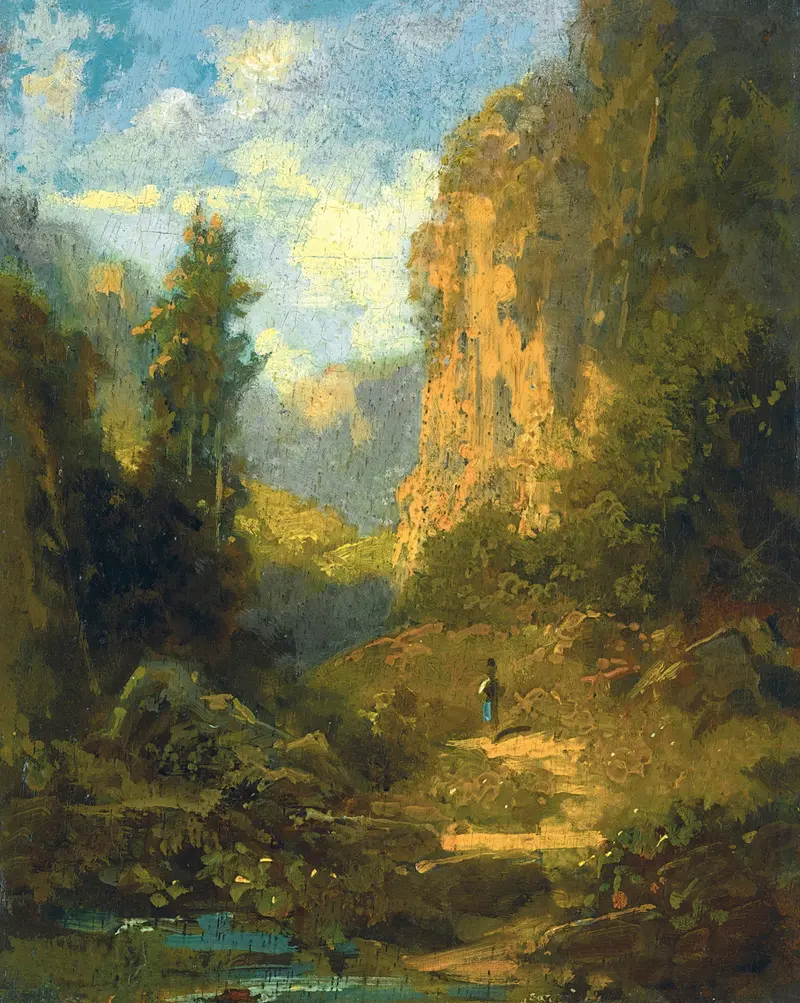
Gebirgslandschaft
Carl Spitzweg
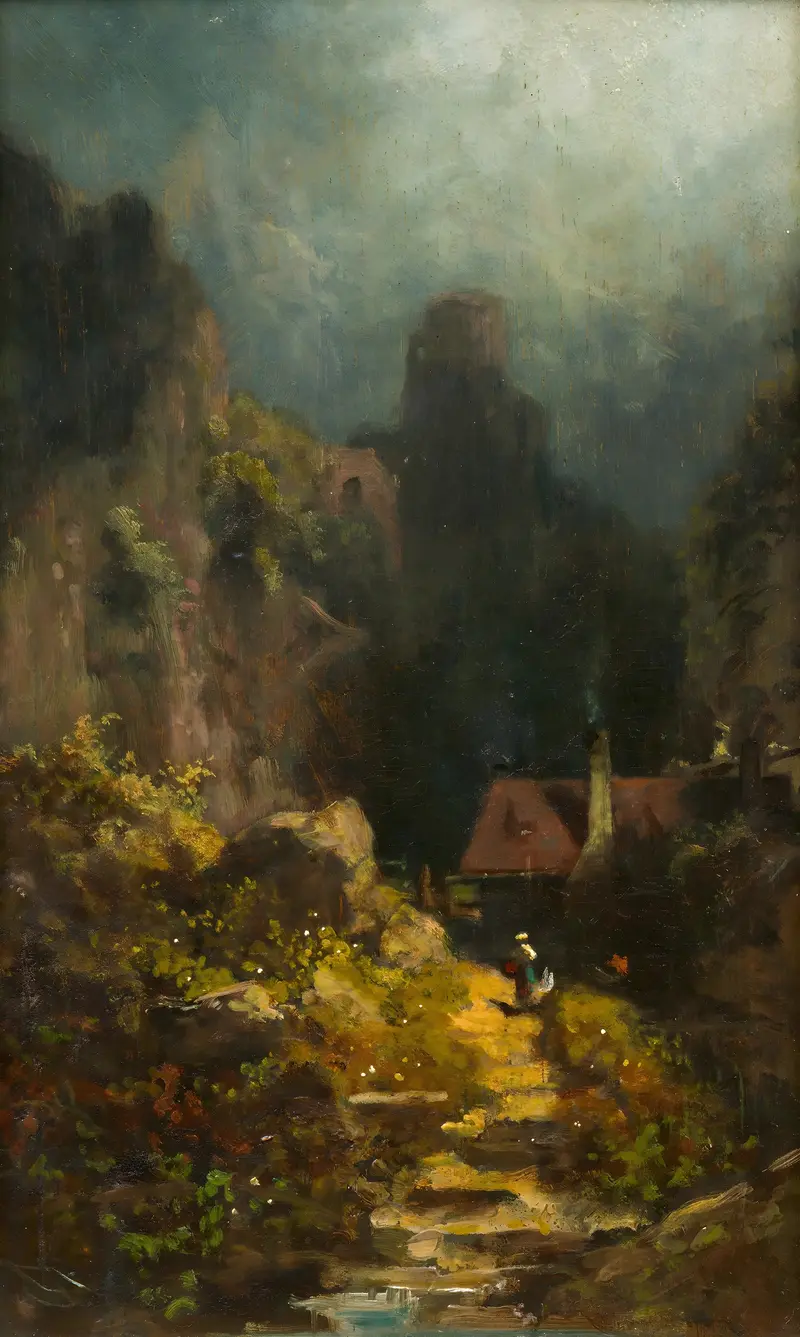
In der Schlucht
Carl Spitzweg

Gebirgsmühle
Carl Spitzweg
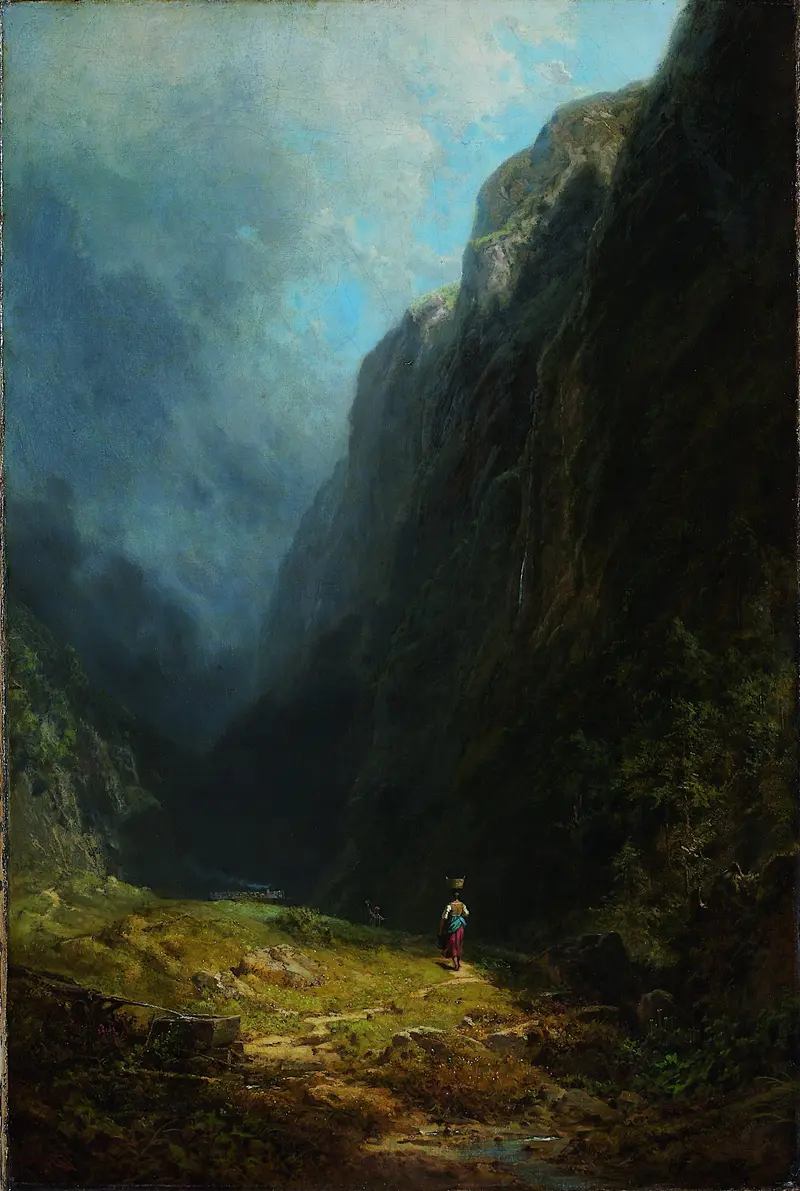
In the Alpine High Valley (Landscape with Mt. Wendelstein)
Carl Spitzweg
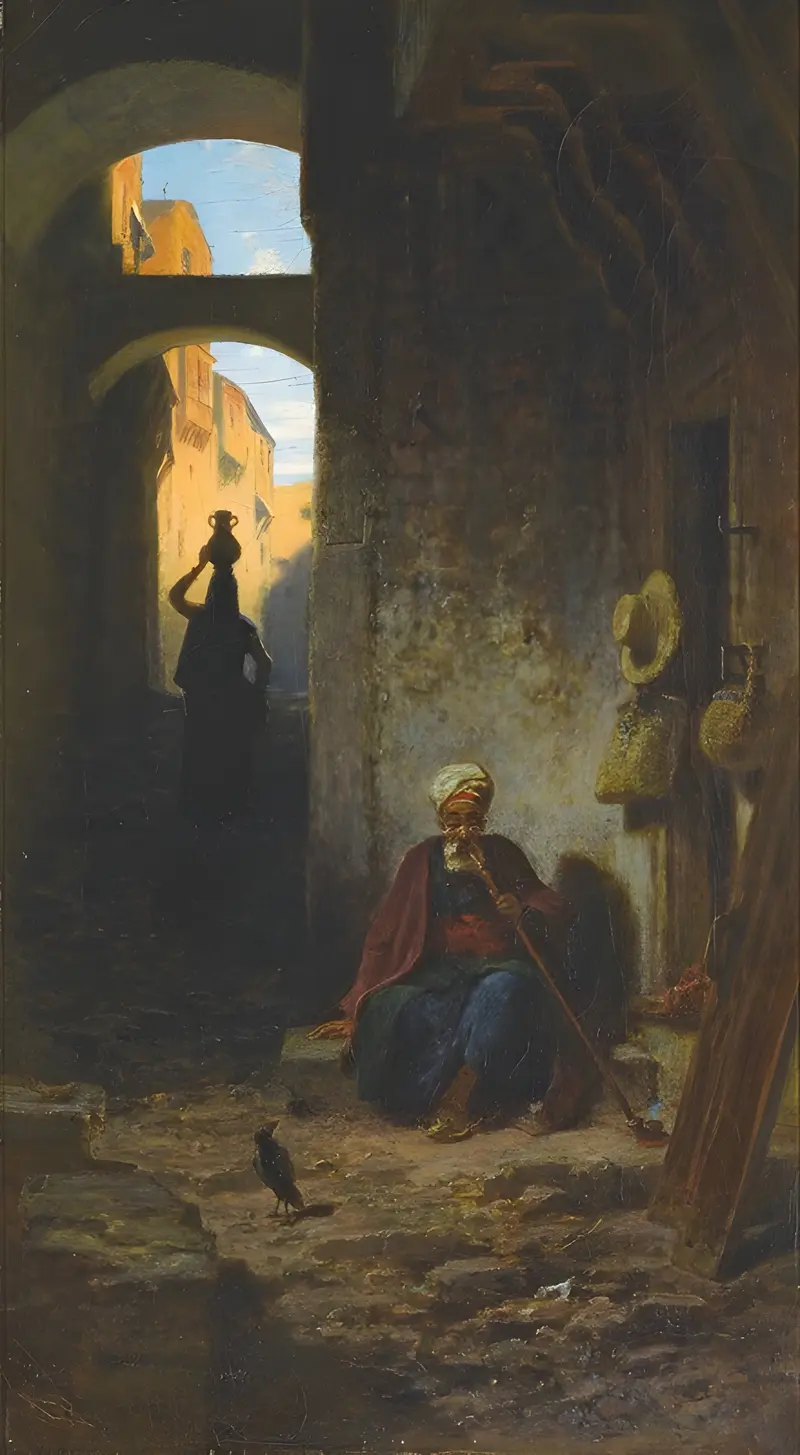
Out Of The Orient
Carl Spitzweg
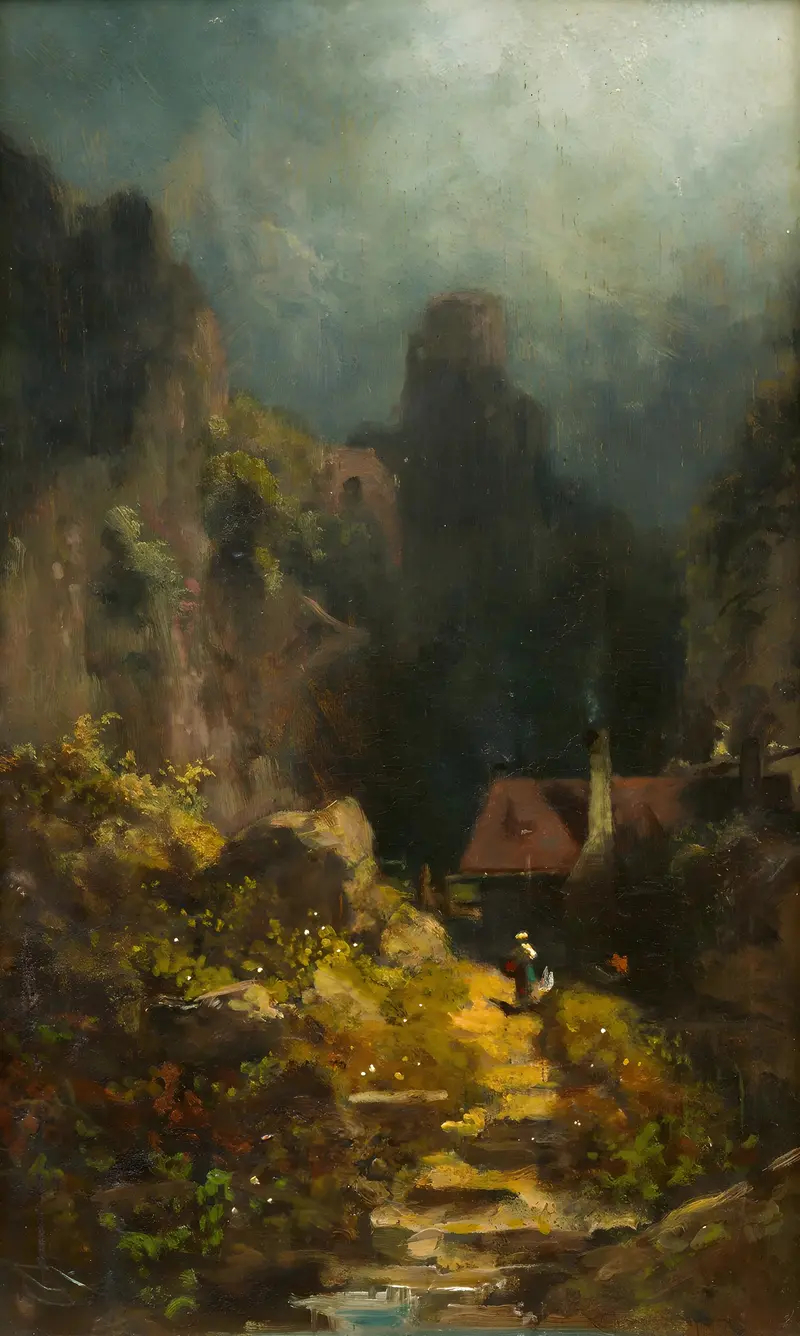
In der Schlucht (Haus im Grund mit rauchendem Kamin)
Carl Spitzweg
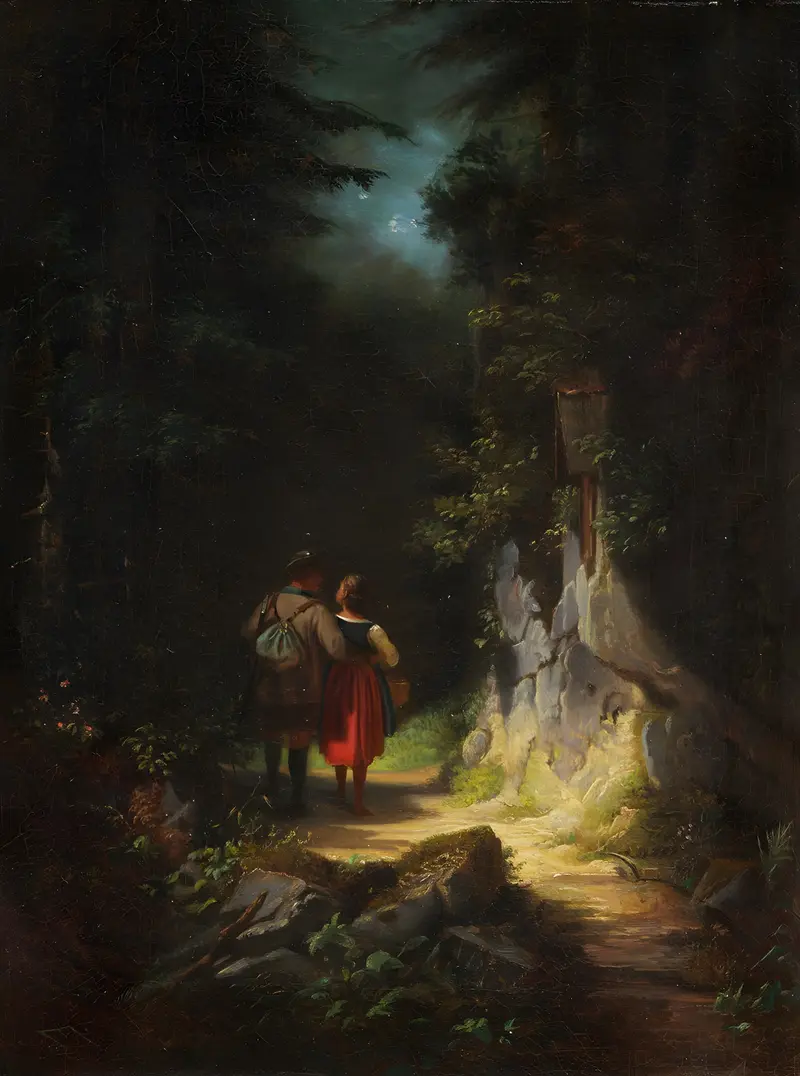
Jäger mit Mädchen (Der verliebte Jäger)
Carl Spitzweg
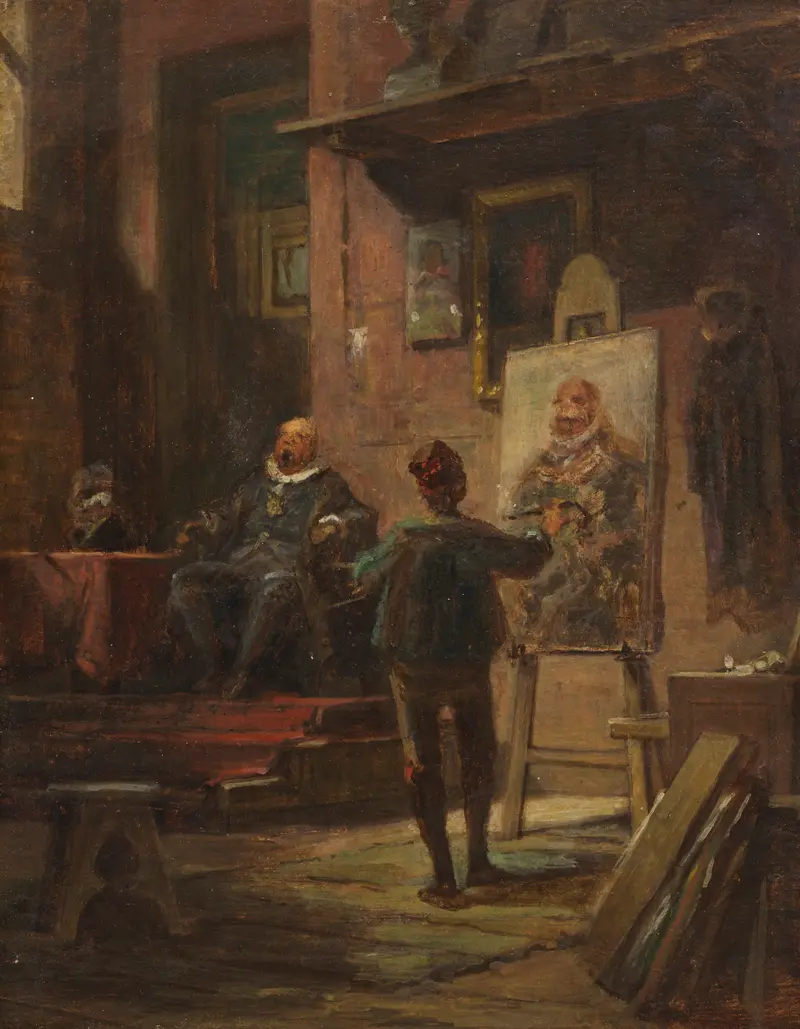
Der Maler im Atelier
Carl Spitzweg
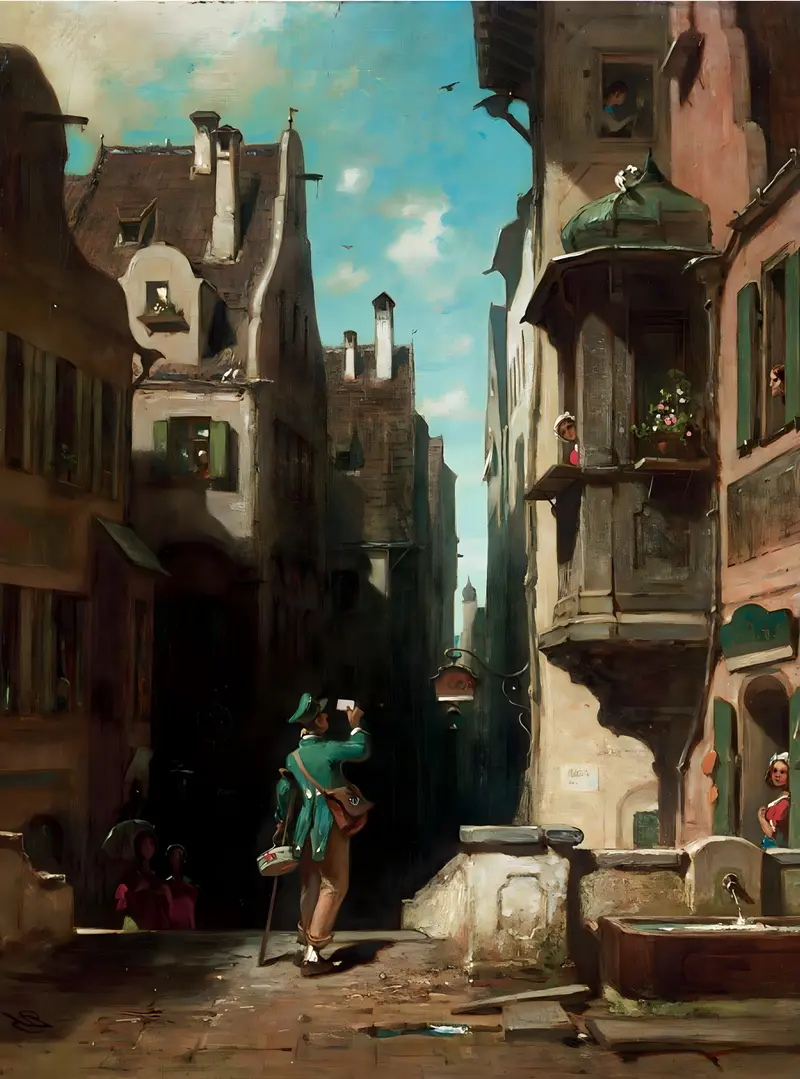
Der Postbote
Carl Spitzweg
More Genre Scene Art

Banquet of the Officers of the St George Civic Guard
Frans Hals

Rembrandt and Saskia in the Scene of the Prodigal Son
Rembrandt van Rijn

Bal du moulin de la Galette
Pierre-Auguste Renoir

Quadrille at the Moulin Rouge
Henri de Toulouse-Lautrec

A Burial at Ornans
Gustave Courbet

When Will You Marry?
Paul Gauguin