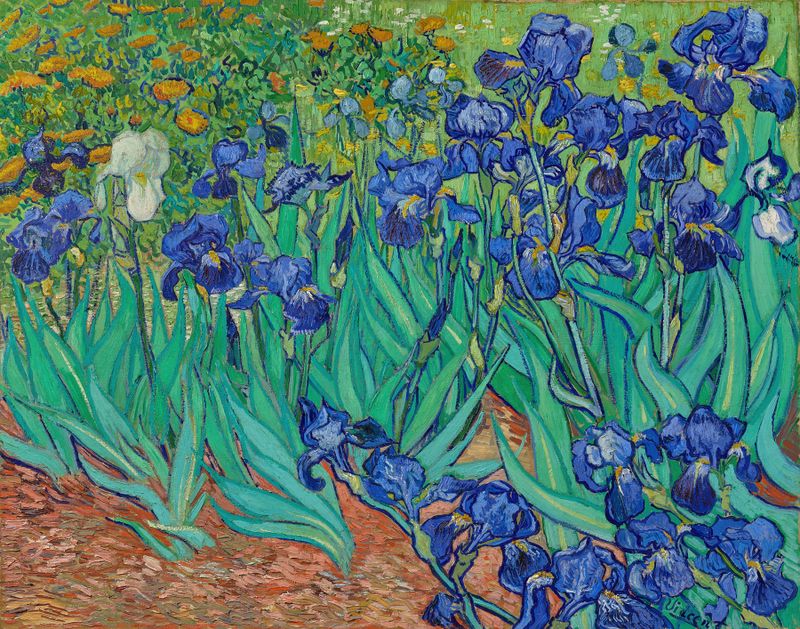
Der Nutzgarten in Wannsee nach Osten — History & Facts
This sentiment echoes in the gentle hues of a garden, offering a glimpse into tranquility while hinting at deeper narratives woven through the soil of despair and longing. Amidst the verdant leaves, there lies a promise — a flicker of hope amid the shadows of the past. Focus on the left side of the canvas where sunlit patches illuminate the lush greens of the garden. Observe how the artist employs brushstrokes that dance lightly across the surface, creating a rich tapestry of color and texture.
The vibrant contrasts between the earth tones and the bright foliage draw the viewer’s eye to the central plot, where life flourishes against the weight of history. Each detail, from the dew-kissed leaves to the meticulously arranged rows of plants, invites a sense of serenity and contemplation. Yet, beneath this serene exterior lies an intricate interplay of themes. The choice to depict a garden suggests cultivation and growth, a metaphor for resilience and the human spirit’s capacity to endure.
Additionally, the harmonious composition juxtaposes the beauty of nature with the underlying struggle of post-World War I Germany, reflecting the tension between hope and despair. It’s a glimpse into a world where healing is possible, yet not without the scars of the past. In 1924, Liebermann, a key figure in the German Impressionist movement, painted this work during a time of personal and collective upheaval. Residences and landscapes he once knew were transformed, yet he sought solace in the familiar beauty of gardens, continuing to explore themes of light and color while capturing the essence of a reinvigorated life.
His dedication to capturing the world around him reveals not only his artistic vision but also the resilience of a society finding its way forward.
More Artworks by Max Liebermann
Browse all →
Die Blumenterrasse in Wannsee mit Blick auf den Fischotterbrunnen
Max Liebermann
Die Große Seestraße in Wannsee mit Spaziergängern
Max Liebermann

Seitlicher Blick in den Wannseegarten
Max Liebermann

Der Rosengarten in Wannsee
Max Liebermann

Allee mit Spaziergängern und Automobilen
Max Liebermann

Blick in meinen Garten
Max Liebermann
Die Blumenterrasse im Wannseegarten nach Norden
Max Liebermann

Spielende Kinder am Strand
Max Liebermann
Die Netzflickerinnen
Max Liebermann

Am Strand von Noordwijk
Max Liebermann