Der Nutzgarten in Wannsee nach Südosten — History & Facts
In the serene embrace of nature, we discover moments that whisper tranquility to our restless souls. Look to the center of the canvas, where the meticulously cultivated vegetable garden unfolds like a mosaic of greens and earth tones, framed by gentle sunlight. Notice how the soft brushstrokes convey both the lushness of the plants and the delicate interplay of light and shadow upon the soil. The entire scene breathes life; each leaf and blossom seems to sway gently in an unseen breeze, inviting you to step closer and immerse yourself in this pastoral haven. Yet, beneath this surface calm lies a richness of emotion.
The garden, a symbol of sustenance and growth, reflects the duality of human experience—the joy of cultivation contrasted by the ever-looming passage of time. The carefully arranged rows hint at order amidst chaos, offering a fleeting glimpse into the balance we seek in our own lives. The vibrant colors, both joyous and muted, evoke a feeling of nostalgia, reminding us of the beauty found in simplicity and the fragility of these moments. Max Liebermann painted this piece in 1924, during a period of deep introspection in post-World War I Germany.
As a leading figure in the Berlin Secession, he embraced Impressionism, capturing the essence of everyday life through natural scenes. At this point in his career, Liebermann sought solace in his garden, reflecting a desire to reconnect with nature and find peace amidst a changing world.
More Artworks by Max Liebermann
Browse all →
Die Blumenterrasse in Wannsee mit Blick auf den Fischotterbrunnen
Max Liebermann
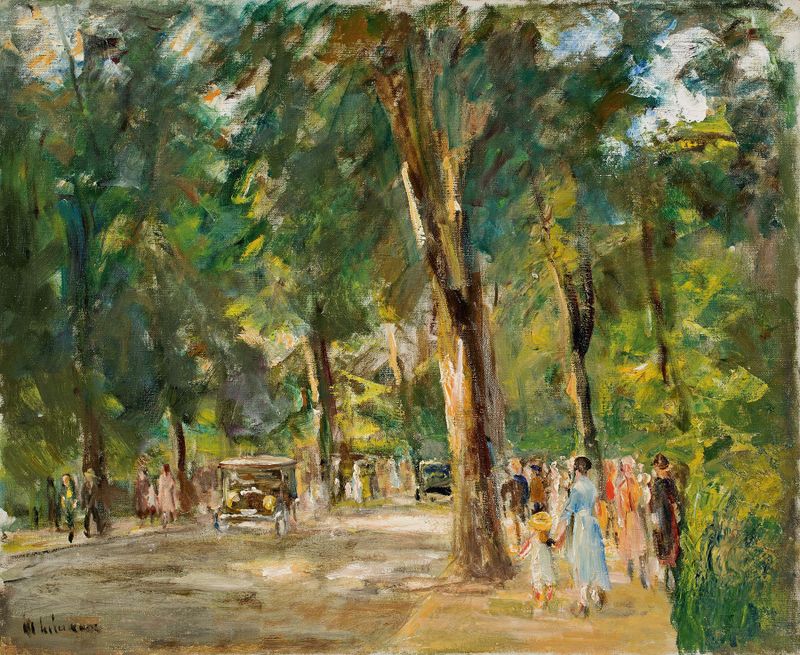
Die Große Seestraße in Wannsee mit Spaziergängern
Max Liebermann

Seitlicher Blick in den Wannseegarten
Max Liebermann

Der Rosengarten in Wannsee
Max Liebermann

Allee mit Spaziergängern und Automobilen
Max Liebermann

Blick in meinen Garten
Max Liebermann
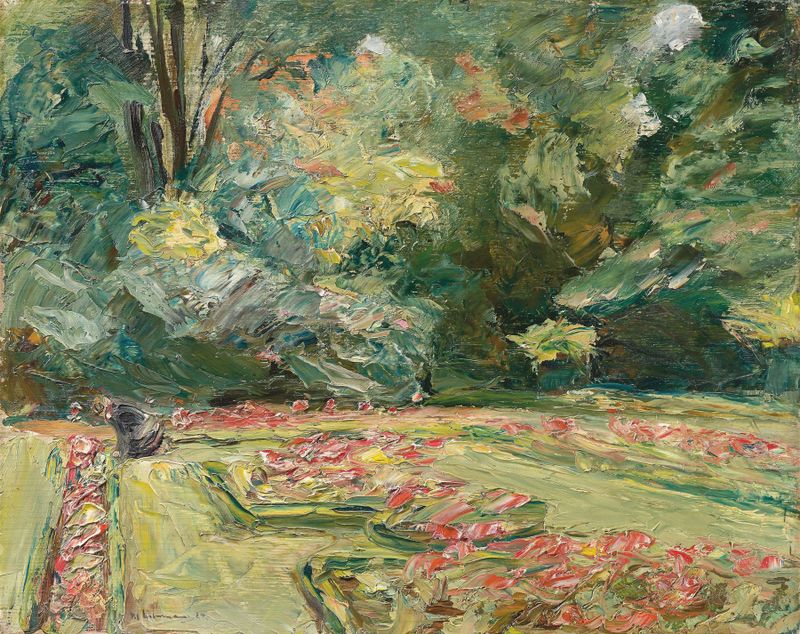
Die Blumenterrasse im Wannseegarten nach Norden
Max Liebermann

Spielende Kinder am Strand
Max Liebermann
Die Netzflickerinnen
Max Liebermann

Am Strand von Noordwijk
Max Liebermann