
Die zerbrochene Schale — History & Facts
Few images capture embarrassment and innocence with such immediacy as this: a small, freshly clipped lapdog, caught mid-turn, stands beside a shattered porcelain bowl. The animal’s startled gaze meets the viewer directly, its fluffy head crowned with a bright red bow—a domestic flourish that only heightens the sense of disruption. The light falls softly on the dog’s exposed back, emphasizing the contrast between its shorn body and the unruly mane that frames its face.
The broken bowl and spilled contents at its feet are not just props, but silent witnesses to a recent mishap, the aftermath still hanging in the air. Painted by Anton Schrödl by 1906, this work belongs to a tradition of animal portraiture that flourished in the late nineteenth and early twentieth centuries, when pets became cherished members of bourgeois households. Such paintings were often commissioned to commemorate beloved companions, capturing their quirks and foibles with as much care as any human sitter. The presence of the broken bowl hints at the everyday dramas of domestic life, while the dog’s elaborate grooming and ribbon signal the affection and attention lavished upon it.
Now in the Dorotheum collection, Die zerbrochene Schale invites us to linger over the small, telling moments that animate the world behind closed doors—moments as fragile, and as revealing, as porcelain.
More Artworks by Anton Schrödl

Gässchen in Hallstatt
Anton Schrödl
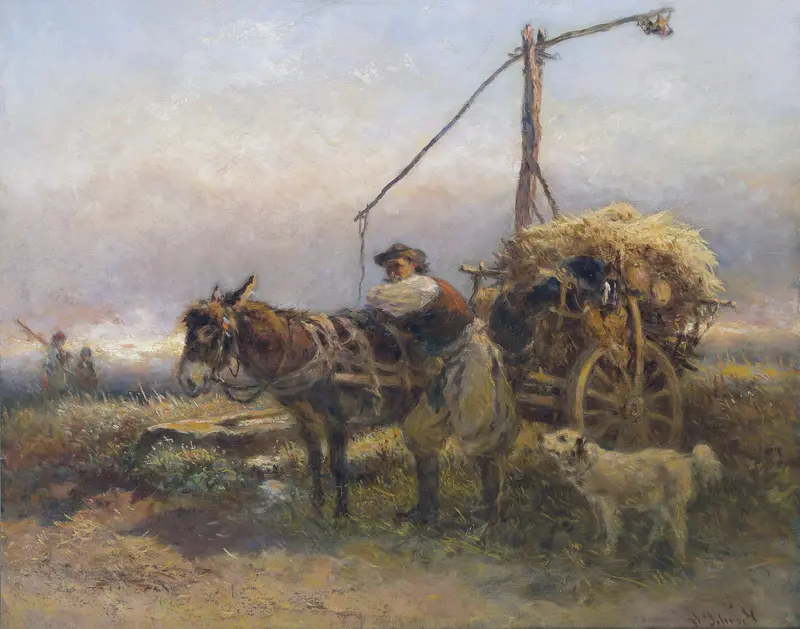
Eselgespann
Anton Schrödl
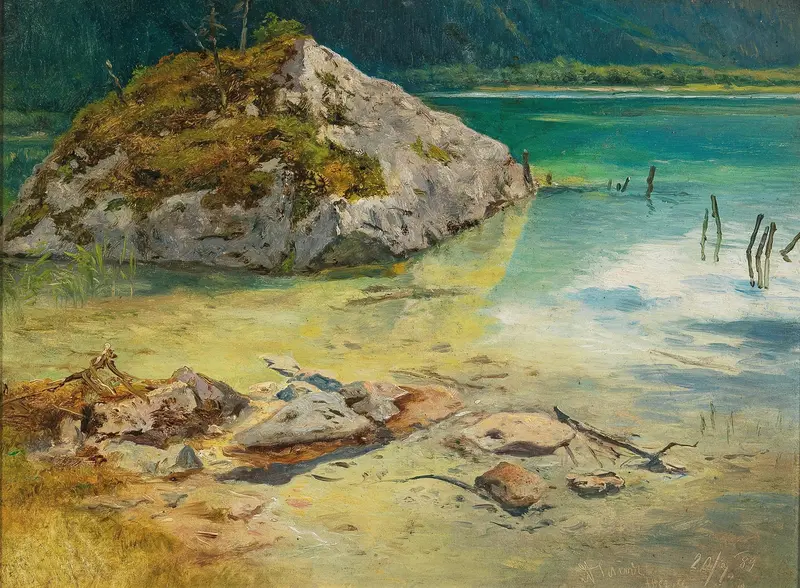
Impression of Lake Attersee
Anton Schrödl
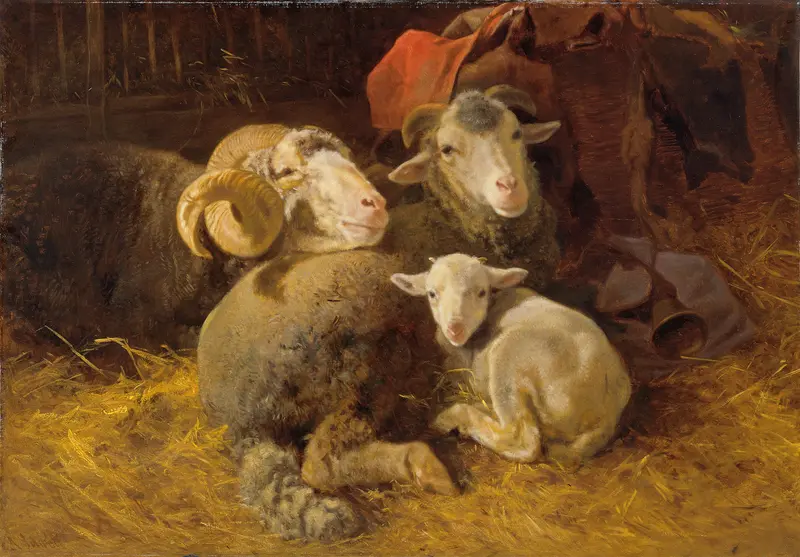
Schafe im Stall 3737 Kunsthistorisches Museum
Anton Schrödl
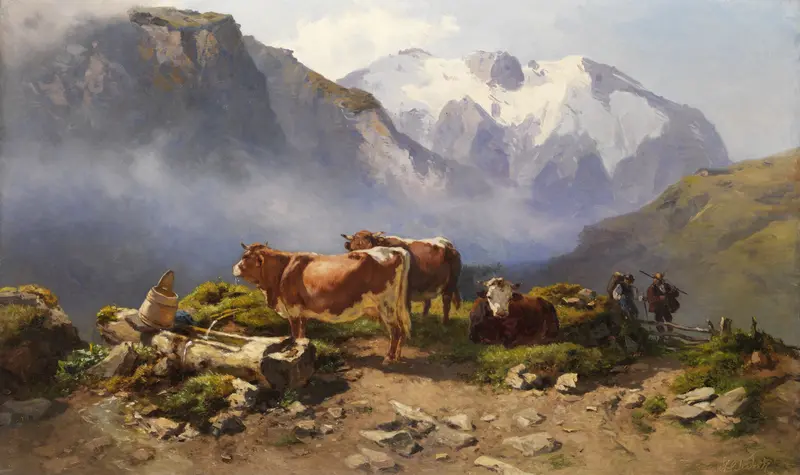
Weidende Kühe auf einer Alm
Anton Schrödl
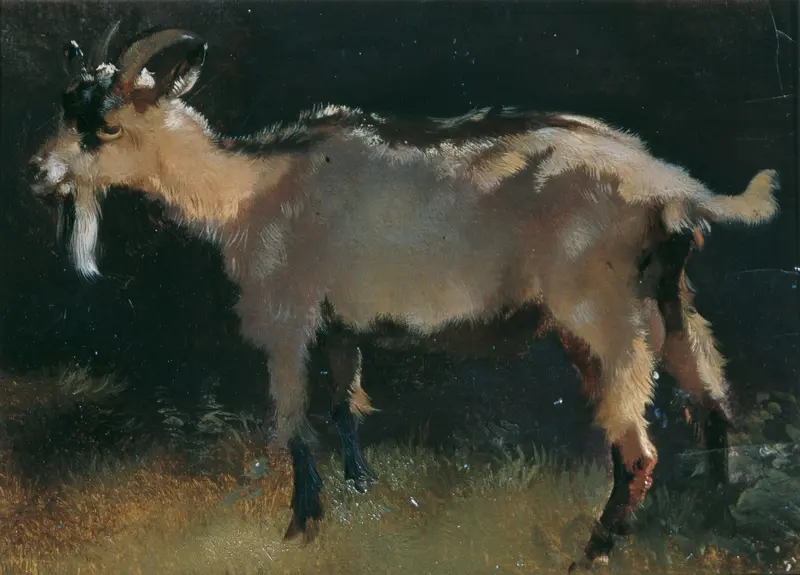
Ziege 3572 Kunsthistorisches Museum
Anton Schrödl
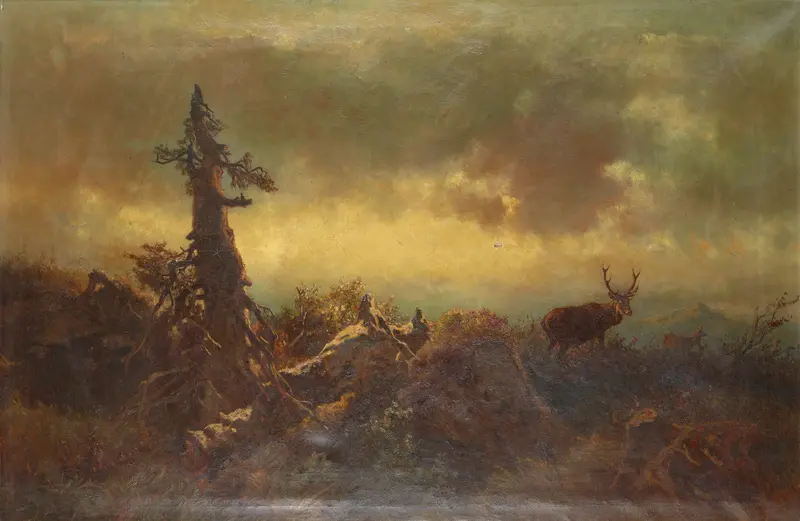
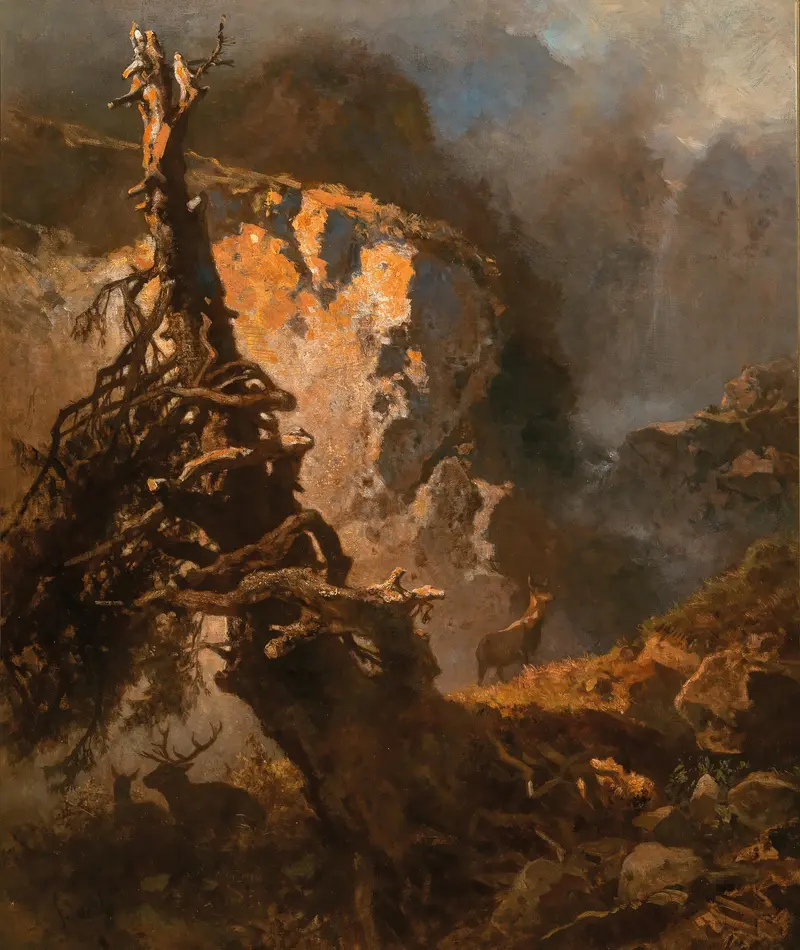
Hochebene mit Hirsch 3738 Kunsthistorisches Museum
Anton Schrödl
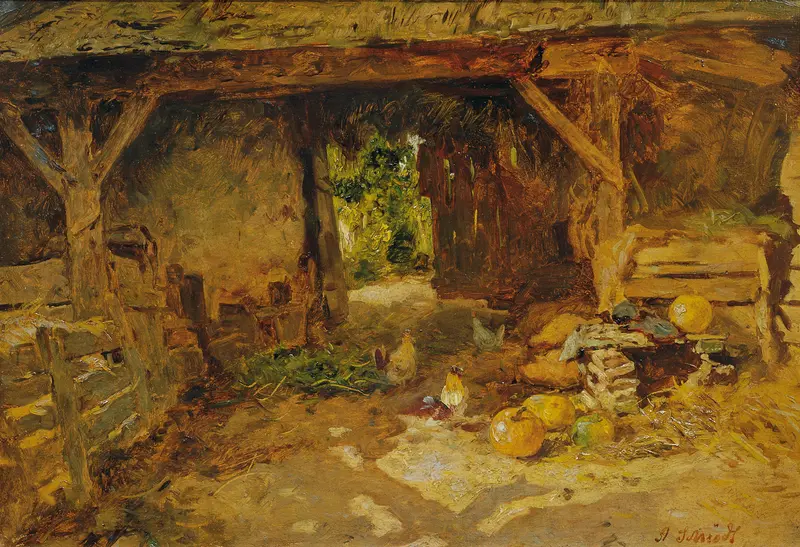
Hofinterieur aus dem Marchfeld 561 Österreichische Galerie Belvedere
Anton Schrödl
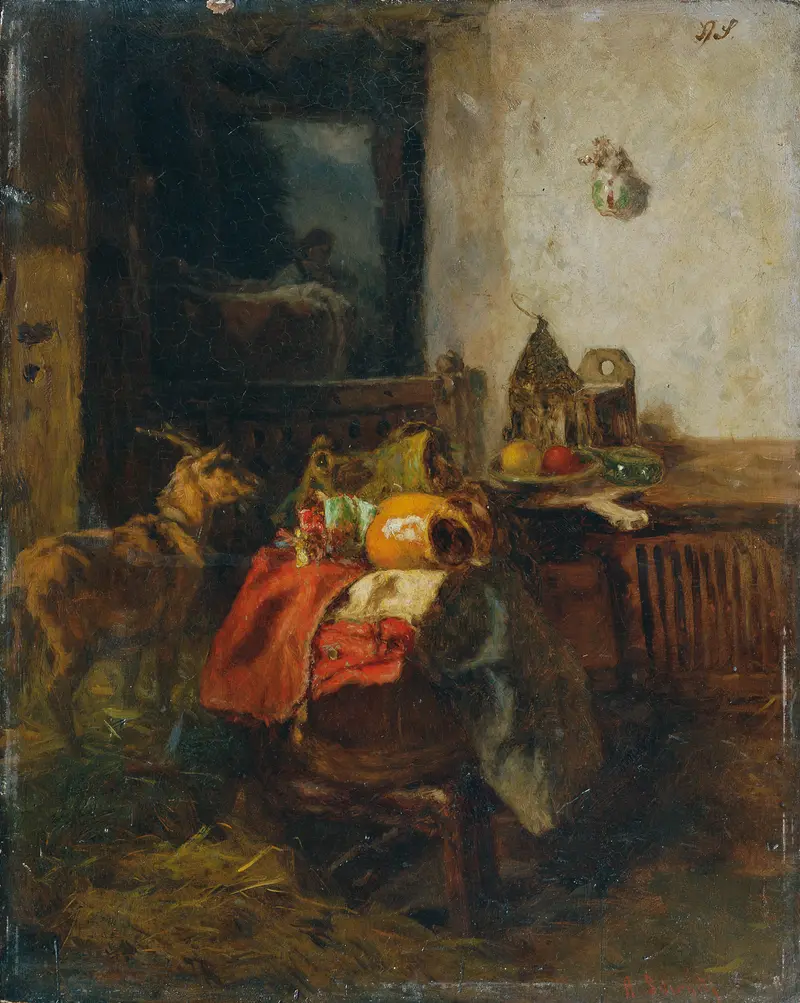
Bauernzimmer mit einem Stillleben 786 Österreichische Galerie Belvedere
Anton Schrödl
Chamois High in the Mountains
Anton Schrödl





