
Weidende Kühe auf einer Alm — History & Facts
What first seizes the eye in Weidende Kühe auf einer Alm is the sense of altitude: the cows, sturdy and calm, graze not in a gentle pasture but on a rugged ledge, with mist swirling below and snow-capped peaks looming behind. The painter, Anton Schrödl, leads us into the drama of the high Alps, where every patch of grass is hard-won and the air itself seems thinner. A hollowed log serves as a trough, fed by a trickle of water, its placement both practical and poetic—a reminder that even in such grandeur, daily life persists.
The light falls warmly on the cows’ flanks, their reddish coats glowing against the cool blue shadows of the mountains, while the figures in the background, likely herders, recede into the landscape, dwarfed by nature’s scale. This painting, dated by 1906, belongs to a tradition in which artists sought not just to record rural life, but to elevate it, making the ordinary both heroic and intimate. In late nineteenth- and early twentieth-century Europe, such alpine scenes were popular among collectors who longed for a vision of unspoiled nature and honest labor, even as industrialization transformed the continent. The work’s presence in the Hampel Auctions collection hints at its journey through private hands, a fate shared by many works of this genre.
History has kept few traces of this specific painting’s early life, but its enduring appeal lies in the way it invites us to linger—following the path of sunlight across the grass, or imagining the long climb that brought cows and herders to this unlikely meadow.
More Artworks by Anton Schrödl

Gässchen in Hallstatt
Anton Schrödl
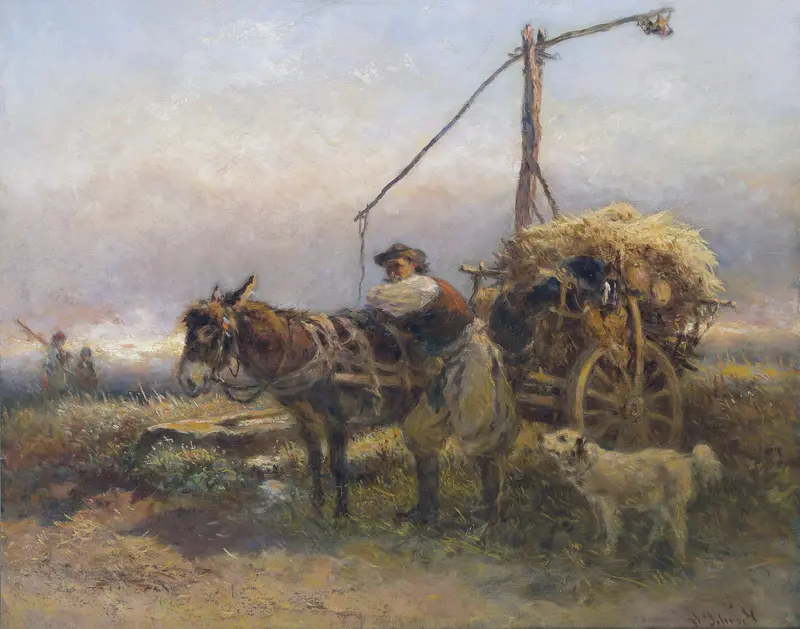
Eselgespann
Anton Schrödl
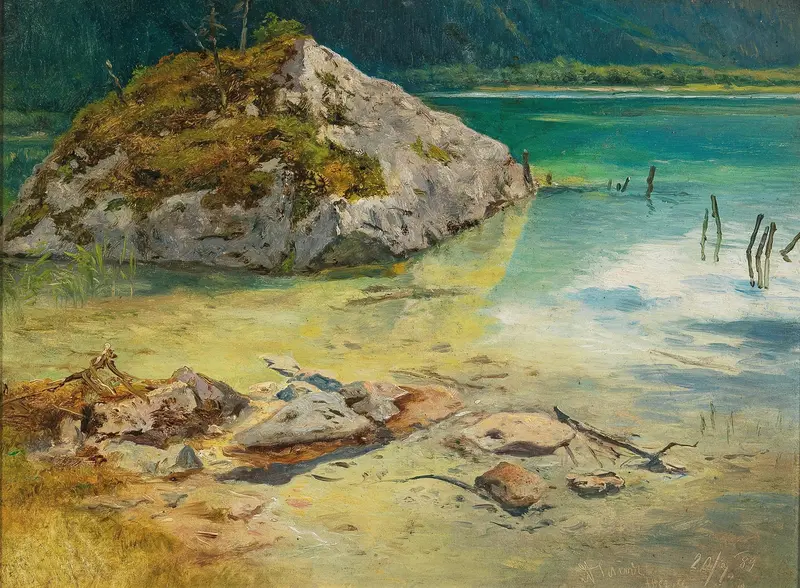
Impression of Lake Attersee
Anton Schrödl
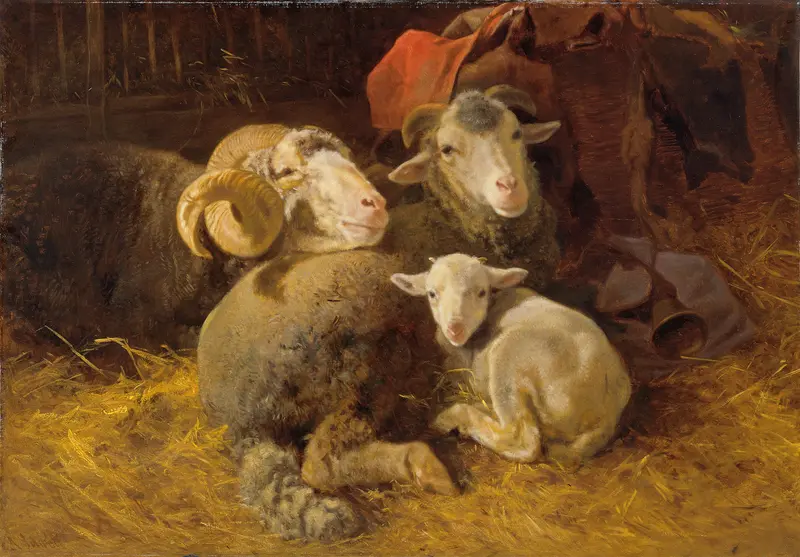
Schafe im Stall 3737 Kunsthistorisches Museum
Anton Schrödl
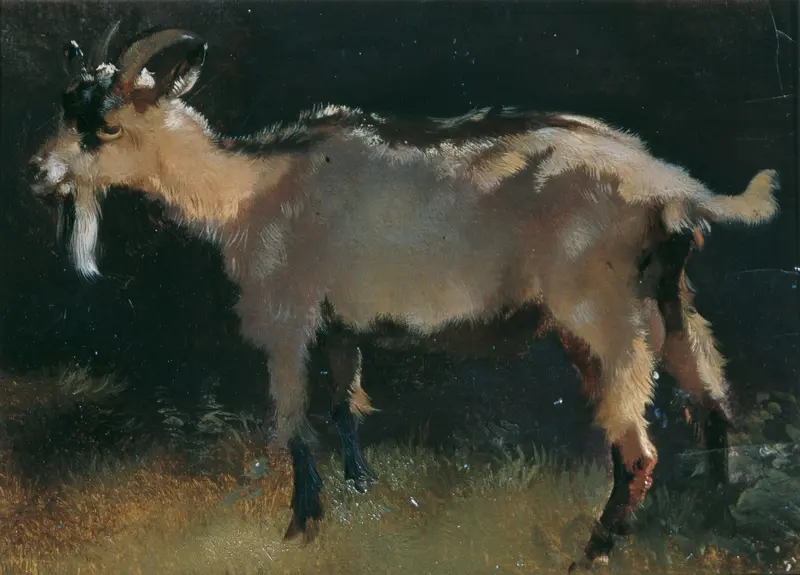
Ziege 3572 Kunsthistorisches Museum
Anton Schrödl
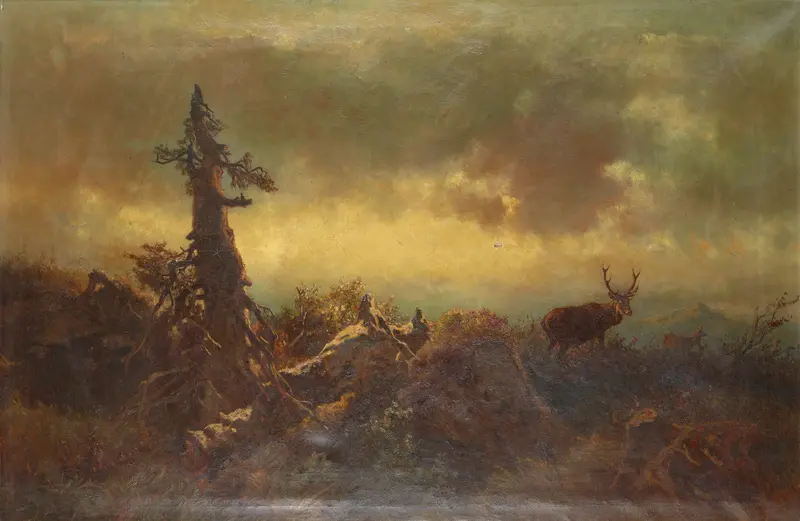
Hochebene mit Hirsch 3738 Kunsthistorisches Museum
Anton Schrödl
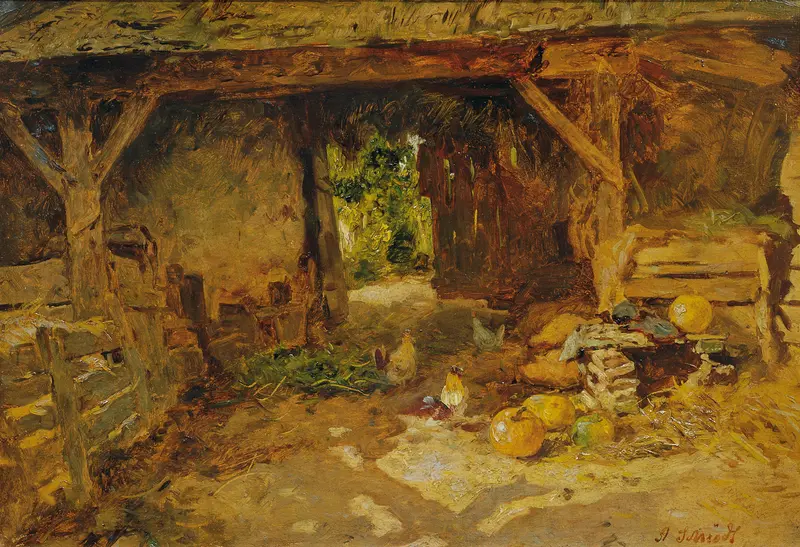
Hofinterieur aus dem Marchfeld 561 Österreichische Galerie Belvedere
Anton Schrödl
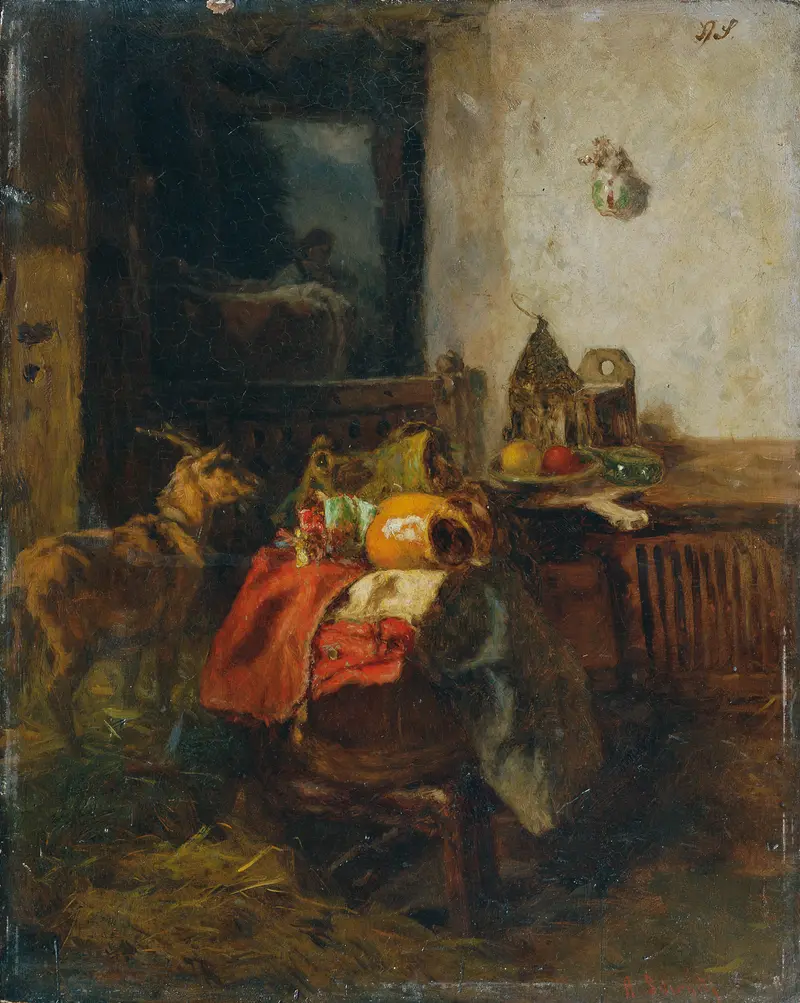
Bauernzimmer mit einem Stillleben 786 Österreichische Galerie Belvedere
Anton Schrödl
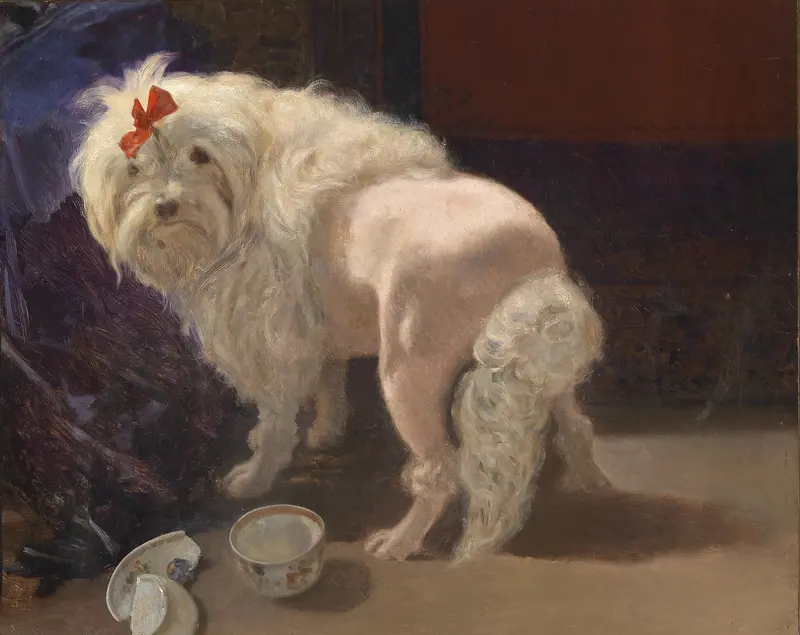
Die zerbrochene Schale
Anton Schrödl
Chamois High in the Mountains
Anton Schrödl
More Landscape Art

The Starry Night
Vincent van Gogh

View of Delft
Johannes Vermeer

Water Lilies
Claude Monet

The Grand Canal, Venice, looking north-west from the Ca' Corner to the Ca' Contarini degli Scrigni, with the campanile of Santa Maria della Carità
Canaletto

Windsor Castle
Canaletto

The Grand Canal looking North-East from the Palazzo Dolfin-Manin to the Rialto Bridge
Canaletto