
Ziege 3572 Kunsthistorisches Museum — History & Facts
A single goat stands alert, its gaze turned outward as if something just beyond our sight has caught its attention. The artist, Anton Schrödl, renders the animal with a tactile immediacy—look at the crisp white beard, the curve of the horns, the play of sunlight across the rough, patchy coat. The background recedes into darkness, letting the animal’s form emerge in sharp relief, every muscle and strand of fur defined by quick, confident brushwork.
The goat’s stance is tense, one leg just lifted, as if it might spring away at any moment; this is not a static portrait, but a moment caught mid-breath. Paintings like this, focused on humble animals, found a particular resonance in the nineteenth century, when artists and collectors alike sought out images of rural life and the creatures that populated it. Anton Schrödl was known for his animal studies, and works such as Ziege 3572 Kunsthistorisches Museum—now in the collection of the Belvedere—speak to a time when artists turned their attention from grand historical narratives to the everyday world. History has kept few traces of this specific painting’s journey, but its presence in a major Viennese collection invites us to look again, and to find wonder in the ordinary.
More Artworks by Anton Schrödl

Gässchen in Hallstatt
Anton Schrödl
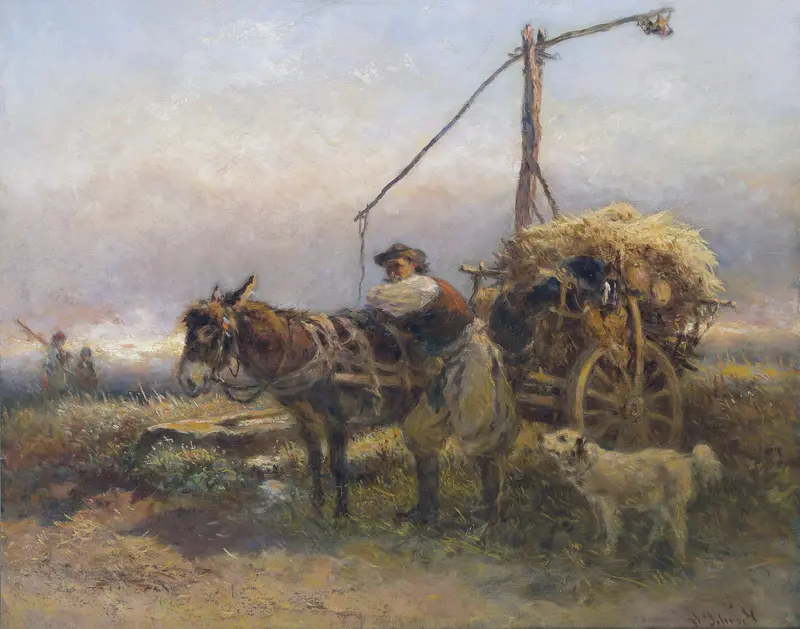
Eselgespann
Anton Schrödl
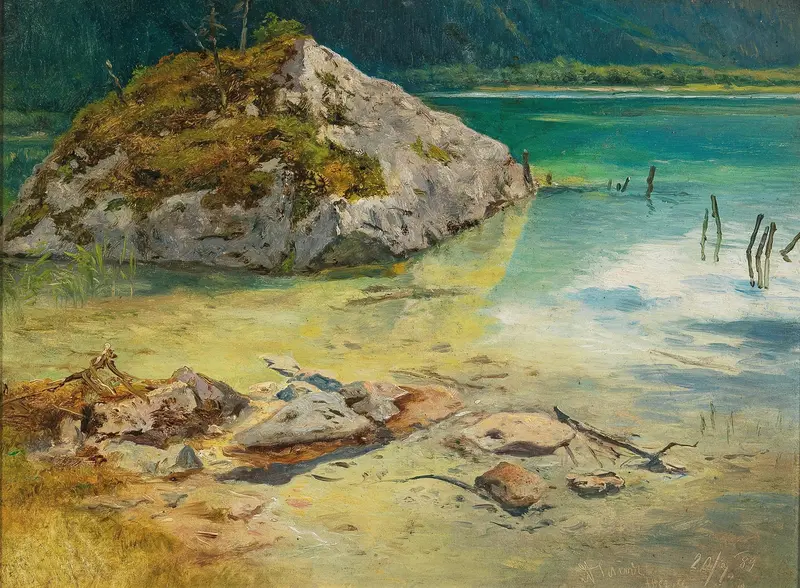
Impression of Lake Attersee
Anton Schrödl
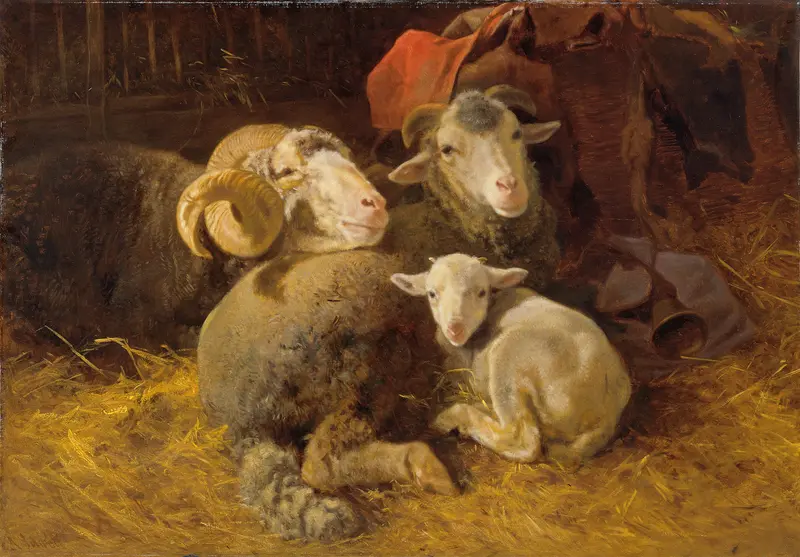
Schafe im Stall 3737 Kunsthistorisches Museum
Anton Schrödl
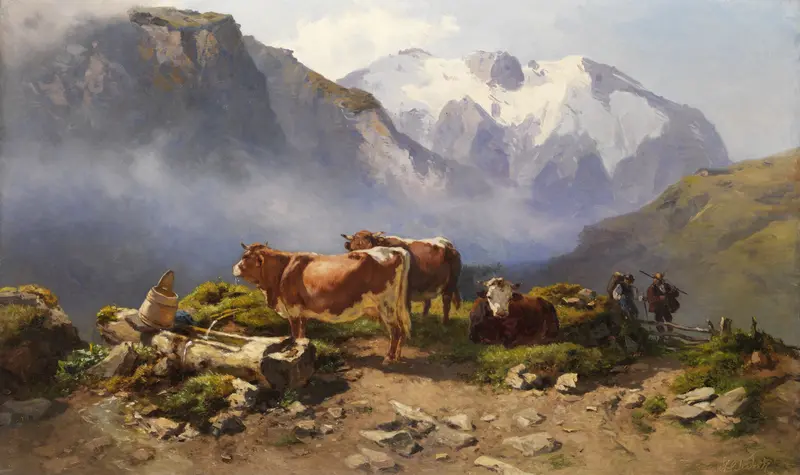
Weidende Kühe auf einer Alm
Anton Schrödl
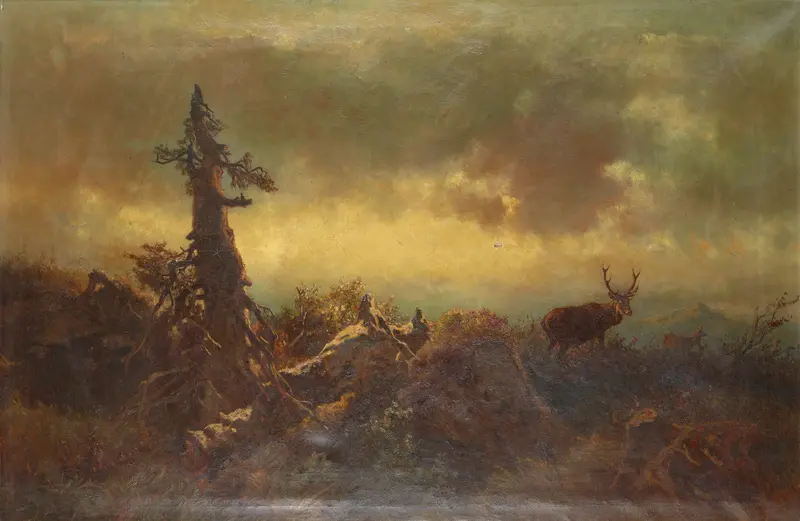
Hochebene mit Hirsch 3738 Kunsthistorisches Museum
Anton Schrödl
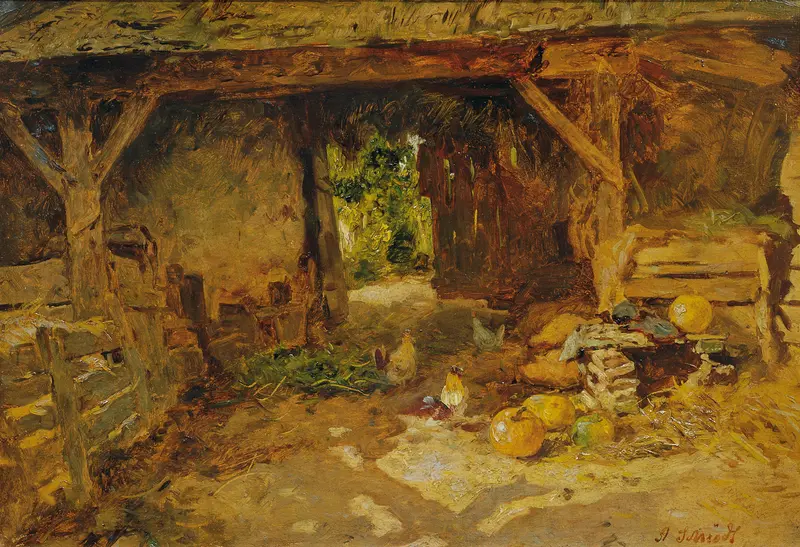
Hofinterieur aus dem Marchfeld 561 Österreichische Galerie Belvedere
Anton Schrödl
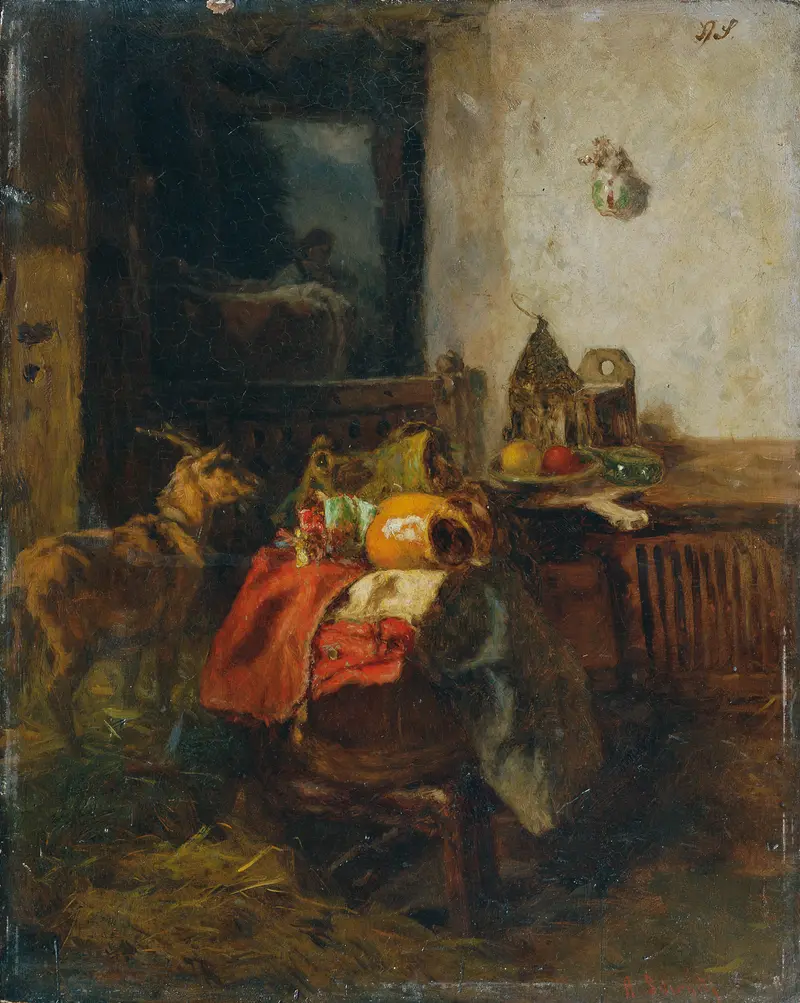
Bauernzimmer mit einem Stillleben 786 Österreichische Galerie Belvedere
Anton Schrödl
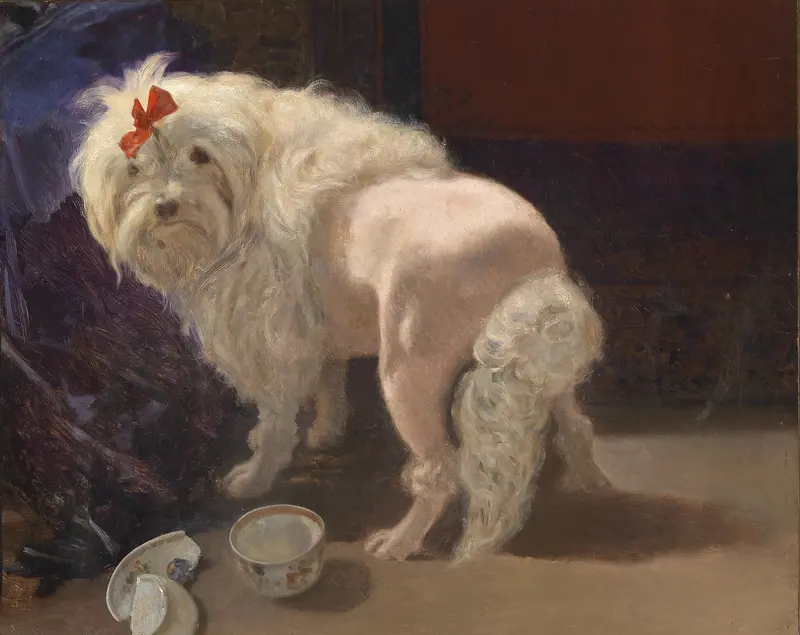
Die zerbrochene Schale
Anton Schrödl
Chamois High in the Mountains
Anton Schrödl





