
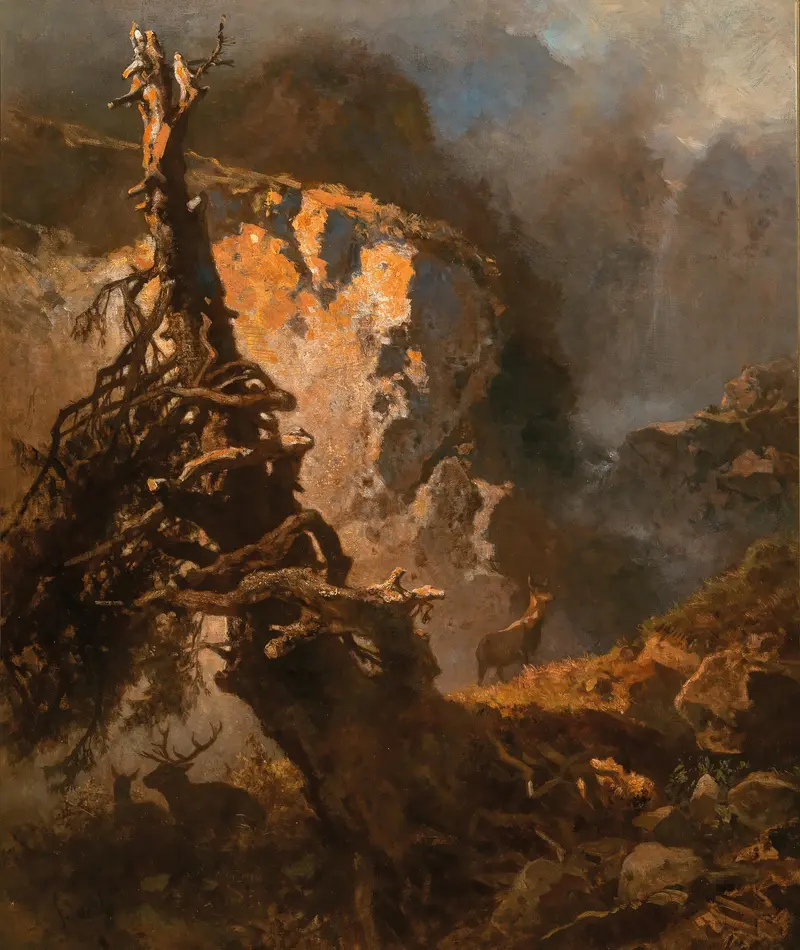
Hochebene mit Hirsch 3738 Kunsthistorisches Museum — History & Facts
A single stag stands poised on a windswept plateau, his antlers silhouetted against a sky that seems to burn with the last light of day. The eye is pulled first to the gnarled, almost skeletal tree anchoring the left side of the painting—a sentinel, battered by time and weather, its roots exposed like the bones of the earth itself. From there, the golden glow on the horizon draws you across the tangled undergrowth to the alert, solitary figure of the deer.
The animal’s stance is wary, its body tense, as if it has just sensed a presence beyond the frame. The palette—rich with ochres, russets, and deep greens—sets a mood of wildness and impending dusk, while the low perspective lets the sky take command, dwarfing both beast and tree in the vastness of nature. Painted in 1885, Hochebene mit Hirsch by Anton Schrödl belongs to a world where the Romantic fascination with untamed landscapes and noble animals still lingered in the air. Such scenes were prized by collectors and the rising bourgeoisie of Central Europe, who saw in them both a tribute to the grandeur of the natural world and a reminder of the vanishing wilderness at the edges of civilization.
Schrödl, working in an era when industrialization was reshaping the countryside, captures a sense of both awe and melancholy—the stag is both king and exile, the plateau both stage and refuge. Today, the painting resides in the Belvedere’s digital collection, a testament to a time when artists and viewers alike found meaning in the silent drama of the wild. Let your gaze linger on the horizon; the story here is one of survival, solitude, and the enduring pull of the land.
More Artworks by Anton Schrödl

Gässchen in Hallstatt
Anton Schrödl
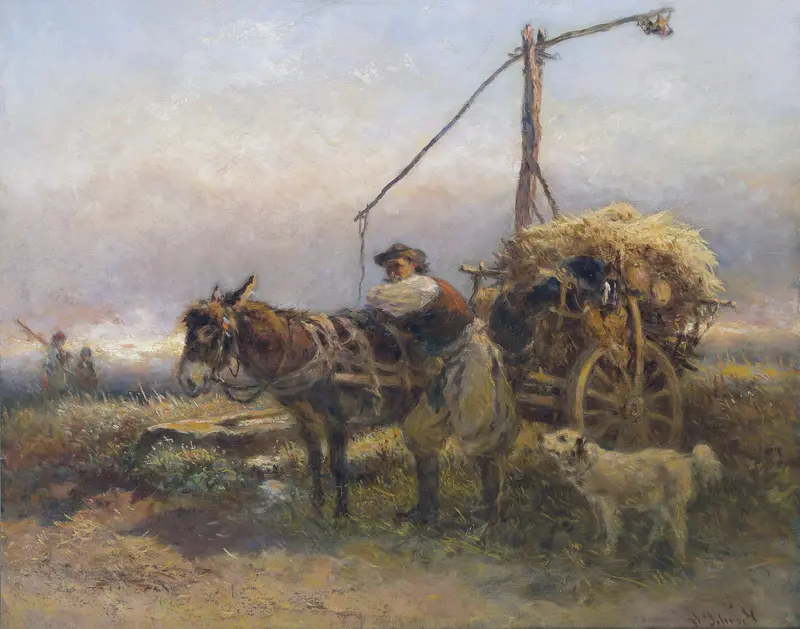
Eselgespann
Anton Schrödl
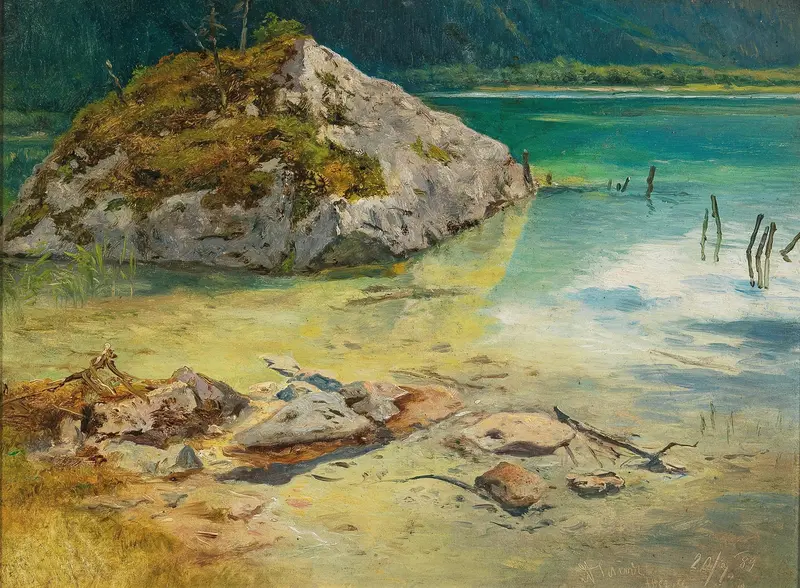
Impression of Lake Attersee
Anton Schrödl
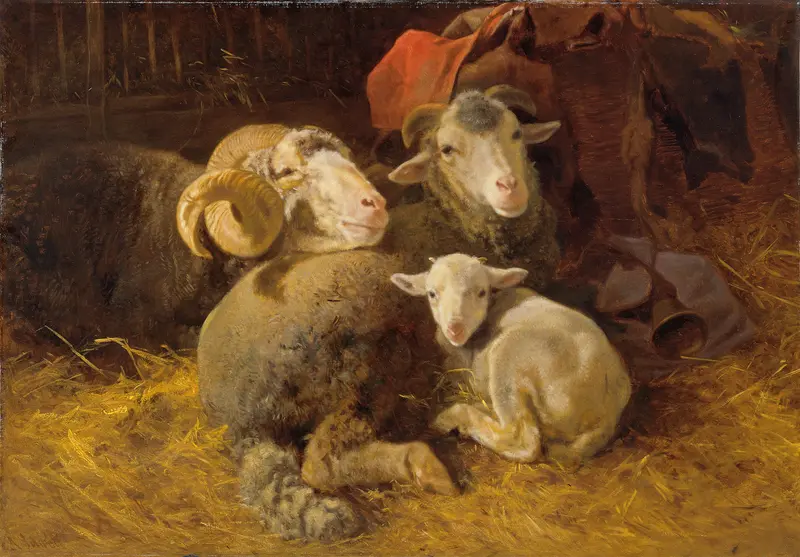
Schafe im Stall 3737 Kunsthistorisches Museum
Anton Schrödl
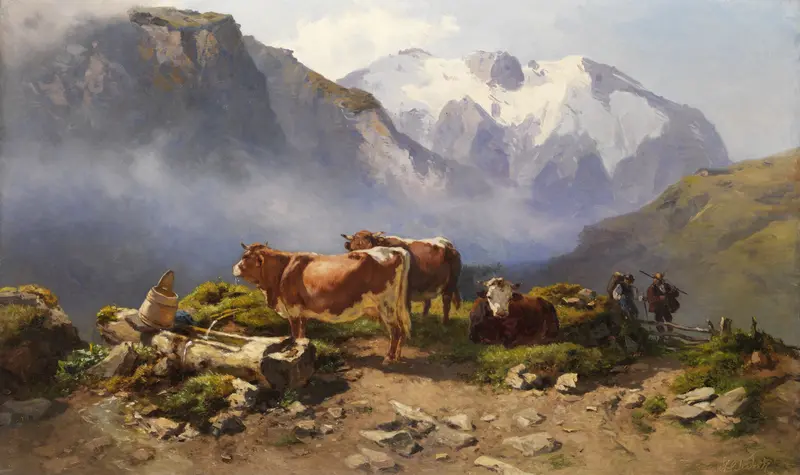
Weidende Kühe auf einer Alm
Anton Schrödl
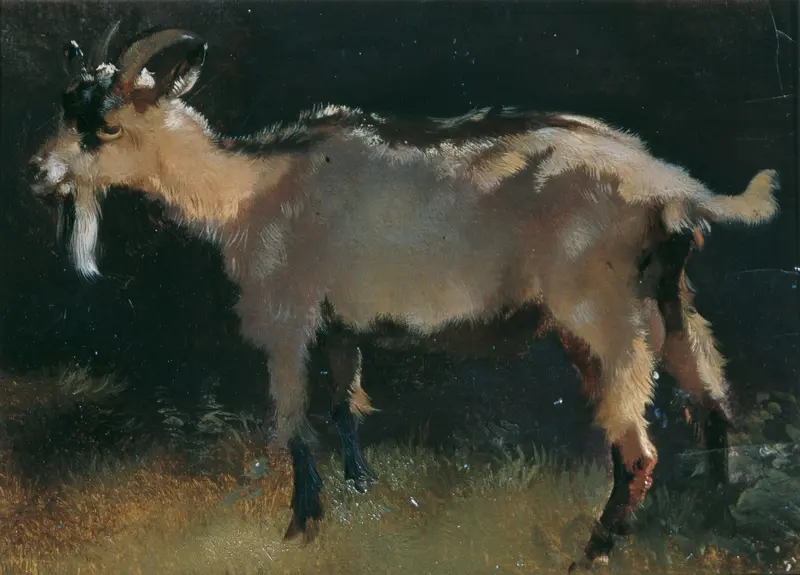
Ziege 3572 Kunsthistorisches Museum
Anton Schrödl
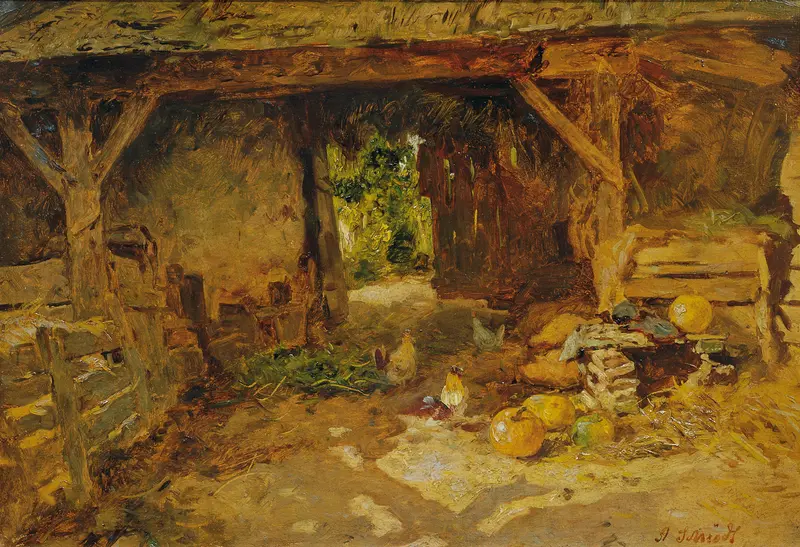
Hofinterieur aus dem Marchfeld 561 Österreichische Galerie Belvedere
Anton Schrödl
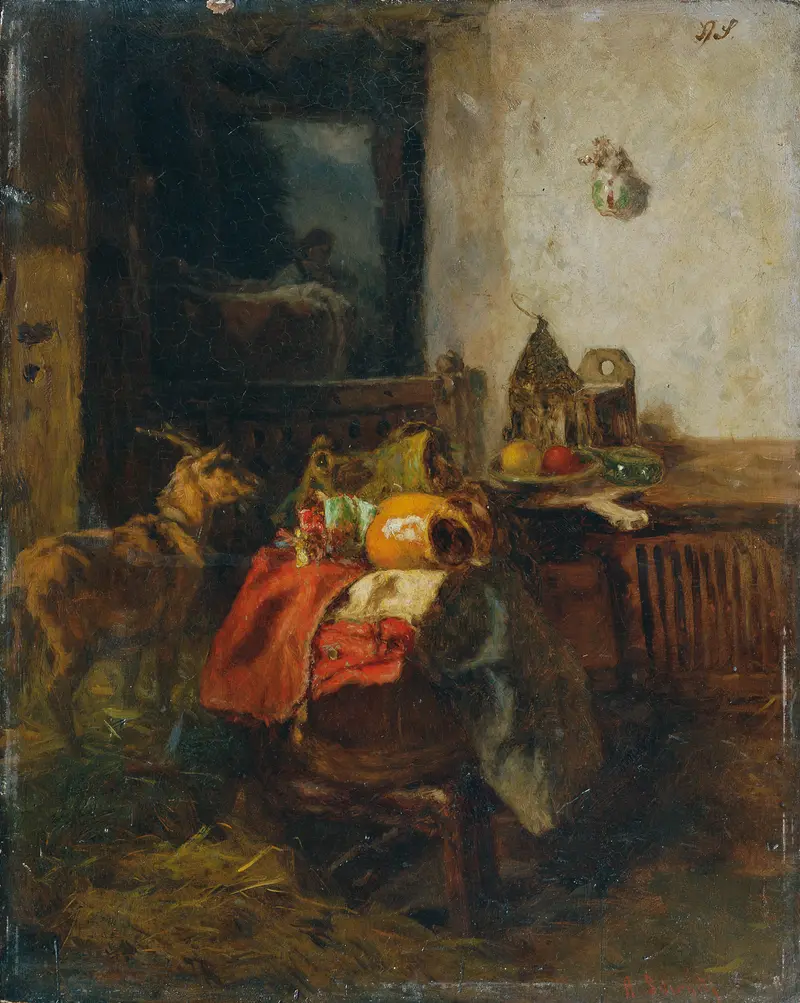
Bauernzimmer mit einem Stillleben 786 Österreichische Galerie Belvedere
Anton Schrödl
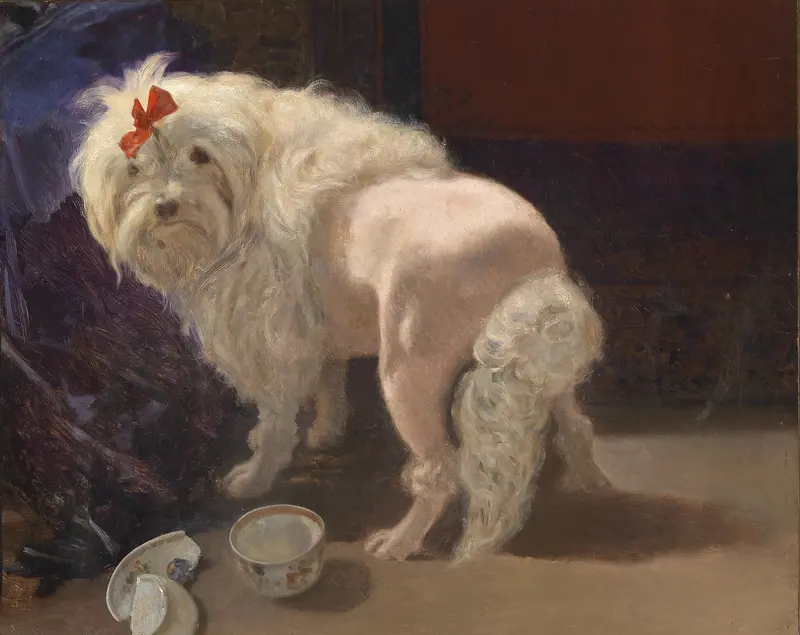
Die zerbrochene Schale
Anton Schrödl
Chamois High in the Mountains
Anton Schrödl
More Landscape Art

The Starry Night
Vincent van Gogh

View of Delft
Johannes Vermeer

Water Lilies
Claude Monet

The Grand Canal, Venice, looking north-west from the Ca' Corner to the Ca' Contarini degli Scrigni, with the campanile of Santa Maria della Carità
Canaletto

Windsor Castle
Canaletto

The Grand Canal looking North-East from the Palazzo Dolfin-Manin to the Rialto Bridge
Canaletto