
Eselgespann — History & Facts
A cart heavy with hay pauses at the edge of a field, and it is the weariness of the donkey, not the labor of the farmer, that first catches the eye. The animal’s head dips, ears slack, as if the day’s work has pressed down upon its very bones. The man, half-turned in the cart, is caught in a moment of rest or reflection, his form solid against the pale, shifting sky.
A dog stands alert at his side, the only creature in the scene that seems to anticipate motion. The palette is earthy and subdued, the brushwork loose and atmospheric, with the soft haze of light suggesting either early morning or the close of day—moments when the world is neither fully awake nor ready to sleep. In the distance, two figures move through the mist, their presence a reminder that this is a working landscape, alive with unseen stories. Painted by Anton Schrödl and dated by 1906, Eselgespann belongs to a tradition of rural genre painting that flourished in Central Europe at the turn of the twentieth century.
Such works were often collected by the rising middle class or landed gentry, eager to celebrate or sentimentalize the rhythms of peasant life as industrialization transformed the countryside. The painting now resides in the Dorotheum collection, its precise journey through history largely unrecorded—a fate shared by many works that documented the everyday rather than the grand. In its quiet focus on the toil and companionship of man and beast, the painting invites us to linger, to look again at the ordinary, and to find in it a quiet dignity.
More Artworks by Anton Schrödl

Gässchen in Hallstatt
Anton Schrödl
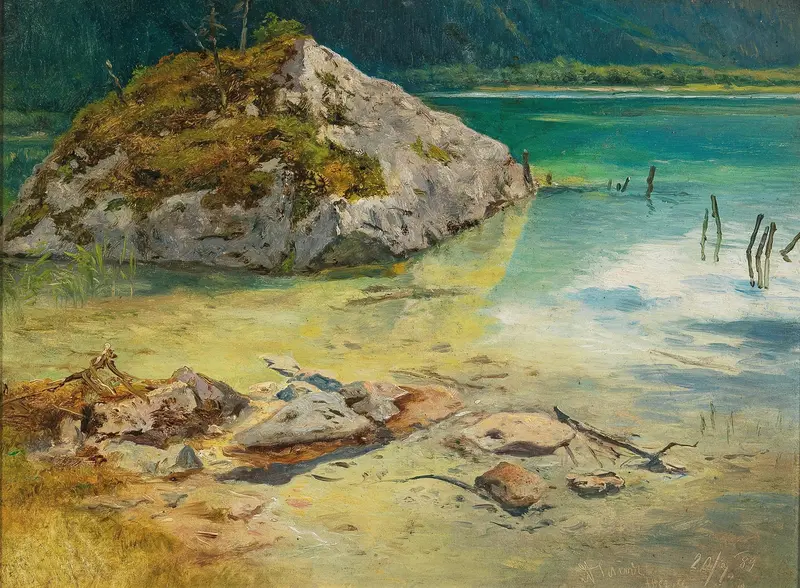
Impression of Lake Attersee
Anton Schrödl
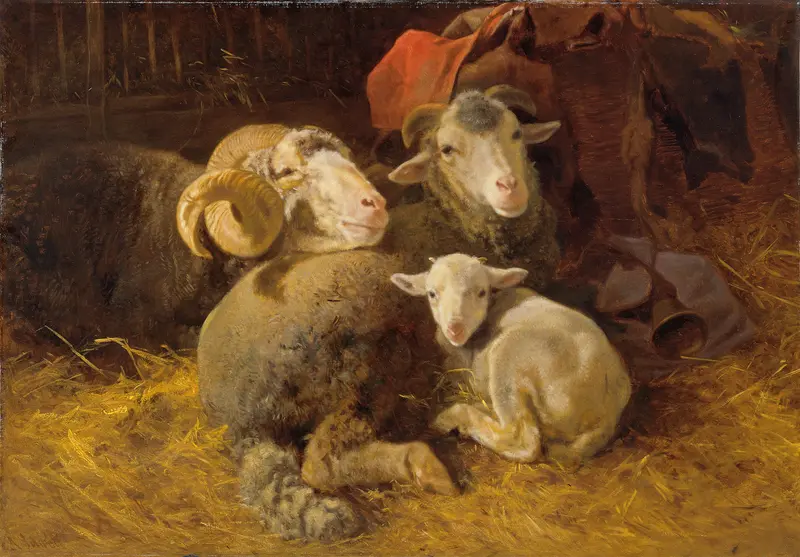
Schafe im Stall 3737 Kunsthistorisches Museum
Anton Schrödl
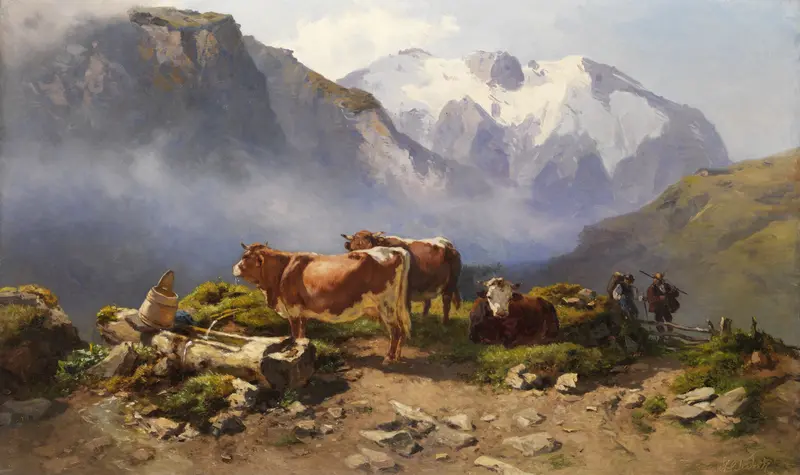
Weidende Kühe auf einer Alm
Anton Schrödl
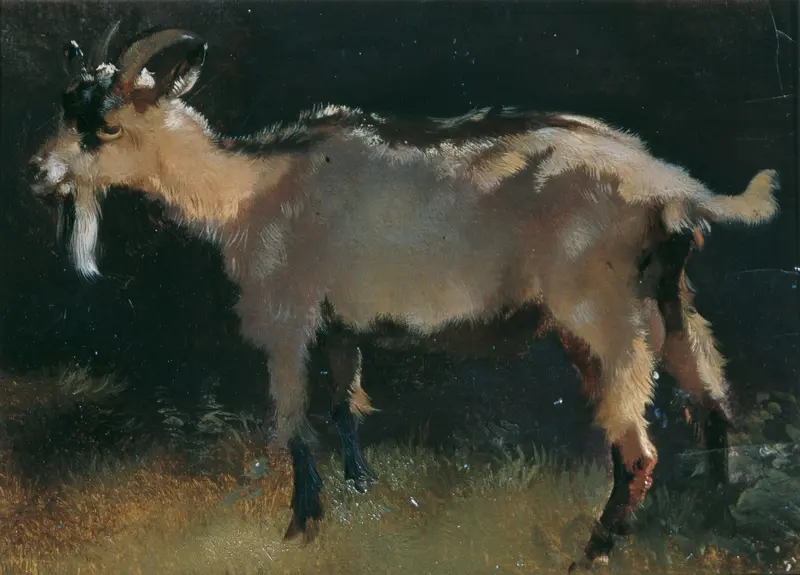
Ziege 3572 Kunsthistorisches Museum
Anton Schrödl
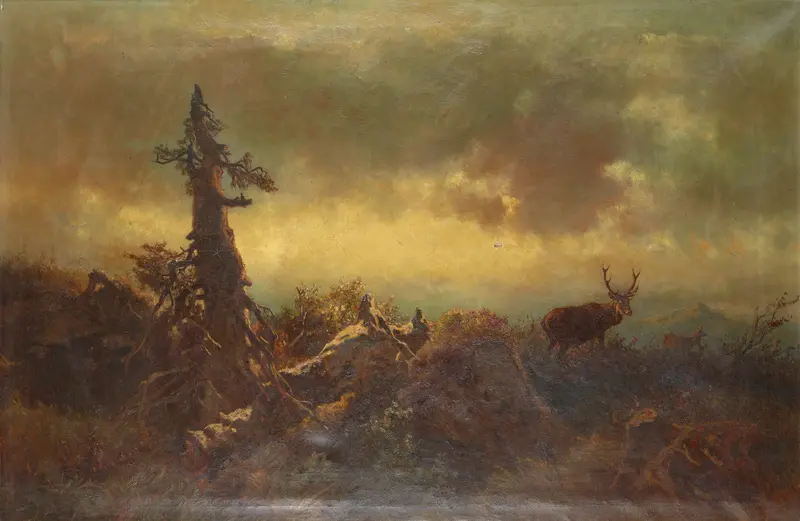
Hochebene mit Hirsch 3738 Kunsthistorisches Museum
Anton Schrödl
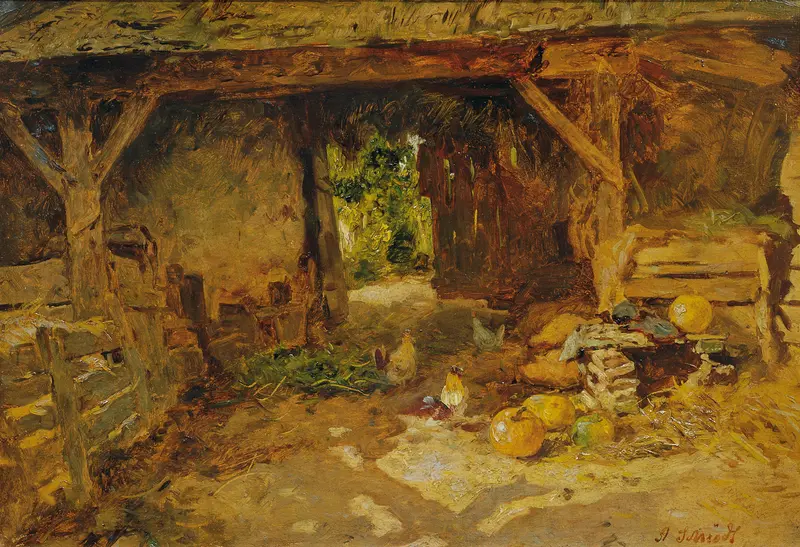
Hofinterieur aus dem Marchfeld 561 Österreichische Galerie Belvedere
Anton Schrödl
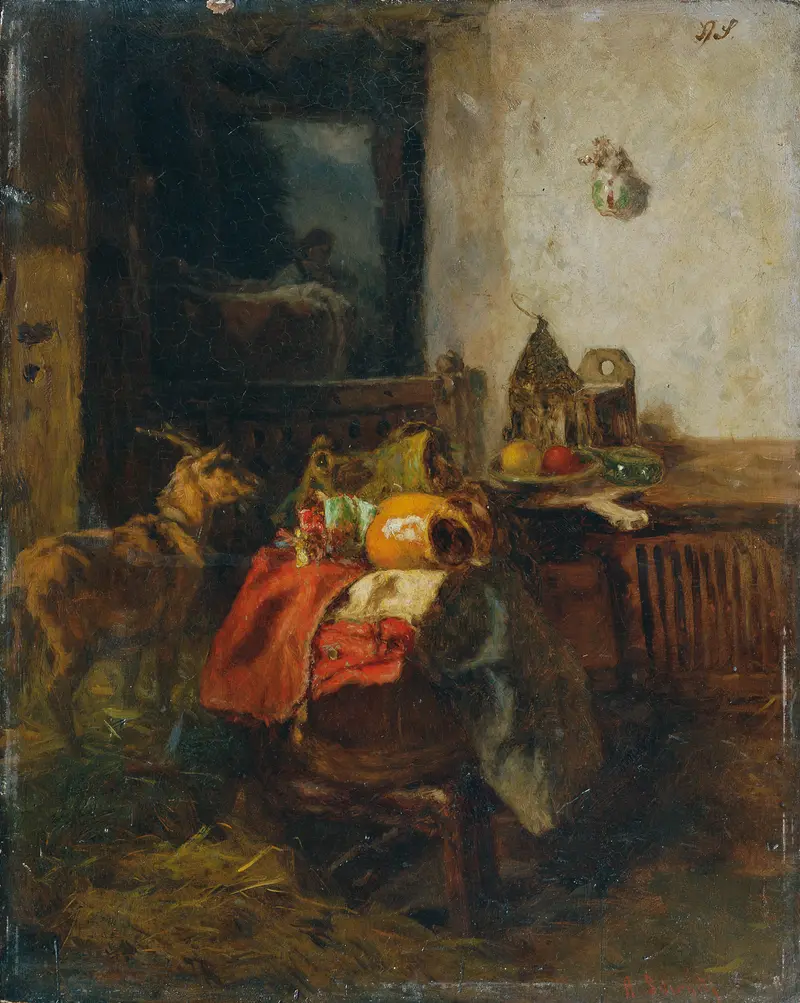
Bauernzimmer mit einem Stillleben 786 Österreichische Galerie Belvedere
Anton Schrödl
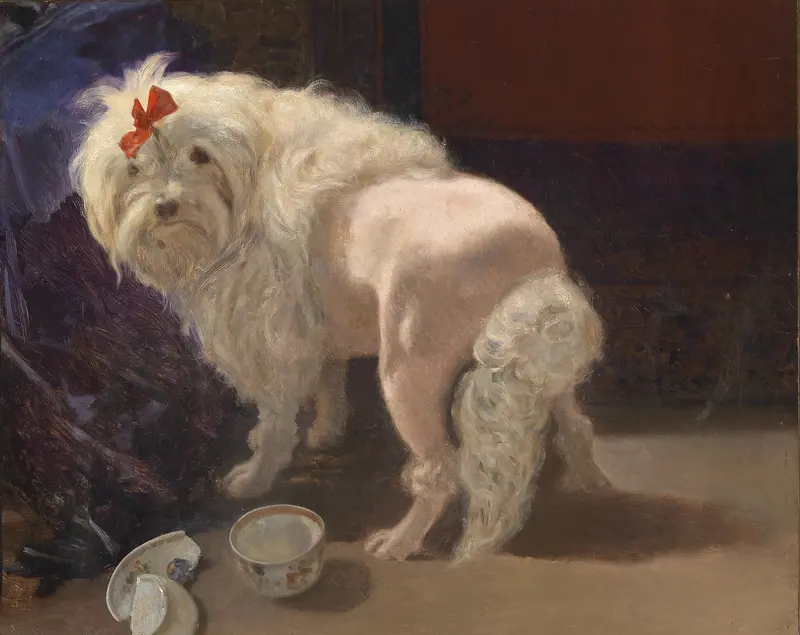
Die zerbrochene Schale
Anton Schrödl
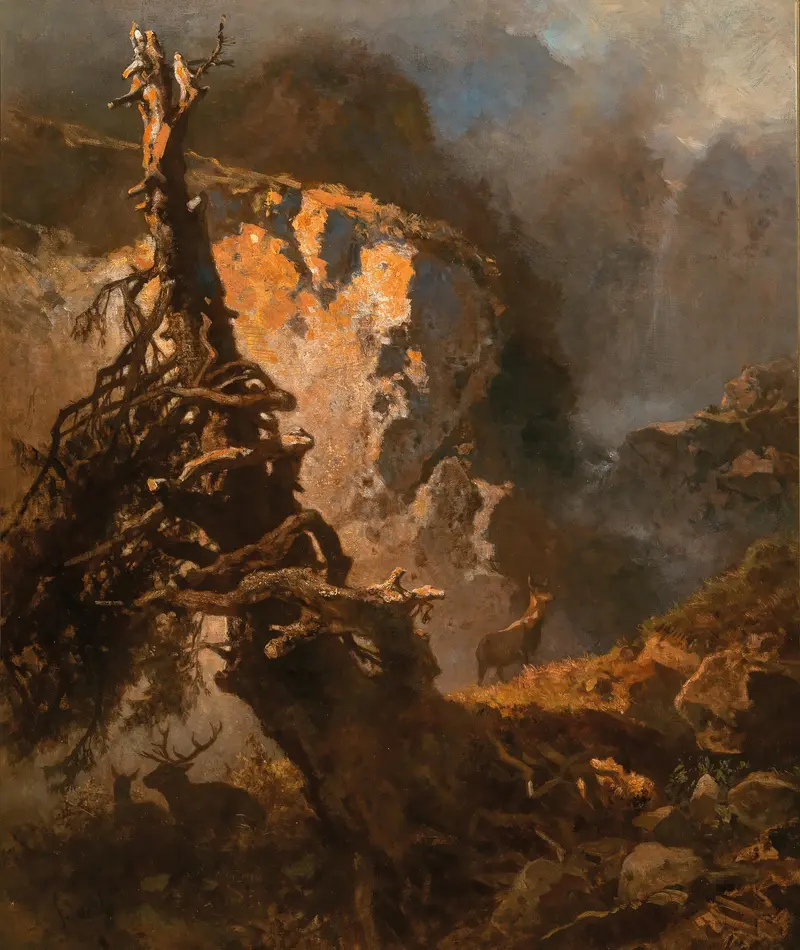
Chamois High in the Mountains
Anton Schrödl
More Genre Scene Art

Banquet of the Officers of the St George Civic Guard
Frans Hals

Rembrandt and Saskia in the Scene of the Prodigal Son
Rembrandt van Rijn

Bal du moulin de la Galette
Pierre-Auguste Renoir

Quadrille at the Moulin Rouge
Henri de Toulouse-Lautrec

A Burial at Ornans
Gustave Courbet

When Will You Marry?
Paul Gauguin