
Discomedusae (Jellyfish) — History & Facts
What first seizes the eye in Discomedusae (Jellyfish) is the sense of order imposed on nature’s most elusive forms. Against a deep green, the jellyfish and their kin radiate outward in careful symmetry, each specimen isolated yet connected by the artist’s guiding hand. The palette—limited to celadon greens and coral reds—serves to highlight the internal structures: the branching canals, the delicate frills, the almost architectural precision of their radial bodies.
Each organism is rendered with scientific clarity, but the arrangement transforms them into a kind of living mandala, inviting the viewer to follow the looping tentacles and intricate lobes as if deciphering a coded language of the sea. Created in 1904 for Kunstformen der Natur, this plate by Ernst Haeckel belongs to a world where art and science were partners in discovery. The turn of the twentieth century saw a surge in natural history illustration, as biologists and explorers sought to catalogue the planet’s diversity with both rigor and beauty. Haeckel’s images were not just tools for scientists; they were meant for a wider audience, capturing the public imagination with their blend of accuracy and design.
History has kept few traces of the individual journeys of such plates, but their legacy endures in the way they taught generations to see the natural world with new eyes—structured, wondrous, and always worth a second look.
More Artworks by Ernst Haeckel
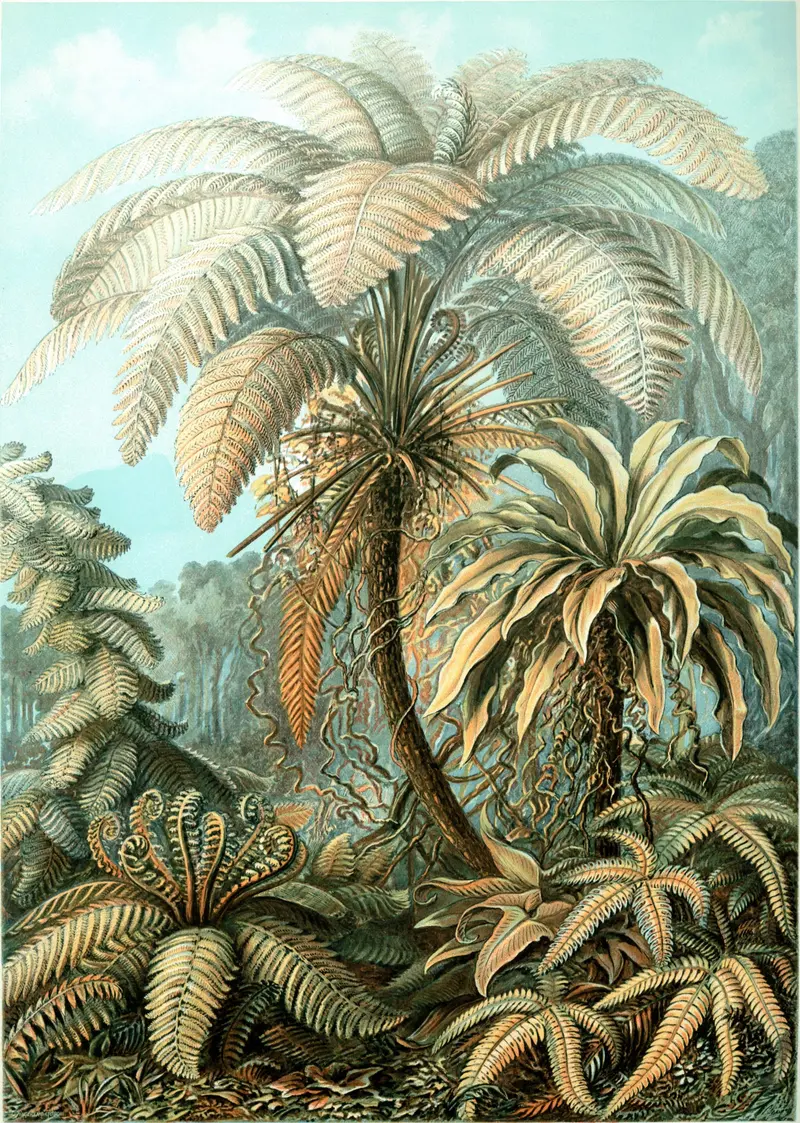
Filicinae (Ferns)
Ernst Haeckel
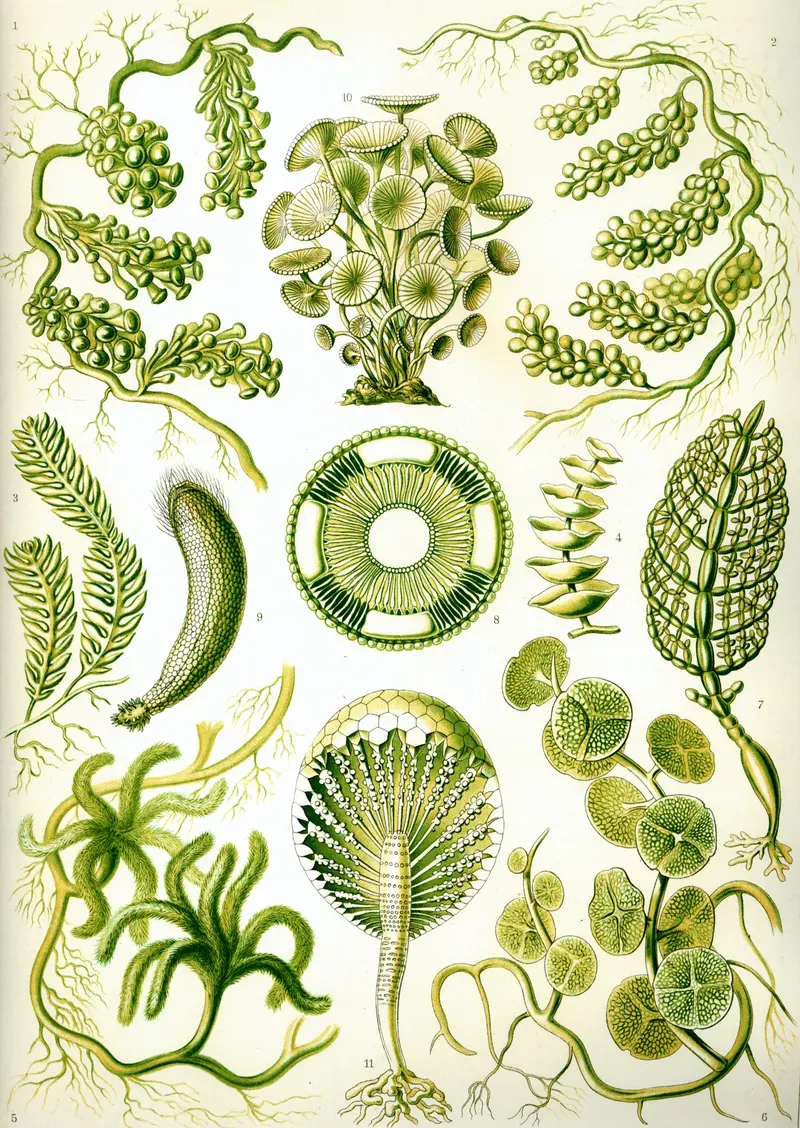
Siphoneae (Green Algae)
Ernst Haeckel

Cirripedia (Barnacles)
Ernst Haeckel

Actiniae (Sea Anemones)
Ernst Haeckel
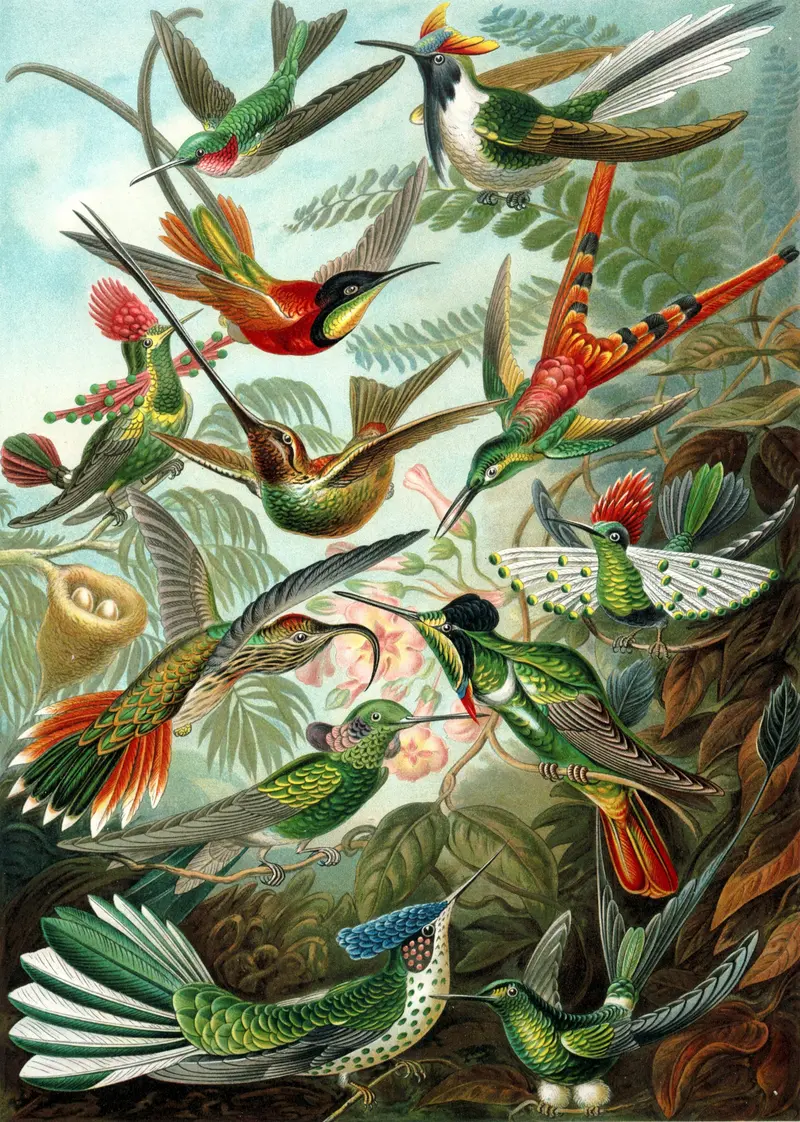
Trochilidae (Hummingbirds)
Ernst Haeckel
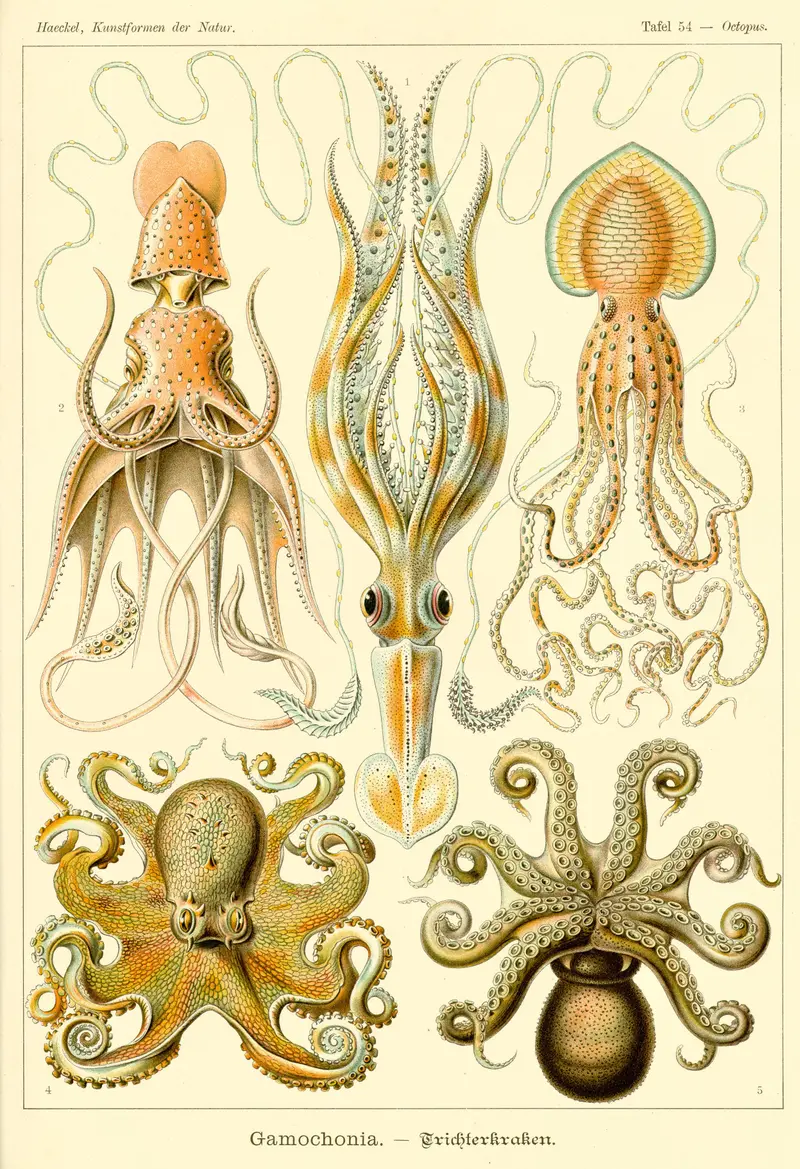
Gamochonia (Cephalopods)
Ernst Haeckel
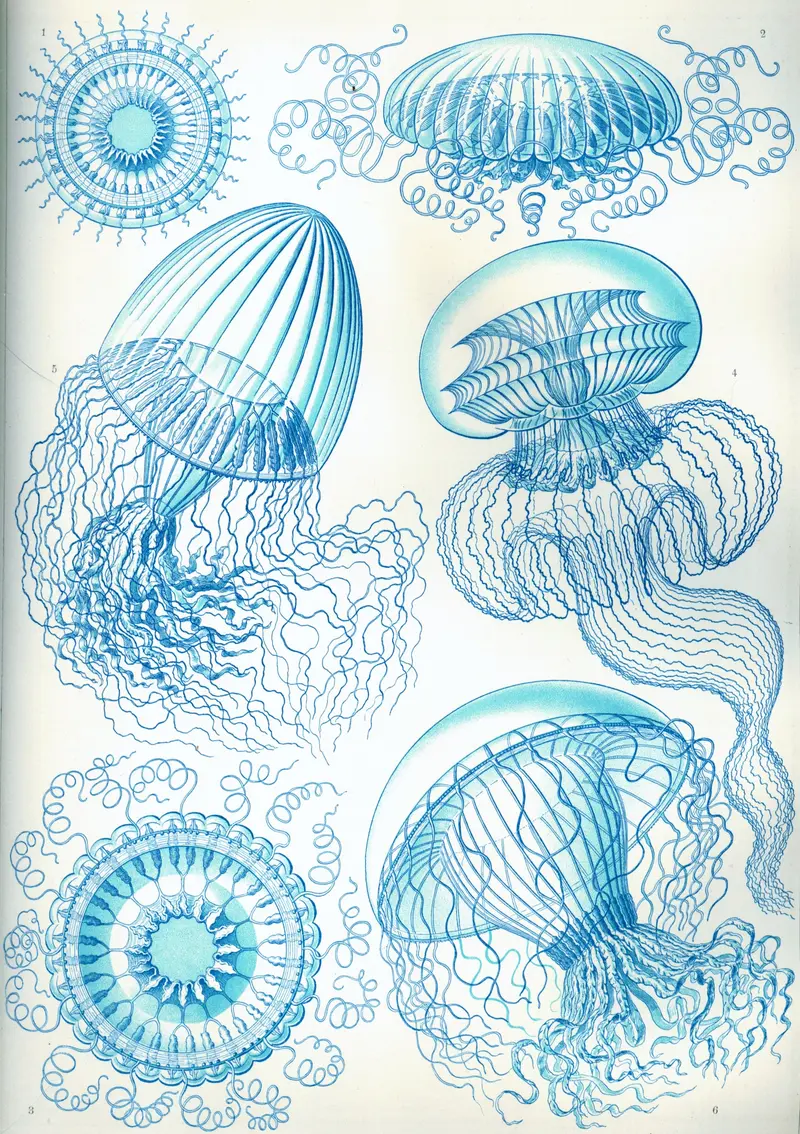
Leptomedusae (Jellyfish)
Ernst Haeckel
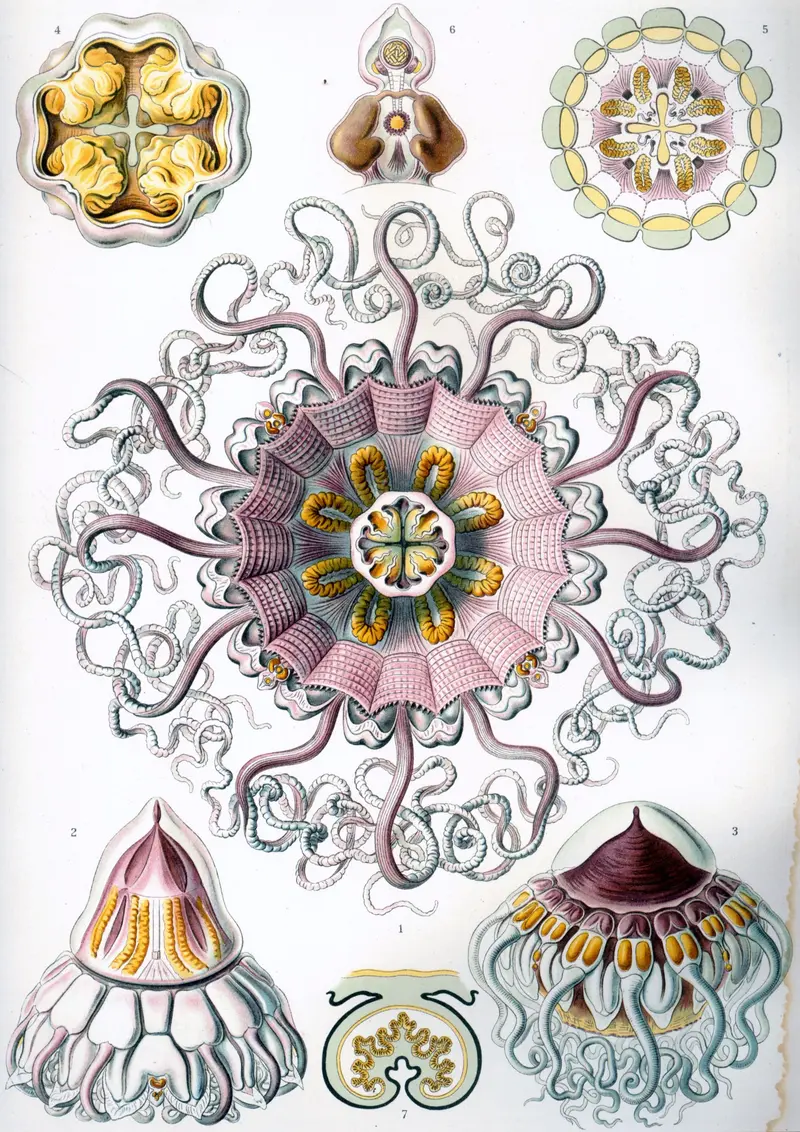
Peromedusae (Jellyfish)
Ernst Haeckel
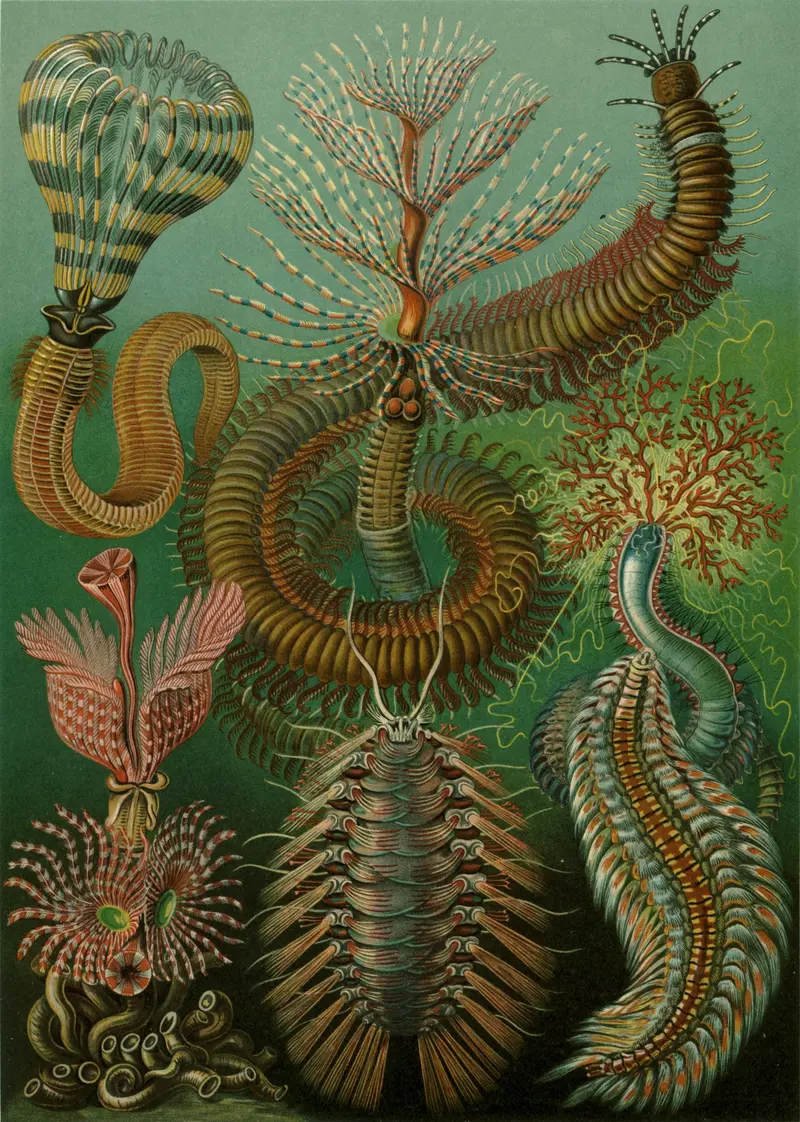
Chaetopoda (Bristle Worms)
Ernst Haeckel
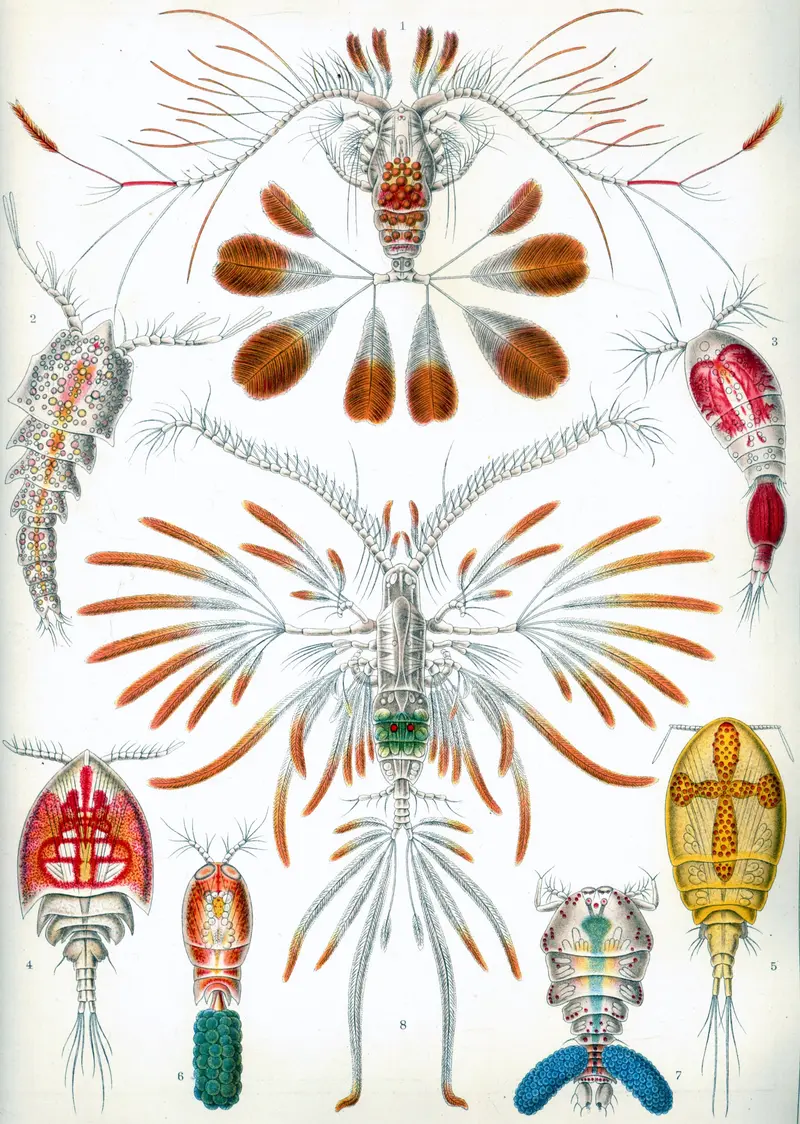
Copepoda (Copepods)
Ernst Haeckel





