
Dividing Range, Riwaka and Takaka — History & Facts
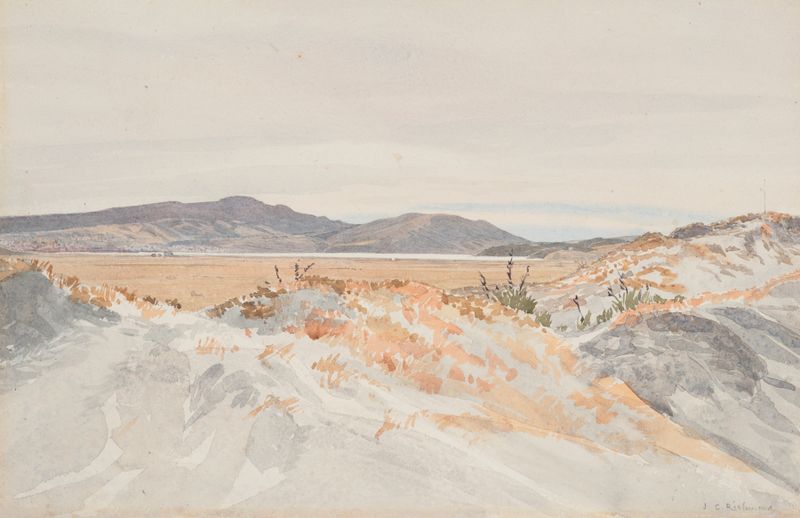
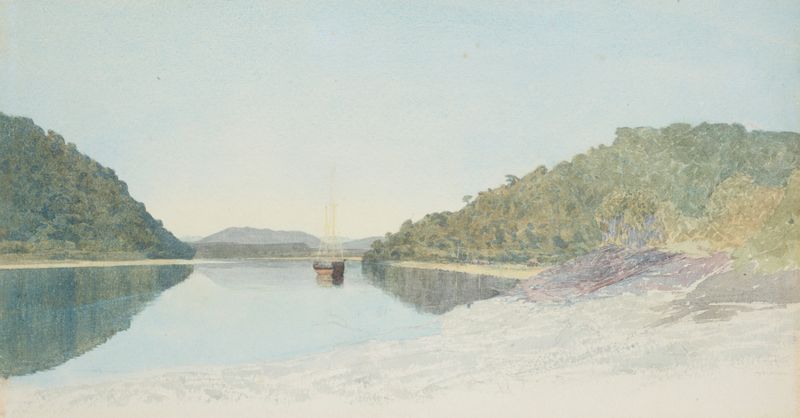
Could beauty survive in a century of chaos? In Dividing Range, Riwaka and Takaka, the natural world dances with vibrancy and tranquility amidst the tumult of the 19th century. Look to the sweeping hills that cradle the horizon, where undulating forms mimic the rhythm of distant waves. The artist employs a delicate palette of greens and blues, inviting you to explore the interplay of light across the landscape. Notice how the brushstrokes create a sense of movement, from the cascading clouds to the gentle flow of the river that guides the eye through the composition.
Each layer of paint adds depth, allowing you to feel the texture of the land and the atmosphere surrounding it. Yet, beneath this serene exterior lies a tension between the raw, untamed beauty of nature and the encroaching influence of human activity. The stark contrast between the vibrant foreground and the shadowy mountains suggests a struggle between civilization and wilderness. Additionally, the placement of the river acts as both a barrier and a connection, symbolizing the journey between two worlds that constantly redefine themselves.
Each corner of the canvas teems with life, inviting reflection on what is at stake in this fragile balance. James Crowe Richmond painted this scene in 1870, during a period of significant change in New Zealand’s landscape and national identity. The country was experiencing a wave of European settlement, which brought both opportunity and disruption. Richmond, immersed in the burgeoning artistic community, sought to capture the essence of his homeland, bridging the beauty of nature with the realities of a transforming society.
More Artworks by James Crowe Richmond
Browse all →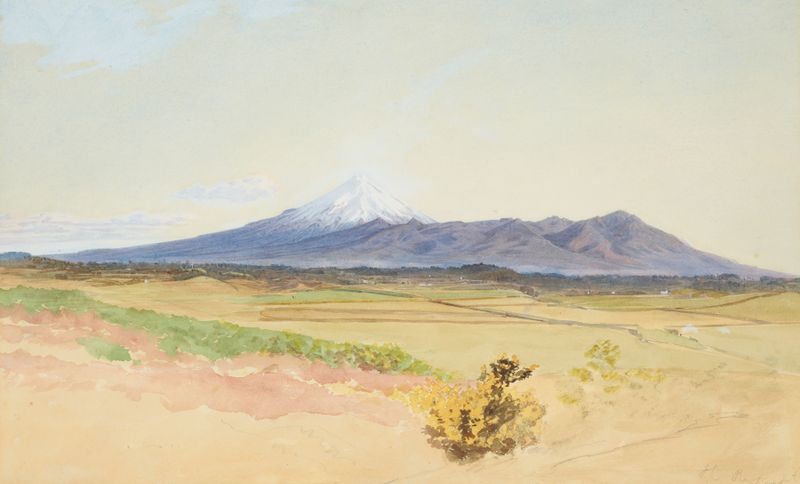
Mount Egmont and Pouakai, from New Plymouth
James Crowe Richmond
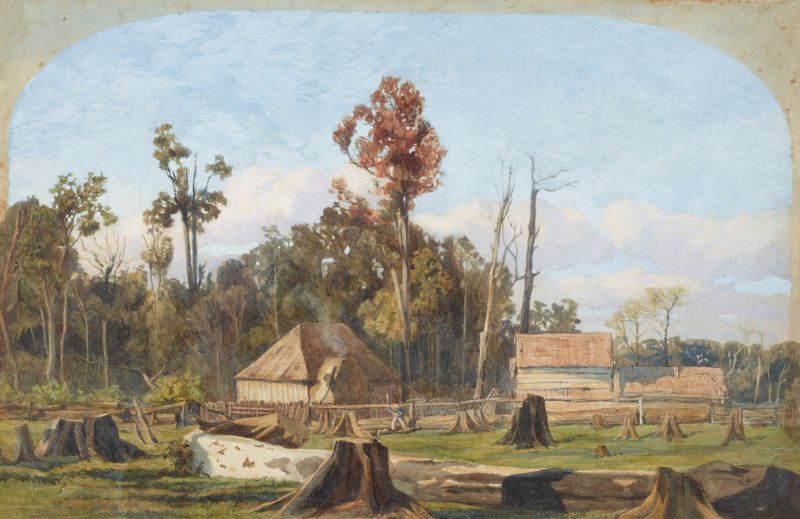
Settler’s home, Merton, near New Plymouth
James Crowe Richmond
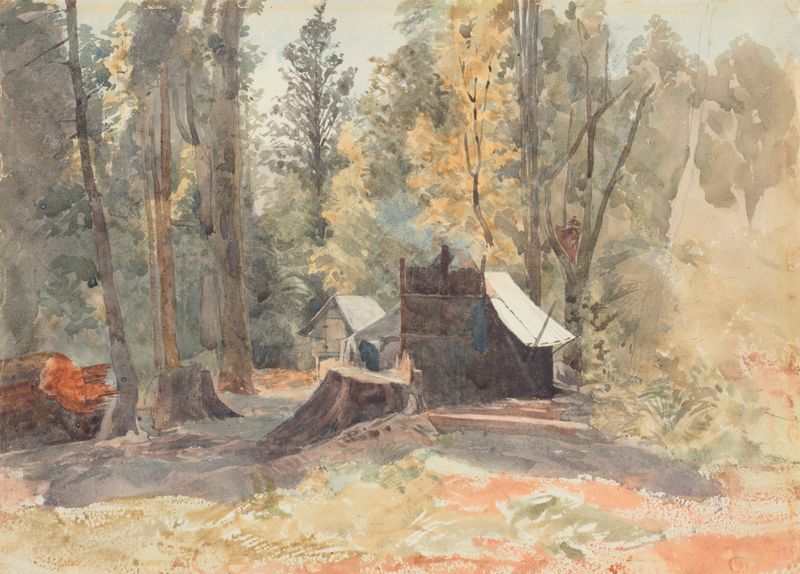
Hut of the ‘Italian party’, old diggings on Buller
James Crowe Richmond

Mosque at Tlemcen
James Crowe Richmond

Ngatapa, Te Kooti’s Pa
James Crowe Richmond
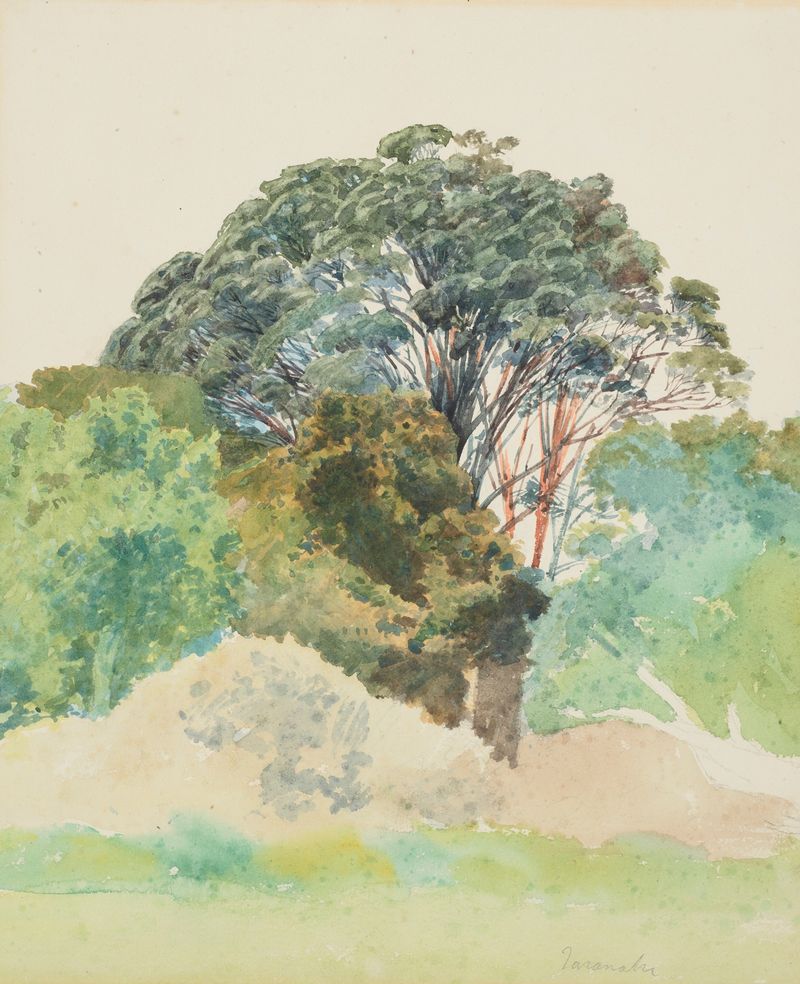
Rata, Taranaki
James Crowe Richmond

Grey River, on the beach
James Crowe Richmond
Dunedin from the Ocean Beach
James Crowe Richmond

On Collingwood Goldfields
James Crowe Richmond
Site of Greymouth
James Crowe Richmond





