
Rata, Taranaki — History & Facts
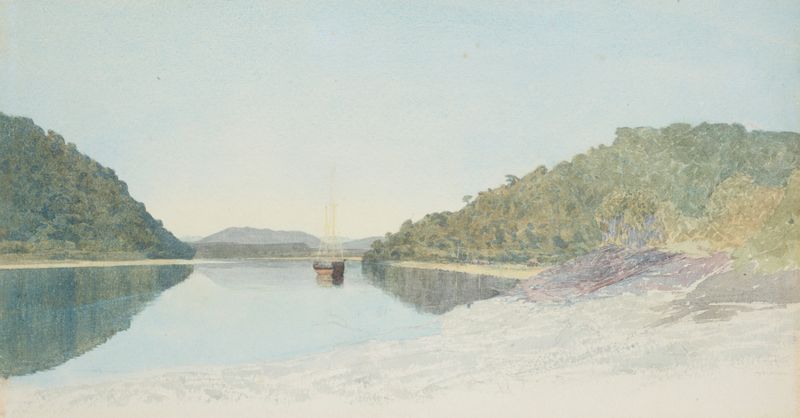
When did color learn to lie? In the delicate swirl of hues, a memory arises, blurring the lines between reality and imagination, reminding us of the power of perception in our lives. Look closely at the foreground, where rich greens embrace the ground, vibrant and alive, inviting you to step into a lush world. Notice how the sweeping mountains rise behind, their hues softened by the ether of distance, casting a spell of serenity. The overall composition beckons the eye from the bright patches of sunlight to the shadowed recesses, illustrating a harmony that exists between light and landscape, and between the tangible and the ephemeral. Yet beneath the placid surface lies a complex dialogue—between nature and human presence, past and present.
The disparate elements hint at a deeper narrative: the encroachment of civilization upon untouched beauty, and the memory of what was before the artist's brush. The subtle interplay of color evokes nostalgia, suggesting that memories, much like landscapes, are shaped and reshaped by the passage of time. In the 1850s, while painting Rata, Taranaki, Richmond was immersed in a burgeoning art scene that sought to capture the essence of New Zealand's landscapes. Living in a time of colonial expansion and cultural shifts, he was inspired by the natural beauty surrounding him, reflecting both the wonder and the unease of a world rapidly changing.
This era profoundly influenced his work, leading him to create pieces that resonated with the duality of awe and loss.
More Artworks by James Crowe Richmond
Browse all →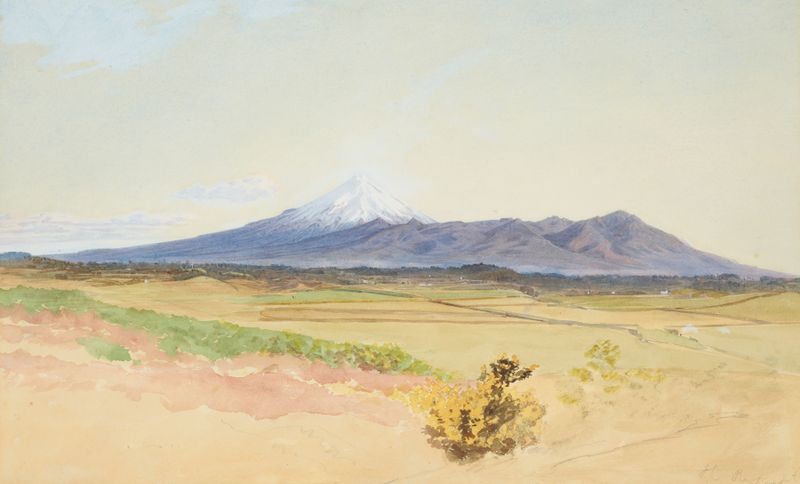
Mount Egmont and Pouakai, from New Plymouth
James Crowe Richmond
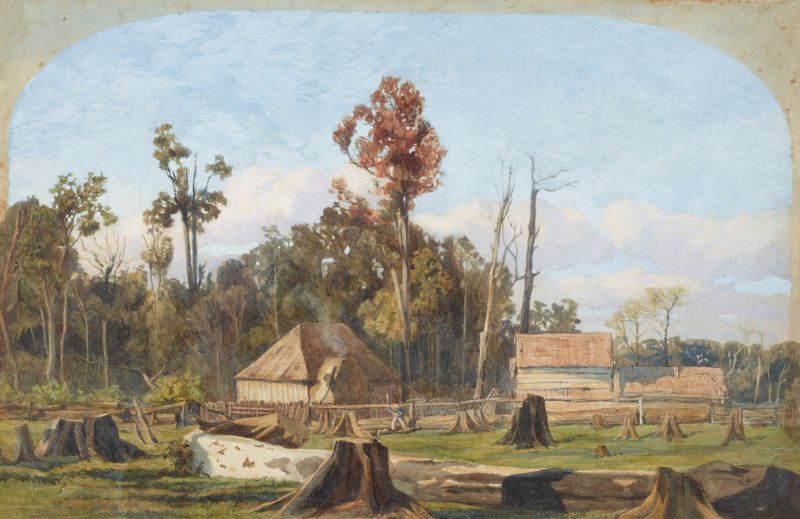
Settler’s home, Merton, near New Plymouth
James Crowe Richmond
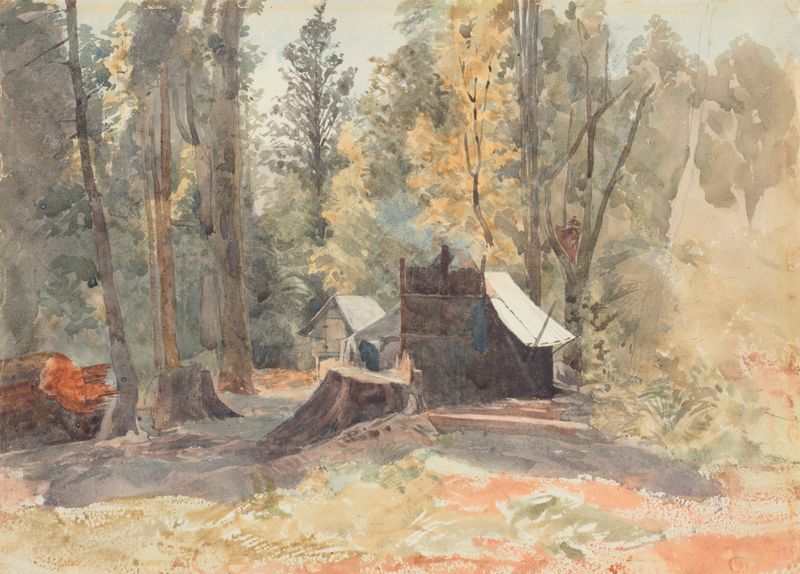
Hut of the ‘Italian party’, old diggings on Buller
James Crowe Richmond

Mosque at Tlemcen
James Crowe Richmond

Ngatapa, Te Kooti’s Pa
James Crowe Richmond

Dividing Range, Riwaka and Takaka
James Crowe Richmond

Grey River, on the beach
James Crowe Richmond
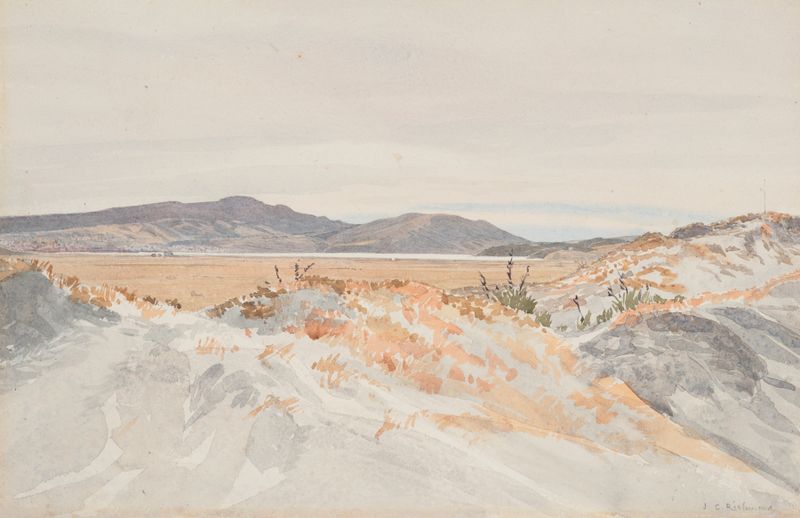
Dunedin from the Ocean Beach
James Crowe Richmond

On Collingwood Goldfields
James Crowe Richmond
Site of Greymouth
James Crowe Richmond





