
Grey River, on the beach — History & Facts
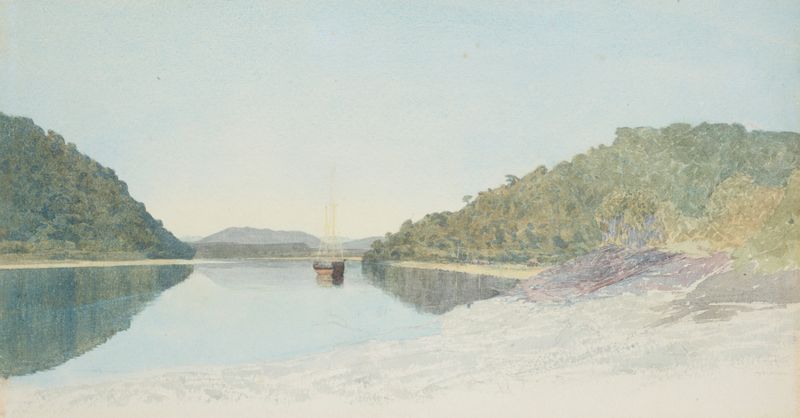
This profound transformation captures the essence of legacy that binds us to our past and shapes our future. In the delicate interplay of hues and textures, the artist reveals the unseen threads of time that connect us to the world we inherit. Look closely at the horizon line, where the muted greys of the river blend with soft blues and greens of the beach. Notice how the gentle brushstrokes create a serene yet poignant atmosphere, inviting the viewer to traverse the tranquil waters.
The interplay of light and shadow illuminates the details of the shore, while ethereal clouds drift softly in the sky, reflecting both the calmness of nature and the complexities of memory. Beneath the surface lies a quiet tension—the juxtaposition of permanence and transience. The river, a symbol of continuity, flows tirelessly while the shoreline’s fleeting footprints hint at human impermanence. Each stroke conveys the dichotomy of life, a reminder of both our ephemeral existence and our enduring impact on the natural world.
This emotional resonance deepens as the scene unfolds, urging contemplation of our own legacies. In 1862, Richmond painted this work during a period marked by both personal introspection and significant artistic movements in England. The Pre-Raphaelite Brotherhood was gaining momentum, promoting a return to detail, intense colors, and complex textures that might have influenced his approach. This work reflects his evolving style amid a rich cultural landscape, revealing a moment of connection between the artist and the ever-flowing river of time.
More Artworks by James Crowe Richmond
Browse all →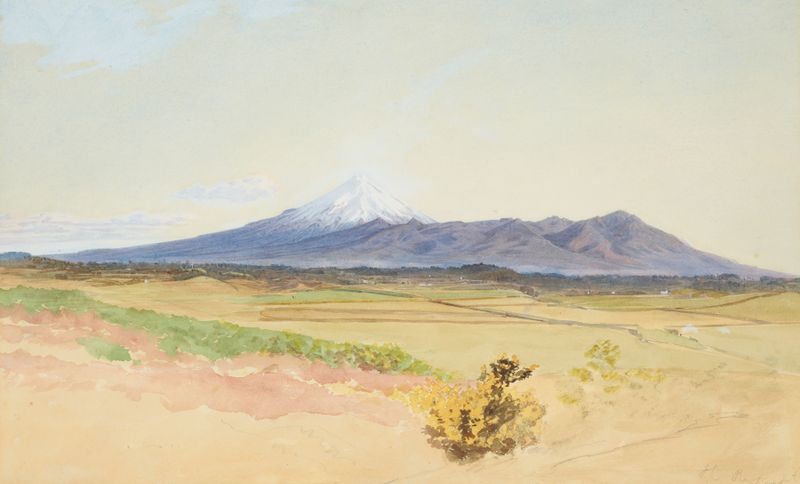
Mount Egmont and Pouakai, from New Plymouth
James Crowe Richmond
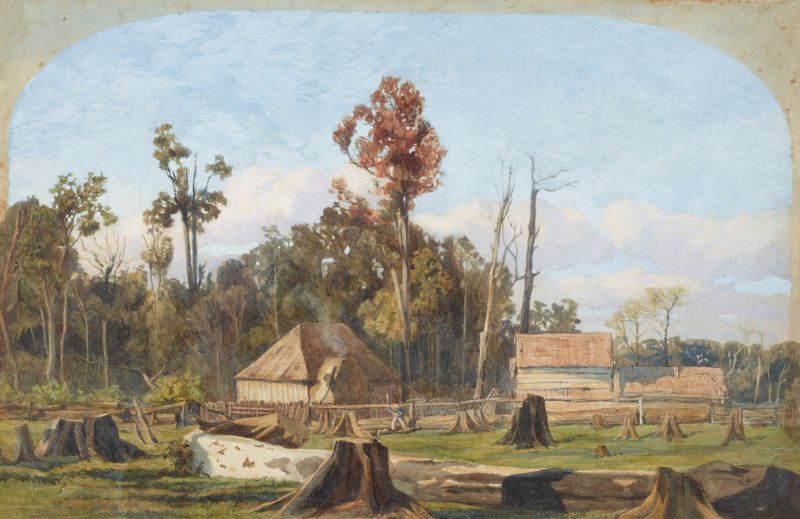
Settler’s home, Merton, near New Plymouth
James Crowe Richmond
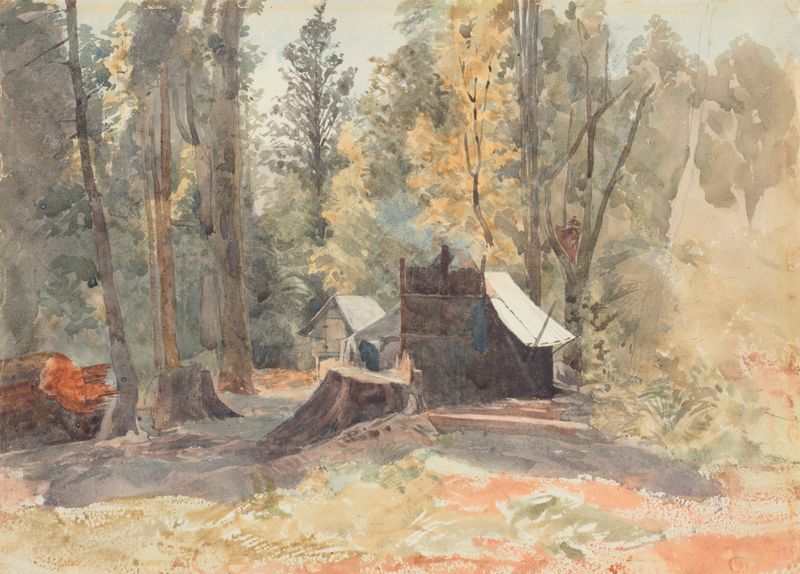
Hut of the ‘Italian party’, old diggings on Buller
James Crowe Richmond

Mosque at Tlemcen
James Crowe Richmond

Ngatapa, Te Kooti’s Pa
James Crowe Richmond

Dividing Range, Riwaka and Takaka
James Crowe Richmond
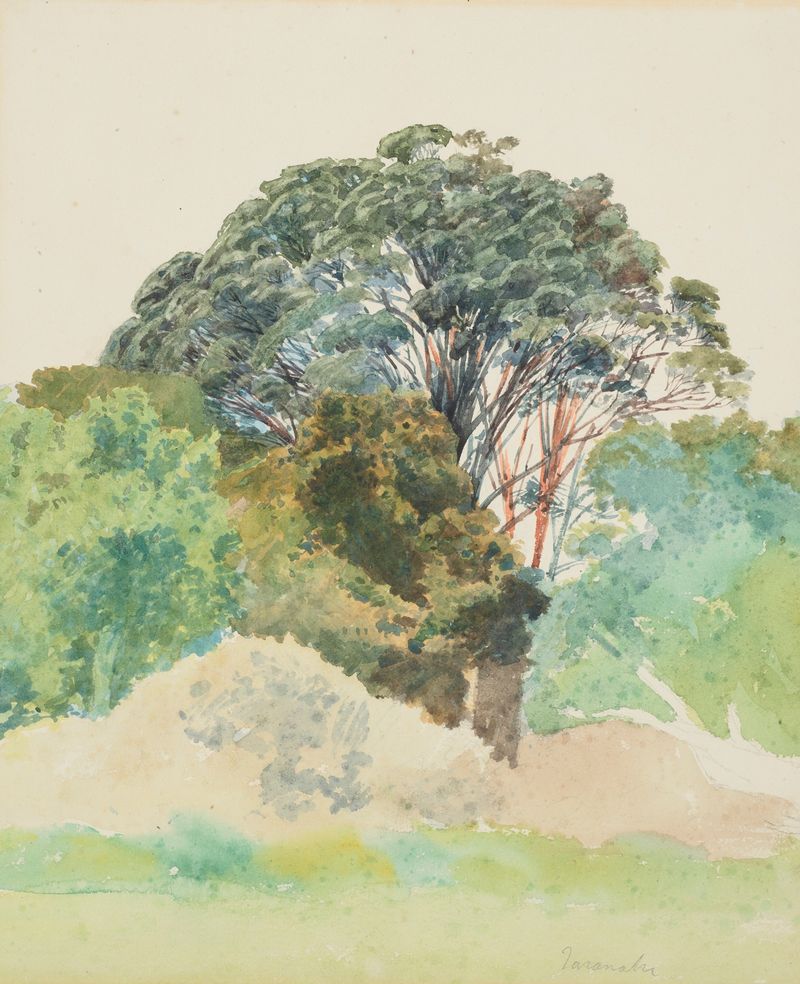
Rata, Taranaki
James Crowe Richmond
Dunedin from the Ocean Beach
James Crowe Richmond

On Collingwood Goldfields
James Crowe Richmond
Site of Greymouth
James Crowe Richmond





