
Hut of the ‘Italian party’, old diggings on Buller — History & Facts
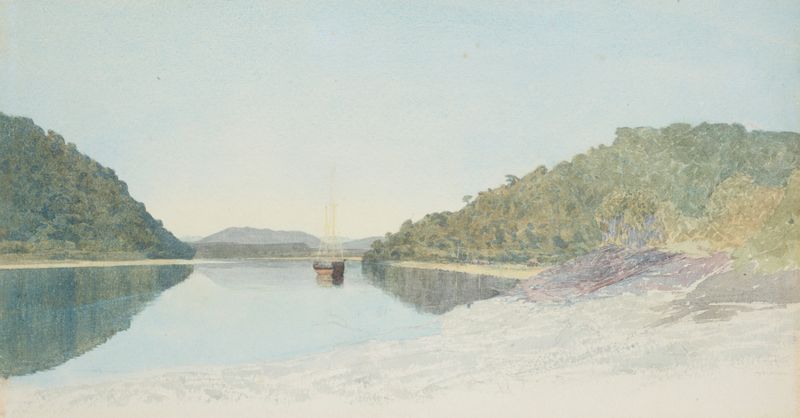
In the stillness of the old diggings, time itself seems to pause, revealing layers of memories hidden within the landscape. The hut stands as a sentinel of stories long past, a testament to human endeavor and the relentless passage of moments. Look to the left at the weathered structure that dominates the canvas, its rough-hewn timbers blending into the earthy hues of the surrounding terrain. Notice how the light casts soft shadows, wrapping the scene in a gentle embrace, while the muted greens and browns evoke a sense of nostalgia.
The composition draws the eye through the rugged landscape, capturing the essence of abandonment and the fragility of human ambition against nature’s timeless backdrop. Delve deeper into the contrasts present in this artwork: the transient nature of man versus the enduring presence of the earth, the vibrancy of life contrasted with the stillness of decay. The juxtaposition of the simple hut against a vast, unyielding landscape speaks to the resilience and vulnerability of those who once sought fortune here. Each brushstroke whispers the tales of dreams pursued and the quiet acceptance of their fleeting reality. James Crowe Richmond painted this piece in 1862 during a period of exploration and change in New Zealand.
At the time, the gold rush was reshaping the landscape and lives of many, marking an era of hope and hardship. Richmond, a prominent artist and member of the colonial elite, engaged with these themes, portraying both the romanticism and the harshness of frontier life, as he sought to capture the essence of a rapidly evolving world.
More Artworks by James Crowe Richmond
Browse all →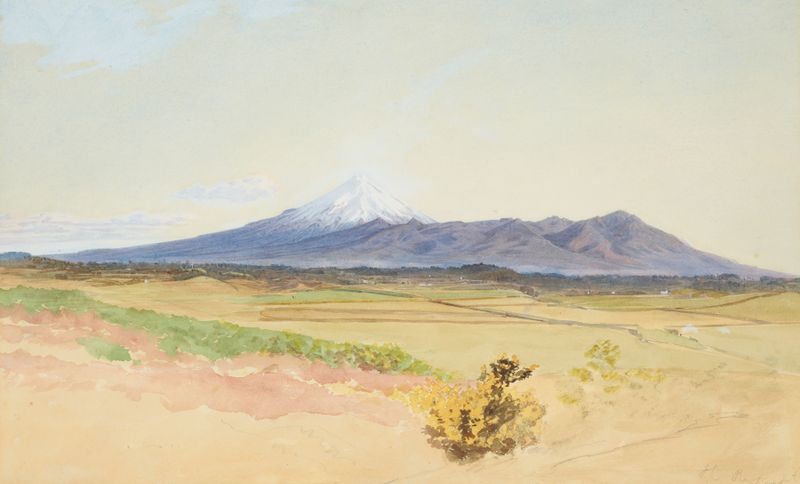
Mount Egmont and Pouakai, from New Plymouth
James Crowe Richmond
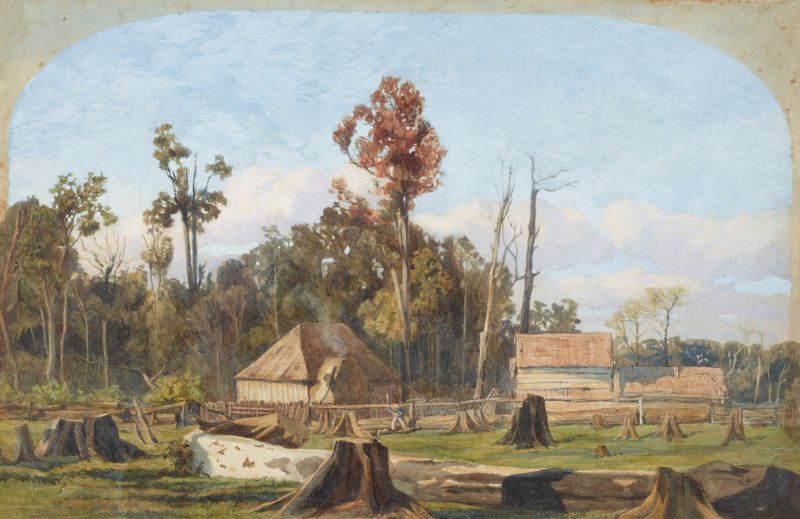
Settler’s home, Merton, near New Plymouth
James Crowe Richmond

Mosque at Tlemcen
James Crowe Richmond

Ngatapa, Te Kooti’s Pa
James Crowe Richmond

Dividing Range, Riwaka and Takaka
James Crowe Richmond
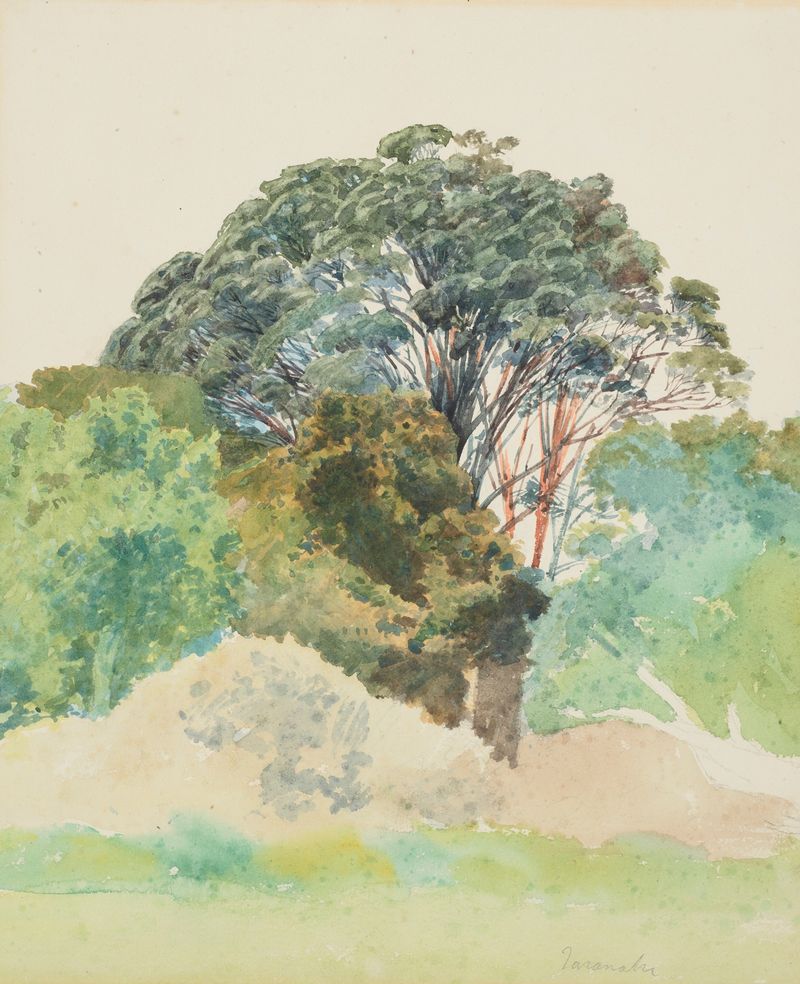
Rata, Taranaki
James Crowe Richmond

Grey River, on the beach
James Crowe Richmond
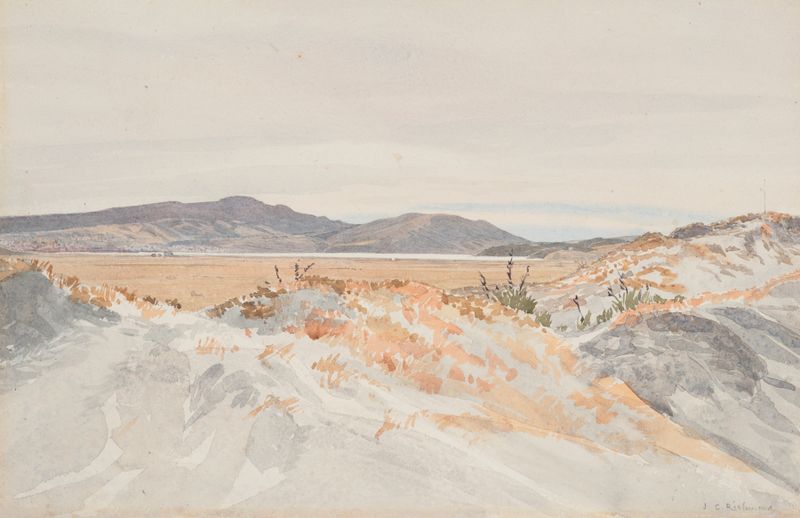
Dunedin from the Ocean Beach
James Crowe Richmond

On Collingwood Goldfields
James Crowe Richmond
Site of Greymouth
James Crowe Richmond





